The Science of Time Travel
Is time travel possible? Science fiction has explored it for decades, but what does real physics say? From Einstein’s relativity to quantum mechanics, scientists have debated whether we could ever move through time like in the movies. Let’s break down the theories, paradoxes, and possibilities of time travel. Stick around to the end, and don’t forget to like and subscribe!
 View on TikTok
 View on YouTube
Create Your Own
Make AI-powered videos in minutes
Video Transcript
Full text from the video
Time travel isn’t just a fantasy—it’s rooted in real physics!
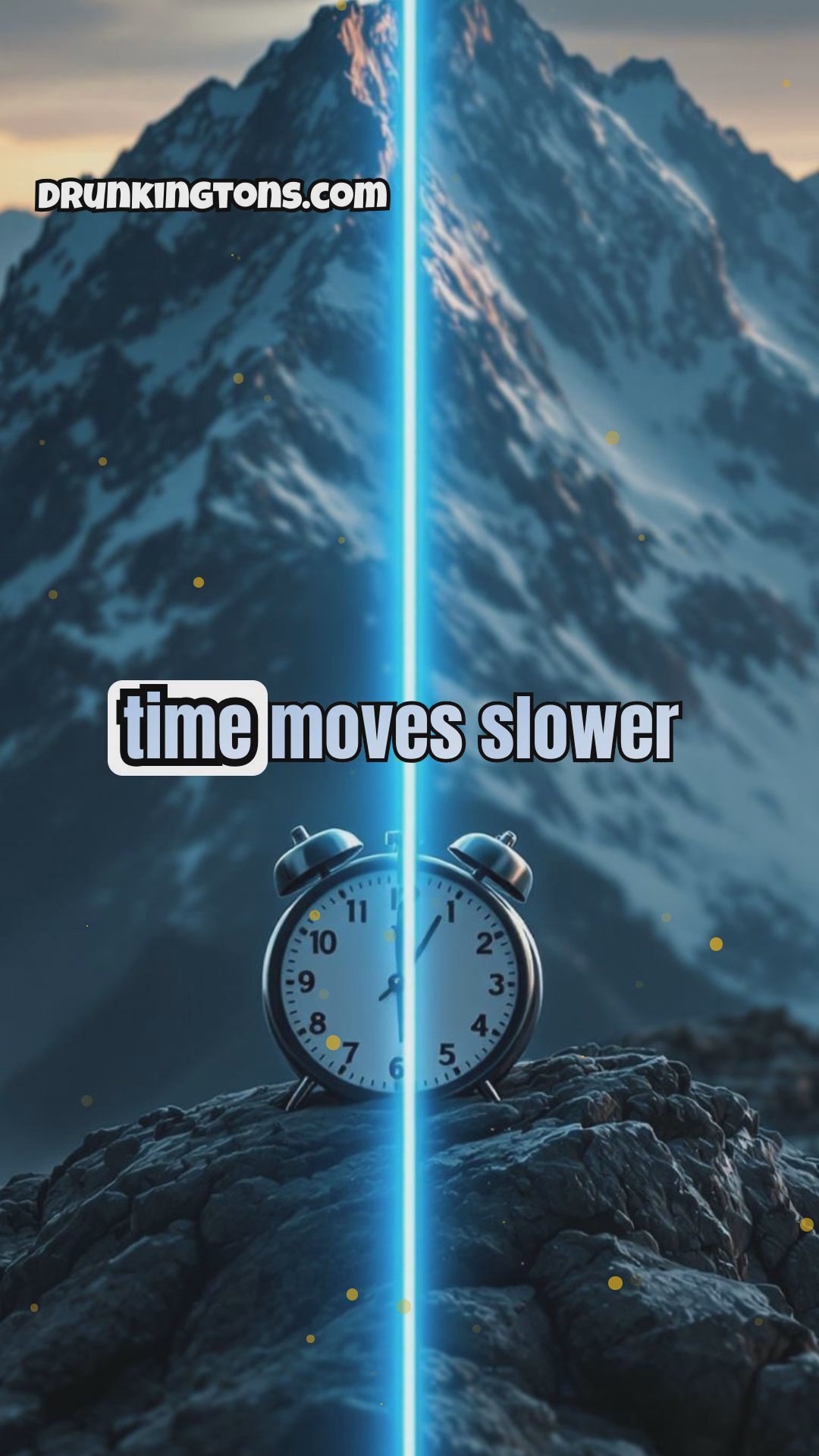
Einstein’s theory of relativity shows that time isn’t fixed; it stretches and contracts depending on speed and gravity.
Astronauts on the International Space Station actually age slightly slower than people on Earth due to time dilation.
If we could travel close to the speed of light, we could leap forward in time!
But what about traveling to the past?
That’s where things get tricky.
Going back in time introduces paradoxes.
The most famous is the grandfather paradox—if you traveled back and prevented your grandparents from meeting, would you
even exist?
Some theories suggest parallel universes could solve this, where each change creates a new timeline.
Others propose closed time-like curves, where events are self-consistent, meaning you could visit the past but never change
it.
So, could time travel to the past ever be possible?
Some scientists think it might be!
One possible method for time travel involves wormholes—hypothetical tunnels in spacetime that could connect distant points, or even
different times.
If one end of a wormhole moved at near-light speed, time dilation could create a time difference between
the two ends.
Step through, and you might emerge in the past or future!
But there’s a catch: wormholes are purely theoretical, and even if they exist, keeping them stable long enough
to travel through is a huge challenge.
Quantum mechanics might hold the key to time travel.
Some interpretations suggest particles can influence their own past, a concept called retrocausality.
There’s also the idea of quantum entanglement—where two particles remain connected across time and space.
Could this be harnessed for time travel?
While intriguing, no experiment has proven it possible yet.
Still, quantum physics continues to challenge our understanding of time, and new discoveries could change everything.
So, will we ever time travel?
Science says moving forward in time is possible with extreme speeds or gravity, but going back remains uncertain.
Theories like wormholes, quantum mechanics, and parallel universes offer hope, but we’re far from building a working time
machine.
Still, the mysteries of time continue to inspire scientists and storytellers alike.
What do you think—will time travel ever become reality?
Like and subscribe for more mind-bending science!
More from this creator
Other videos by @productionlittlebird