Top Platforms That Pay Content Creators in 2026

Discover the best platforms that pay content creators in 2026. Compare top monetization options like YouTube, TikTok, & Patreon to start earning.
Most creators ask the wrong question. They ask which platform pays the most, when the better question is which platform matches the way they make content and the kind of audience they can keep. A live streamer, a newsletter writer, and a short-form video creator can all get paid online, but they shouldn't build the same monetization stack.
If you're posting consistently and still not seeing revenue, the problem usually isn't effort. It's platform fit, monetization design, or a workflow that can't keep up with how often these platforms reward fresh content. That's why a useful guide to platforms that pay content creators has to do more than list logos. It has to show where ad revenue works, where direct support works better, and where creators get trapped chasing reach without building income.
The broad pattern is clear. Distribution platforms hold more than 60% of revenue share in 2024, and video accounts for more than 50% of market revenue share because it combines engagement with built-in monetization features like ads, subscriptions, tipping, and shopping, according to Polaris Market Research on creator economy platforms. That lines up with what many creators already feel in practice. Video-first distribution usually gives you the fastest path to discoverability and the deepest monetization stack.
If you also run a site, it helps to understand the broader mechanics of how publishers generate website revenue. The same logic applies here. Attention alone isn't a business unless the platform gives you reliable ways to convert it.
1. YouTube Partner Program (YPP)
Want the platform with the widest set of ways to get paid from one audience? Start with YouTube.
YouTube still sets the standard for ad-revenue platforms because it supports long-form video, Shorts, livestreams, memberships, Super Thanks, Shopping, and YouTube Premium revenue inside one system. For creators building an actual business, that mix is hard to match.
A survey of 1,500 monetizing creators found that YouTube ranked first for income generation at 28.6%, ahead of TikTok, Facebook, Instagram, and X. This is significant because YouTube does not depend on one payout stream. If ad rates dip, a well-built channel can still earn from memberships, fan support, affiliates, sponsors, or product sales tied to the videos.
Where YouTube wins
YouTube rewards depth and repeat viewing. Tutorials, commentary, reviews, explainers, and educational videos can keep bringing in traffic long after publish day. That makes it the strongest ad-revenue platform in this list for creators who want content to compound instead of expire.
The trade-off is slower feedback. TikTok can tell you in hours whether a hook works. YouTube usually takes more patience, better packaging, and stronger retention to produce consistent income.
I have seen the same pattern repeatedly. Creators who treat YouTube like a searchable library tend to last longer than creators who chase random spikes. A single good video helps. A repeatable format gets paid.
- Best fit: Creators making searchable, evergreen, or series-based video.
- Strong features: Studio analytics, channel memberships, fan funding, live monetization, shopping tools.
- Main trade-off: You need consistency, policy compliance, and enough output to smooth revenue swings.
Practical rule: Build around a format you can publish weekly for months. Clear titles, stronger thumbnails, and a recognizable topic promise usually beat one-off creativity.
YouTube also rewards production systems, not just ideas. A useful workflow is to script one core topic, publish the full video, cut the strongest moments into Shorts, then use those Shorts to feed the long-form library. Tools like ShortGenius for AI-assisted video production workflows can help turn scripts into publishable assets faster, especially if you are trying to support both Shorts and long-form without editing everything from scratch.
Visit YouTube Creators.
2. TikTok Creator Rewards
What do you use TikTok for. Fast cash, or fast feedback?
TikTok is best treated as a testing platform inside a bigger monetization system. It can pay through Creator Rewards, but the bigger value is speed. You find out quickly which hooks earn attention, which topics stall, and which format deserves more production time.
That speed has a cost. A format can work this week and miss next week with only small changes in pacing, topic selection, or audience fit. Creators who win here usually publish often, review retention closely, and adjust without getting attached to any single post.
How to use TikTok without depending on it
Creator Rewards pays based on qualified performance, which makes TikTok more useful than the older model that left many creators guessing. The issue is stability. TikTok income can be real, but it is hard to forecast, and it rarely becomes the safest revenue layer in a creator business.
The practical move is to use TikTok for signal collection. Test angles there. Keep the winners. Then route that attention into assets you control more directly, such as email, products, affiliates, subscriptions, or longer-form content on other platforms.
A repeatable workflow matters more than perfection. Write three to five hook options for the same idea, record them in one batch, publish quickly, and only expand the concepts that hold attention. If you need help producing more short-form without building a full editing team, AI-assisted short-form video workflow tools can reduce the scripting, voiceover, and formatting load.
- Best fit: Creators who can publish original short-form consistently and react to performance fast.
- Strong features: Creator Rewards, LIVE monetization, affiliate options, strong topic testing.
- Main trade-off: Revenue can fluctuate fast, and small creative misses can lower both reach and qualified earnings.
One rule is easy to remember. Do not confuse distribution with durability. TikTok is excellent for finding what works. It is weaker as the only place you expect stable income to come from.
Visit TikTok for Creators.
3. Instagram
Can Instagram pay creators well, or is it still mainly a place to look polished and hope brands notice? The answer depends on how you structure the business. Instagram is rarely the cleanest ad-revenue play in this list, but it can be one of the best platforms for turning attention into higher-value income through subscriptions, affiliate sales, inbound brand deals, and repeat buyers.
Instagram works best in the direct-support and brand-conversion bucket, not the pure platform-payout bucket. Reels can drive discovery, but significant income often comes from what happens after someone follows you. Stories build familiarity. DMs close the gap between interest and action. Subscriptions and private content give your strongest followers a reason to pay you every month.
That format mix matters.
Creators who do well here usually assign a job to each surface. Reels bring in new people. Stories keep you present. Profile content proves taste and credibility. Subscriber content gives paying followers something specific they cannot get from casual viewers.
The trade-off is production pressure. Instagram rewards consistency, but the standard for visual quality, pacing, and positioning is still higher than on some other short-form platforms. A creator can post often and still miss if the content feels generic, overly polished, or disconnected from a clear point of view.
I have found Instagram pays best when the content has identity attached to it. Fitness with coaching cues. Finance with personal systems. Beauty with product judgment. Food with process and taste. If people trust your eye, not just your facts, monetization gets easier.
For creators building across categories, Instagram fits well inside a larger workflow. Use short-form testing to identify topics that earn attention, then turn the strongest ideas into Reels, Story sequences, subscriber drops, and brand-safe portfolio content. If you need help producing more variations without editing every asset from scratch, AI tools for short-form content production can support scripting, visual swaps, captions, and versioning across formats.
Visit Instagram for Creators.
4. Facebook for Creators
Facebook still pays more creators than many people expect, especially creators who already know how to repurpose video and live content. It supports Stars, in-stream and overlay ads, Reels monetization, and a central Monetization Manager for checking status and policy issues.
A lot of newer creators ignore Facebook because it doesn't feel culturally central. That's a mistake if your content skews broad, practical, community-driven, or shareable across age groups. Facebook often performs better than people think for clips, commentary, explainers, live sessions, and personality-led pages.
Where Facebook makes sense
Facebook is useful when you already have content from somewhere else. If you're recording for YouTube, streaming live, or publishing Instagram Reels, Facebook gives you another place to monetize that same production work.
The downside is that monetization features can vary by region and account setup, and policy reviews matter. You need a clean workflow and patience for compliance.
- Best fit: Creators with existing video libraries, community content, or live programming.
- Strong features: Stars, ad products, Reels monetization, page-based audience tools.
- Main trade-off: The platform can feel operationally messy if you don't stay organized.
I like Facebook most as a multiplier, not a starting point. If you already have a content engine, it can add revenue. If you're creating from scratch, it usually shouldn't be the first platform you master.
Visit Facebook for Creators.
5. Twitch
Twitch is the clearest example of a platform where community behavior matters as much as platform tools. Paid channel subscriptions, gifted subs, Bits, ads, bounties, and sponsorships all exist, but they only work if viewers feel like showing up live matters.
That's the core trade-off. Twitch can support a loyal creator, but it asks for real time. You can't fake a live-first business with occasional streams and expect strong support.
What Twitch rewards
Twitch rewards consistency, routine, and interactive creators who can hold attention without heavy editing. If your strength is conversation, gameplay, co-working, coaching, reacting, or building in public, it's a strong fit.
What doesn't work is assuming the platform itself will bring a large audience. Discovery is harder than on YouTube or TikTok, so many Twitch creators grow faster when they use short-form platforms to feed their streams.
Field note: Live revenue gets stronger when viewers feel involved, not just entertained. Chat recognition, recurring segments, and community rituals matter more than flashy overlays.
Use Twitch if you enjoy the process of going live. Don't use it just because subscriptions sound attractive. Live burnout is real, and this platform magnifies it if your schedule isn't sustainable.
Visit Twitch Creators.
6. Kick
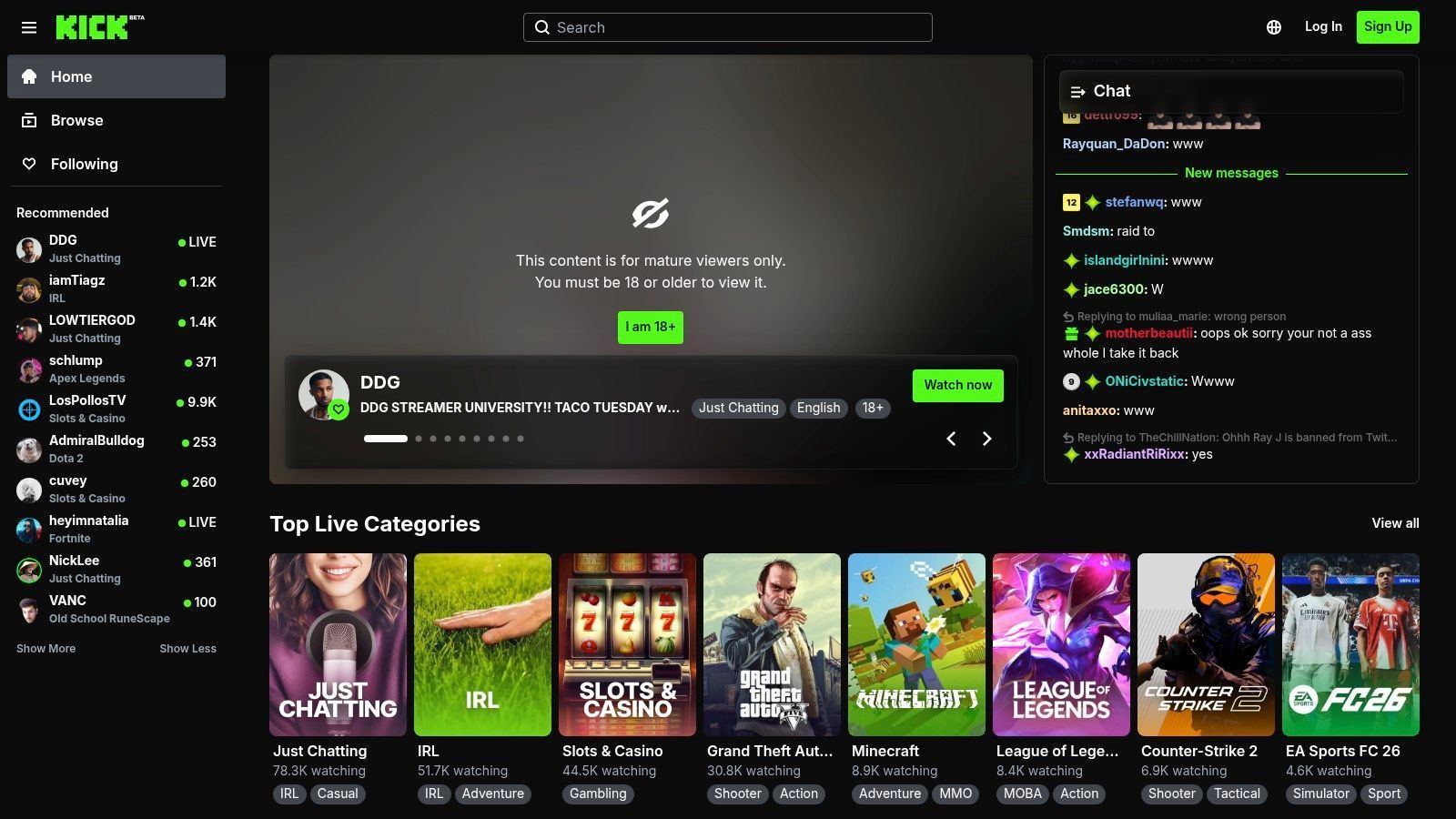
Kick gets attention for one reason first. The platform promotes a 95/5 revenue split on subscriptions and tipping currency. That's a real advantage for creators who already know how to convert viewers into direct support, because a bigger share of subscriber revenue changes the economics of a loyal audience.
That said, a strong split doesn't automatically beat a stronger audience. Twitch and YouTube still have deeper ecosystems, more mature creator habits, and broader discovery loops.
When Kick is the smarter choice
Kick is compelling if you're already live-streaming, you're comfortable experimenting, and you don't want to rely on one platform. It fits creators who multistream, clip aggressively, and treat livestreaming as one piece of a broader distribution strategy.
The weaker side is scale. Smaller audience pools and younger tooling mean you need to bring your own momentum.
- Best fit: Streamers with established communities or multistream setups.
- Strong features: Favorable subscription economics, Stripe-based payouts, clip bounty opportunities.
- Main trade-off: Less built-in audience depth than larger incumbents.
If you're deciding between Twitch and Kick, the question isn't which platform is more creator-friendly on paper. It's where your audience already watches, chats, and spends.
Visit Kick.
7. X
X has become a viable option for creators who already publish where conversation happens. That's different from saying it's the best first monetization platform. It isn't. But if your brand lives in text, hot takes, commentary, clips, threads, or real-time reactions, monetizing the same account your audience already follows is attractive.
The platform offers creator revenue sharing and subscriptions, with a creator dashboard and Stripe-based payouts in supported regions. For some creators, that's enough to turn posting habits they already have into income.
Who should actually use X monetization
Use X if your content naturally creates discussion. Journalists, commentators, niche analysts, meme creators, sports voices, finance creators, and founders often fit better here than lifestyle creators.
What usually fails is trying to force long-form creator economics onto a platform built around fast responses. If your audience doesn't engage in public, repeatable conversation, subscriptions and ad-linked monetization can feel thin.
A practical approach is to treat X as a monetized distribution and relationship layer. Post ideas, clips, and commentary there. Move deeper education, archives, or premium series elsewhere.
One caution matters. Program terms, weighting, and eligibility can change, so this isn't where I'd put the most stable part of a business. I'd treat it as upside, not the core.
Visit X Creators.
8. Snapchat
Snapchat is stronger than many creator lists admit, especially if you understand vertical storytelling instead of just posting generic short-form clips everywhere. Its monetization program includes ad revenue opportunities around Public Stories and Spotlight, plus creator rewards tied to watch time and engagement.
This platform tends to work best for creators who can produce content that feels native to a fast, personal, mobile-first environment. Snapchat viewers usually want momentum. They don't want a recycled clip that obviously came from another app without adaptation.
Snapchat works when the format is native
Good Snapchat content feels sequential. It has movement, context, and quick progression. That makes it a fit for creators in lifestyle, entertainment, commentary, daily storytelling, and AR-friendly niches.
What doesn't work is dumping leftover vertical content into the app and expecting meaningful payouts. You have to respect the platform's pacing.
- Best fit: Short-form storytellers, daily creators, and creators comfortable with vertical series.
- Strong features: Story and Spotlight monetization, creator rewards, discovery surfaces for verified creators.
- Main trade-off: Sustained watch time matters, and not every niche translates well.
If your content already works as episodes, updates, or ongoing visual narratives, Snapchat deserves a real test instead of being treated like an afterthought.
Visit Snapchat for Creators.
9. Patreon
Patreon is one of the clearest direct-support platforms because it turns audience loyalty into recurring revenue. This is a different business model from ad-heavy platforms. You don't need massive reach. You need a group of people who want more access, more depth, or more consistency than public content can provide.
That shift matters because only 34% of creators earn their primary income from platform ads, while 66% rely on sponsorships, affiliate marketing, or digital products, according to InfluenceFlow's creator earnings report summary. Patreon fits that second camp. It's built for creators who monetize relationships, not just views.
The economics of direct fan support
Circle's creator-platform overview notes that Patreon charges new creators a 10% platform fee, plus payment processing fees of about 2.9% + $0.30 per transaction, and creators commonly price memberships around $3 to $50+ per month. Those numbers are the practical reality of membership income. The audience can be smaller, but fee structure and retention suddenly matter a lot.
What works on Patreon is clear benefit design. Bonus episodes, early releases, private posts, member chats, behind-the-scenes breakdowns, and archives all make sense. What doesn't work is vague promises like “support my work if you'd like.”
Paid memberships work when the value is easy to picture before someone subscribes.
Visit Patreon.
10. Substack
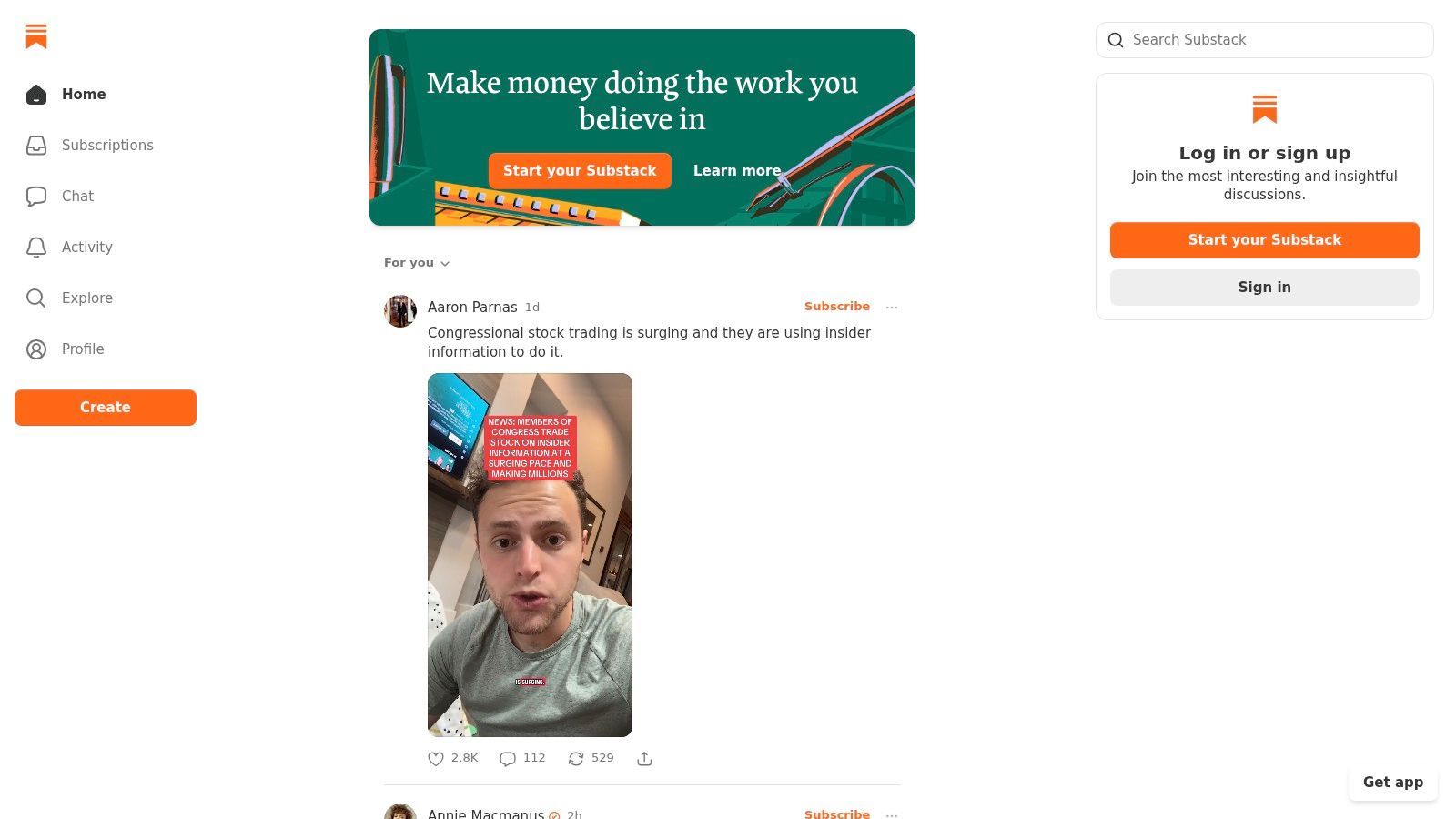
Substack is for creators who want the cleanest path from ideas to paid readership. If your strength is writing, analysis, curation, education, or premium series, it's one of the simplest platforms that pay content creators through subscriptions rather than algorithm-dependent views.
The appeal is straightforward. Publish free posts to attract readers, then reserve premium essays, newsletters, podcasts, or video posts for paying subscribers. You're not waiting for ad revenue logic to make your work valuable.
Why Substack is often underrated
Many creators overlook Substack because it doesn't feel as explosive as short-form social. That's fair. It usually grows slower. But the audience quality can be much stronger because people are opting into a direct relationship with your work.
Substack also takes a familiar fee structure. The platform takes 10% when paid subscriptions are enabled, plus Stripe processing fees. That means the math is simple, but your publishing discipline has to be strong. If you disappear for long stretches, paid retention gets harder.
Use Substack when your audience wants thinking, not just clips. It fits writers first, but it also works for podcasters, researchers, educators, and niche commentators who can build a premium series around a clear point of view.
Visit Substack.
10-Platform Creator Monetization Comparison
| Platform | Key features | Monetization & Value 💰 | UX & Analytics ★ | Target audience 👥 | Unique selling points ✨🏆 |
|---|---|---|---|---|---|
| YouTube Partner Program (YPP) | Long-form, live & Shorts monetization; Studio analytics; fan funding | 💰 Ad revenue + Premium + memberships; stable RPM; seasonal variance | ★★★★ | 👥 Long-form creators, evergreen channels | ✨ Deep analytics, broad discovery; 🏆 long shelf-life content |
| TikTok Creator Rewards | Performance-based Shorts; creator dashboard; complements LIVE & Pulse | 💰 View-weighted payouts; variable, performance-sensitive | ★★★★ | 👥 Short-form, viral-first creators | ✨ Rapid reach and iteration; native analytics |
| Instagram (Reels Ads + Subscriptions) | Reels ads + creator subs; Professional Dashboard; brand tools | 💰 Ads + recurring subs + branded deals; rollout varies | ★★★★ | 👥 Short-form, lifestyle & brand creators | ✨ Strong Reels discovery; native creation/scheduling |
| Facebook for Creators | Stars, in-stream & Reels ads; Monetization Manager | 💰 Multiple levers (Stars, ads); region/page rules apply | ★★★ | 👥 Community-led creators, cross-posters | ✨ Cross-post with Instagram; varied monetization |
| Twitch (Affiliate / Partner) | Live subscriptions, Bits, ads, extensions & mods | 💰 Sub tiers + Bits + ads; proven recurring support | ★★★★ | 👥 Live streamers, gaming & IRL hosts | ✨ Rich live tools & community culture; 🏆 established monetization norms |
| Kick (Live Streaming) | 95/5 rev split on subs/tips; bounties; fast payouts | 💰 Very generous split (95%); Stripe payouts | ★★★ | 👥 Monetization-first streamers, multistreamers | ✨ Industry-leading revenue share; fast payouts |
| X (formerly Twitter) | Ad revenue share + subscriptions; creator dashboard | 💰 Ad share + subs (up to ~97% after fees); eligibility strict | ★★★ | 👥 Engaged conversation-driven creators | ✨ Monetize posts where audience already is; frequent payouts |
| Snapchat (Stories / Spotlight) | Spotlight payouts, Public Story ads; AR-first formats | 💰 Rewards by watch time & ad share; youth-focused value | ★★★ | 👥 Vertical storytellers, AR/Gen Z audience | ✨ AR tools + daily-use discovery; Snap Star benefits |
| Patreon | Membership tiers, native video & livestreams, CRM tools | 💰 Predictable recurring income; platform & payment fees apply | ★★★★ | 👥 Creators seeking owned, recurring revenue | ✨ Full membership control; exportable audience data |
| Substack | Paid newsletters, podcast/video support, referrals | 💰 Straightforward paywall; platform fee ~10% + Stripe | ★★★★ | 👥 Writers, newsletter-first & long-form creators | ✨ Excellent deliverability & discovery; subscription-first model |
Your Next Step From Creator to Paid Professional
Want to stop guessing which platform will pay you and start building a creator business that survives algorithm swings?
Treat monetization as a stack with clear jobs. Discovery platforms bring new people in. Direct-support platforms turn attention into recurring income. Live platforms build trust faster than edited content alone. Owned channels, especially memberships and newsletters, give you protection when reach drops or payout rules change.
That split matters because no platform does everything well. Researchers at the University of Texas at Dallas explain the core tension clearly: platforms control the income mechanisms while creators supply the content that attracts attention and advertising revenue. Creators who rely on one payout system are exposed to policy shifts, weaker distribution, changing ad rates, and account-level restrictions.
The reliable approach is to build a stack with purpose.
A practical setup looks like this:
- Discovery: YouTube, TikTok, Instagram, Snapchat
- Live community: Twitch, Kick
- Owned recurring revenue: Patreon, Substack
- Distribution support: Facebook, X
Use each platform for one job. That keeps production decisions clear and makes performance easier to judge.
For a new video creator, one of the safest combinations is a discovery engine plus a conversion engine. YouTube plus Patreon still works well because one platform helps people find you and the other gives your best audience a reason to pay monthly. Writers usually get better results from Substack once they can publish with consistency and give readers a clear reason to subscribe. Live creators usually earn more steadily when Twitch or Kick sits on top of a paid community, membership offer, or email list they control.
Production is where creators lose momentum. The problem usually is not ideas. The problem is turning one strong idea into enough finished assets to publish, test, and improve every week without burning out.
Build a repeatable workflow instead.
Start with one core asset. That can be a YouTube video, a stream plan, a newsletter issue, or a podcast segment. Then cut that same topic into short clips, vertical edits, quote posts, community posts, teaser emails, and simple variations for different platforms. Judge content by business outcomes, not reach alone. A short video with strong views but no subscribers, replies, or paid conversions did not help much. A smaller post that brings in email signups or new members deserves to be repeated.
AI can speed up this process if you use it with discipline. The useful role is production support: scripting drafts, rough cuts, voiceover passes, resizing, repackaging, and version testing. That shortens the path from idea to publishable assets. As noted earlier, ShortGenius fits this workflow well when the goal is to produce more monetizable content without letting production become the bottleneck.
Keep one rule in place. Give one platform your best discovery content. Give one platform your best conversion content.
That is the shift from creator to paid professional. Paid creators do not depend on a single viral post or one platform's goodwill. They assign each platform a role, build around repeatable output, and keep the parts of the business that collect revenue under their control.