How to Monetize Social Media: A 2026 Roadmap

Learn how to monetize social media with a platform-agnostic roadmap. Build revenue streams, create content funnels, and scale your creator business in 2026.
Most advice about how to monetize social media starts in the wrong place. It tells creators to grow first, post constantly, chase reach, and worry about revenue later.
That approach breaks a lot of businesses before they start. A creator can rack up views, comments, and followers and still have no reliable way to get paid. Attention without a monetization system is just expensive labor.
The better approach is to treat monetization as part of the content strategy from day one. Not in a cynical way. In a practical way. Every piece of content should help do one of three things: attract the right audience, build trust, or move someone toward a clear offer.
That matters even more now because the opportunity is too large to leave to chance. The influencer marketing industry tripled in value from $10 billion in 2020 to $30 billion in 2025, and influencer marketing delivers an average return of $5.78 for every $1 spent according to this roundup of social media statistics. Brands aren't treating creators like a side experiment anymore. They're treating creator partnerships like a serious channel.
If you're still thinking monetization begins after you "make it," you're using an outdated playbook. Sustainable creators build revenue architecture early. They choose business models that match their niche, create content that supports those models, and set up systems that keep income from depending on a single post or a lucky algorithm spike.
A useful companion to that thinking is Suby's guide on how to make money as a content creator, especially if you're pressure-testing which revenue paths fit your strengths.
Beyond Views and Likes a New Monetization Mindset
Views are useful. Likes are useful. Neither is a business model.
A healthy creator business runs on fit, not noise. Fit between your audience and your offer. Fit between your content style and the way you earn. Fit between your production capacity and the promises you make to brands, buyers, or members.
Vanity metrics create bad decisions
Creators get stuck when they optimize for what platforms reward in public. They chase reach because reach is visible. They chase followers because followers look impressive in screenshots. Then they wonder why revenue feels random.
The problem isn't audience growth. The problem is building an audience with no path to value.
Practical rule: If a post performs well but doesn't help sell, qualify, or deepen trust with the right audience, treat it as awareness, not proof that your business is working.
That mindset changes what you measure. Instead of asking, "Did this go viral?" ask better questions.
- Audience quality: Did the post attract people who need what I sell?
- Commercial intent: Did anyone click, reply, ask a buying question, or join a list?
- Repeatability: Can I make this format again without burning out?
- Offer alignment: Does this content naturally lead into a product, service, affiliate recommendation, or sponsor category?
Revenue should shape your content early
Creators often wait too long to choose their monetization model. That leads to generic content and confused offers.
A finance creator who wants brand deals should build trust and category authority. A coach who wants to sell services should make content that surfaces pain points and shows a process. A product curator who wants affiliate income should focus on demonstration, comparison, and buyer confidence.
Those are different businesses. They shouldn't publish the same way.
One of the biggest shifts I recommend is moving from "What should I post today?" to "What system am I building?" The answer usually includes more than one revenue stream, because no single stream stays stable forever.
Choosing Your Social Media Monetization Pillars
Most creators don't need more monetization ideas. They need fewer. Chosen on purpose.
Trying to activate every revenue stream at once usually creates weak execution across the board. Start with one primary pillar and one secondary pillar that naturally fit your niche, audience behavior, and production style.
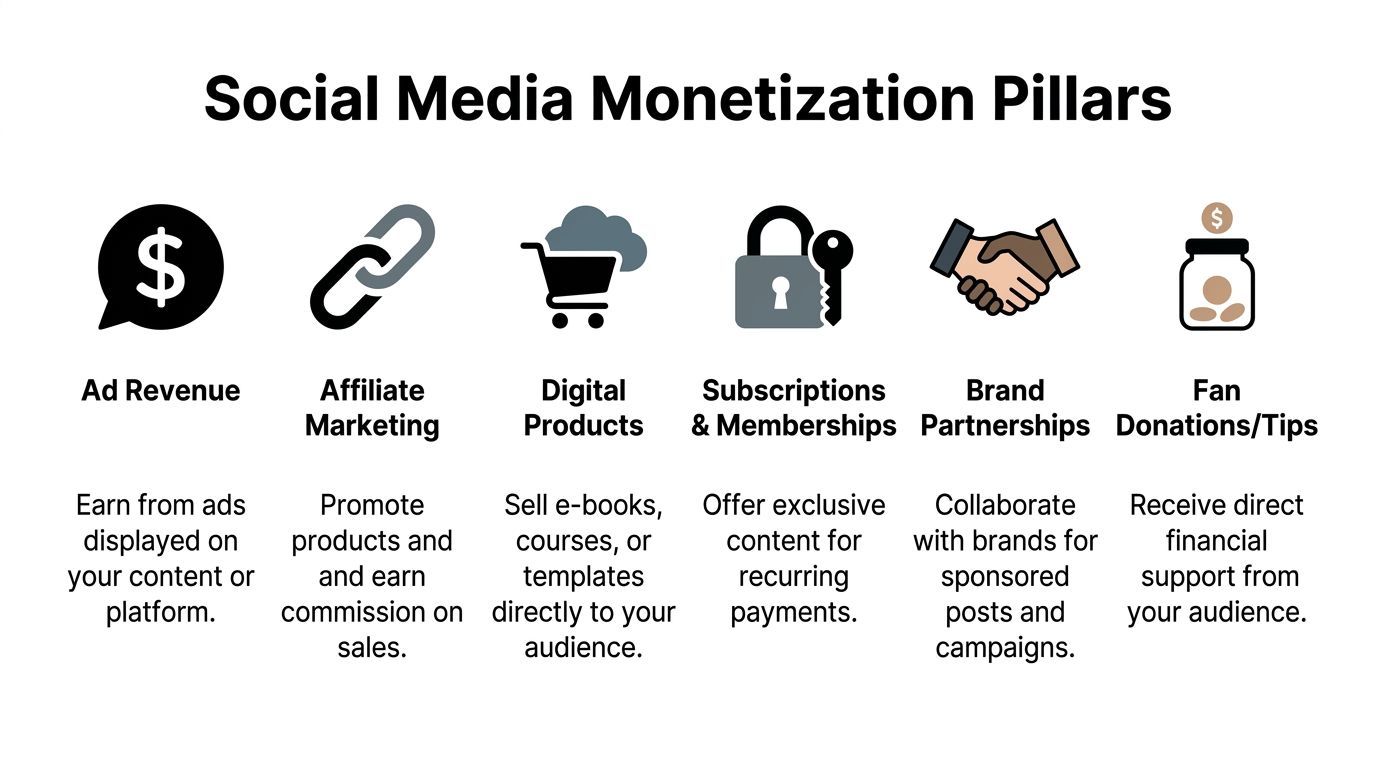
The five pillars that matter most
Some people split these differently, but in practice most creator businesses earn from a small set of recurring models.
| Monetization Model | Effort to Start | Earning Potential | Best For |
|---|---|---|---|
| Ad Revenue | Medium | Moderate | Long-form video creators, publishers, channels with consistent view volume |
| Brand Partnerships | Medium | High | Niche experts, lifestyle creators, strong on-camera communicators |
| Affiliate Marketing | Low to Medium | Moderate to High | Review creators, educators, tool curators, product-led niches |
| Social Commerce | Medium | High | Product-driven niches, short-form video creators, DTC-friendly audiences |
| Direct-to-Fan | High | High | Coaches, educators, analysts, community-led creators |
Ad revenue works best when distribution is already strong
Platform ad revenue is attractive because it's built in. You publish, qualify, and get paid through the platform's program.
The upside is simplicity. The downside is control. You don't control rates, eligibility rules, or how hard a platform pushes your content next month.
Ad revenue tends to work best when your format naturally supports watch time or repeat viewing. It works less well when your content is highly niche, your posting schedule is uneven, or your income needs are too important to leave to platform rules.
Brand partnerships reward trust, not just scale
Sponsorships are still one of the fastest ways to turn audience attention into real revenue. Brands care about fit, credibility, and whether your audience takes action.
In this area, many smaller creators underestimate themselves. A well-defined audience in a tight niche can be more valuable than a much larger account with weak relevance.
You do need some structure here: a clean pitch, examples, a rate philosophy, and proof that your audience engages with recommendations. Later in this guide, I'll get into the sponsorship process.
Affiliate marketing is strong when you influence decisions
Affiliate income works when your content helps people choose. That's the core mechanic.
If you review gear, explain software, compare tools, show workflows, recommend books, break down creator setups, or walk through buying decisions, affiliate fits naturally. If your content is mostly entertainment with no buying context, affiliate usually underperforms.
The mistake is stuffing links under unrelated posts. The better method is to pair links with content that reduces buyer uncertainty.
Good affiliate content doesn't just mention a product. It answers the question someone has right before they buy.
Social commerce is no longer optional in product-friendly niches
If your audience buys physical products, beauty items, fashion, home goods, fitness tools, or impulse-friendly consumer products, social commerce deserves serious attention. It's projected to reach $1 trillion globally by 2028, with social networks generating 17.11% of total online sales in 2025, according to Sprout Social's social media marketing ROI statistics.
That changes how creators should think about content. Short-form video isn't just for reach. It's product discovery, product education, and conversion.
This model is strong for creators who can demonstrate, style, compare, unbox, or integrate products naturally into routines. It tends to be weaker for abstract topics that don't map cleanly to a purchase.
Direct-to-fan is slower to build and stronger to own
Memberships, paid communities, premium newsletters, templates, digital products, and courses take more setup. They also give you more control.
The strongest reason to build this pillar is ownership. You control the offer, the relationship, and the margin structure. The trade-off is that you have to develop a sharper point of view and deliver ongoing value.
There's also real upside when the audience is engaged. Product-focused platforms report 3% to 7% free-to-paid conversions globally, with engaged niches such as creators reaching 10%, according to Product School's monetization strategy guide.
Choose based on your business, not what's trendy
A simple way to decide where to start:
- Pick ad revenue first if your strength is publishing volume and you're already building for broad distribution.
- Pick brand partnerships first if your niche is clear and your audience trusts your recommendations.
- Pick affiliate first if people already ask what tools, products, or resources you use.
- Pick social commerce first if your content can make products feel easy to buy.
- Pick direct-to-fan first if you solve recurring problems and can package that knowledge.
Most durable businesses combine these over time. A strong pairing might look like this:
- Coach or educator: Brand partnerships plus digital products
- Tech creator: Affiliate plus sponsorships
- Beauty creator: Social commerce plus brand deals
- Analyst or thought leader: Membership plus select sponsors
- Lifestyle creator: Sponsorships plus affiliate
If you're early, don't build a five-headed business. Build one income engine that works, then layer in a second.
Designing Your Content Funnel for Profit
A lot of creators know how to post. Fewer know how to sequence content so revenue becomes predictable.
The fix is to think in funnels. Not the spammy version. The practical version. Different content has different jobs, and your audience needs more than one touchpoint before they buy, subscribe, or respond to a sponsor.
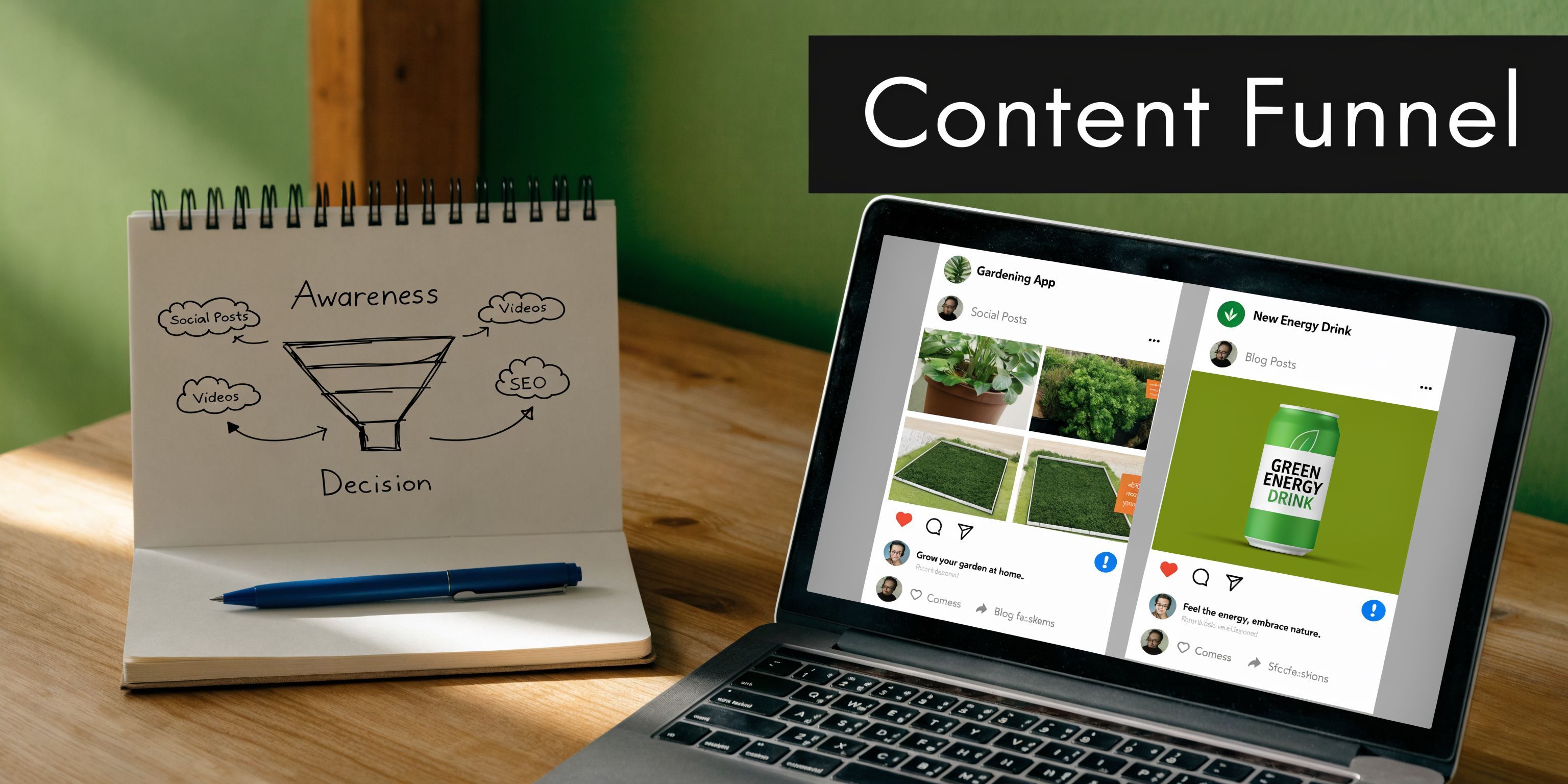
Top of funnel attracts the right strangers
Top-of-funnel content earns attention. On social media, that usually means short-form video, strong hooks, simple ideas, and recognizable pain points.
This content should be easy to consume and easy to share. It should also qualify the audience. A generic viral post can grow the wrong crowd. A focused top-of-funnel post grows people who might eventually buy.
For a fitness coach, top-of-funnel might be:
- Quick routine clips: A short workout people can save
- Myth-busting posts: A common nutrition mistake explained
- Pattern interrupts: A contrarian take on a familiar fitness belief
For a software creator, it might be a fast demo, a before-and-after workflow, or a "stop doing this manually" clip.
Middle of funnel builds trust and authority
Middle-of-funnel content explains, teaches, compares, or expands. It helps someone say, 'This person knows what they're doing. They understand my problem.' Many creators underinvest in this stage.
A good middle layer includes:
- Breakdowns: Explain how something works in more depth
- Process content: Show the method behind the result
- Comparisons: Help people evaluate options
- Stories: Share mistakes, lessons, or client patterns
If you need a simple way to map these stages into actual offers and follow-up, this sales funnel template is a useful reference point.
One practical way to produce this content faster is building simple explainers from scripts and prompts using tools like text to video workflows, especially when you're trying to keep educational content consistent across multiple channels.
Your middle layer doesn't need to be longer. It needs to be clearer.
Bottom of funnel asks for action
Bottom-of-funnel content converts. Make the offer specific here.
That could mean a direct pitch for coaching, a walkthrough of your digital product, a sponsor integration with a strong use case, or a social commerce post that answers the last buyer objection.
For the same fitness coach:
- Top: A short bodyweight workout clip that gets saves.
- Middle: A deeper explanation of why most meal plans fail.
- Bottom: A direct video inviting people into a coaching program, with clear outcomes, who it's for, and how to apply.
For a creator selling templates, the bottom layer might show the template in action. For an affiliate creator, it might compare two tools and make the recommendation explicit. For memberships, it might show what paying members get this month and who the membership is best for.
Build a weekly content mix instead of posting randomly
Most creators don't need more content. They need a balanced mix.
A simple weekly system might include:
- Awareness posts: Designed to reach new people
- Trust posts: Designed to deepen expertise and relevance
- Conversion posts: Designed to move someone to one clear next step
The key is matching each post to a single business goal. A post can be entertaining and educational, but from a monetization perspective it should still have one primary job.
Funnel mistakes that kill revenue
A few patterns show up again and again:
- Too much awareness content: Lots of reach, little buying intent
- No offer bridge: Good content that never points anywhere
- Weak bottom-of-funnel content: The creator feels awkward selling, so they stay vague
- Content mismatch: Trying to sell high-trust offers with low-trust content
The cleanest content funnels feel natural because each layer prepares the next. People discover you, learn from you, and then see a relevant offer that makes sense.
Setting Up Your Technical Monetization Stack
A monetization strategy doesn't become real until payment flows, links work, products are connected, and your social profiles point somewhere intentional.
This is the part creators avoid because it feels administrative. It's also the part that keeps revenue from leaking.

Commerce setup needs to be friction-light
Social commerce is too large to treat casually. As noted earlier, it's projected to reach $1 trillion globally by 2028, and short-form video is the primary ROI driver in that environment.
If you're selling products directly or helping brands sell products, reduce every unnecessary step between content and checkout.
Start with these basics:
- Platform storefronts: Activate TikTok Shop, Instagram Shopping, Facebook Marketplace, or other native commerce tools relevant to your channel.
- Product catalog hygiene: Make sure titles, images, variants, and fulfillment details are accurate before you push traffic.
- Link architecture: Put the right destination in bio links, story links, pinned posts, and product tags.
- Tracking: Use whatever reporting the platform gives you so you can see which formats and products convert.
A lot of creators lose sales because their content is good and their backend is sloppy. Broken product links, mismatched landing pages, and out-of-date storefronts kill intent fast.
Memberships and digital products need delivery, not just checkout
Selling access is different from selling an item. The transaction isn't enough. Delivery has to feel organized.
For memberships, paid communities, newsletters, or digital products, choose a platform that handles the basics cleanly. That usually includes payments, member access, content delivery, and some way to communicate with buyers outside a social app.
Think through the stack in order:
- Offer page: What is it, who is it for, and why now?
- Checkout: Keep the payment path simple.
- Access flow: What happens immediately after purchase?
- Retention touchpoints: How will members keep seeing value?
- Support: Where do questions go?
If a creator has to manually patch together every step, the business becomes hard to scale. Even a small setup should feel deliberate.
Affiliate systems depend on clean organization
Affiliate marketing looks simple because the front-end is simple. Behind the scenes, it gets messy fast if you don't organize.
Use a basic system for:
- Approved programs: Amazon Associates, software partner programs, creator marketplaces, or niche affiliate networks
- Link inventory: Keep one document or database with active links and notes
- Disclosure process: Make your affiliate relationships clear
- Content mapping: Match specific links to high-intent content rather than spraying them everywhere.
The creators who do this well treat affiliate links like product assets, not afterthoughts. They know which links belong in tutorials, comparison posts, email sequences, and pinned resources.
For creators producing ad-style social content or sponsored creative at scale, tools that speed up concepting and iteration can help. A resource like AI ad generator workflows is useful when you're building multiple ad variations or product-led videos.
Your analytics layer should answer business questions
Most creators spend too much time in vanity dashboards and not enough time checking revenue signals.
Your stack should make it easy to answer:
- Which content drives product clicks
- Which sponsors get engagement and buying intent
- Which affiliate posts lead to sales
- Which offers create repeat buyers or subscribers
- Which channels deserve more production time
A dashboard is only useful if it helps you decide what to make next.
A good walkthrough can help if you're wiring these systems together for the first time.
Build for simplicity first
Creators often overbuild. They add too many tools, too many links, too many offers, and too many automations before they have proof any of it matters.
Start smaller.
One clean offer with a functioning checkout beats five monetization ideas sitting in your notes app.
The stack should support your model, not distract from it. If you can't explain how money moves from content to account in a few sentences, simplify the system.
Pitching Brands and Securing Sponsorships
Brand deals don't start when a company emails you. They start when your content makes a commercial case for you.
The creators who land steady sponsorships usually do three things well. They pick a clear niche, make content that already looks sponsor-compatible, and present themselves like a business when they reach out.

Why smaller creators often win
A lot of creators wait too long to pitch because they think they're still "too small." That's often false.
Micro-influencers with 10,000 to 100,000 followers often see 5% to 10% engagement, compared with 1% to 2% for mega-influencers, according to CommuniPass on creator monetization mistakes. Brands care about that because engagement usually says more about audience trust than raw follower count.
If you're in that range, or even building toward it, your pitch shouldn't apologize for size. It should lead with relevance, consistency, and the kind of audience response you generate.
Build a media kit that answers buyer questions
A brand manager doesn't need a pretty PDF. They need clarity.
Include:
- Who you reach: Niche, audience interests, and platform mix
- What you make: Short-form video, tutorials, UGC-style ads, reviews, stories, or educational content
- What you've seen work: The content formats that get the strongest audience response
- Ways to work together: Sponsored posts, package options, licensing, whitelisting, or creator-for-hire content
- Contact details: Make it easy to move the conversation forward
Keep it brief. The job of the media kit is to start a sales conversation, not finish it.
A pitch that gets replies is specific
Bad pitches sound mass-sent. Good pitches make it obvious you understand the brand, the audience, and the content angle.
Here's a simple structure that works.
Hi [Name], I create [type of content] for [audience]. I've been following [Brand] and noticed a strong fit with the topics my audience already responds to, especially around [relevant product or problem].
I have a content idea that would show [product or use case] in a way that fits naturally with my existing format. I can share a few concepts if helpful.
If you're exploring creator partnerships, I'd be glad to send over my media kit and examples.
Best, [Name]
This works because it doesn't overtalk. It signals fit, offers a concrete angle, and makes the next step easy.
Show the brand the content before they buy it
One of the easiest ways to stand out is to mock up a sample. Not a full unpaid campaign. Just enough to reduce imagination.
That might be:
- A storyboard
- A rough script
- A thumbnail concept
- A short sample video in the brand's tone
For UGC-style opportunities, creators can also sharpen their pitch by studying examples of AI UGC ad workflows, especially when they need to present polished concept variations quickly.
Brands don't buy follower counts alone. They buy confidence that you can make content their customer will trust.
Negotiate like a partner, not a fan
The fastest way to weaken a sponsorship conversation is to sound grateful just to be included.
Stay collaborative, but stay commercial. Clarify deliverables, revisions, usage rights, posting windows, exclusivity, and whether the brand wants organic content, ad creative, or both. Those details shape the value of the deal.
If the first partnership goes well, look for continuity. Ongoing relationships usually beat one-off campaigns because the content gets better as both sides learn what works.
The strongest sponsorship businesses aren't built from random inbound. They're built from repeated proof in a clear niche.
Measure Scale and Diversify Your Revenue
A creator business gets stronger when you stop judging it by momentum and start judging it by signals.
Momentum is exciting. Signals are useful.
If you want to monetize social media for the long haul, track each revenue stream by the behavior that matters most. Affiliate content should be judged by clicks and sales behavior. Memberships should be judged by retention and participation. Sponsors should be judged by renewals, audience fit, and whether the content moved people.
Measure by stream, not by ego
A practical scorecard looks different for every business, but the logic is simple.
- Ad revenue: Which formats consistently earn and which ones waste production time
- Affiliate: Which posts create buying intent, not just curiosity
- Brand deals: Which categories lead to repeat partnerships
- Products and memberships: Which messages drive signups and which buyers stick around
- Social commerce: Which products, hooks, and demos move people to checkout
Keep this light. You don't need an enterprise dashboard. You need enough visibility to know what to repeat, improve, or drop.
Scaling is usually an operations problem
Most creators don't hit a ceiling because they run out of ideas. They hit a ceiling because production gets messy.
The answer isn't just "work harder." It's systematize what already works. Turn winning content into repeatable series. Build a publishing rhythm. Reuse strong hooks across channels. Create standard formats for sponsor integrations, affiliate reviews, and offer-driven posts.
That also means reinvesting in support. Sometimes that's editing help. Sometimes it's better organization. Sometimes it's a faster production workflow so you can publish more consistently without turning every video into a custom project.
Diversification is protection, not distraction
The most fragile creator businesses rely on one platform, one format, or one revenue source.
That's dangerous because platforms change. Policies change. Distribution shifts. And those changes can hit fast. 70% of creators report sudden revenue drops of more than 50% because of algorithm volatility, according to Entrepreneur's piece on relying on social media income.
That number should change how you operate.
Build assets you control:
- Email list: A direct line that doesn't depend on a feed
- Owned product pages: A place to send people regardless of platform changes
- Repurposable content library: So one idea can work across channels
- Multiple revenue streams: So one weak month doesn't break the business
The safest creator income isn't the one with the biggest month. It's the one that survives a bad platform decision.
Creators who last tend to do two things at once. They keep using social platforms for reach, and they keep moving attention into assets they own.
That's the durable play. Not one viral post. Not one brand deal. Not one platform payout. A portfolio.
If you want to build that portfolio without drowning in production work, ShortGenius (AI Video / AI Ad Generator) is built for exactly that problem. It helps creators and teams turn ideas into videos, ads, and multi-platform content faster, so you can spend less time assembling assets and more time testing offers, publishing consistently, and growing revenue streams that don't depend on luck.