Engagement on Facebook Posts: Benchmarks and Tactics

Boost engagement on Facebook posts with 2026 benchmarks, algorithm signals, and proven tactics for creators, social managers, and brands.
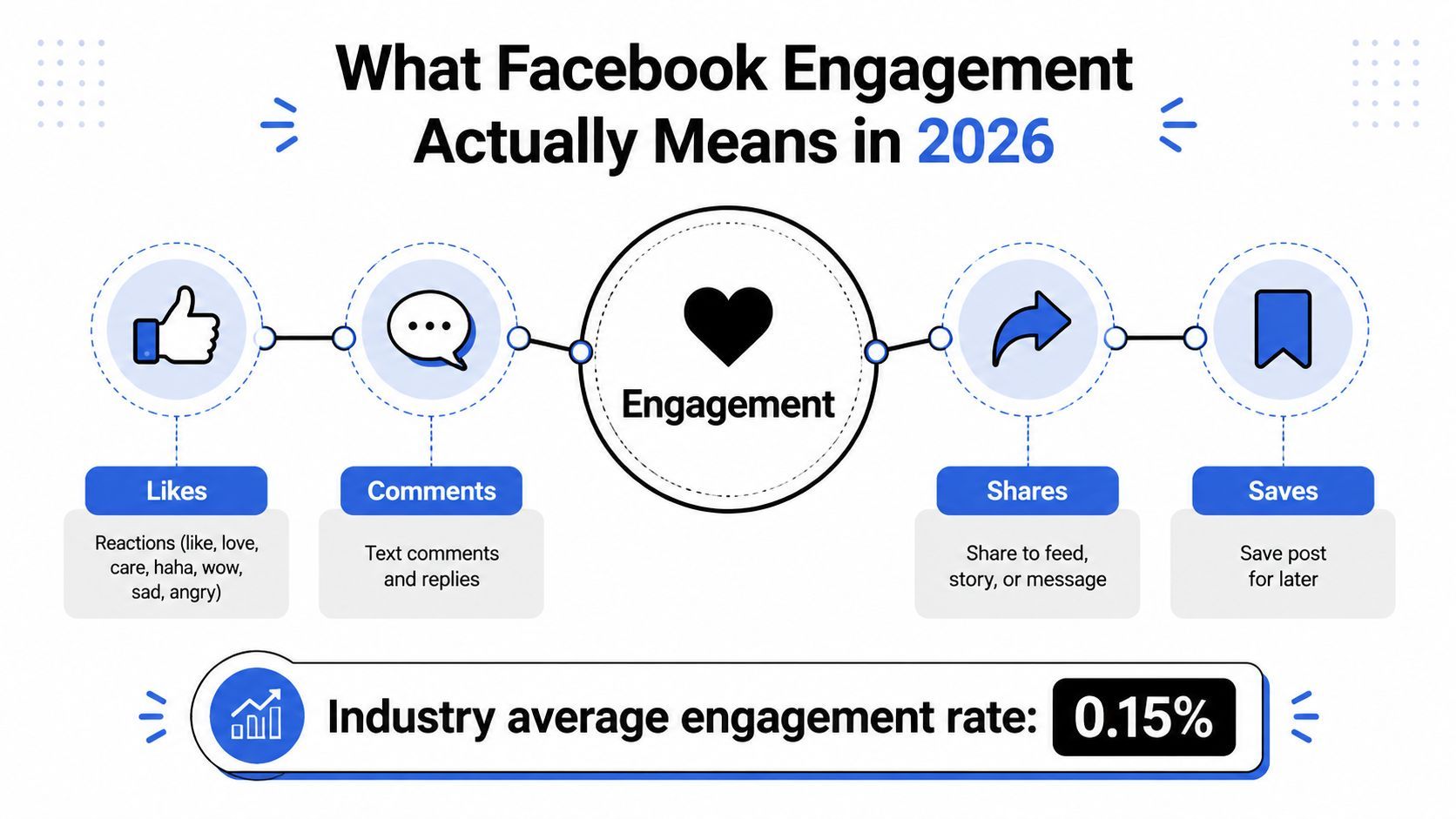
Facebook engagement averages just 0.15% in 2026, according to Socialinsider's Facebook benchmark analysis. That means engagement on Facebook posts is not a mass-audience game by default. Most pages earn interaction from a narrow slice of their audience, and the number you call “good” depends heavily on whether you divide interactions by fans, reach, or impressions.
That denominator changes the story. A post with a modest rate by reach can still generate substantial business value if it reaches people beyond your follower base, while a high rate by fans may only reflect a small, highly loyal audience. The practical answer isn't to chase one universal benchmark. Track the exposure base that matches your goal, then optimize for the signals that show genuine interest.
What Facebook Engagement Actually Means in 2026
Facebook defines engagement through actions people take on a post, including reactions, comments, shares, and clicks, as outlined in Meta's engagement definition. In reporting, separate saves, link clicks, and video views because each points to a different kind of interest. Reach and impressions are exposure metrics, not engagement metrics.
The denominator determines what “good” means. Engagement by fans divides interactions by the people who follow or like the page. It helps assess community loyalty and how effectively a page activates its existing audience. Engagement by reach divides interactions by everyone who saw the post, including non-followers reached through recommendations or sharing.
Engagement by impressions uses total displays. It helps evaluate repeated exposure, but it can lower the apparent rate when the same people see a post several times. These measures are not interchangeable. A fan-based rate answers a community question, while a reach-based rate shows how well content performed among the people it reached.
The raw count can change the interpretation. A post reaching 500,000 people with a 0.15% engagement rate by reach would produce 750 interactions, using the benchmark rate reported by Socialinsider's 2026 report. A 5% rate by fans on a post seen by only 200 followers would represent 10 interactions. The second percentage is higher, but the first post generated more activity and broader awareness.
Choose the denominator that matches the job
Use engagement by fans to measure community depth and loyalty. Use engagement by reach to evaluate discovery content, Reels, sharing, and distribution beyond the page.
A useful reporting sheet shows both. Record reactions, comments, shares, clicks, saves, and views separately, then connect each measure to its relevant exposure base. Do not compare a reach-based rate with a fan-based rate. They describe different performance conditions.
Practical rule: Report the rate, denominator, and raw interaction count together. A percentage without its exposure base is incomplete.
How the Facebook Algorithm Rewards Engagement Signals
Facebook ranking systems weigh positive and negative feedback when deciding which posts receive further distribution. Reactions, comments, and shares can support reach, while hides, unfollows, and snoozes can reduce future visibility, according to research on Facebook feed ranking.
The practical value of an action depends on both effort and intent. A like is easy to give. A comment adds conversation, while a share places the post in another person's network. Those actions usually offer stronger evidence that the content mattered. Saves and meaningful clicks can also signal intent, but review what follows, such as a completed visit, continued viewing, or another useful action.
Build for conversation, not empty activity
Posts earn better-quality interaction when they give people something specific to add. A product announcement can ask which feature customers want demonstrated next. A creator can show two editing approaches and ask viewers which one they would use and why. A local business can invite customers to share a practical recommendation instead of requesting a reaction.
Engagement bait serves a different purpose. Asking people to comment, tag, or share only to inflate a visible metric may produce shallow activity without building interest. Negative feedback matters too. If users hide, snooze, or unfollow after seeing a post, an early burst of clicks may not protect its later distribution.
Measure the rate against the audience that had an opportunity to respond. A high interaction rate among fans can reflect community loyalty, while a lower rate by reach may still accompany valuable discovery. The denominator changes what “good” means, so compare like with like and keep raw comments, shares, clicks, and negative feedback beside the rate.
Understand the feedback loop
Distribution and interaction can reinforce one another. A post that earns comments and shares may receive more feed opportunities, creating further chances for response. Negative feedback can restrict those opportunities, leaving the post with less room to recover.
Early community management helps, though no verified universal deadline or weighting formula applies to every page. Reply to useful comments, answer questions accurately, and keep the thread active while people are contributing. Avoid repetitive replies designed only to extend the comment count. Add information, ask a relevant follow-up, or move a support issue to the right channel.
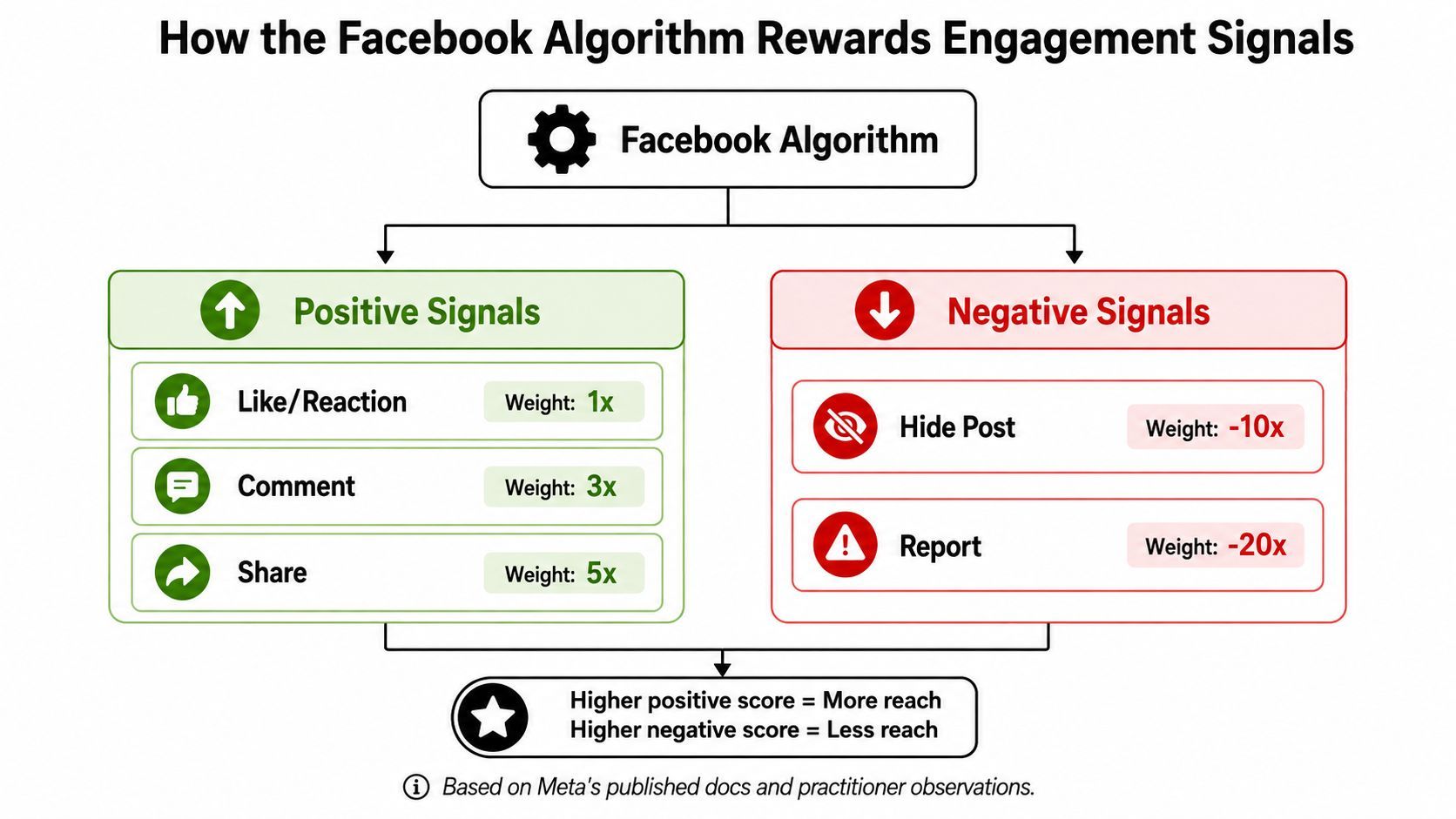
The operating principle is clear: optimize for discussion, sharing, and sustained attention, then monitor negative feedback alongside positive actions. Video views need the same discipline. A view can indicate attention, but it does not prove that the viewer understood, trusted, or shared the message. Pair views with comments, shares, clicks, and retention signals where available.
Realistic Engagement Benchmarks by Post Type
Benchmarks are useful only when the denominator stays consistent. The available 2026 data records 0.15% average Facebook engagement when reactions, comments, and shares are divided by fans, based on 25 million posts from 130,683 pages, according to Socialinsider's benchmark study. Its flat year-over-year result also makes it risky to compare a fan-based rate with a reach-based rate.
The figures below are engagement-by-fans benchmarks, not reach-based targets.
| Post type | Engagement by reach | Engagement by fans | Notes |
|---|---|---|---|
| Photo posts | Not provided | 0.09% | Higher than status and link posts in the cited 2024 benchmark set |
| Video posts | Not provided | 0.06% | Results vary widely by creative and viewing behavior |
| Status posts | Not provided | 0.04% | Text-only updates in the cited benchmark set |
| Link posts | Not provided | 0.02% | Often receive weaker organic interaction in the cited benchmark set |
| Reels | Not provided | 0.13% in Q2 2026 | Reported as the strongest format, despite a decline from 0.15% |
Source: Socialinsider's Facebook benchmarks.
Why format comparisons can mislead
A Reel may reach non-followers and collect passive views, while a link post may reach fewer people but produce valuable clicks from existing fans. A reach denominator can make the Reel look stronger. A fan denominator can favor the post that activates an established audience. Neither rate explains business value by itself.
Buffer's 2026 analysis reports a median Facebook engagement rate of about 5.6% in 2025, while Socialinsider reports 0.15% average engagement and a flat year-over-year result, as documented in Buffer's State of Social Media Engagement report. The difference reflects different formulas, populations, and denominators. Treat these figures as reference points, not interchangeable goals.
Set a primary measure for each format, then keep supporting signals visible:
- Reels: Track discovery, shares, meaningful comments, and follow-on actions. Views show distribution, not necessarily interest.
- Photos: Review saves, comments, and shares connected to the visual or message.
- Status updates: Assess the substance of replies, rather than reaction volume alone.
- Links: Separate outbound clicks from fan-based interaction and reach.
Your historical baseline is usually the clearest comparison. Compare the same format with the same denominator, and judge performance against the post's purpose. A post can have a modest fan-based rate while still generating the clicks, conversations, or shares that matter to the page.
Tactics That Drive Measurable Engagement Lifts
The most reliable improvements come from matching the creative format to the action you want. A video designed for discovery needs a clear opening and readable captions. A community post needs a prompt that invites a real answer. A link post needs enough context that people understand why leaving Facebook is worthwhile.
Make the first frame earn attention
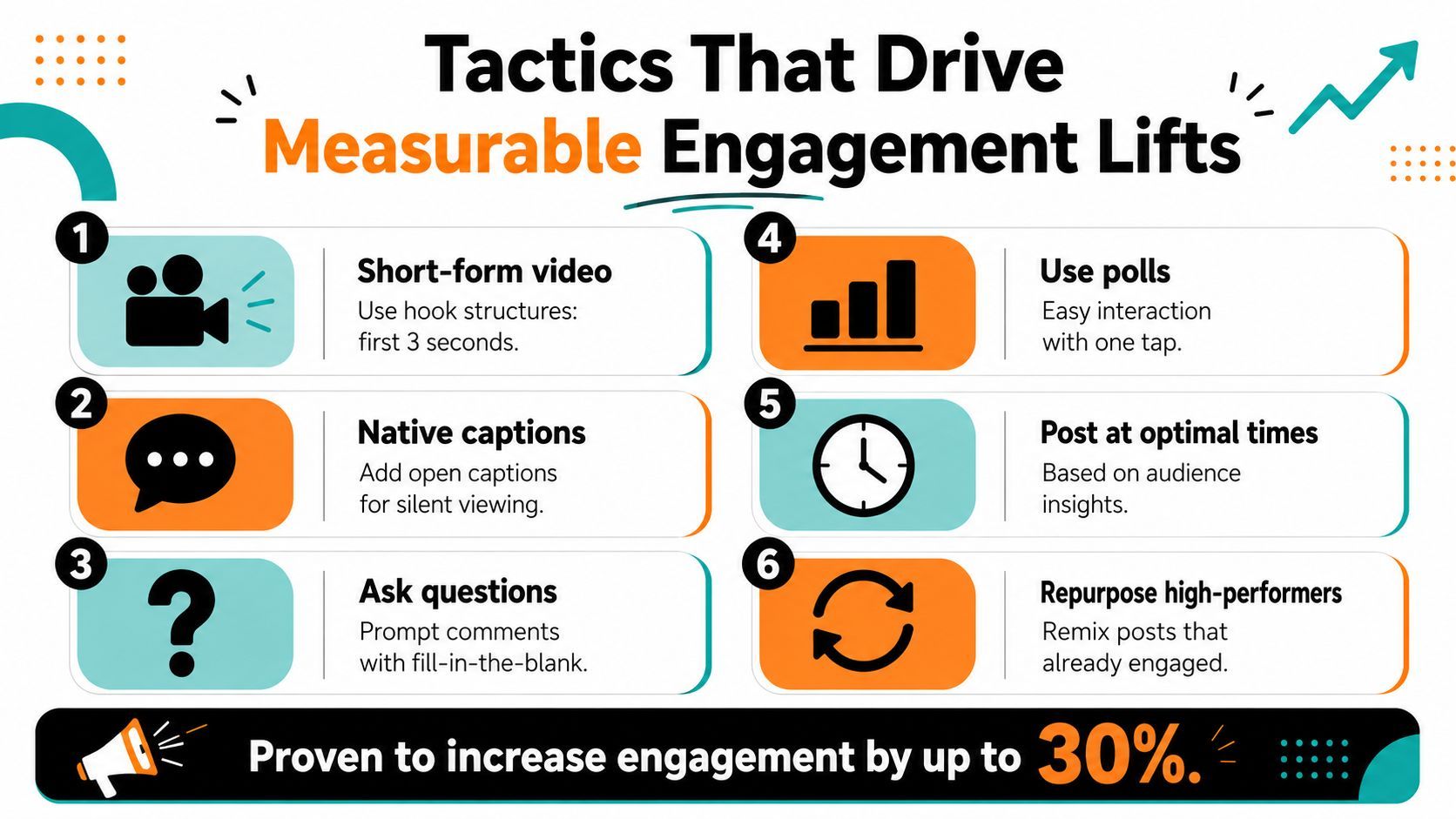
Open short-form video with the problem, result, or tension. Don't spend the opening on a logo animation or a long introduction. Use native uploads, clear on-screen captions, and a visual change that makes the subject understandable without sound.
For creators producing music-led content, a practical guide to viral Facebook video music can help with the production choices that affect whether a video feels native and watchable. Music should support the idea, not obscure the voiceover or make the first seconds difficult to follow.
Write captions that create a response
A useful caption often follows this pattern:
- State a specific observation or problem.
- Add a short explanation, example, or opinion.
- Ask one question that requires more than a reflexive “yes.”
- Reply to the strongest answers with information that extends the thread.
“Which option do you prefer?” is easy to ignore. “What would you change before using this workflow with a small team?” gives the reader a clearer reason to contribute. The latter can produce more useful comments, even if it attracts fewer total reactions.
Use calls to action without manufacturing activity
Ask for feedback when the feedback will influence something. Invite people to save a checklist they may need later, share a useful explanation, or comment with an experience related to the topic. Avoid prompts that make the action itself the content.
Better CTA: Ask for an opinion, example, correction, or next question. The interaction should have value even if nobody else sees it.
Treat cadence as a quality decision
More posts won't automatically create more engagement. Frequent publishing can split attention across several posts, while sparse publishing can make the page feel inactive. Start with a cadence your team can sustain, then compare posts using the same denominator and content category.
A brand workflow might batch several vertical videos around one customer problem, vary the opening and example, and schedule them across separate content windows. A creator might turn one tutorial into a Reel, a photo summary, and a question-led status post, then compare which version generates conversation rather than copying the same asset everywhere.
Use audience activity insights as a starting point, not a permanent rule. Timing matters because people need to be present to respond, but the creative promise still determines whether they stop, read, watch, or share.
Building a Testing and Scheduling Workflow
A useful testing workflow makes denominator choice explicit. Decide whether success will be measured against fans, reach, or impressions, then keep that denominator consistent within the comparison. A reach-based rate shows how many people who saw a post acted. A fan-based rate helps assess response from the page's potential audience, while impressions can reveal repeated exposure. None should be treated as interchangeable.
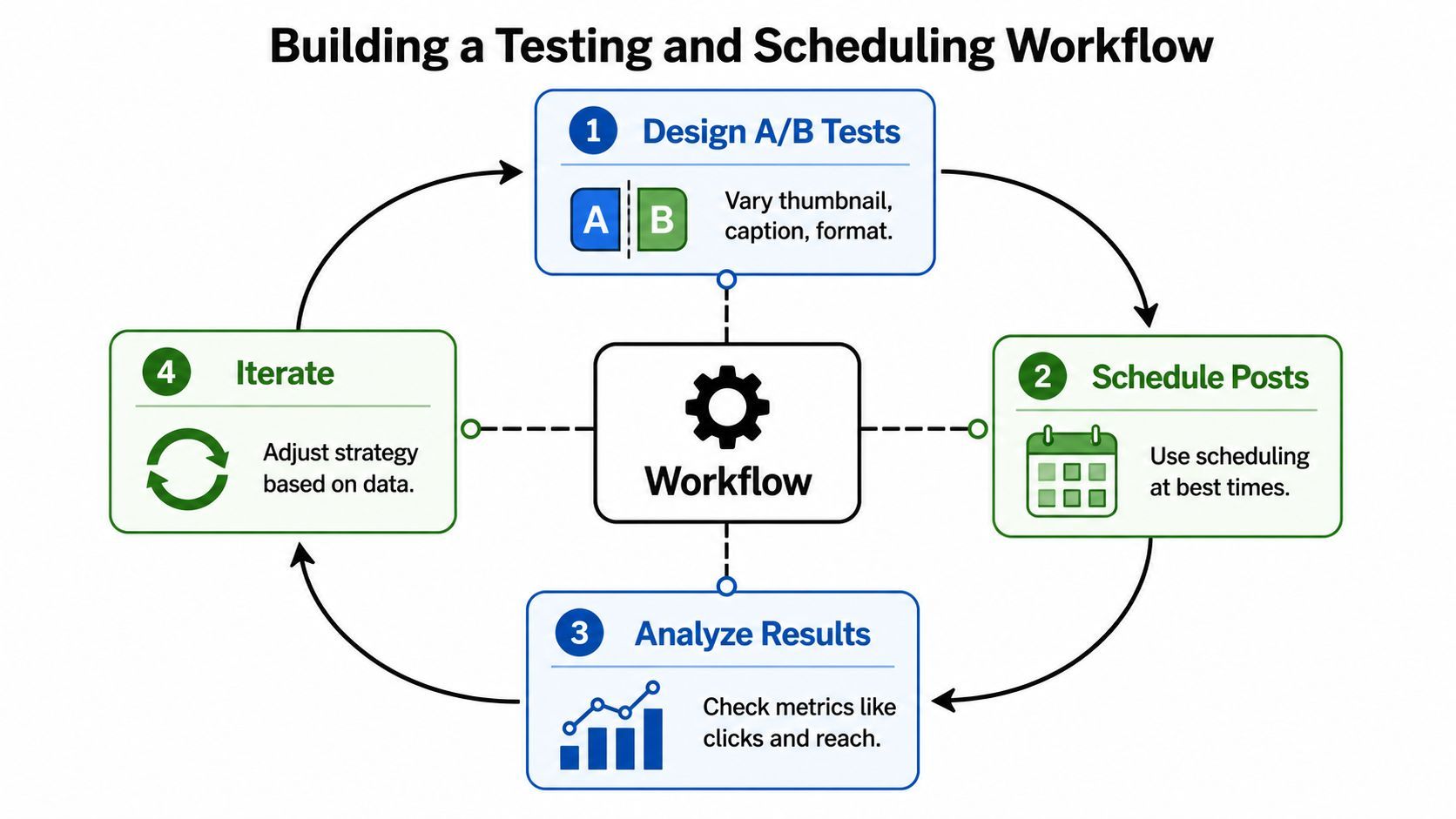
Test one major variable at a time, such as thumbnail style, caption length, opening line, format, posting window, or CTA. Keep the subject, audience, and measurement method similar enough for the result to mean something. Track reach, impressions, reactions, comments, shares, clicks, saves, and negative feedback, then connect each action to the post's purpose.
A practical monthly cycle
Week one: Establish the baseline. Export recent results, group posts by format and purpose, and identify the actions that matter to the business. Record both the rate and its denominator.
Week two: Test creative packaging. Keep the topic similar while changing the thumbnail or opening frame. Compare reach-based and fan-based results separately, since the same post can look strong under one denominator and ordinary under another.
Week three: Test the caption and CTA. Use a discussion prompt on one version and a save- or click-oriented prompt on another. Judge comments, saves, and clicks according to the intended action rather than forcing every post into one engagement score.
Week four: Review the pattern. Keep formats that repeatedly produce useful actions, revise weak concepts, and document the variable changed before starting the next cycle. Treat one unusual result as a signal to test again, not as a final answer.
Schedule evergreen content in Meta Business Suite or a tool your team already manages reliably. Native scheduling keeps publishing close to platform analytics. Third-party tools can help agencies coordinate several channels, though they add another system to maintain. Leave room for reactive posts, and separate similar content enough to avoid competing for the same audience attention.
Turn reporting into decisions
Review Insights on a fixed schedule. Pull the strongest and weakest posts, inspect the interaction mix, and ask what people did. Many reactions with no shares may indicate weak practical value. Comments with limited reach may point to packaging that needs improvement. A link post with strong clicks can support the business even when its public interaction rate appears modest.
Teams producing repeatable assets can evaluate ShortGenius as one workflow option for scriptwriting, video assembly, captions, resizing, brand assets, and scheduling. The tool matters less than recording the tested variable, chosen denominator, and observed outcome.
Common Engagement Misconceptions to Avoid
A large follower count does not guarantee a healthy engagement rate. Big pages often contain inactive followers, mixed interests, and people who rarely see or respond to a specific post. A smaller niche page can generate more useful discussion because its audience has a clearer reason to care. Measure the result against reach as well as fans, since the denominator changes what “good” looks like.
Likes are only one signal. Meta's documented engagement definition includes reactions, comments, shares, and clicks. Ranked research confirms that both positive and negative feedback signals influence distribution. A post with fewer reactions but strong comments and shares may support distribution and community more effectively than one covered in low-intent likes. Check impressions too, because high exposure with little action points to a different problem than limited exposure with strong response.
Cross-platform comparison creates another trap. Facebook, Instagram, TikTok, and LinkedIn expose content through different feed systems and encourage different behaviors. A rate that looks ordinary on Facebook may be healthy for your page, while a borrowed benchmark can push your team toward the wrong action.
Posting more can dilute attention. Several posts released close together may compete for the same audience, leaving each with fewer meaningful responses. Test cadence instead of assuming higher volume creates growth.
Engagement pods and comment-trading groups create activity without dependable audience value. Repetitive comments from people who are not interested can distort reporting and produce weak downstream behavior. Build interaction from relevance, not reciprocal obligation.
Your 30-Day Facebook Engagement Action Plan
Use the first week to audit. Export recent Facebook posts, separate reactions, comments, shares, clicks, saves, and views, then record both engagement by fans and engagement by reach where available. Mark the formats that generated discussion or sharing, not just the posts with the largest visible reaction count.
In week two, create controlled variations. Produce two short-form video openings, rewrite captions with clear questions, and test publishing windows suggested by your audience activity data. Keep the subject and audience reasonably consistent.
Week three is for focused comparison. Test thumbnail treatment, CTA type, and caption structure one variable at a time. Watch positive actions alongside hides, unfollows, and other negative feedback so you don't mistake a short burst of attention for durable performance.
In week four, turn the findings into a calendar. Keep the formats that repeatedly support your goal, retire weak patterns, and schedule a balanced mix of discovery, community, and conversion content.
Operating checklist
- Daily: Respond to useful comments, answer questions, and flag genuine support issues.
- Weekly: Review reach, impressions, clicks, comments, shares, and saves in Meta Business Suite.
- Monthly: Recalculate baselines with the same denominator and document the next test.
Sustainable engagement grows through consistent learning, not a single viral outlier.
ShortGenius (AI Video / AI Ad Generator) helps creators and teams produce scripts, videos, captions, resized assets, and Facebook-ready posts in one workflow. Use ShortGenius (AI Video / AI Ad Generator) to turn tested content ideas into repeatable video and ad production, then schedule the formats that earn meaningful engagement.