10 Best Hashtags for YouTube Shorts in 2026

Discover the 10 best hashtags for YouTube Shorts to boost views and engagement. Get niche-specific lists, strategies, and expert tips for 2026.
Are your YouTube Shorts getting ignored even when the opening is strong and the edit is sharp? In many cases, the problem is simple. The hashtags are too broad, too random, or doing the same job twice.
A lot of advice on the best hashtags for YouTube Shorts still pushes generic tag lists. That usually leads creators to paste in a stack of popular terms that add noise instead of context. On Shorts, I get better results with a tighter set, usually three to five hashtags, where each tag has a clear role in discovery, positioning, or audience fit. If you plan and batch Shorts with a YouTube Shorts workflow tool, that role-based approach is much easier to keep consistent across uploads.
This shifts the focus toward selecting a hashtag mix that helps YouTube and viewers understand the clip faster. A strong hashtag set can clarify format, narrow the topic, signal intent, and sometimes connect the Short to a specific creator or business audience.
That's the lens for this guide. These are 10 hashtag types with different jobs, not 10 tags to paste onto every post. Some help with broad discovery. Some work better for niche community building. Some are useful for creator-to-creator reach, trend timing, or B2B visibility. The value is in choosing the right combination for the goal of the specific Short, then matching the tags to what the video delivers.
1. #YouTubeShorts Core Discovery Hashtag
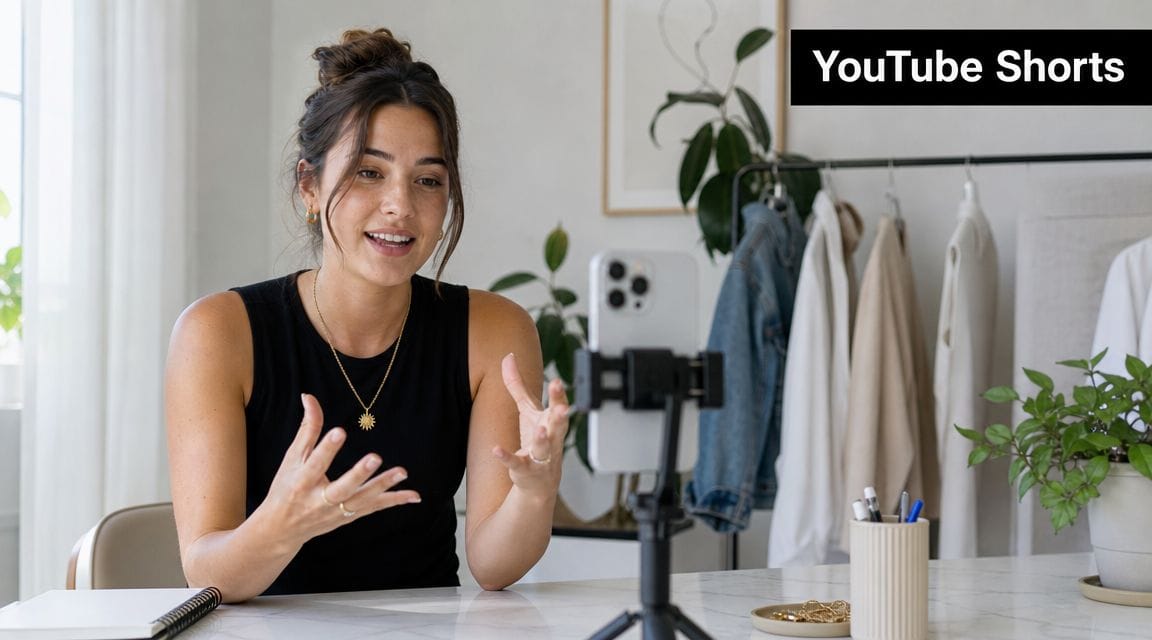
Want the clearest possible format signal for a Short that was made for YouTube from the start? Use #YouTubeShorts.
This tag helps with classification. It gives YouTube and viewers immediate context that the video is a Short built for this platform, not just a recycled vertical clip with random metadata attached. I use it when the goal is broad YouTube-native discovery, especially on explainers, commentary, mini tutorials, product demos, and trimmed highlights from long-form videos.
When it works best
#YouTubeShorts performs best as the anchor tag in a small, focused set. Its job is to label the format. The other tags should carry the topic and the audience intent.
A practical mix looks like this:
- Core format tag: #YouTubeShorts
- Topic tag: #TechShorts, #QuickRecipes, #BeautyTips
- Audience or use-case tag: #GadgetReviews, #MealPrep, #SkincareRoutine
That structure matters because broad reach without topic clarity usually pulls in weak impressions. You may get views, but not the right viewers, and retention suffers. A tighter set gives YouTube a better read on what the clip is about and who is likely to care.
Keep the set compact. One broad discovery tag plus two or three specific tags is usually enough. Once creators pile on generic terms, the description starts reading like a search grab bag instead of a clear relevance signal.
Practical rule: If every hashtag could fit on almost any Short, none of them are doing much work.
What doesn't work
#YouTubeShorts is not a shortcut to distribution. On its own, it says almost nothing about subject matter, buyer intent, or niche fit. Pairing it with filler tags like #viral, #fyp, #explore, and #trending usually weakens the setup unless the video is tied to a real trend and the content supports that angle.
There is also a trade-off here. This tag is strong for broad YouTube-native categorization, but weak for differentiation. If the clip targets a narrow audience, such as SaaS founders, home gym beginners, or DSLR filmmakers, the niche tag often does more of the discovery work.
Execution still decides whether the tag mix pays off. Teams using a YouTube Shorts creation workflow can keep naming, formatting, and testing more consistent across batches, which makes it easier to spot whether the hashtag set is helping or whether the creative itself needs work.
2. #Shorts Cross-Platform Short-Form Video Tag
#Shorts is the simplest format tag in the category, and that simplicity is the whole point. It's broad, familiar, and useful when you repurpose content across platforms or want a clean universal label.
Its strength is portability. If your team edits one vertical concept and adapts it for multiple channels, #Shorts keeps the metadata lightweight. That said, it's even broader than #YouTubeShorts, so it needs support from niche tags or the signal gets muddy fast.
Best use case
This tag works well for creators who batch-produce content. A fitness coach cutting the same routine for YouTube, Instagram Reels, and TikTok can keep #Shorts as the common denominator and swap in the niche tag set per platform and topic.
For example, a repurposed upload might use:
- Universal format tag: #Shorts
- Topic tag: #Fitness
- Specific angle: #HomeWorkout or another niche phrase your audience would search for
This is also where discipline matters. A practical benchmark from industry guides is to keep the set compact and relevance-weighted, usually 3 to 5 hashtags, while changing only 1 to 2 tags between uploads if you're testing performance in analytics (VEED's YouTube Shorts hashtag guidance).
The trade-off
#Shorts gives reach potential, but not much differentiation. It tells YouTube the format. It doesn't say much about the subject.
So if your content is in a crowded category like comedy, beauty, gaming, or productivity, #Shorts should almost never stand alone. You need narrower tags to define the lane. Otherwise you're joining a very broad conversation without telling the platform why your video belongs in a specific recommendation path.
3. #ShortFormVideo Content Format Identifier
This tag is useful when you're speaking to an audience that thinks in content formats, not just topics. Agencies, marketers, educators, and creator-tool audiences often understand “short-form video” as a category in itself.
That makes #ShortFormVideo stronger for industry-facing content than for entertainment content. If you're posting a cooking clip or a prank, it's probably too abstract. If you're showing how to script hooks, edit product demos, or structure educational content in under a minute, it fits much better.
Where this tag earns its spot
A social media manager posting a before-and-after edit breakdown can use #ShortFormVideo to frame the upload correctly. So can a coach explaining how to turn one webinar point into a punchy vertical clip. In those cases, the format is part of the value proposition.
Use it with:
- One format anchor: #ShortFormVideo
- One vertical tag: like #VideoMarketing or #ContentCreator
- One subject tag: something more specific to the clip itself
What I like about this tag is that it filters the audience a bit. You're less likely to attract random broad traffic and more likely to attract people who care about the craft or business of making Shorts.
The best hashtag is often the one that narrows the audience just enough to improve fit.
Where it falls flat
It's weak for highly emotional or entertainment-first clips. A comedy sketch, recipe reveal, or travel montage rarely benefits from describing itself as “short-form video.” The viewer cares about the joke, the meal, or the destination, not the format theory behind it.
So treat #ShortFormVideo as a framing tag for industry-aware viewers, not a universal add-on.
4. #ViralShorts Trending and Engagement-Focused Tag
Want more reach on a Short that already has strong share potential? #ViralShorts can help frame that intent, but only if the creative earns it.
This tag works best as an amplifier, not a rescue tool. I use it on clips with a sharp hook, a fast payoff, and a reason for someone to send it to another person right away. If the video is slow, overly niche, or built around context the viewer does not have yet, #ViralShorts usually adds noise instead of traction.

Use it for content with clear sharing energy
Strong fits include:
- Fast comedy: a joke that lands in the first few seconds
- Visual transformation: before-and-after edits, reveals, makeovers, repairs
- Timely reactions: commentary tied to a current trend people already recognize
- Repeatable concepts: challenge formats or opinions viewers want to respond to
The trade-off is competition. #ViralShorts sits in a crowded bucket, so it rarely does much by itself. Its real value comes from pairing broad energy with specific context. A creator posting a dramatic room makeover might combine #ViralShorts with tags tied to home decor, DIY, or small-space design. A marketer posting a surprising ad teardown might pair it with #VideoMarketing and a niche industry tag. That mix gives the algorithm more useful signals than "viral" alone.
How to decide if the tag fits
Ask a tougher question than "Do I want this to go viral?" Ask whether the clip creates an immediate reaction. Surprise, tension, debate, novelty, and strong visual contrast all increase the odds that the tag matches the content. If the Short teaches a narrow workflow, explains a tool, or depends on slow setup, a niche tag set usually performs better.
I also avoid using this tag on every upload. Overuse makes the labeling feel inflated, and viewers can sense that. Selective use keeps it believable.
Best way to test it
Run simple comparisons over several Shorts:
- Version A: one broad momentum tag like #ViralShorts plus 2 niche tags
- Version B: no viral tag, only format and niche tags
- Watch for: changes in audience fit, retention quality, comments, and whether the traffic looks broader but less relevant
Used well, #ViralShorts supports content that already has speed, emotion, or replay value. Used loosely, it becomes decoration.
5. #ContentCreator Creator Community Engagement Tag
This one is less about mass discovery and more about audience quality. #ContentCreator helps when you want to attract other creators, editors, marketers, freelancers, and people who care about process.
That's useful if you sell services, teach content strategy, recruit collaborators, or build authority in creator-adjacent niches. It's not usually the best tag for a consumer-facing entertainment Short. It's much stronger for behind-the-scenes clips, workflow demos, production tips, and creator commentary.
Strong scenarios for using it
A freelance editor breaking down caption choices. A social media manager explaining how they adapt one script into multiple vertical cuts. A creator showing the difference between a raw take and the final posted Short.
Those posts don't just need eyeballs. They need the right eyeballs.
A few formats that fit especially well:
- Behind-the-scenes process: scripting, editing, thumbnails, versioning
- Tool walkthroughs: how you speed up repetitive production tasks
- Opinion clips: what's working in Shorts right now for your niche
- Collab bait: content designed to attract peers, not just end viewers
Why it works
This tag acts like a filter. It tells the platform and the audience that the upload is about the work of creating, not only the finished entertainment product. That can lead to better comments, better DMs, and better partnership opportunities than a broader discovery tag would bring.
If you're trying to build a reputation instead of chase random reach, #ContentCreator is usually more valuable than a generic “viral” tag.
Use community hashtags when the comment section matters as much as the view count.
6. #VideoMarketing B2B and Brand-Focused Tag
If your Shorts support a business goal, not just channel growth, #VideoMarketing deserves a spot in the conversation. This is one of the better tags for agencies, SaaS teams, consultants, e-commerce brands, and in-house marketers posting educational or proof-driven clips.
It won't bring broad entertainment traffic. That's fine. The point is to attract viewers who understand the commercial use of video and may become leads, subscribers, or clients.
When brands should use it
This tag fits Shorts such as:
- Ad creative breakdowns: showing how a concept was structured
- Product demo clips: tight vertical explainers for a feature or use case
- Campaign commentary: analyzing why a creative angle works
- UGC-style brand content: examples that teach while selling
If you're building a business-focused channel, pair #VideoMarketing with a more specific industry or use-case tag rather than more broad hype tags. The audience quality is better, and the video promise is clearer.
For teams refining their production setup, the editing stack matters too. If you're evaluating workflows for client or brand content, this guide to choosing video editors for your channel is a useful complement to your hashtag strategy.
Common mistake
A lot of creators slap #VideoMarketing onto generic motivational content about “growing online.” That usually misses. The tag works best when the Short teaches, demonstrates, critiques, or documents actual video-led marketing work.
This is also where measurement matters more than vanity. If the tag brings fewer views but better business conversations, it's doing its job.
7. #AIGenerated Emerging Tech and Innovation Tag
AI-related tags work when AI is part of the story. That could mean the visuals were generated, the voiceover was synthetic, the script was AI-assisted, or the whole Short is a commentary on AI workflows.
The audience for #AIGenerated is curious, skeptical, and detail-oriented. They don't just want the output. They want to know how it was made and whether the use of AI added something worthwhile.
A benchmark from 2026 highlights how hashtag usage can be measured at scale. One ranked list reports that #Inspiration appeared in 164,945 clips out of 5.9 million analyzed, which is a useful reminder that tags live inside crowded ecosystems and should be chosen based on both relevance and observable performance, not hype alone (Marketing With Morgan's 2026 YouTube Shorts hashtag guide).
How to use it without sounding gimmicky
The best AI Shorts do one of three things:
- Show the workflow: input, output, and your edits after generation
- Compare methods: AI-assisted version versus manual version
- Teach judgment: when AI helps and when it makes the result worse
A weak use of #AIGenerated is a vague “look what AI made” post with no context. A strong use is a transparent breakdown that shows your creative decisions.
Here's a relevant example format to study:
Best pairing strategy
Pair #AIGenerated with one audience tag and one outcome tag. For example, a creator-tools Short might combine it with #ContentCreator or #VideoMarketing, depending on who the clip is for.
That matters because AI is still too broad on its own. The more clearly you define the use case, the better the tag performs.
8. #CreatorEconomy Monetization and Growth Tag
#CreatorEconomy is a smart tag when the Short talks about sustainable content businesses, not just content creation itself. It's more strategic than #ContentCreator and more commercial than a format tag.
Use it when your video touches monetization, sponsorship structure, audience ownership, content operations, creator tools, or how teams scale output without burning out.
What kind of content fits
This tag works for:
- Monetization explainers: sponsor-read structure, productized services, revenue mix
- Operational content: batching, workflows, asset reuse, team collaboration
- Platform commentary: how creators adapt to search, recommendations, and changing discovery
- Tool-led productivity Shorts: showing how one system supports consistent publishing
If you create content for people trying to turn a channel into a business, this tag can attract a more serious viewer than broader creator hashtags.
For example, a Short about production efficiency pairs well with resources on AI music for short videos, especially if your point is that better systems help creators publish more consistently without lowering quality.
The catch
This tag is too abstract for casual viewers. If the Short doesn't quickly anchor itself in a concrete pain point, the label won't do much. “Creator economy” is interesting to operators, founders, and serious creators. It's not a hook by itself.
So use it on advice with commercial or operational stakes, not generic “keep going” creator motivation.
9. #TrendingNow Timely and Algorithm-Responsive Tag
This is one of the easiest tags to misuse because creators often confuse “recent” with “relevant.” A clip isn't trending because you posted it today. It's trending when it connects to a live topic, format, sound, or conversation people are already engaging with.
That means #TrendingNow is a speed tag. It rewards creators who can identify a moving topic, produce a useful angle, and publish while the window is still open.
How to make this tag worth using
The strongest formula is simple:
- Spot the trend early: use YouTube search suggestions and creator research
- Add a niche angle: don't mimic the trend exactly
- Publish fast: the timing matters almost as much as the creative
Recent creator guidance increasingly frames hashtags as one signal among many, with more emphasis on trend research, freshness, and testing than on static hashtag lists. It also points to YouTube's autocomplete and search suggestions as practical inputs when choosing tags for Shorts (Vaizle's 2026 YouTube Shorts hashtag insights).
What smart creators do differently
They don't use #TrendingNow on evergreen videos. They use it on content that responds to a current hook, then support it with niche tags that define the topic.
A tech creator might react to a new device feature. A finance educator might comment on a policy headline. A beauty creator might jump on a fresh tutorial style making rounds that week. In each case, the trend tag only works because the niche context makes the video relevant.
If there's no timely angle, skip it. An irrelevant trend tag doesn't help classification. It just makes the metadata less trustworthy.
10. #MustWatch Quality and Value Indicator Tag
#MustWatch is a confidence tag. You're telling viewers this clip is worth stopping for. That can work, but only when the video earns the claim immediately.
I like this tag best for premium educational clips, sharp storytelling, visually strong edits, and high-signal content where the payoff is obvious within seconds. It's less effective on average promotional material or loosely edited commentary.

Good uses for #MustWatch
Think about:
- Condensed expert advice: one sharp insight delivered clearly
- Mini case breakdowns: a compelling lesson from a campaign, creator, or trend
- High-production Shorts: strong lighting, clean sound, deliberate pacing
- Unexpected value: a tip, reveal, or perspective the viewer didn't expect
This tag works best when it's rare. If every upload is labeled “must watch,” the tag loses meaning fast.
Reserve aspirational tags for your top-tier uploads. Scarcity makes the label believable.
When it backfires
It fails when the video opens slowly or overpromises. If the first seconds are weak, the hashtag makes the gap more obvious.
That's why I'd only use it when the content already has a strong hook, polished delivery, and a clear reward for staying to the end. In a practical hashtag stack, #MustWatch usually belongs as the fourth or fifth tag, never as the main discovery signal.
Top 10 YouTube Shorts Hashtags Comparison
| Tag | Complexity 🔄 (Implementation) | Resources ⚡ (Requirements) | Expected Outcomes ⭐📊 | Ideal Use Cases 💡 | Key Advantages 📊 |
|---|---|---|---|---|---|
| #YouTubeShorts - Core Discovery Hashtag | Low 🔄, include by default | Low ⚡, no extra tools | ⭐⭐⭐⭐, high algorithm visibility & reach | Every Shorts upload | Foundational for discovery, broad reach |
| #Shorts - Cross-Platform Short-Form Video Tag | Medium 🔄, adapt formats per platform | Medium ⚡, reposting/variants needed | ⭐⭐⭐, wide cross-platform reach | Repurposing content across YouTube/TikTok/Reels | Simplifies multi-platform strategy, broad audience |
| #ShortFormVideo - Content Format Identifier | Low–Medium 🔄, tag by format | Low ⚡, basic editing | ⭐⭐⭐, clearer algorithm categorization | Educational/tutorial/brand demos under 60s | Signals format to algorithms, consistent category fit |
| #ViralShorts - Trending & Engagement-Focused Tag | High 🔄, strategic timing & creative hooks | High ⚡, premium content & trends monitoring | ⭐⭐⭐⭐, potential viral lift (not guaranteed) | Best-performing, high-production pieces | Boosts engagement signals, increases chance of featured placement |
| #ContentCreator - Creator Community Engagement Tag | Medium 🔄, ongoing community engagement | Low–Medium ⚡, consistent participation | ⭐⭐⭐, networking and collaboration growth | Behind-the-scenes, tutorials, creator networking | Fosters collaborations, builds professional visibility |
| #VideoMarketing - B2B & Brand-Focused Tag | Medium–High 🔄, professional messaging needed | High ⚡, polished production and metrics | ⭐⭐⭐, targeted business leads, lower viral reach | Agencies, DTC, B2B campaigns and case studies | Reaches marketers/clients, supports conversions and brand positioning |
| #AIGenerated - Emerging Tech & Innovation Tag | Medium 🔄, technical setup + disclosure | Medium ⚡, AI tools and editing expertise | ⭐⭐⭐, growing interest, higher novelty appeal | Showcasing AI features, rapid production demos | Positions creator as innovator, taps fast-growing trend |
| #CreatorEconomy - Monetization & Growth Tag | Medium 🔄, requires credibility and data | Medium ⚡, case studies and analytics | ⭐⭐⭐, higher conversion and trust-building | Monetization strategies, growth tutorials | Attracts growth-focused creators, supports thought leadership |
| #TrendingNow - Timely & Algorithm-Responsive Tag | High 🔄, real-time monitoring & speed | Medium–High ⚡, rapid editing and posting | ⭐⭐⭐⭐, immediate algorithm boost if timely | Trend reactions, challenges, breaking cultural moments | Capitalizes on peak interest, high short-term engagement |
| #MustWatch - Quality & Value Indicator Tag | High 🔄, selective and reputation-dependent | High ⚡, exceptional production quality | ⭐⭐⭐⭐, strong retention and watch-time gains | Cinematic shorts, premium educational content | Signals excellence, improves retention and audience expectations |
Your Next Step: From Hashtags to a Cohesive Strategy
What happens when you stop copying giant hashtag lists and start assigning each tag a job?
Your Shorts strategy gets clearer fast. The strongest hashtag sets are usually small, specific, and tied to a real publishing goal. I treat hashtags as classification tools that help YouTube understand the video and help the right viewer recognize it at a glance.
That distinction matters because these 10 hashtag types are not interchangeable. #YouTubeShorts and #Shorts support broad discovery. #ContentCreator and #CreatorEconomy help with peer visibility and audience fit. #VideoMarketing can attract a business audience, but it can also reduce broad entertainment reach if the content feels too niche or too polished for casual viewers. Good hashtag strategy is always a trade-off between scale, relevance, and intent.
A practical setup looks like this:
- One format tag: #Shorts or #YouTubeShorts
- One topic tag: your niche, problem, or content category
- One audience or intent tag: who it is for, or why they should care
- One optional strategic tag: #VideoMarketing, #AIGenerated, #CreatorEconomy, #TrendingNow, or #MustWatch, only if the video genuinely fits
Use the mix that matches the goal of the post.
A creator chasing reach might pair a format tag with a timely tag like #TrendingNow. A niche educator might get better results from a narrower topic tag plus #MustWatch if the Short delivers strong value fast. A B2B team posting case studies or product education should choose tags their buyer already pays attention to, not generic creator tags that bring views without business intent.
Keep testing disciplined. Change one tag set at a time and review the result in YouTube Studio. Look for clearer differences in search traffic, suggested views, retention quality, and audience fit. A broad tag may increase impressions. A niche tag may lower reach but improve watch quality and conversions. Both outcomes can be useful if they match the job of the video.
If you want extra help shaping the wording before you publish, Outrank's keyword research platform can help validate topic phrasing, especially for B2B Shorts where slight wording changes often shift audience quality.
Hashtags help with discovery and context. They do not fix a weak opening, a confused topic, or a Short that takes too long to deliver the payoff.
The next step is building a repeatable system. Choose hashtags based on purpose. Format, topic, audience intent, then goal-specific support. Review performance. Keep what attracts the right viewer. Cut what only adds noise.
If you want to turn that process into a faster production workflow, ShortGenius (AI Video / AI Ad Generator) is built for teams and creators who need to test angles consistently. It handles scripting, visuals, voiceover, editing, and scheduling in one place, which makes it easier to publish with a clear strategy instead of guessing from one Short to the next.