10 Ad Creative Examples to Adapt, Analyze, and Reuse

Explore 10 standout ad creative examples with strategic analysis, reusable frameworks, and practical tips for creating high-performing campaigns.
The most popular advice about advertising says you should study great ads and borrow what made them famous. That's backwards. Copying the surface gives you someone else's product truth, audience, and budget. The useful part is underneath, the repeatable mechanism that turned an insight into a response.
Every strong example below works that way. One uses a dramatic demonstration to prove a claim. Another uses a blunt founder pitch to make a subscription model memorable. Others use a data reveal, a personal name, or a participation loop that turns customers into the distribution channel. You don't need their exact joke, set, or celebrity. You need the formula they used to earn attention and link it to a product.
That distinction matters commercially. Nielsen's summary of Project Apollo reported that 65% of a brand's sales lift from advertising came from the creative itself, rather than media exposure alone. Placement gives you a chance to be seen. Creative decides much of what that exposure accomplishes.
So read these ad creative examples as templates, not trophies. For each one, notice the audience insight, the creative mechanic, the strategic payoff, and the practical way to replicate it. If you want a contrasting business focused set, compare them with video ad examples with B2B metrics.
1. Blendtec 'Will It Blend?' Series
The set below captures the premise before you even press play.
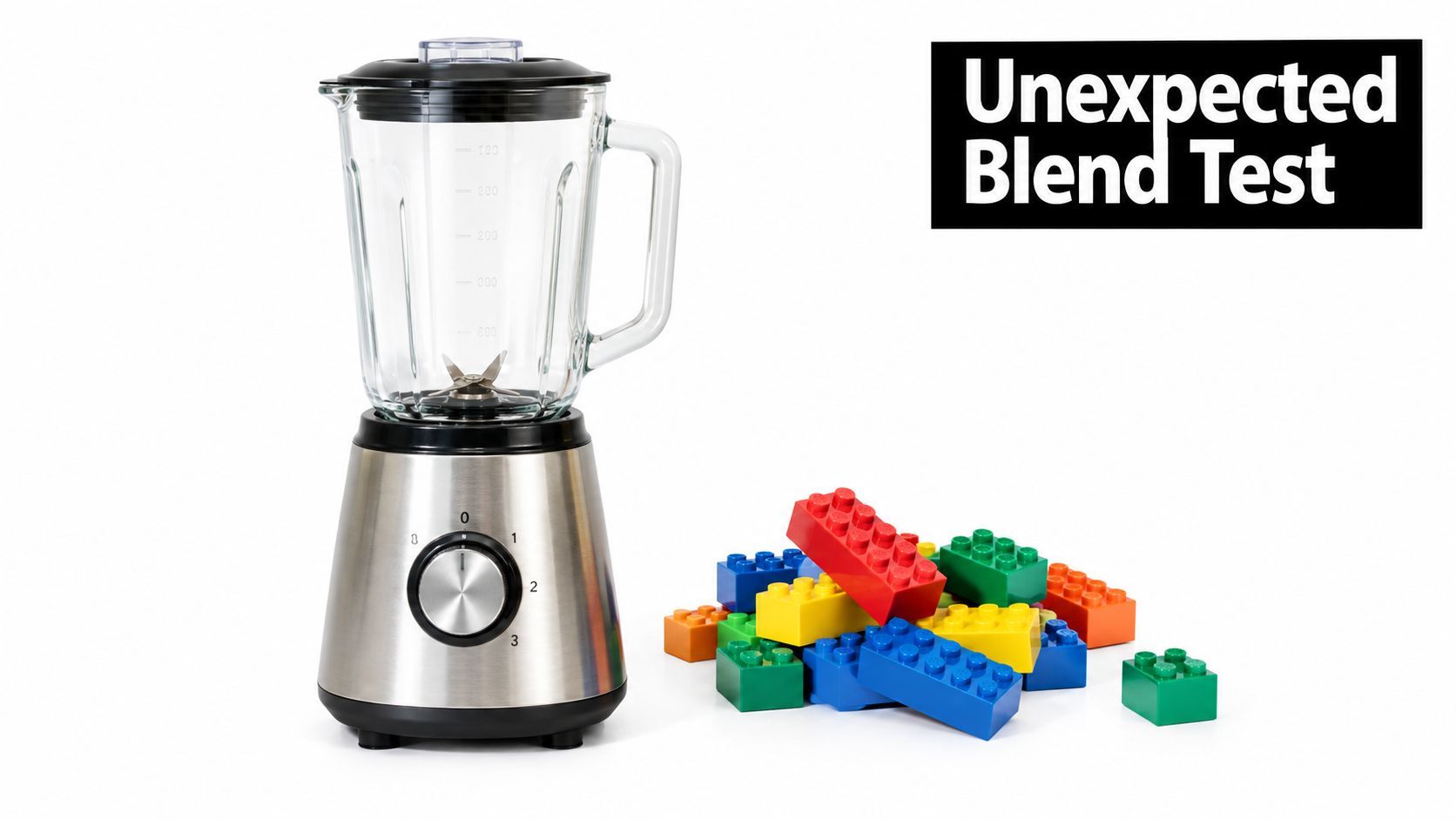
Insight. Shoppers don't believe power claims in a product description. They believe a test they can watch fail. Founder Tom Dickson turned that skepticism into a question, Will It Blend, then fed the machine marbles, golf balls, and an iPhone.
Creative mechanic. Each episode is a tiny experiment. It opens with the object and the question, runs the blender, then reveals the result. There's no discount pitch and almost no explanation needed. Entertainment carries the proof, and the product stays visible throughout.
Strategic payoff. Skin Grip offers a useful modern parallel in search, where Sponsored Products video produced a 3.7x higher CTR and a 15% higher conversion rate with flat ACOS. Different placement, same principle. Show use where people are comparing options, and connect the clip to a specific purchase destination.
The original episode format shows how little setup this mechanic needs.
How to Replicate It
- Build a numbered premise: Use one repeatable question, test, or transformation you can run weekly.
- Open with stakes: Show the object, problem, or challenge in the first seconds, not your logo.
- Organize as a series: Plan episode themes in ShortGenius and auto-schedule releases across platforms.
2. Dollar Shave Club 'Our Blades Are F***ing Great'
Michael Dubin walks through a warehouse, looks at the camera, and explains why razors shouldn't cost what they cost. That's nearly the whole ad. The restraint is the point.
The image below mirrors that direct, founder-led framing.
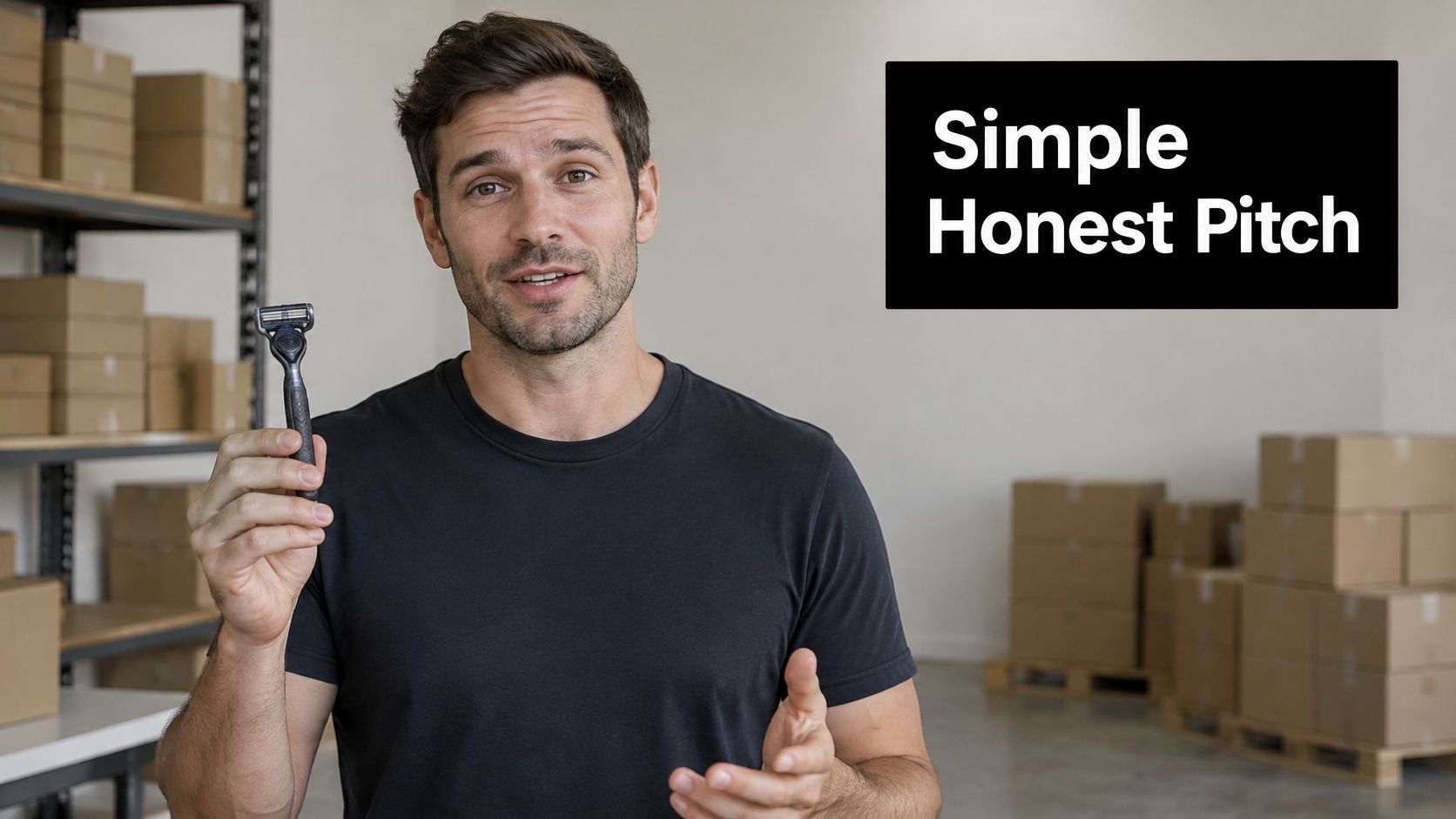
Insight. Men resented overpriced razors and complicated feature claims. Dollar Shave Club didn't need a better blade story. It needed a simpler buying story, delivered by someone who sounded tired of the category too.
Creative mechanic. The script stacks problem, price, subscription, proof, and call to action into a deadpan monologue. Jokes arrive after the value proposition is clear, so humor speeds comprehension instead of replacing it. The warehouse setting also signals low overhead without saying it.
Strategic payoff. A distinct voice makes a commodity easy to remember and easy to describe to a friend. Later campaigns kept that tone because the voice itself became a brand asset, separate from any single offer.
How to Replicate It
- Lead with price and pain: Put both in the first ten seconds.
- Use a real spokesperson: A founder or employee can build trust faster than a polished presenter.
- Test tone, not just copy: Generate humorous and straightforward versions with ShortGenius scriptwriting tools, then compare completion and click rates.
3. Old Spice 'The Man Your Man Could Smell Like'
Isaiah Mustafa starts in a shower, moves to a boat, then appears on a horse, all in one surreal, rapid monologue. Viewers remember the absurdity. The smarter move came after the spot aired.
The Mechanic Behind the Spectacle
Insight. Body wash was often bought by women for men, so the ad speaks to the buyer while making the user the joke and the aspiration. That double address is more replicable than the set pieces.
Creative mechanic. The original 2010 spot created a character with a fixed voice, confidence, and visual style. Old Spice then extended it into personalized response videos to social comments, published quickly while conversation was active. One hero asset became a responsive content system.
Strategic payoff. The brand didn't wait for sharing to happen on its own. It rewarded comments, created reasons to tag friends, and turned audience input into new media. The character supplied consistency, while each reply supplied novelty.
A launch ad should ship with its follow-up system already planned. If you can't answer comments in the same voice within hours, you're leaving attention unused.
How to Replicate It
- Design for clips: Shoot or generate scenes that can stand alone as short social cuts.
- Prebuild response templates: Prepare backgrounds, voice lines, and captions before launch.
- Resize with intent: Use ShortGenius scene swaps and resize tools for each aspect ratio, rather than cropping one master file.
4. Dove 'Real Beauty Sketches'
A forensic sketch artist draws a woman twice. First he uses her own description. Then he uses a stranger's description. The stranger's version looks warmer, brighter, and more open.
The simple portrait setup below reflects why the reveal feels personal rather than staged.

Insight. Many women describe themselves more harshly than others see them. Dove didn't state that as a slogan. It built an experiment viewers could watch and judge for themselves.
Creative mechanic. The two-sketch contrast gives emotion a visible structure. Tension builds during the descriptions, then the side by side reveal delivers the message without a lecture. Product claims stay in the background, while the brand claim becomes clearer.
Strategic payoff. Emotional intensity works when it stays attached to a belief and a next step. Zappi and VaynerMedia reported that ads in the top quartile for emotional connection generated nearly twice the immediate sales impact of ads near the average, at the 78th versus 41st percentile. Feeling alone isn't enough. The emotion needs a job, such as relief, confidence, or belonging.
How to Replicate It
- Test emotional intensity: Cut low, medium, and high versions, then measure recall and conversion.
- Use real participants: Keep consent, context, and editing honest.
- Caption for silent viewing: ShortGenius voiceover and caption tools help the reveal land across languages.
5. Share a Coke Personalization Campaign
Coca-Cola removed its own logo from the front of the bottle and replaced it with a first name. That small change turned a mass product into a gift, a search, and a photo prompt.
This exchange captures the social handoff the campaign was designed to create.
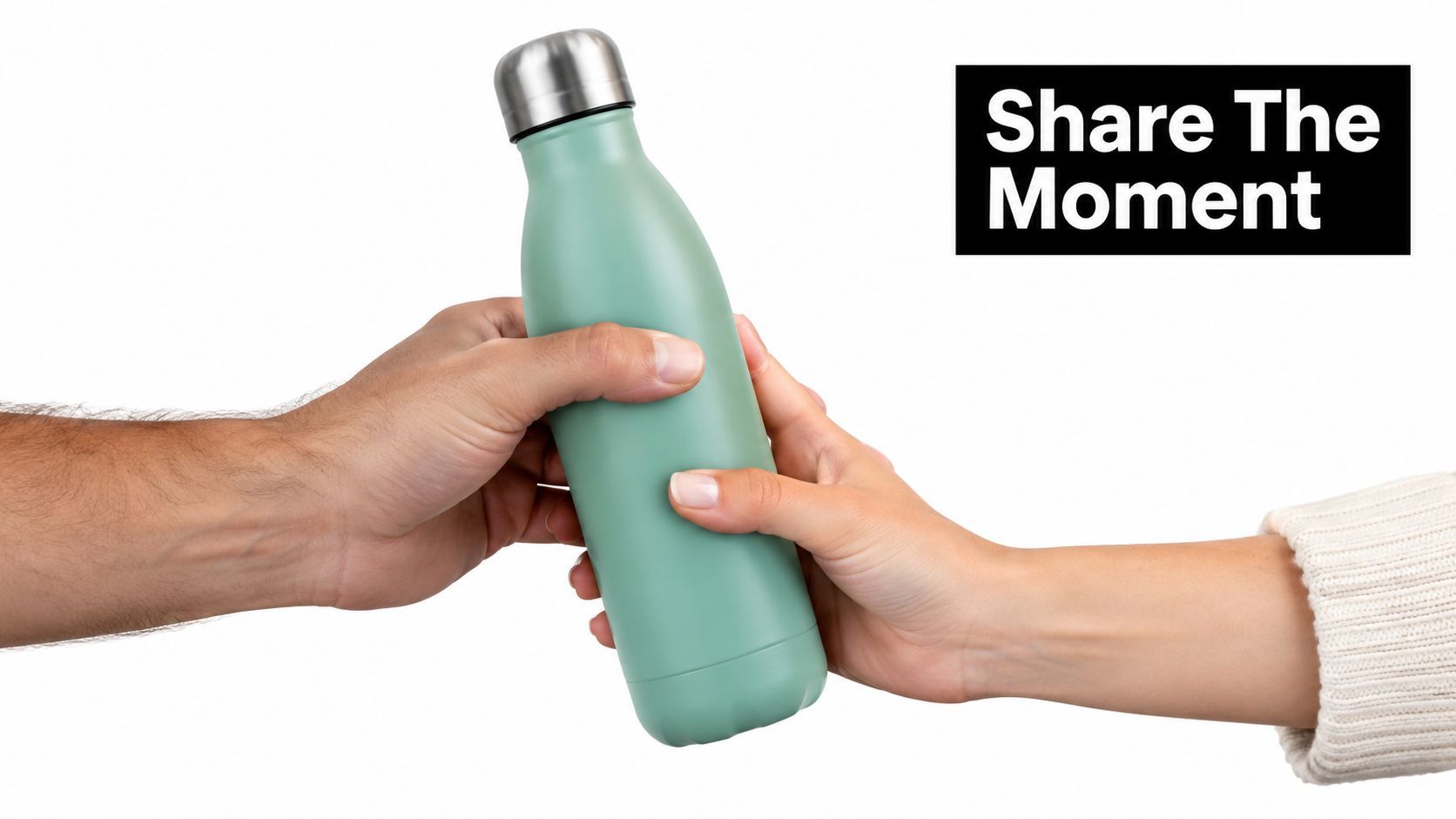
Insight. People share things that help them say something specific to another person. A generic soft drink doesn't do that. A bottle with your friend's name does.
Creative mechanic. The packaging became the ad. Customers hunted for names, photographed bottles, and created the distribution. Later versions used phrases and localized editions, which follows the same template plus variable structure used in many personalized ad creative examples.
Strategic payoff. Personalization lowered the effort required to participate. You didn't need to write a caption or invent a reason to post. The name supplied both.
How to Replicate It
- Choose one variable: Name, city, team, result, or milestone can drive a full set of variants.
- Write the share prompt: Tell people who to send it to and why.
- Batch the production: Use ShortGenius and its API workflow to generate personalized versions with localized captions and voiceovers.
6. Apple 'Shot on iPhone' Campaign
Apple could've listed camera specifications. Instead, it put customer photos on billboards and let the output make the argument.
Proof Without a Pitch
Insight. Buyers don't experience megapixels. They experience a photo of their kid, a trip, or a night street that looks good. Apple framed the camera through creative possibility, not technical comparison.
Creative mechanic. The ad and the proof are the same asset. A strong customer image demonstrates the product, signals who uses it, and invites the next customer to try to match it. Credit turns contributors into visible participants, which encourages more submissions.
Strategic payoff. Representation needs care when you scale this model. Northwestern Kellogg reported that depicting observable customer diversity increased perceptions that a brand was creative and offered greater product variety, and those perceptions improved brand impression and willingness to pay, use, and choose the brand. Diverse casting alone isn't the lesson. Involve represented communities in decisions, language, and context.
Practical rule: If customers make your proof, give them credit, clear rights terms, and a real say in how their work appears.
How to Replicate It
- Set rights first: Publish submission, licensing, and credit rules before collecting content.
- Feature varied creators: Show different places, ages, and use cases without flattening them into one look.
- Repurpose carefully: Turn approved stills into vertical videos with ShortGenius resize and caption tools.
7. Burger King 'Whopper Detour'
Burger King offered a one cent Whopper, but you could only access it in its app near a McDonald's. The targeting rule wasn't hidden behind the creative. It was the creative.
Insight. Rivalry creates attention, but people still need a simple reason to act now. A cheap burger supplied that reason. Location supplied the joke, the challenge, and the press hook.
Creative mechanic. Geofencing turned a competitor's store into a trigger. The user had to download the app, travel to the zone, activate the offer, then go to Burger King. Each step made the story easy to retell.
Strategic payoff. The campaign converted media attention into an owned channel, the app. That's stronger than a stunt that only earns impressions because the brand kept a direct relationship after the promotion ended.
How to Replicate It
- Pair targeting with a clear reward: The offer should be understandable in one sentence.
- Check legal boundaries: Review competitor claims, location rules, and promotion terms before launch.
- Explain fast: Use ShortGenius to make short teaser videos showing the steps, deadline, and redemption path.
- Keep the window compact: A limited run creates urgency and contains operational strain.
For a plainer product, your trigger could be weather, a store visit, a cart reminder, or a local event. The formula stays the same, context plus low friction reward.
8. Nike 'Dare to Dream Crazy' (Dream Crazy)
Colin Kaepernick narrates a story about athletes whose ambitions look unreasonable until they aren't. The product appears as part of a worldview, not as the hero of every frame.
Insight. Nike customers don't only buy shoes for function. They buy identification with ambition, risk, and persistence. The campaign made that identification explicit and accepted that clarity would divide opinion.
Creative mechanic. A steady voiceover links different athlete stories into one escalating argument. Short scenes create momentum, while the final message reframes sacrifice as proof of belief. Cutdowns can isolate one athlete without losing the core idea.
Strategic payoff. Values led creative can deepen loyalty among aligned audiences and sharpen brand memory. It can also damage trust if the public message doesn't match long term behavior. That risk is part of the strategy, not an afterthought.
How to Replicate It
- Audit alignment first: Only publish a stance your policies, partnerships, and customer experience can support.
- Plan sentiment monitoring: Track audience segments separately, not just total mentions.
- Make native cutdowns: Build short social edits around one story each.
- Adapt locally: Use ShortGenius voice and scene tools to adjust narration and imagery by region while keeping the central claim consistent.
Don't borrow the controversy. Borrow the discipline of choosing one belief and proving it through specific human stories.
9. Spotify Wrapped Personalized Ads
Wrapped works because the audience creates the distribution. Spotify converts private listening records into a shareable identity statement, and every screenshot carries the brand for free.
Insight. People share data when it says something about who they are. Top artists, genres, and listening minutes are ordinary account records until design turns them into a story worth posting. The user does the media buying.
Creative mechanic. The format combines personal data, sequence, and reveal. Each card raises a small question, then the next screen answers it. Vertical templates fit stories, and the annual schedule builds anticipation before launch day, so sharing spikes inside a predictable window.
Strategic payoff. Users become the channel because the asset flatters them, not because Spotify asks for promotion. For replication, this is one of the most transferable ad creative examples in this list: any product with progress, preferences, purchases, or milestones can run the same mechanism on its own data.
How to Replicate It
- Use data ethically: Only display information users expect, understand, and can choose to share.
- Design for screenshots: Keep one stat per frame, with brand cues that survive cropping.
- Create a seasonal ritual: Use ShortGenius templates and series scheduling through an AI ad production workflow to prepare recurring recap videos ahead of a fixed date.
- Add one surprise: A percentile, streak, or unexpected category gives people a caption without extra work.
Copy the mechanism, not the cards. Pick one dataset your users already recognize as theirs, give it a reveal sequence, and let identity do the distribution.
10. Coca-Cola 'Holidays Are Coming' AI-Generated Ad
Coca-Cola's trucks, lights, and winter route are familiar enough that viewers can recognize the idea in seconds. The 2024 version recreated that world with generative AI, which made production method part of the public debate.
Insight. Holiday advertising sells continuity. Customers want the ritual to feel familiar, even when the tools behind it change. That makes heritage campaigns a hard test for AI because small visual or emotional misses feel larger.
Creative mechanic. AI generated rich seasonal imagery around an established brand memory. The strategic question isn't whether the output looked polished. It's whether the new asset performed like the original on attention, brand recall, and purchase response.
Strategic payoff. Dandy Blend shows a cleaner way to judge that question. Amazon Ads reported that AI creative generated 2,368 clicks at a 1.1% CTR versus 1,292 clicks at 0.6% for the original, while conversions rose from 481 to 1,055 and advertising cost of sale moved from 7.0% to 6.8%. Use controlled holdouts, not taste alone. If you're comparing formats, it also helps to find ad examples that convert in your own category.
How to Replicate It
- Generate, then review: Use AI for concepting and assets, with human checks for accuracy and tone.
- Apply a brand kit: Lock color, type, and logo rules across versions.
- Test both routes: Compare AI and traditional edits on the same placement and offer.
Top 10 Ad Creative Examples Compared
| Example | 🔄 Complexity & resource needs | ⚡ Production and distribution | 📊 Expected outcome | ⭐ Ideal use case | 💡 Key advantage |
|---|---|---|---|---|---|
| Blendtec “Will It Blend?” | Low–moderate; recurring product tests, host, and fresh ideas | Fast, repeatable short videos | Product awareness, shares, and recall | Visually demonstrable products | Memorable, repeatable product proof |
| Dollar Shave Club launch video | Low; simple set, presenter, and concise script | Fast to produce; direct-response distribution | Offer comprehension and sign-ups | DTC launches with a clear value proposition | Humor and founder presence make the pitch distinctive |
| Old Spice “The Man Your Man Could Smell Like” | High for real-time responses; talent, scripts, and coordination | Hero ad can be repurposed; rapid response content needs speed | Brand recall, engagement, and sharing | Brands with a strong character and social team | Extends one creative idea into interactive content |
| Dove “Real Beauty Sketches” | Moderate; participants, artist, and sensitive storytelling | Focused production with strong sharing potential | Emotional engagement and earned media | Purpose-led campaigns grounded in audience insight | Human stories connect the brand to a clear message |
| Share a Coke | High; personalization across production, retail, and digital | Scales through templates and localized versions | User-generated content and social sharing | Brands with broad audiences and personalization options | Turns a mass-market product into a personal prompt |
| Apple “Shot on iPhone” | Moderate–high; creator sourcing, licensing, and quality review | Ongoing content collection and cross-format reuse | Credibility and product capability awareness | Brands able to showcase customer-created work | Real user content demonstrates product results |
| Burger King “Whopper Detour” | High; app, geofencing, offer, and legal coordination | Fast, location-based activation with a campaign window | App downloads, conversions, and press attention | Brands with location data and a relevant mobile offer | Makes the targeting mechanic part of the creative |
| Nike “Dream Crazy” | High; premium production, talent, and brand alignment | Hero film supports shorter multi-platform edits | Cultural conversation and brand affinity | Brands prepared to take a values-led stance | Emotional storytelling can create broad discussion |
| Spotify Wrapped | High; first-party data, personalization, and privacy safeguards | Automated, recurring, share-friendly formats | Engagement and organic user sharing | Data-rich brands with recurring customer insights | Personalization motivates audiences to distribute the content |
| Coca-Cola “Holidays Are Coming” AI ad | Moderate–high; generative tools plus human, legal, and brand review | AI can speed iteration and localization | Brand recognition, with possible debate about authenticity | Brands testing AI for established campaign assets | Combines faster visual experimentation with a familiar theme |
Turn Inspiration Into a Repeatable Creative System
A gallery can make you faster only if you leave with a system. Otherwise, you'll save ten references, imitate the most recent one, and learn little from the result. Start by separating the mechanism from the surface.
First, extract the audience insight. Write it as a tension someone already feels. Blendtec used disbelief. Dove used the gap between self perception and outside perception. Spotify used identity. If your insight could describe everyone, it's probably too broad to guide a scene, script, or offer.
Second, name the creative mechanic. Call it demonstration, founder monologue, response loop, two version reveal, personalized template, customer proof, location trigger, manifesto, data recap, or AI heritage remake. A clear name helps your team produce variants without drifting into random ideas. It also keeps feedback focused on whether the mechanic works, not whether someone likes a color.
Third, choose the production shortcut. You may need a phone demonstration, a customer submission workflow, a set of name based templates, a voiceover, or generated backgrounds. Pick the shortcut that preserves the proof. Don't remove the expensive looking part if that part is what makes the claim believable.
Fourth, build platform specific variations. A search placement needs product clarity fast. A social feed needs a hook that survives silent autoplay. A story format needs one idea per frame. Resize, caption, and re-sequence for each placement rather than publishing one master edit everywhere.
Fifth, test one meaningful variable at a time. Change the hook, emotional intensity, demonstration object, data reveal, creator, or call to action. Keep audience, offer, and placement steady enough to interpret the result. Monash University's analysis of 312 television advertisements found that no single creative device explained much of an ad's short term, in market sales effectiveness on its own. Treat principles as starting points, then validate combinations in your market.
That portfolio mindset is where smaller teams can compete. You don't need a stadium shoot to test a demonstration against a founder pitch. You need clear concepts, tight scripts, and enough variants to find which combination fits a specific audience and decision stage. Teams refining paid social can also compare local execution notes, including Melbourne agency Facebook advertising insights, against their own placement data.
ShortGenius (AI Video / AI Ad Generator) can support that workflow by helping you script, generate, adapt, caption, resize, and schedule variations across channels. Use it to recreate the strategic structure behind strong ad creative examples, not to duplicate another brand's execution. The formula travels. The trust has to be earned by your own proof.
Turn one mechanism from this list into three testable variants today, with different hooks, scenes, and calls to action for each platform. ShortGenius (AI Video / AI Ad Generator) brings scriptwriting, video and image generation, voiceovers, captions, resizing, and scheduling into one workflow, so you can produce and publish those variants in minutes.