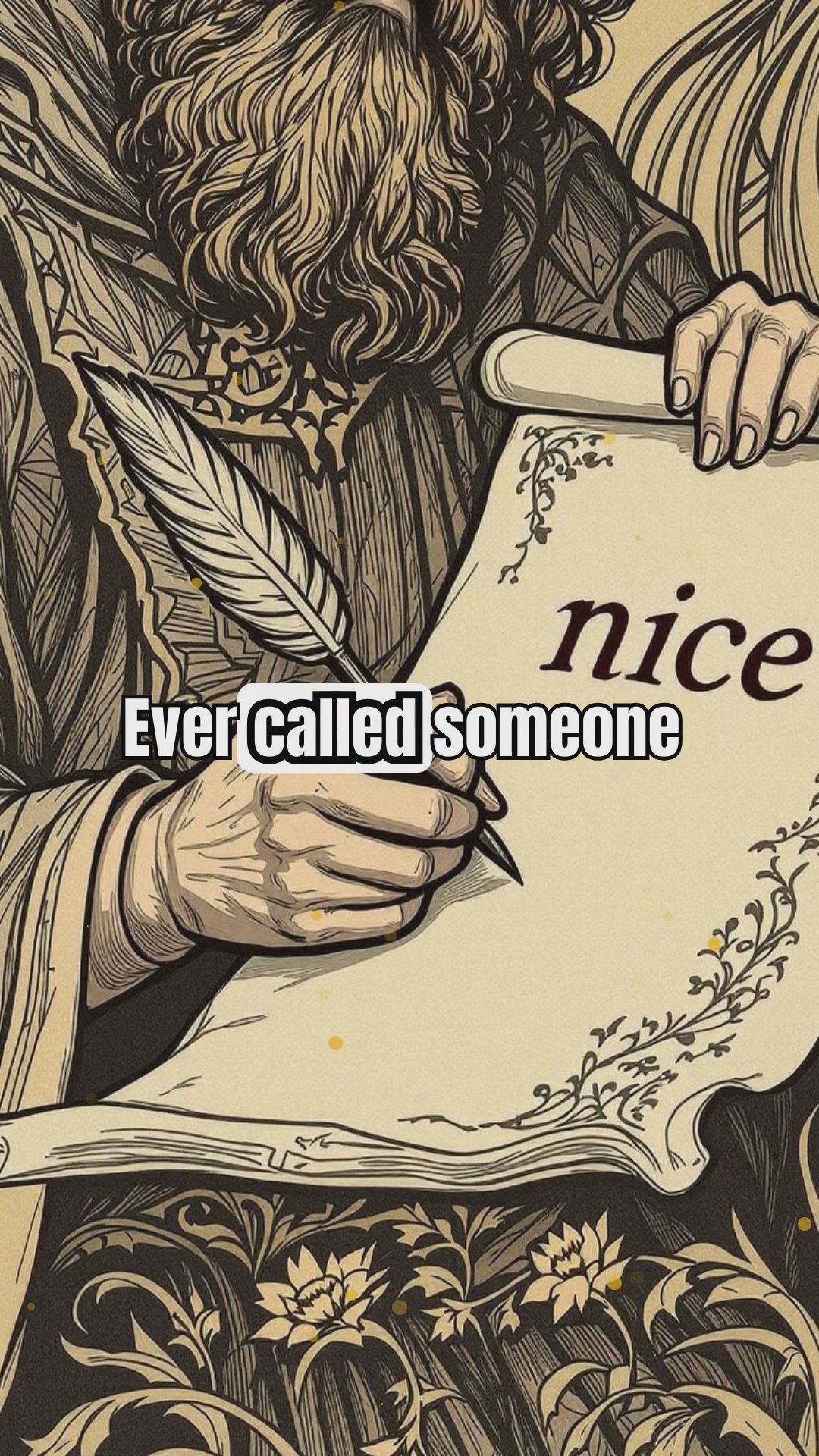
The Surprising Evolution of 'Tawdry' from Saintly Lace to Cheap Flash
Uncover the fascinating journey of the word 'tawdry,' starting with a 7th-century saint's elegant necklaces sold at lively fairs, and how it morphed into a term for all things gaudy and low-quality. This linguistic tale reveals how piety turned into parody through centuries of cultural shifts.
 View on YouTube
 View on TikTok
Create Your Own
Make AI-powered videos in minutes
Video Transcript
Full text from the video
Have you ever called something cheap and showy 'tawdry' without knowing why?
This word's origin is a wild ride through history, starting with a saint who inspired elegant accessories.
Today, it means flashy junk, but it began as something far more refined.
Let's dive into how a holy woman's legacy got twisted into a synonym for tacky.
It all kicks off in medieval England with Saint Audrey, whose story is anything but ordinary.
Saint Audrey, or Æthelthryth, was a real 7th-century Anglo-Saxon princess who became a nun and founded Ely Abbey.
She died of a throat tumor in 679, but her devotees remembered her for wearing fine lace neckerchiefs
to hide a neck swelling.
After her death, she was canonized, and her feast day on October 17 became a big deal.
Pilgrims flocked to Ely, turning her memory into a commercial phenomenon that would shape language forever.
By the Middle Ages, Saint Audrey's fair in Ely exploded in popularity.
Vendors sold 'Saint Audrey's laces' – beautiful silk necklaces and scarves honoring the saint's style.
These were high-quality items at first, symbols of devotion and fashion.
Pilgrims snapped them up as souvenirs, blending piety with prettiness.
But as fairs grew rowdier, the laces started changing, setting the stage for a linguistic shift that would
surprise etymologists centuries later.
Over time, 'Saint Audrey's lace' got shortened in speech to 'tawdry lace.' As mass production kicked in during
the Renaissance, these once-fine items became cheaper knockoffs.
Fairs turned into chaotic bazaars where quality dipped to meet demand.
What started as luxurious tributes devolved into gaudy trinkets, often overly decorated to attract buyers.
This transformation mirrored broader societal changes, where sacred symbols morphed into secular baubles through commerce and convenience.
By the 17th century, 'tawdry' had leaped from describing lace to anything ostentatious yet shoddy.
Writers like Shakespeare used it in plays to mock vain characters sporting fake finery.
The word captured the essence of superficial allure hiding poor craftsmanship.
This shift happened because those fair-bought laces became synonymous with fleeting trends and inferior goods, embedding 'tawdry' in
English as a clever put-down for the pretentiously cheap.
Interestingly, the word's evolution reflects how language adapts to cultural ironies.
Saint Audrey's pious image got commercialized, then cheapened, mirroring modern branding pitfalls.
Today, we use 'tawdry' for everything from sleazy decor to scandalous headlines, forgetting its saintly roots.
This etymological journey shows how words can flip meanings entirely, from veneration to disdain, all thanks to evolving
tastes and market forces over centuries.
So next time you spot something tawdry, remember Saint Audrey's legacy – a reminder that even holy origins
can lead to worldly mockery.
This word's story is a gem for language lovers, proving etymology hides surprises in everyday terms.
From medieval fairs to modern slang, 'tawdry' encapsulates history's playful twists.
Share this if you love word origins, and let's keep uncovering language's hidden paths together.
More from this creator
Other videos by @annehosaini