Why Is English Spelling So Weird?
Ever wondered why English spelling is so unpredictable? From silent letters to bizarre rules, English spelling is a puzzle even for native speakers. Let’s unravel the fascinating history behind this chaos, tracing invasions, printing presses, and quirky scholars. By the end, you’ll see why spelling ‘knight’ with a ‘k’ isn’t just random—it’s a story centuries in the making.
 View on YouTube
 View on TikTok
Create Your Own
Make AI-powered videos in minutes
Video Transcript
Full text from the video
Why does English spelling make so little sense?
The answer starts over a thousand years ago, when Old English was spoken.
Back then, words were spelled phonetically—what you heard is what you wrote.
But then, the Norman Conquest in 1066 brought French-speaking rulers, who introduced thousands of new words and their
own spelling habits.
Suddenly, English became a mashup of two languages, and the confusion began.
The French influence didn’t just add new words—it changed how old words were spelled.
For example, the Old English word ‘cwen’ became ‘queen’ under French influence.
Spelling started to reflect French conventions, not just English sounds.
This mix created inconsistencies, as some words kept their old forms while others changed.
The result?
A patchwork language where spelling rules were more like suggestions than laws.
Fast forward to the invention of the printing press in the 15th century.
Suddenly, books could be mass-produced, but printers came from different regions and had their own spelling preferences.
Some even added extra letters to justify lines or make words look more ‘learned.’ That’s why we have
silent letters like the ‘b’ in ‘doubt’—it was added to mimic the Latin word ‘dubitare,’ not because anyone
pronounced it.
The Renaissance brought a wave of scholars obsessed with Latin and Greek.
They ‘corrected’ English spellings to reflect these ancient roots, even when it made no sense phonetically.
That’s why ‘debt’ has a silent ‘b’—borrowed from Latin ‘debitum.’ These changes made English look more prestigious but
left us with spellings that don’t match how we speak.
The language became a museum of historical quirks.
Regional accents and dialects added even more chaos.
As English spread across the British Isles, people pronounced words differently, but there was no central authority to
standardize spelling.
So, the same word could be spelled multiple ways in different places.
Even Shakespeare spelled his own name several ways!
This lack of standardization meant that spelling was often a matter of personal or local preference.
When English crossed the Atlantic, American reformers like Noah Webster tried to simplify things.
He dropped unnecessary letters—‘colour’ became ‘color,’ ‘theatre’ became ‘theater.’ But not all his changes caught on, and British
English kept its own quirks.
The result?
Two major spelling systems, each with its own set of oddities.
English spelling became even more unpredictable, depending on which side of the ocean you’re on.
Today, English spelling is a living fossil, packed with silent letters, odd rules, and historical leftovers.
Spellcheck helps, but the real story is in the layers of history behind every word.
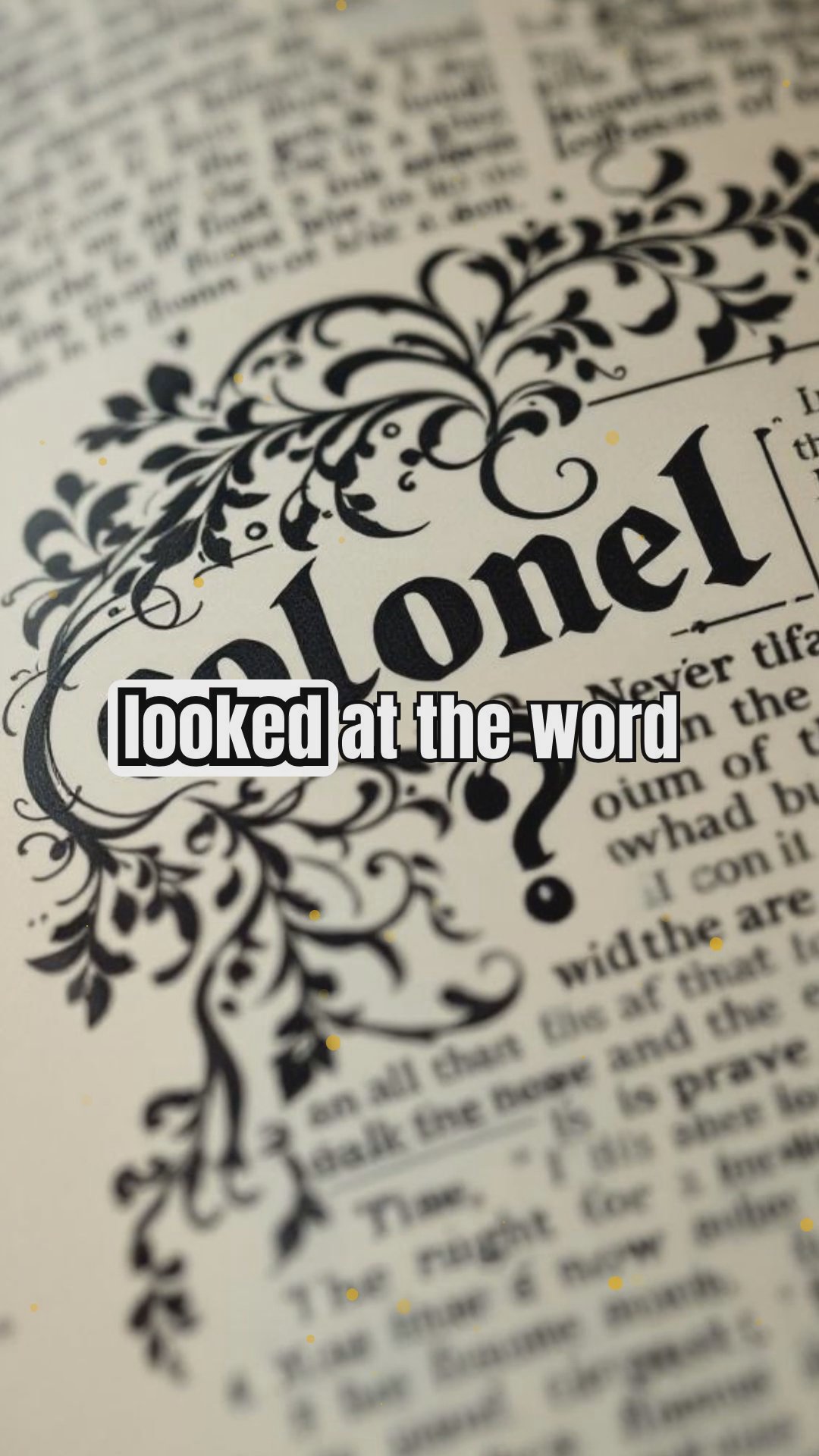
Next time you struggle with ‘knight’ or ‘colonel,’ remember: you’re not just spelling a word—you’re spelling out centuries
of invasions, inventions, and eccentric scholars.
That’s what makes English spelling so weird—and so fascinating.
More from this creator
Other videos by @annehosaini