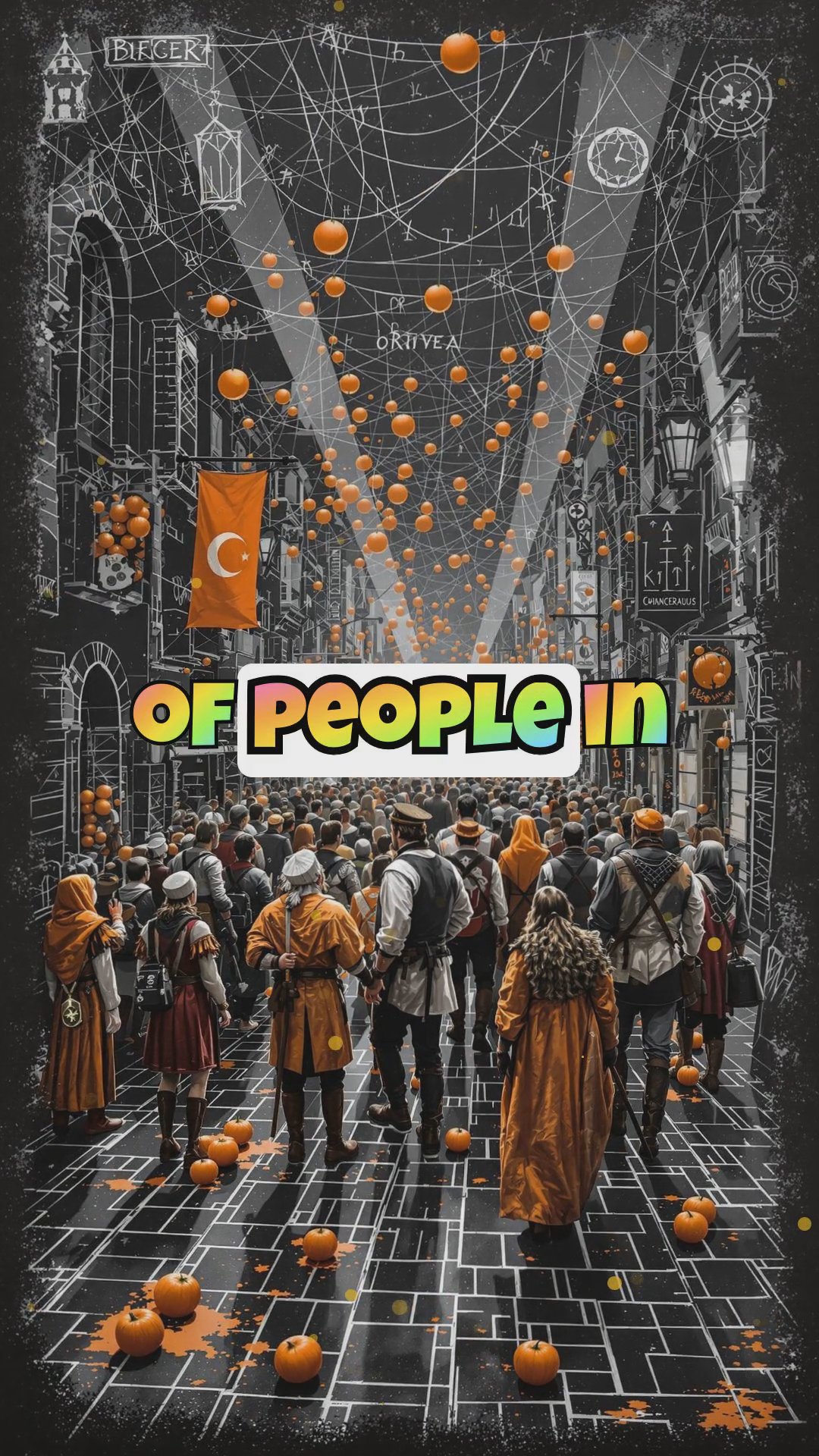
The Dancing Plague of 1518: When Dancing Became Deadly
In 1518, a bizarre and terrifying event unfolded in Strasbourg: people danced uncontrollably for days, some even to their deaths. What caused this strange phenomenon? Was it mass hysteria, a toxic reaction, or something more mysterious? Let's dive into one of history’s strangest medical mysteries—the Dancing Plague of 1518.
 View on YouTube
 View on TikTok
Create Your Own
Make AI-powered videos in minutes
Video Transcript
Full text from the video
It all started in July 1518 when a woman named Frau Troffea stepped into the streets of Strasbourg
and began dancing.
She didn’t stop.
Hours turned into days, and soon, others joined her.
Within a week, dozens were caught in the frenzy, moving uncontrollably as if possessed.
No one could explain it.
Was it a curse?
A disease?
The city watched in horror as the number of dancers grew, and exhaustion began to take its toll.
Authorities were baffled.
Physicians ruled out supernatural causes and declared it a ‘natural disease’ caused by overheated blood.
Their solution?
More dancing.
They built stages and hired musicians, hoping the afflicted would dance the sickness away.
But the plan backfired.
The dancing intensified, and more people succumbed to exhaustion, strokes, and heart attacks.
What was meant to cure them only fueled the madness, turning the city into a nightmarish dance floor
of suffering.
Historians have debated the cause for centuries.
Some believe it was mass hysteria, triggered by extreme stress and famine.
Others suggest ergot poisoning—hallucinogenic mold found in rye bread—caused uncontrollable movements.
But neither theory fully explains why people danced for weeks without stopping.
The event remains one of history’s strangest medical mysteries, defying easy explanation.
Whatever the cause, the Dancing Plague of 1518 left a haunting mark on Strasbourg’s history.
The plague eventually faded, but not before claiming lives.
As suddenly as it began, the dancing stopped.
Some were taken to a shrine in hopes of divine intervention, and the city slowly returned to normal.
But the mystery remained.
Why did it happen?
Could it happen again?
The Dancing Plague of 1518 stands as a chilling reminder of how the human mind and body can
be pushed to terrifying extremes under the right conditions.
Even today, mass psychogenic illnesses still occur, though rarely as extreme as the Dancing Plague.
From laughing epidemics to mysterious fainting spells, history is full of strange outbreaks where the mind influences the
body in bizarre ways.
Could modern stressors trigger something similar?
While we may never see another dancing plague, the mystery of 1518 reminds us that the human mind
is capable of astonishing—and sometimes terrifying—things.