What Makes a Viral Video and How to Create One

Discover what makes a viral video with this guide. We explore the psychology, strategies, and key elements that turn content into an internet sensation.
Let's be real: a viral video is never just a fluke. Behind every clip that explodes across the internet is a masterful blend of powerful emotion, perfect timing, and a genuine connection with its audience. The videos that spread like wildfire are the ones that hit you with a jolt—laughter, shock, inspiration, or intense curiosity—and make you need to share them right now.
The Hidden Blueprint of a Viral Video
Going viral isn't about catching lightning in a bottle. It's about understanding what makes people tick. Think of your video as a single spark and the online world as a vast, dry forest. If you create the right spark and release it at the right moment, you can ignite a massive blaze of shares, comments, and views. That initial spark is what we call a share trigger.
A share trigger is simply the hook—the emotional or psychological reason a video becomes impossible to ignore. It’s that moment you stop scrolling and your first thought is, "Oh, my friends have to see this." This isn't about jumping on the latest meme; it's about tapping into fundamental human drivers that never get old.
Core Elements of Virality
So, what are the ingredients for one of these shareable sparks? While the exact recipe can change, the key components are surprisingly consistent. At its core, a viral video has to connect with people on an emotional level, land at a time when they're ready to receive it, and feel authentic to the community it’s trying to reach.
This infographic lays out the essential pillars that hold up any viral success.
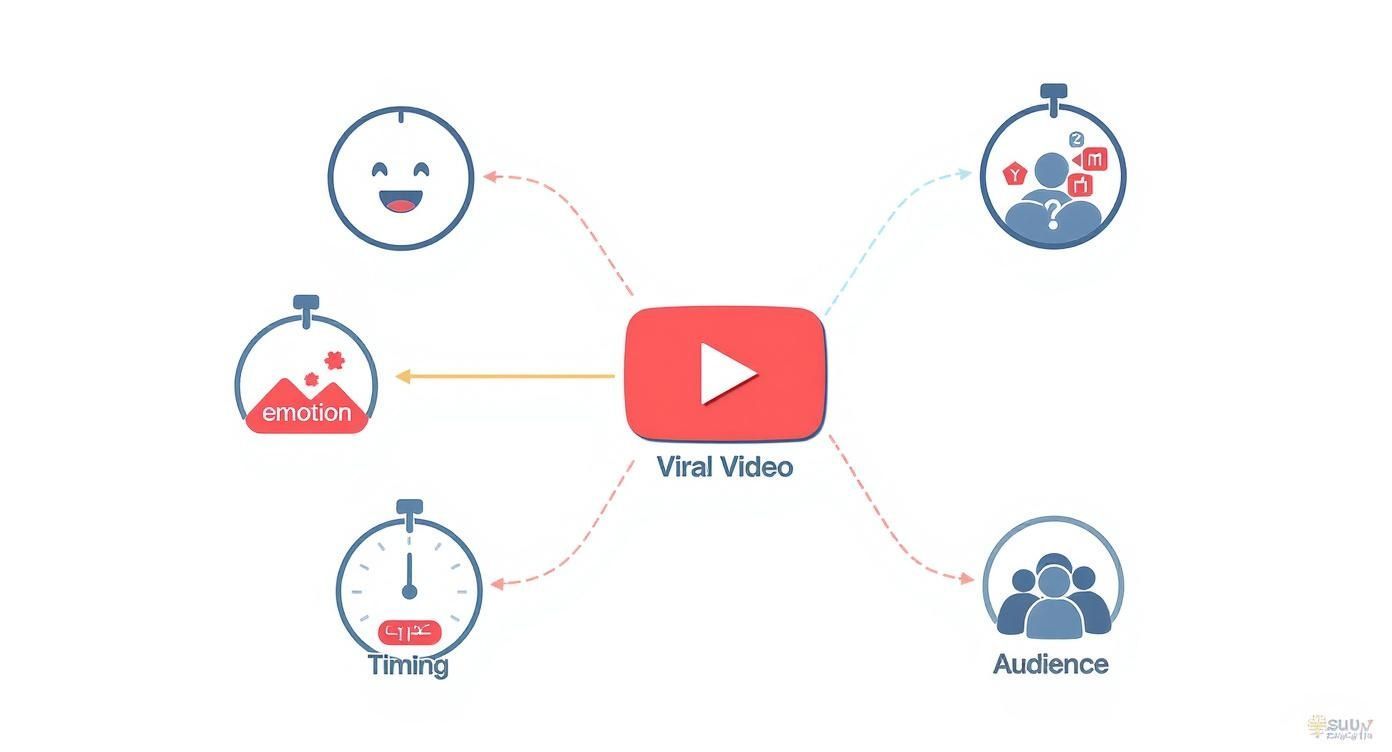
As you can see, emotion, timing, and audience aren't separate things; they're interconnected forces. The magic happens when you find the perfect balance between all three.
The most potent share trigger you have is emotion. It's not just a hunch; studies on content sharing have shown that videos evoking high-arousal emotions like awe, laughter, or even anger are 30% more likely to be shared than content that makes people feel low-arousal emotions like sadness.
This emotional punch is what gives a video its initial push. When viewers feel something intensely, they’re naturally driven to share that feeling with others. This creates a ripple effect that can quickly swell into a massive wave. To get a better grasp on making your content connect, it's worth exploring these 10 best practices for interactive video success for some deeper insights.
To simplify these concepts, the table below provides a quick snapshot of the foundational components we've just discussed. Think of it as a cheat sheet for the mechanics behind unforgettable content.
Core Components of a Viral Video
| Component | Description | Example |
|---|---|---|
| Emotional Impact | The video evokes a strong, high-arousal emotion that prompts an immediate reaction. | The "Double Rainbow" video's pure, unadulterated joy and awe. |
| Relatability | Viewers see themselves, their friends, or their experiences in the content. | A video showing the universal struggle of assembling IKEA furniture. |
| Timing & Relevance | The video taps into a current conversation, event, or cultural moment. | The "Corn Kid" interview, which perfectly captured a wholesome, joyful moment people were craving. |
| Audience Connection | The content feels authentic and speaks the language of a specific community or niche. | A hyper-specific gaming meme that only players of that game would understand and share. |
Each of these elements plays a critical role. While you might not nail all of them every time, understanding how they work together is the first step toward creating something truly shareable.
The Unseen Forces Driving People to Share

Ever wonder why you feel an almost magnetic pull to hit the “share” button on a video? It’s not random. It’s a powerful psychological response, and understanding what’s happening behind the scenes is crucial if you want to understand what makes a video go viral.
When we share a video, we're doing more than just passing along a link. We're saying something about ourselves. This is the core idea behind social currency. By sharing something hilarious, clever, or even exclusive, we’re trying to look good to our friends and followers.
Think about it. Passing on a witty clip makes you seem funnier. Sharing an insightful commentary makes you appear smarter. The video itself becomes a vehicle for boosting your own social standing.
The Power of Emotional Contagion
Beyond managing our own image, there's a simpler, more primal force at play: emotions are contagious. When a video hits you with a powerful jolt of joy, awe, or surprise, you instinctively want to spread that feeling. This is a phenomenon known as emotional contagion, and it’s like a wave that ripples across social networks.
A great video doesn’t just show an emotion; it transfers it. Viewers catch the feeling and feel compelled to pass it on, sparking a chain reaction. This is exactly why content that triggers intense, high-arousal emotions (like excitement or amusement) nearly always outperforms videos that make people feel more passive or sad.
For a video to have a real shot at virality, it needs to tap into one of these deep-seated psychological triggers:
- Surprise and Novelty: Our brains are wired to notice things that are new or unexpected. A video with a shocking plot twist or a never-before-seen skill is perfectly designed to cut through the digital noise and make people say, "You have to see this."
- Community and Belonging: Content that taps into a shared identity—an inside joke, a common struggle, a subculture reference—makes people feel seen. Sharing it becomes an act of solidarity, a way of saying, "I'm part of this group."
- Participation and Ownership: Modern platforms are built for interaction. Features like duets on TikTok, stitches, and challenges invite viewers to become part of the content. This gives them a personal stake in its success.
When a viewer feels like they are part of the story, they transition from a passive consumer to an active promoter. This sense of ownership is a massive catalyst for sharing.
Sparking Action Through Shared Identity
Ultimately, the videos we can’t help but share are the ones that make us feel connected. They connect us to the creator, and they connect us to each other. They validate something we believe, make us laugh at a universal truth, or show us something so mind-blowing that it feels wrong not to show other people.
Take a simple life-hack video, for instance. It doesn't just offer a useful tip; it builds a small community around a shared problem. People share it thinking, "My friends could use this," an act that strengthens their social bonds.
Getting a handle on these psychological triggers is what separates content that gets a few polite likes from a video people feel psychologically compelled to spread. You're no longer just making a clip; you're building a social object, engineered from the start to be passed along. This is a fundamental piece of the puzzle of what makes a viral video.
Creating for the Short-Form Video Revolution
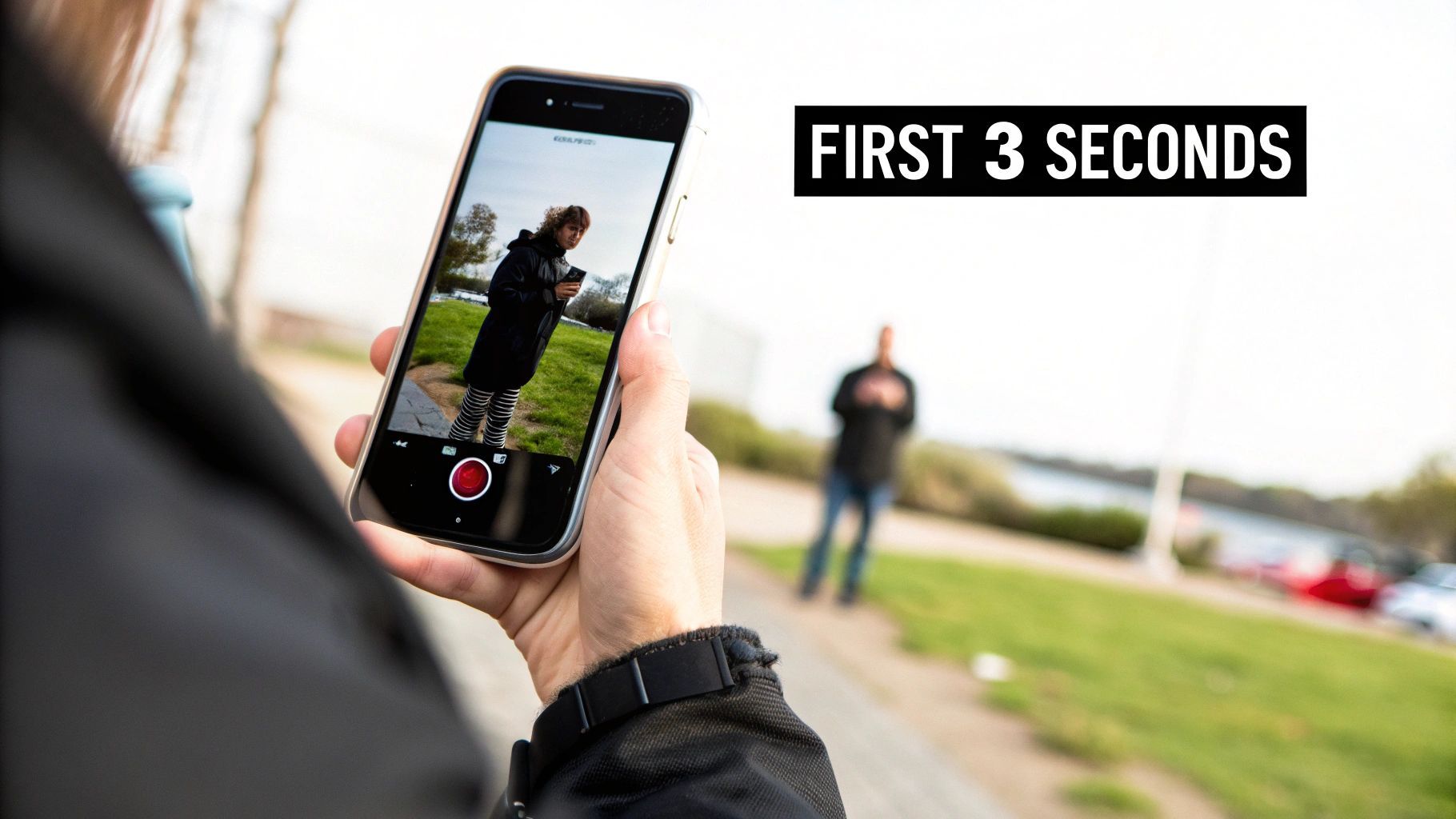
If you want to go viral today, your best bet is almost always a short, vertical video. Platforms like TikTok, Instagram Reels, and YouTube Shorts have completely rewired how we watch content. They’re built for our mobile-first lives and short attention spans. Forget long, winding intros—you have to make an impact immediately.
This isn’t just a passing fad; it’s a reflection of how people actually behave online. In 2025, the single biggest driver of virality is short-form video, with TikTok and YouTube Shorts leading the charge. TikTok alone has over 2 billion monthly active users, and 90% of consumers on these platforms watch short videos every single day.
The numbers don't lie. Data from 2025 shows that short-form videos get 2.5 times higher engagement rates than other formats. And when you go vertical—designing for a phone screen—you see a staggering 90% higher completion rate compared to horizontal videos.
Grabbing Attention in Three Seconds or Less
In an endless sea of scrolling, the first three seconds are your entire pitch. This is your "scroll stopper"—that hook, whether visual or audio, that makes someone's thumb freeze. If you can't spark curiosity in that tiny window, the viewer is already gone.
Think of it as the whole movie trailer boiled down into a single, captivating moment. Your opening needs to promise something good, whether that's a laugh, a mind-blowing fact, or just a visually stunning shot.
Here are a few proven ways to craft a hook that works:
- Start with the climax: Show the most exciting part first, and then rewind to explain how it happened.
- Use bold on-screen text: A big, punchy question or a statement like "You've been cleaning this all wrong" is an instant curiosity magnet.
- Lead with action: Kick things off with dynamic movement instead of a static shot of someone just talking to the camera.
A classic mistake is saving the punchline for the end. With short-form video, you have to lead with your best stuff to earn the viewer's attention for the rest of the clip.
Designing for a Mobile-First Experience
Making a viral short is more than just chopping up a longer video. It’s about creating something specifically for the platform, embracing all its quirks and features. That means fully leaning into the vertical format.
On-screen text and captions are non-negotiable now. So many people watch with the sound off, and clear, readable text makes sure your message gets across no matter what. Trending audio is another huge piece of the puzzle. Using a popular sound acts like a shortcut, telling the algorithm to show your video to a massive, built-in audience that already likes that type of content.
Creating this kind of video quickly and consistently can be tough. Learning how to unlock explosive growth by turning long videos into viral shorts with AI is a game-changer for anyone serious about winning in this space.
Tools like https://shortgenius.com can pull everything together, from writing the script and putting the video together to adding your branding and scheduling posts. This kind of unified workflow is essential for keeping up the pace.
At the end of the day, getting a handle on the short-form revolution is about delivering a powerful, concentrated dose of value or emotion, perfectly wrapped for a fast-scrolling, mobile world.
Why Real Beats Perfect: Forging Connections with Authenticity and Live Content
Let's face it: we're all a little tired of the perfectly curated, impossibly polished feeds we scroll through every day. There's a growing fatigue with content that feels manufactured, and it's created a huge opening for something much more powerful: authenticity. People are actively looking for genuine, unscripted moments that feel real, relatable, and trustworthy.
This is exactly why raw, behind-the-scenes glimpses or even slightly flawed videos often crush their high-budget, super-slick counterparts. When a creator is willing to be vulnerable, laugh at a mistake, or just act like a normal human being, they forge a much deeper connection. That trust is the bedrock of a loyal community—the kind of community that doesn't just watch, but actively engages and shares.
The Magic of Unscripted Moments
Authenticity has a way of completely disarming an audience. It instantly breaks down the wall between the creator and the viewer, transforming a broadcast into something that feels more like a conversation between friends.
This isn't an excuse to abandon quality, but it is a call to prioritize what's genuine. We don't just share videos; we share feelings. A raw, emotional reaction or a hilarious, spontaneous blunder is an incredibly potent, shareable moment that polished content can rarely manufacture.
Here’s why being real works so well:
- It Forges Trust: Genuine content feels honest. This makes people far more receptive to you and your message.
- It Boosts Relatability: Showing your imperfections makes you seem more human, and your experiences more universal. We've all been there.
- It Creates Unforgettable Moments: Spontaneous events are, by nature, surprising and unique. They stick in our minds and make us want to share them.
Tapping into the Immediacy of Live Video
Going live is perhaps the ultimate expression of this authentic connection. Live streaming on platforms like Twitch, YouTube, or Instagram creates an immediate sense of urgency and community. Viewers feel like they're part of an exclusive, unfolding event, and the unscripted nature of a live broadcast is authenticity in its purest form.
Live streams aren't just a broadcast; they're a shared experience. The real-time interaction, the potential for anything to happen, and the direct line to the creator foster a level of engagement that pre-recorded videos struggle to match.
This direct interaction is a massive catalyst for virality. The global live streaming market, valued at around $100 billion in 2024, is proof of this cultural shift. And it's not slowing down—that market is projected to explode to $345 billion by 2030. The data backs it up, too: live streams can generate up to 6 times more interactions than standard videos. For more on this trend, you can dig into the latest live streaming statistics.
The best part? The viral potential doesn't stop when the broadcast ends. The most memorable highlights, funny gaffes, or shocking moments from a live event are often clipped and shared, taking on a second life as standalone viral videos. This is a brilliant two-for-one strategy: you engage your core audience in the moment and simultaneously create a library of authentic content ready to reach the masses.
Turning Viral Success into a Marketing Strategy
Going viral doesn't have to be a lucky accident. For savvy brands and creators, it’s a calculated move designed to hit specific goals that go way beyond just racking up views. This is where the art of making a shareable video meets the science of smart marketing.
Instead of just crossing your fingers and hoping for a lucky break, this approach treats virality as an engine for real growth. The goal isn't just to get attention—it's to turn that attention into something tangible, like fresh leads, more sales, or a fiercely loyal community. That’s the difference between a one-hit wonder and a powerful marketing asset.
Think of it this way: your video is a tool, not just a piece of content. It could be a cleverly disguised explainer that solves a nagging problem for your audience, or it might be a user-generated content (UGC) campaign that invites people to become part of your brand's story.
Engineering Virality for Business Growth
To really make this work, you have to tie your creative ideas directly to your business goals. It's all about engineering content that not only strikes an emotional chord but also nudges viewers toward a specific action.
This strategic mindset is exactly why video has become so critical for businesses. It's expected that by 2025, a staggering 95% of brands will be using video in their marketing. The results are hard to argue with: 87% of marketers say video has directly helped them generate more leads, and another 87% confirm it has driven higher sales. You can dig into more of these video marketing statistics on Vidico.com.
Numbers like these explain why companies are putting their money where their mouth is. Marketers are now dedicating between 21% and 30% of their digital budgets to video, and for good reason—90% of them report a strong return on that investment.
The best viral marketing doesn't feel like an ad at all. It feels like a genuine, shareable moment. It entertains or helps first, and sells second.
Connecting Creative Concepts to Real-World Results
So, how do you actually connect a cool creative idea to measurable success? It all starts with being crystal clear about your goals and figuring out how a viral video can help you get there.
Here’s how you can align your content with common marketing objectives:
-
To Generate Leads: Create a "how-to" video that solves a massive pain point for your ideal customer. At the end, offer a call-to-action to download a more in-depth guide or sign up for a free webinar.
-
To Build Brand Awareness: Kick off a challenge or a hashtag campaign that gets people to create their own content. This turns your audience into brand advocates, spreading your message for you.
-
To Drive Sales: Film an entertaining product demo that shows off its value in a surprising or funny way. Make it so good that people share it just because they enjoyed watching it.
When you start thinking with this business-first mindset, you stop taking shots in the dark. Instead, you start building a reliable strategy for getting real, measurable results.
Answering Your Burning Questions About Going Viral
Even when you know the theory behind what makes a video pop, putting it all into practice can feel a little daunting. Let's tackle some of the most common questions that come up when you're on the ground, actually trying to create that next viral hit.
How Much of This Is Just Luck?
It’s easy to look at a viral video and chalk it all up to a lucky break. And sure, a little bit of right-place-right-time never hurts. But virality is almost never a complete accident.
Think of it this way: you can't control the cards you're dealt in poker, but a great player knows how to play any hand to maximize their chances. Making a viral video is a lot like that. You can’t force it, but you can dramatically stack the odds in your favor by deeply understanding your audience, creating something with genuine intention, and getting it in front of the right people.
Luck might be the spark that lights the fire, but a solid strategy is what provides the fuel. Consistently creating high-quality, emotionally intelligent content is what puts you in the game to get lucky.
What’s the Perfect Length for a Viral Video?
There's no magic number here, because the "right" length always comes down to the platform and the story you're telling. That said, the trend is impossible to ignore: short-form video is absolutely dominating right now.
On platforms like TikTok and Instagram Reels, the sweet spot is often under 30 seconds. In many cases, the top performers are just 7 to 15 seconds long. The game is won or lost in the first three seconds, so your goal is to hook the viewer instantly and get to the point—fast.
A great rule of thumb is to make your video as long as it needs to be to land the punchline or emotional beat, and not one second longer. If a moment doesn't serve the story, cut it.
Can I Go Viral Without Chasing Trends?
You absolutely can. Tapping into a trend is a great way to catch a wave of attention, but nothing is more powerful than pure, unadulterated originality. Think about it: the most legendary viral videos didn't just follow trends; they became them.
If you're going to ignore what's trending, your concept needs to be a knockout. It has to offer something people haven't seen before—a jaw-dropping skill, a wild plot twist, or a moment of raw, unfiltered humanity. The aim is to create something so fresh and unique that people feel an almost primal urge to show it to someone else.
Do I Need a Fancy Camera to Go Viral?
Nope. Not even a little bit. In fact, in the current creator economy, authenticity almost always wins out over slick production value. The vast majority of viral content is filmed on a smartphone, and audiences have grown to prefer that raw, in-the-moment feel. It feels more real, more relatable.
Don't sweat the gear. Instead, obsess over these three things:
- Good lighting: Can people actually see what’s going on?
- Clear audio: Can they hear the joke, the emotion, or the key piece of information?
- A strong idea: Does the story at the heart of your video connect with people?
At the end of the day, the camera you use is far less important than the story you tell with it.
Ready to turn your ideas into shareable content in minutes? ShortGenius unifies scriptwriting, AI-powered visuals, and natural voiceovers into one seamless platform, helping you create and schedule high-quality short-form videos with incredible speed. Start creating content that connects at https://shortgenius.com.