what is a content calendar: master your content planning

what is a content calendar and how does it organize marketing? Learn to build one and streamline your content workflow.
A content calendar is essentially a strategic roadmap that dictates when and where you’re going to publish your content. Think of it as the command center for your entire marketing operation—it turns a scattered list of ideas into a cohesive, goal-oriented plan that keeps everyone on the same page.
Your Content Marketing GPS
Imagine trying to build a house without a blueprint. You might have the best materials and a top-notch crew, but the final product would be a chaotic mess. A content calendar is that essential blueprint for your marketing, stopping what I call "random acts of marketing" and making sure every single piece you publish has a purpose.
It’s so much more than a simple schedule. It's a living document that gives you a bird's-eye view of your entire content pipeline. This clarity helps you manage your team’s time, sidestep those last-minute scrambles for ideas, and maintain a steady rhythm of valuable content for your audience. For a more detailed look, this guide to a marketing content calendar is a great resource for getting your team aligned.
From Chaos to Cohesion
Let's be real: without a calendar, teams often work in their own little bubbles. This leads to wasted effort, duplicated work, or content that completely misses the mark on broader campaign goals. A shared, central calendar acts as the single source of truth, making collaboration feel effortless. Your writers, designers, and social media managers can all see what's being worked on, what's due, and what’s just around the corner.
This kind of organization isn't just a "nice-to-have" anymore; it's essential. The global content marketing industry is projected to balloon to $107.5 billion by 2026, which tells you just how much businesses are investing in structured planning. In fact, a 2025 study revealed that 61% of small businesses are now pushing out content weekly—a huge jump from just 43% in 2023. This shift highlights a growing reliance on organized workflows to keep up.
To really nail down what a content calendar does for your strategy, let's break down its core functions.
Key Functions of a Content Calendar at a Glance
| Function | What It Does | Why It Matters |
|---|---|---|
| Strategic Planning | Aligns content with marketing goals, campaigns, and key dates. | Ensures every piece of content has a purpose and contributes to business objectives. |
| Team Collaboration | Creates a single source of truth for all content-related activities. | Prevents miscommunication, streamlines workflows, and keeps everyone in sync. |
| Consistency | Helps maintain a regular publishing schedule across all channels. | Builds audience trust and keeps your brand top-of-mind. |
| Resource Management | Provides a clear view of team workload and upcoming deadlines. | Helps you allocate resources effectively and avoid team burnout. |
| Gap Analysis | Visually maps out your content to spot gaps or overlaps. | Allows you to create a more balanced and comprehensive content mix. |
This table makes it clear: a content calendar isn't just about scheduling posts. It's about building a smarter, more intentional marketing machine.
A content calendar doesn't just organize your posts; it organizes your strategy. It forces you to think ahead, connect your content to business objectives, and turn your marketing into a proactive, results-driven engine.
Ultimately, this simple tool is what turns a reactive, often stressful process into a proactive and strategic one. It provides the framework you need to consistently create high-quality content that truly connects with your audience and drives your business forward.
What Goes Into a Great Content Calendar?
Think of a great content calendar less like a simple schedule and more like the central nervous system for your entire content operation. It’s what connects every idea to a finished product. To get it right, you need to include a few key components.
At the bare minimum, every entry needs a publication date, the content topic or headline, and the primary keyword you're aiming for. These are the absolute basics that tell you what you're creating, when it's going live, and why it matters for your strategy.
But a truly functional content calendar goes beyond just the basics. It's built for teamwork and clarity.
The Must-Haves for Team Collaboration
When you have more than one person involved in creating content, you absolutely have to track ownership and progress. Otherwise, things get lost. Adding just two simple columns to your calendar can stop tasks from slipping through the cracks and give everyone a clear view of what’s happening.
Here’s what you need:
- Assigned Owner: Who is the one person responsible for getting this piece of content across the finish line? Naming a single owner creates accountability and ends the "I thought you were doing that" confusion.
- Current Status: Is the article being drafted? Is it under review? Has it been approved? A simple status like "Drafting," "In Review," "Approved," or "Published" offers a real-time snapshot of your entire workflow.
This simple setup brings planning, collaboration, and tracking together into one unified system.
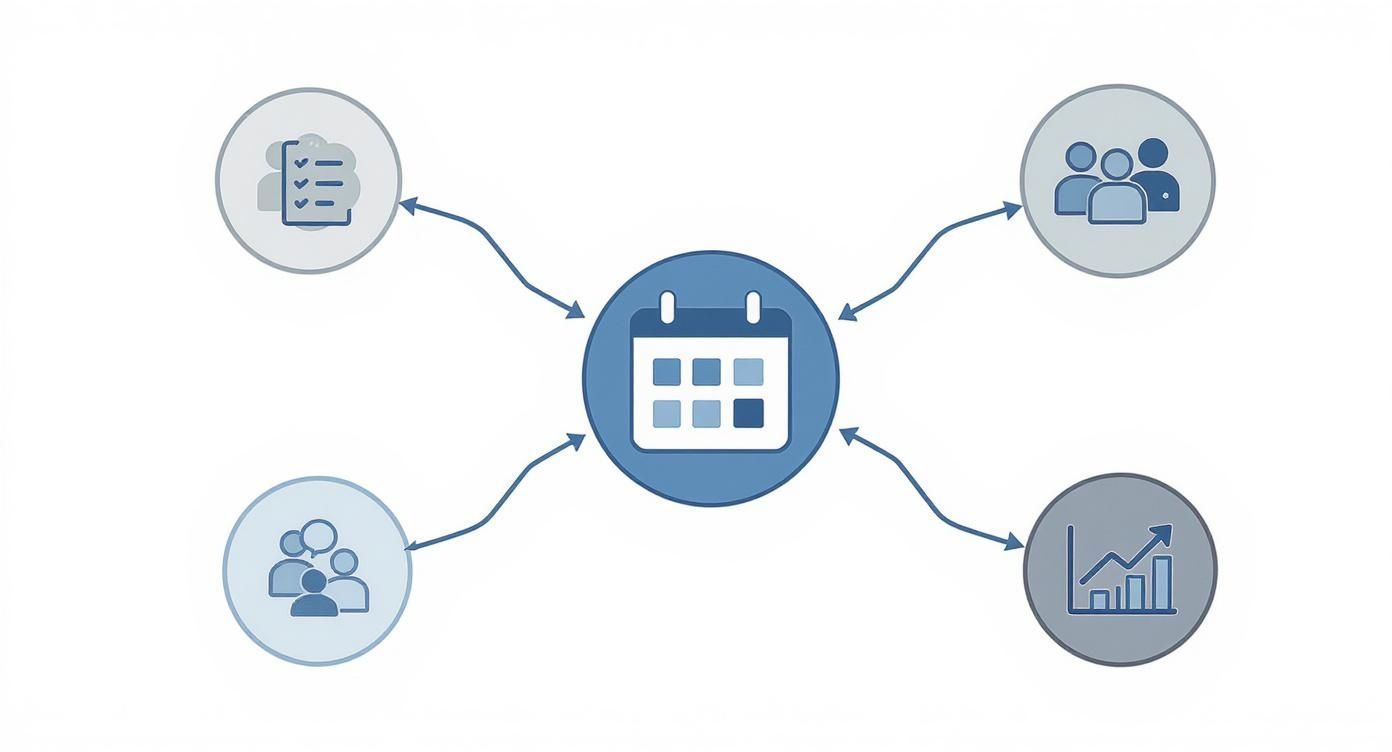
As you can see, the calendar becomes the hub that connects every part of the content creation process.
By getting these core elements in place, you’re not just scheduling posts. You’re building a reliable and transparent system for producing high-quality content, consistently. This is what separates the organized, high-performing teams from the ones who always feel like they're putting out fires.
Once these building blocks are in place, your calendar transforms from a simple document into a powerful tool that makes teamwork smoother and results more predictable.
What You Gain from Strategic Content Planning
Think of a content calendar as more than just a fancy to-do list. It's the engine behind a consistent, high-impact content strategy that turns your marketing from a series of random guesses into a reliable asset for growth.
The first and most obvious win is consistency. When your audience knows they can count on you for regular, valuable content, you build trust and anticipation. This predictable rhythm also signals to search engines that you're a serious, authoritative source, which can pay dividends in organic traffic over time.
Bring Your Team Together
A shared content calendar is the ultimate cure for communication chaos—no more digging through endless email threads or trying to sync up mismatched spreadsheets. It becomes the single source of truth for your entire team.
When writers, designers, social media managers, and marketers are all looking at the same roadmap, collaboration just clicks. Everyone sees the bigger picture, understands their role, and knows what’s due when. This clarity cuts down on friction and frees up your team's mental energy for what really matters: creating fantastic content.
A content calendar doesn't just manage your content; it aligns your team. It transforms a disjointed process into a unified effort, ensuring every piece of content purposefully supports your core business objectives.
Finally, planning ahead lets you stop being reactive and start being strategic. By mapping out content in advance, you can perfectly time your posts to align with product launches, seasonal trends, or major campaigns. This foresight is what makes your content feel relevant and powerful.
To really get a handle on your entire content pipeline, the way you view it matters. Exploring the advantages of a full-screen calendar view can give you a fresh perspective on how to maximize its organizational power.
How to Build Your First Content Calendar

Ready to create your first content calendar? It’s a lot less complicated than you might think. The trick is to start with a solid foundation and build on it. Let's walk through the essential steps to get your calendar off the ground and turn those scattered ideas into an actual plan.
Step 1: Define Your Core Content Pillars
Before you can fill a calendar with posts, you need to decide what you’re going to talk about. This is where content pillars come in. Think of these as the handful of big, important themes your brand will own—the topics you'll return to again and again.
These pillars should be a direct reflection of what your business does and what your audience is genuinely interested in.
For instance, a brand that sells home coffee gear might settle on these pillars:
- Brewing Guides and Techniques
- Coffee Bean Reviews
- Espresso Machine Maintenance
Once you have these pillars, brainstorming stops feeling like staring into a void. You suddenly have clear buckets to fill with specific ideas.
Step 2: Brainstorm and Prioritize Your Ideas
Now for the fun part. Get your team together (or just yourself) and start brainstorming topics that fit neatly under each of your pillars. Where do you find inspiration? Check out what competitors are doing, dive into keyword research tools, and pay close attention to the questions your customers are asking.
You’ll likely end up with a huge list of ideas, and not all of them will be gold. The next step is to prioritize. Focus on the topics that will deliver the most value to your audience and are most likely to help you hit your business goals.
To keep from feeling swamped, just plan one month at a time. You can always work further ahead once you get into a rhythm.
Step 3: Choose the Right Tool for Your Team
Picking the right tool is a big deal because it shapes your entire workflow. You don't need a fancy, expensive system right out of the gate. For many, a simple spreadsheet is the perfect starting point. As your team or your ambitions grow, you can always graduate to a more specialized platform.
The market for these tools is booming—it was valued at USD 5.71 billion in 2023 and is expected to reach USD 16.37 billion by 2030. That growth tells you just how essential these platforms have become for businesses everywhere. You can find out more about the growth of calendar platforms and their impact on modern marketing.
Choosing Your Content Calendar Tool
Finding the right home for your content plan depends entirely on your team's size and needs. Here’s a quick breakdown to help you decide.
| Tool Type | Best For | Pros | Cons |
|---|---|---|---|
| Spreadsheets (Google Sheets, Excel) | Solo creators & small teams | Free, incredibly flexible, and most people already know how to use them. | Everything is manual; collaboration can get messy quickly. |
| Project Management Tools (Trello, Asana) | Growing teams that need clear workflows. | Excellent for assigning tasks, setting deadlines, and tracking progress from idea to publication. | Can have a bit of a learning curve; might be overkill for one person. |
| Dedicated Content Software (CoSchedule, Loomly) | Large teams & agencies. | Packed with advanced features like automation, built-in analytics, and approval workflows. | Often expensive and can be overly complicated if you don't need all the bells and whistles. |
Ultimately, the best tool is the one your team will actually use consistently. Start simple, see what works, and don't be afraid to switch as your content strategy evolves.
Beyond Spreadsheets: Upgrading to a Smarter Planning Tool
Look, a spreadsheet is a fantastic starting point. I've built dozens of them myself. But as your content operation picks up steam, you'll quickly find that manually updating rows and columns becomes a massive time-sink. It’s a bottleneck that can seriously slow you down.
This is the exact moment when dedicated content software and advanced templates become game-changers. They’re built to handle the heavy lifting, automating the tedious bits and giving you a much more visual, intuitive handle on your entire workflow.
Supercharge Your Workflow with Smart Features
The real magic of these modern tools isn't just about better organization; it's about intelligence. They stop being a passive place to store dates and start actively participating in your content strategy. Think of it as upgrading from a simple map to a full-blown GPS that gives you real-time feedback.
Many of these platforms now have AI baked right in, offering features that can:
- Spark new topic ideas based on your core content pillars and what’s currently trending.
- Pinpoint the best times to post on different social channels to get more eyeballs on your work.
- Track performance automatically, pulling in key metrics like views, engagement, and even conversions without you lifting a finger.
- Smooth out approval workflows, so your team can review, comment, and sign off on content without endless email chains.
When you move beyond a basic spreadsheet, you're not just getting a fancier calendar—you're adopting a smarter system. This shift helps you optimize every piece of content for better engagement and a clearer return on your marketing investment.
Tools like ShortGenius take this even further by integrating these features directly into their platform. You can plan, create, and schedule all your video content from a single dashboard. Your calendar is no longer just a document; it becomes the command center for your entire content operation.
Got Questions About Content Calendars? We've Got Answers.
Even the best-laid plans run into real-world questions. Let's tackle some of the most common ones that pop up when teams start putting content calendars into practice.
How Far Out Should We Plan Our Content?
This is a classic question, and the answer really depends on your team's agility. For most brands, planning one full month in advance hits the sweet spot. It gives your creators enough time to do great work and leaves room for proper review cycles, all without locking you into a plan that's too rigid to change.
Many seasoned teams take a two-tiered approach. They map out big-picture themes quarterly—like a major product launch or seasonal campaign—and then fill in the specific topics and posts on a monthly basis. This gives you the best of both worlds: a long-term strategic vision with the flexibility to jump on a trending topic when it pops up.
Is a Content Calendar the Same as an Editorial Calendar?
You'll often hear these terms used interchangeably, but there's a subtle difference. Think of a content calendar as the master plan for all your marketing efforts. It includes everything from your blog posts and social media updates to your email newsletters and video scripts.
An editorial calendar, on the other hand, is usually more focused. It typically zooms in on the workflow for a single channel, like the detailed production schedule for a company blog. For most businesses, a single, unified content calendar is the way to go—it keeps everyone on the same page and ensures your message is consistent everywhere.
Remember, a content calendar isn't meant to be carved in stone. It's a living document. The real magic happens when you keep it updated.
How Often Should We Update the Calendar?
To get the most out of your calendar, it needs regular attention. Set aside time for a quick weekly check-in. This is your chance to update the status of different projects, see what’s coming up next, and make small tweaks as needed.
Then, at the end of each month, do a deeper dive. Look at what you published, analyze its performance, and use those insights to inform the plan for the next month. This rhythm of weekly updates and monthly reviews is what turns your calendar from a simple schedule into a powerful strategic tool.
Ready to stop wrestling with spreadsheets and build a content workflow that actually works? ShortGenius brings your planning, AI-assisted creation, and multi-channel scheduling together in one place. It’s time to turn your great ideas into a seamless content machine. Try ShortGenius today and see the difference for yourself.