How to Create Ads with AI: how to create ads with ai for beginners

Discover how to create ads with ai using proven strategies—from setup and scripting to AI-driven video ads that convert.
When you hear about creating ads with AI, what we're really talking about is using a tool like ShortGenius to turn a simple text prompt into a complete video ad—script, visuals, voiceover, and all. This whole process takes your creative brief and spits out a high-quality, ready-to-run short-form video for TikTok, Instagram, or YouTube in a sliver of the time it used to take.
Why AI is Radically Changing Ad Creation
We're standing at a new frontier in advertising. Creating powerful ads is no longer a game reserved for those with massive budgets and months-long production schedules. The entire model is shifting from a slow, resource-heavy process to a nimble, AI-powered one. Before we get into the "how-to," it's worth getting a handle on what AI advertising technology entails and the ideas behind it.
This isn't just some future-facing theory; it's happening right now. Advertisers are embracing AI for video ads in droves. A recent report found that 86% of buyers are already using or plan to use generative AI for their creative work. This is especially true for social media, where 85% are using it to churn out content for platforms like TikTok and Instagram.
And people are noticing. 71% of Gen Z and Millennials say they think they've seen an AI-generated ad, a huge leap from just 54% a year ago. If you want to dig deeper into the numbers, you can check out the full report on these AI adoption trends in advertising.
The New Game is Speed and Scale
Let’s be honest: the old way of making ads is painfully slow and expensive. You need writers, designers, editors, and maybe even a whole production crew. AI platforms just smash that entire workflow into a single, straightforward process.
This opens up a world of possibilities for marketers and creators:
- Generate ideas on the fly: Take one core concept and instantly spin it into dozens of different scripts and visual styles.
- Produce ads in minutes: Forget waiting weeks. You can create a scroll-stopping video before your coffee gets cold.
- Test and learn faster: Run multiple A/B tests at once to quickly figure out what your audience actually responds to.
The real magic here isn't just about doing things automatically. It's about amplifying your own creativity. AI takes care of the grunt work, which frees you up to think about the bigger picture—the strategy, the messaging, and doubling down on what works.
Tools like ShortGenius give small teams the firepower to go head-to-head with big brands by producing a high volume of professional-looking ads. It levels the playing field, making great advertising achievable for everyone, whether you're a solo creator or part of a huge marketing department.
Building Your AI Ad Campaign Foundation
Before you even think about writing a prompt, let’s talk about the groundwork. It's tempting to jump right into the creative part, but skipping the strategy is like building a house without a blueprint. You might end up with something that looks interesting, but it's not going to stand for long.
The goal here is to make sure your AI-generated ads are built on a solid strategy, not just cool visuals. This initial planning gives the AI its marching orders. Without clear direction, even the most powerful tools are just shooting in the dark.
Start with a Clear Objective
First things first: what does a "win" look like for this campaign? Are you aiming to get your brand in front of as many new people as possible, or are you trying to drive immediate sales for a new product launch? Each goal requires a completely different creative angle.
Most campaign goals fall into one of these buckets:
- Brand Awareness: Getting your name out there to a cold audience.
- Lead Generation: Collecting emails for a newsletter or getting sign-ups for a free guide.
- Direct Sales: Pushing for that final click to "buy now."
A fuzzy goal like "get more engagement" is a recipe for wasted ad spend. You need something concrete. For example, a specific objective like "increase email sign-ups by 20%" gives your AI a clear target to hit.
The old way of doing this involved a slow, manual back-and-forth between teams. AI completely changes the game by making the whole process faster and more iterative.
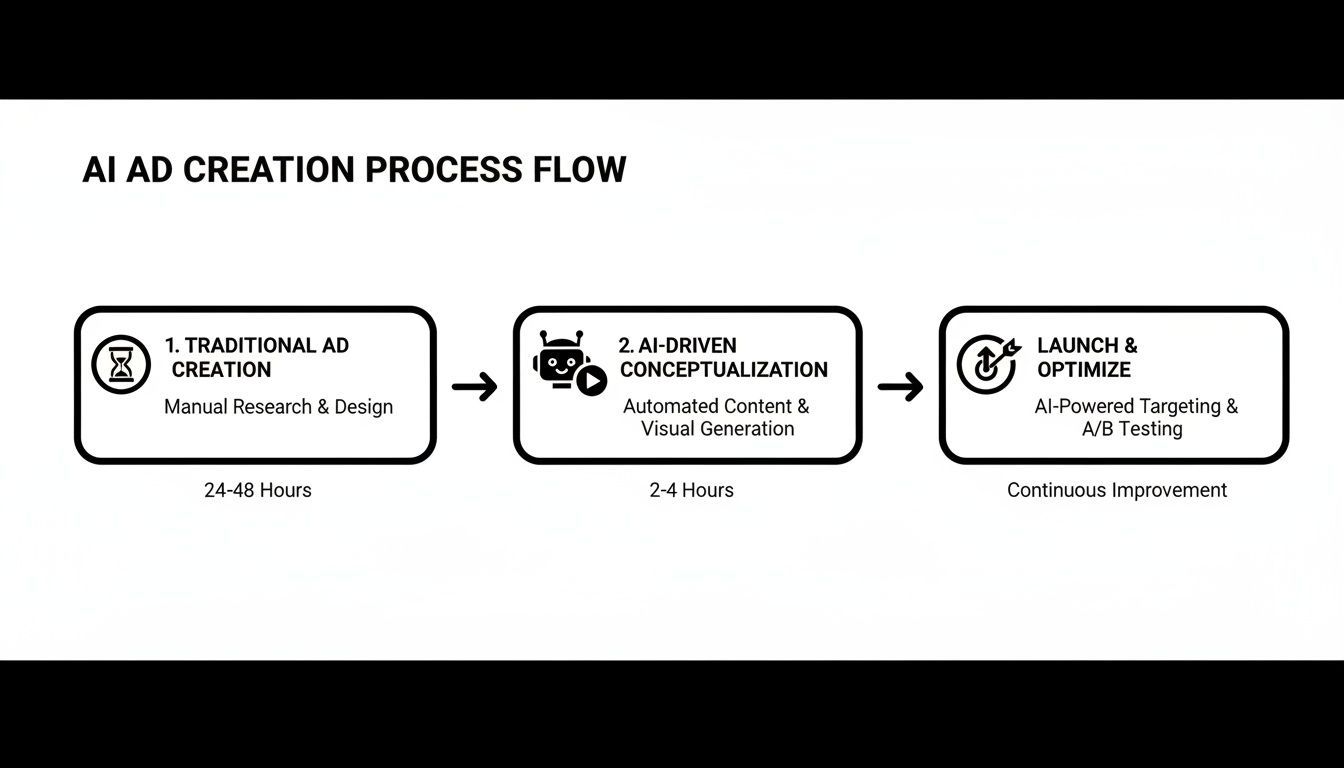
As you can see, the AI-driven approach condenses what used to be weeks of work into a much more efficient workflow, letting you test and learn at a pace that was impossible before.
Know Your Audience and Platform
Once you have your objective locked in, you need to get crystal clear on who you're talking to. A campaign targeting Gen Z skincare fanatics on TikTok will need a totally different vibe, script, and visual style than one going after B2B decision-makers on LinkedIn.
Think of your audience's favorite platform as your ad's natural habitat. An ad that feels out of place gets scrolled past instantly. A killer TikTok ad feels like a native TikTok video, not a polished TV commercial shoehorned into the feed.
Understanding these platform nuances is the key to creating AI ads that actually perform. You have to meet people where they are, in a format they expect.
Choosing the Right Platform for Your AI Ad
Deciding where to run your ads is just as important as the ad creative itself. This table breaks down the major players to help you pick the right battlefield for your campaign.
| Platform | Primary Audience | Best Ad Format | Key Objective |
|---|---|---|---|
| TikTok | Gen Z & Millennials (18-34) | Short-form, UGC-style vertical video | Brand Awareness, Viral Trends |
| Millennials & Gen X (25-44) | High-quality Reels, Stories, Carousels | Lead Generation, E-commerce Sales | |
| Gen X & Boomers (35+) | Video Ads, Image Ads, Carousels | Community Building, Conversions | |
| YouTube | Broad (All Ages) | Skippable & Non-skippable video ads | In-depth Storytelling, Sales |
Choosing the right platform ensures the assets you generate with a tool like ShortGenius are perfectly tuned for both your business goals and the people you’re trying to reach.
With these fundamentals sorted, you’re ready for the fun part: crafting the perfect prompt.
Mastering the Art of the AI Ad Prompt
The quality of your AI-generated ad comes down to one thing: the quality of your prompt. Seriously. Think of it less like typing a command and more like briefing a creative director. If you give a vague, one-line request, you'll get a bland, generic video back. But if you want to get something truly special out of a tool like ShortGenius, you need to give it a rich, detailed brief.
This skill, which everyone is calling prompt engineering, is the new secret weapon for modern marketers. It’s part marketing strategy, part creative direction, and all about packing a punch in just a few sentences. A great prompt doesn't just describe your product; it paints a vivid picture of your ideal customer and the exact feeling you want your ad to create.
The Anatomy of a High-Performing Ad Prompt
Every killer prompt I've seen has a few key ingredients. Leave one out, and you force the AI to guess—and AI is a notoriously bad guesser when it comes to creative vision. Your job is to leave no room for error.
Here's what you absolutely must include:
- Product & Core Benefit: Don't just state the product's name. What is the single biggest, most compelling outcome someone gets from it? Instead of "a new skincare cream," think "a hydrating night cream that visibly reduces fine lines in just two weeks."
- Audience & Their Pain Point: Who are you trying to reach, and what's keeping them up at night? For instance, "busy professionals who feel guilty about grabbing unhealthy takeout every night."
- The Vibe: How should this ad feel? Words like "energetic and witty," "calm and trustworthy," or "aspirational and luxurious" act as creative guardrails for the AI.
- A Crystal-Clear CTA: What is the one thing you want the viewer to do? Don't be shy. Be specific: "Click the link for 20% off your first order," or "Swipe up to download the free guide."
A well-crafted prompt is your creative blueprint. It transforms the AI from a simple content generator into a strategic partner that understands your campaign's goals, audience, and desired emotional impact.
Let’s make this real. Imagine you're marketing a meal delivery service. A lazy prompt like, "Create a video ad for our meal kit," gives the AI almost nothing to work with. The result will be forgettable at best.
Putting It All Together: A Real-World ShortGenius Example
Now, let's build a prompt for that same meal kit company, but do it the right way. We'll load it with all the details the AI needs to create something that actually converts.
Here’s a simple framework you can adapt:
Prompt Template: "Generate a 20-second TikTok ad for [Product]. The ad should target [Audience] by focusing on their [Pain Point]. I want the tone to be [Tone/Vibe], and it needs to show how our product delivers [Benefit]. The ad must end with a clear call-to-action to [CTA]."
Let's fill it in: "Generate a 20-second TikTok ad for 'FreshPlate' meal kits. The ad should target busy young professionals (ages 25-35) by focusing on their struggle with unhealthy, expensive takeout after a long workday. I want the tone to be upbeat, relatable, and a little humorous, and it needs to show how our service provides a delicious, home-cooked meal in under 15 minutes. The ad must end with a clear call-to-action to 'Tap the link to get 50% off your first box!'"
See the difference? This prompt gives the AI specific constraints and a clear creative lane. It knows the audience, their problem, the desired emotion, and the business goal. With this level of detail, it can generate multiple, strategically-aligned script variations, scene ideas, and voiceover styles, giving you a massive head start on a winning campaign.
Bringing Your AI Video Ad to Life
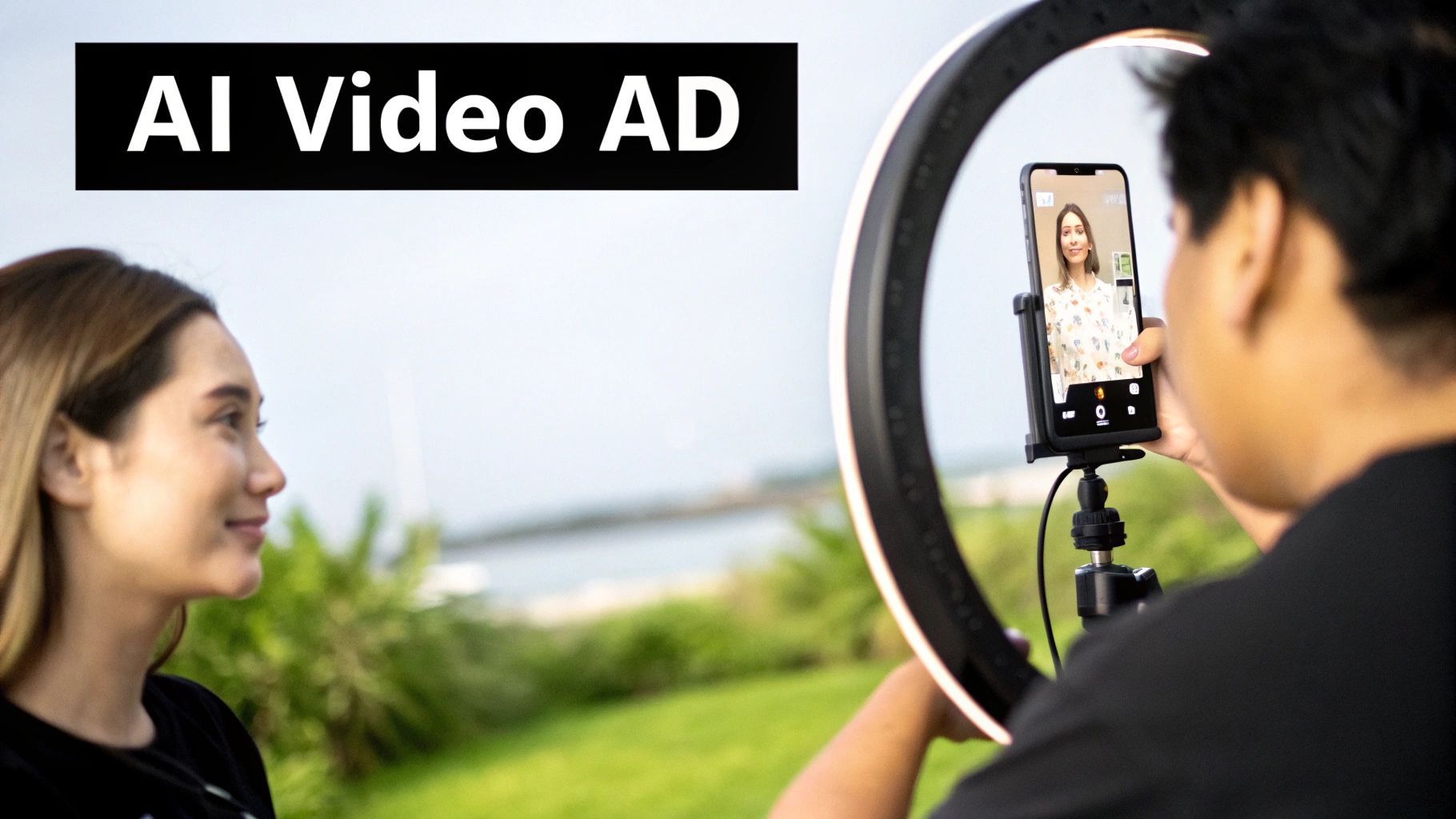
Alright, you've done the hard work of crafting a solid, detailed prompt. You’ve given the AI your creative vision on a silver platter. Now for the fun part: watching that text spring to life as a real, tangible video ad ready to grab your audience's attention.
The secret here is to create something that feels like it belongs in a social feed, not a high-budget Super Bowl commercial. We're aiming for that authentic, UGC-style (user-generated content) look that people actually trust. Modern AI tools are fantastic at this, generating scenes that feel genuine and help your ad blend in, making people much more likely to stop scrolling and actually watch.
This whole space is exploding for a reason. The generative AI market that's fueling this ad creation revolution is expected to rocket to $182 billion by 2026. For perspective, it was just $44.89 billion in 2023. That kind of meteoric rise tells you everything you need to know about how critical these tools have become for anyone advertising on TikTok, Instagram, or Reels.
Crafting the Visual and Audio Experience
First up, let's get those core video scenes generated. Based on the detailed instructions in your prompt, tools like https://shortgenius.com will start creating clips. It might be someone using your product, an actor portraying a common customer frustration, or visuals that perfectly match your target demographic. When you're ready to visualize your ad concepts, an AI Reel Generator can automate the creation of dynamic, engaging video clips tailored for platforms like Instagram.
Next, we need to think about audio, which is just as important for hooking your audience. You can typically browse a whole library of natural-sounding AI voiceovers. Look for one that hits the right note for your brand's personality—maybe you need something high-energy and exciting, or perhaps a calm, trustworthy voice is a better fit.
And don't forget, a huge chunk of people watch social media videos on silent. This makes auto-generated captions an absolute must. They’re non-negotiable if you want your message to land, whether the sound is on or off.
Pro Tip: Don't just pick the first AI voice you like. I always recommend testing at least two or three different voices with the exact same script. It’s amazing how a small shift in tone or pacing can completely change an ad's vibe and, ultimately, its performance.
Applying Your Brand and Adding Special Effects
Brand consistency is everything. Any decent AI ad generator will let you upload your brand kit—think logos, specific fonts, and your official color palette. Once uploaded, you can apply it all to your video with just a click, ensuring every ad feels distinctly yours.
Finally, let’s talk about making your ad impossible to ignore. This is where you can get creative with AI-powered special effects that are designed to stop the scroll.
I'm not talking about cheesy filters. These are strategic tools. Look for things like:
- Scroll Stoppers: These are eye-catching animations or text effects that pop up right at the start of your ad to instantly grab someone’s attention.
- Surreal Camera Movements: AI can create camera shots that would be wildly expensive or physically impossible to film, like flying directly through your product.
- Dynamic Scene Transitions: Forget boring cuts. AI can generate smooth, engaging transitions that maintain a fast pace and keep viewers locked in from one scene to the next.
When you bring all these elements together—authentic visuals, a compelling voiceover, clear captions, consistent branding, and standout effects—you create a polished, professional ad without the traditional costs and headaches. You’ve officially turned a simple prompt into a high-performing asset, ready for launch.
Launching and Optimizing Your AI Campaign
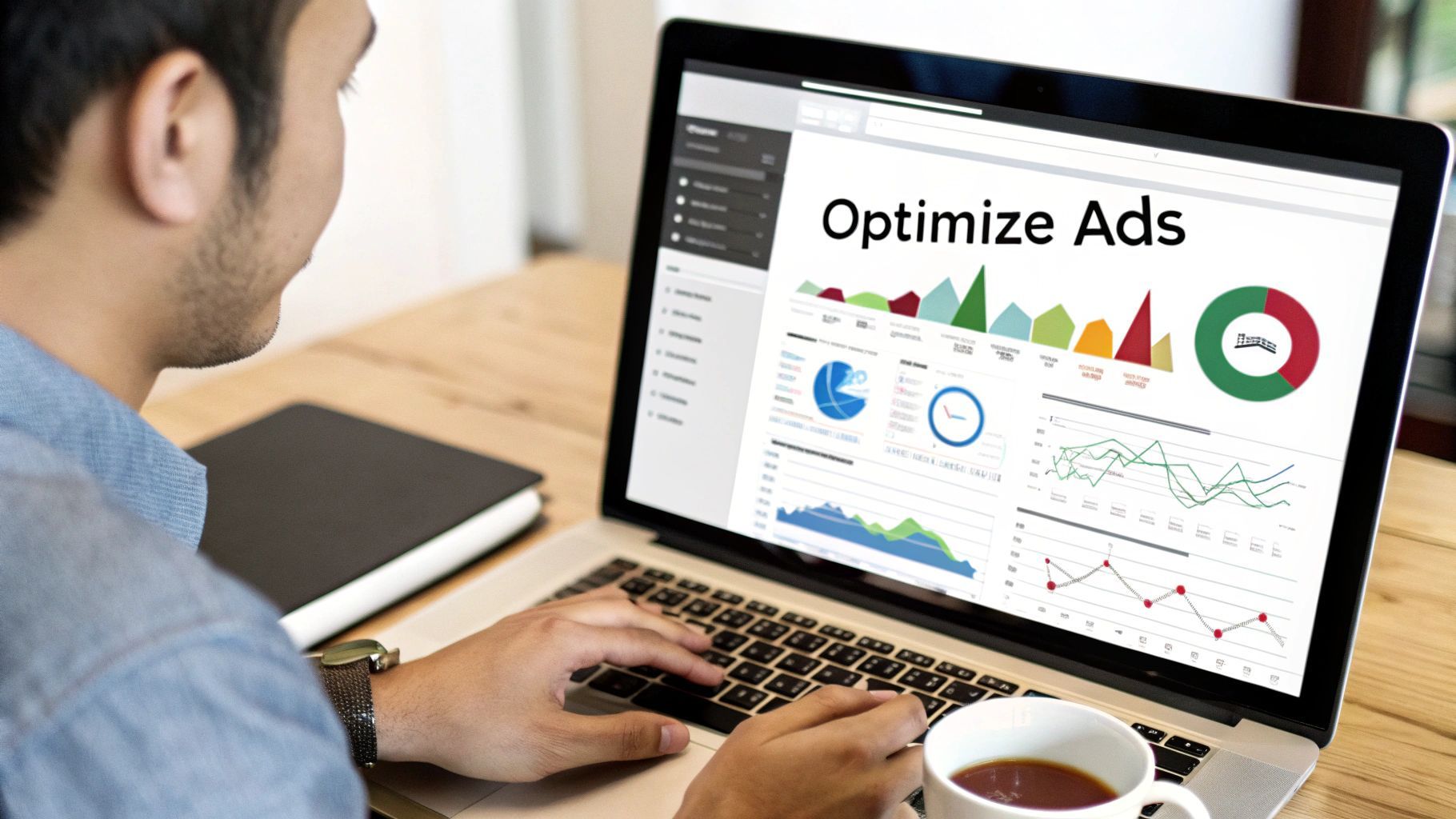
Hitting "generate" on your AI ad creator is just the starting line, not the finish. The real magic of using AI isn't just about speed; it's about the ability to test, learn, and improve at a pace that was completely out of reach just a few years ago.
A truly successful campaign is defined by what you do after the first batch of creative is ready. This is where you roll up your sleeves and turn a good AI-generated ad into a high-performing asset that actually moves the needle for your business. It's all about creating a feedback loop: test, analyze, and refine.
A/B Testing Your AI Creative
The biggest advantage AI hands you is the power to churn out endless variations for A/B testing. Instead of relying on gut feelings, you can let the data tell you exactly what works. A methodical approach here is the key to maximizing your return on ad spend (ROAS).
My best advice? Isolate one variable at a time. If you change the hook, the visuals, and the CTA all at once, you’ll have no idea which change actually made the difference.
Here are the first things I always test:
- The Hook: That first 1-3 seconds is everything. Pit a question against a bold statement, or try completely different visual openers to see what stops the scroll cold.
- Visuals and Scenes: Generate variations with different actors, backgrounds, or product shots. You might be surprised to find that a raw, UGC-style clip outperforms a slick, polished demo.
- The Call-to-Action (CTA): Experiment with your offers. "Shop Now" is standard, but what about "Get 50% Off Your First Order"? Test different phrasing to see what drives clicks.
- Voiceover and Tone: Does your audience respond better to an energetic, upbeat voice or a calm, authoritative one? AI makes it easy to find out without booking multiple voice actors.
A crucial lesson I've learned is to never get too attached to your first idea. The ad you think is a surefire winner is often not the one that performs best. Let the data be your guide and be ready to scale the creative your audience chooses, not the one you personally like the most.
Resizing and Repurposing Your Winners
Once you've found an ad that's crushing it, its job is far from over. Now, you need to squeeze every ounce of value out of it by adapting it for different placements. An ad that kills it on the TikTok feed will fall flat on Instagram Stories or YouTube Shorts if it’s not formatted correctly.
Most modern AI platforms, like ShortGenius, make this part dead simple. You can take your top performer and, with just a few clicks, resize it into different aspect ratios—like 9:16 for Stories or 1:1 for feed posts. This little step ensures your ad looks native and professional everywhere it appears, which is absolutely critical for engagement.
Automating Campaigns for Long-Term Growth
The final piece of the puzzle is using AI to keep your ad accounts fresh and effective without constant manual effort. Ad fatigue is a real problem; even the best ad will eventually see its performance tank if people see it too many times. Automation is your best defense.
The data backs this up. Today, a staggering 78% of organizations are using AI in at least one marketing function, a huge leap from 55% just last year. This explosion is powered by generative AI, with usage skyrocketing from 33% in 2023 to 71% in 2024.
Platforms like ShortGenius are at the forefront, letting creators on every major social channel launch series-based campaigns almost effortlessly. The AI can generate variations, apply your brand kit, and schedule posts automatically, delivering an average 3.7x return per dollar spent. You can dive deeper into these numbers in this detailed report on AI marketing statistics.
This ability to automate the creation and scheduling of ad variations is a genuine game-changer. You can set up campaigns to run on a recurring basis, automatically swapping in fresh creative to keep performance from dipping. This cycle of testing, resizing, and automating is how you create AI-powered ads that don't just launch well but deliver sustained growth for your brand.
Have Questions About Making Ads with AI?
Even with all the hype, it's totally normal to have a few questions before jumping into AI for ad creation. It’s a huge shift in how we work, and you’re probably wondering about its limitations, what it can actually do, and if you even have the right skills for it.
Let's cut through the noise and tackle some of the most common questions and uncertainties I hear from marketers and creators. We'll cover everything from whether an AI-made ad can feel real to how much time you'll genuinely get back.
Can AI-Generated Ads Actually Feel Authentic?
Absolutely, but here's the catch: the authenticity comes from you, not the machine. The whole point of modern AI ad generators is to replicate that raw, user-generated content (UGC) style that dominates social feeds. The AI doesn’t just spit out authenticity on its own; it gets there because of the detailed, human direction you feed it.
Think of yourself as the creative director. When you tell the AI you want a "witty and relatable" tone for a Gen Z audience or something more "inspirational and professional" for LinkedIn, you're steering the ship.
The trick is to stop thinking of AI as an order-taker and start treating it like a creative partner. You bring the strategy, the empathy for your audience, and the final gut check. The AI just does the heavy lifting.
How Much Time Will I Realistically Save?
The time savings are probably the biggest "wow" factor. A standard video ad, from the initial idea to the final export, can easily eat up days—sometimes weeks—of your time, especially when you factor in team members, feedback loops, and revisions.
With a solid AI tool, you can shrink that entire process down to a few hours.
- Concepts and Scripts: A brainstorming session that used to block out a few days on the calendar? Now it’s done in minutes.
- Production: You can generate all your scenes, record a voiceover, and add captions in less than an hour.
- A/B Test Variations: Creating a half-dozen different versions of an ad to see what works best is practically instant.
This isn't just about being faster for the sake of it. This speed is a massive strategic advantage. It means you can get campaigns out the door quicker and test a much higher volume of creative, which is non-negotiable for finding a winner on fast-paced platforms like TikTok and Instagram.
Do I Need to Be a Tech Whiz to Use an AI Ad Generator?
Not even close. The best platforms are designed specifically for marketers and creators, not developers. They hide all the complicated tech behind a clean, simple interface. If you can write a sentence describing your product and know how to click a mouse, you’re good to go.
The entire workflow revolves around writing clear prompts in plain English and using simple editing tools. You don’t need to know a single line of code or have any experience with professional video editing software. These tools were built to put powerful ad creation into the hands of anyone with a good idea, no matter their technical background.
Ready to stop spending weeks on video production and start generating high-performing ads in minutes? ShortGenius gives you the power to turn a simple idea into a complete, ready-to-launch campaign with AI-powered scripts, visuals, and voiceovers. Try ShortGenius today and see the future of ad creation for yourself.