How to Create a Short Video That Gets Views

Learn how to create a short video from start to finish. Get practical tips to plan, shoot, edit, and share clips that capture attention and drive engagement.
So, you want to create a short video? The core of it is pretty simple: start with a great idea and a killer hook, grab your visuals, then stitch it all together with the right music and captions before you hit publish. That's the basic recipe for making content that actually stops the scroll on platforms like TikTok and Instagram.
Before we get into the nuts and bolts, let's take a quick look at the entire process. It's easy to get bogged down in the details, so having a roadmap helps keep things in perspective.
Your Short Video Creation Roadmap
Here's a high-level overview of the video creation process, giving you a quick answer and a clear path for the rest of the article.
| Phase | Key Action | Why It Matters |
|---|---|---|
| Plan | Define your goal, audience, and core message. Brainstorm a strong hook. | A clear plan prevents wasted effort and ensures your video has a purpose. |
| Create | Write a script, record your voiceover, and gather visual assets (stock or original). | This is where your idea comes to life. Quality assets are the foundation of a good video. |
| Edit | Assemble clips, add music, text, captions, and effects. Refine the pacing. | Editing transforms raw clips into a polished, engaging story that holds attention. |
| Publish | Write a compelling caption, add relevant hashtags, and post at the optimal time. | Your video is done, but publishing strategically is key to getting it seen. |
This roadmap breaks the process down into manageable chunks. Now, let's dive into why this format has taken over.
Why Short Videos Dominate Digital Content
First, let's be clear: short-form video isn't just a trend. It's a massive shift in how we consume information. We've gone from leisurely scrolling to a world of rapid-fire swiping, and that's completely changed the game.
The magic of a short video is its efficiency. In less than a minute, you can share a powerful message, deliver a quick laugh, or teach someone something valuable. For anyone creating content today, knowing how to make a short video isn't just a nice skill to have—it's the most direct path to connecting with an audience.
The Psychology of Quick Content
Short videos work so well because they cater to how our brains are wired. We love novelty and instant gratification. Every time you swipe to a new video on YouTube Shorts or Instagram Reels, you get a little dopamine hit. It's an engaging, almost addictive loop.
This fast-paced environment has trained us all to be incredibly quick judges of content. You have about three seconds to convince someone to stick around. That makes your "hook"—the very first thing people see or hear—the single most important part of your video. If you don't grab them immediately, they're gone.
The real challenge isn't just making a video; it's making the first three seconds of your video unskippable. Everything else—the story, the editing, the call to action—depends on that initial moment of connection.
This simple infographic breaks down the core workflow.
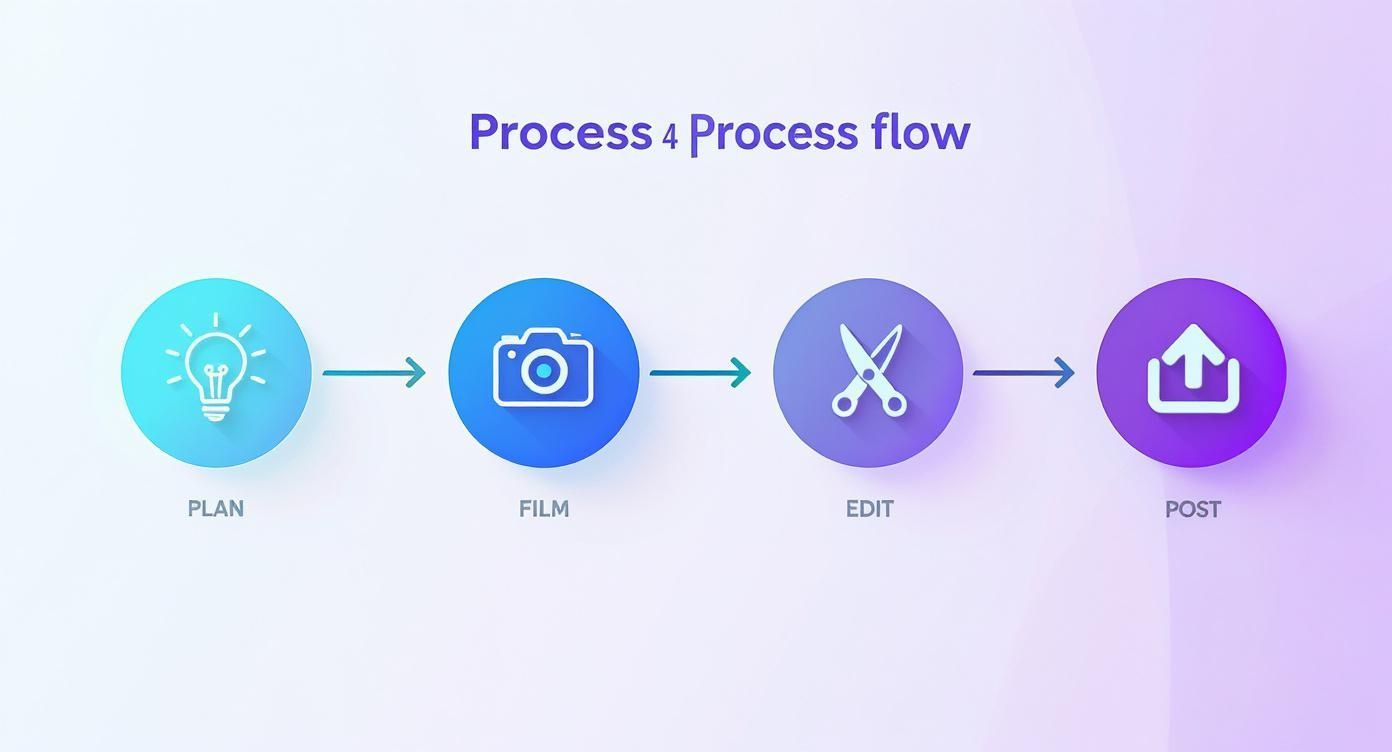
When you look at it this way—Plan, Film, Edit, Post—the whole thing feels a lot less intimidating, right?
The Unstoppable Rise of Video Traffic
The numbers don't lie. Video is absolutely massive. By 2025, it’s expected to make up 82% of all internet traffic. Think about that for a second.
Consider this: 91.8% of users watch videos online every single week, and 75% of that viewing happens on a mobile device. The audience is already there, phone in hand, waiting for great content.
And brevity is key. Videos under 90 seconds have a much higher chance of being watched all the way through. If you want to learn more, diving into some key video marketing statistics can really open your eyes to the scale of this opportunity.
Planning Your Video for Maximum Impact
Ever wonder why some videos go viral while others flop? It's almost never luck. The best videos—the ones that get shared and talked about—are born from a solid plan long before anyone hits "record." This is where you lay the groundwork for success.

Before you even think about the content itself, you have to get crystal clear on who you're making it for. A video for busy moms trying to find quick dinner recipes is going to feel completely different from one aimed at Gen Z gamers looking for the latest easter eggs. Who are they? What do they struggle with? What makes them laugh? Answering these questions first is non-negotiable.
From Vague Idea to a Killer Angle
Once you know your audience, it's time to brainstorm. Let's imagine you own a small coffee shop and you're launching a new seasonal drink. A generic idea like "our new pumpkin spice latte" is a starting point, but it's not going to stop anyone's scroll. It’s forgettable.
We need to sharpen that into a real angle, something with a hook.
- Solve a Problem: "Hate watery pumpkin spice? We make ours with real pumpkin puree. Here's how."
- Go Behind the Scenes: "Watch our head barista, Maria, craft the perfect latte art for our new fall drink."
- Tap into Humor: "That face you make when the first cold day hits and you can finally order a pumpkin spice latte."
See the difference? Each of these takes that boring announcement and turns it into a story. It gives people a reason to care.
A sharp angle is what separates a video that feels like an ad from one that feels like a discovery. You're not just talking at them; you're finding a unique perspective that makes people lean in and listen.
A Simple Structure That Gets Views
Now that you've got an angle, you need a way to deliver it that keeps people watching. For short-form video, one of the most effective frameworks I've seen is the Hook-Story-Offer model. It's built for short attention spans.
- The Hook: This is all about the first 1-3 seconds. Your only job is to stop their thumb from moving. It could be a bold claim ("This is the only pumpkin spice recipe you'll ever need") or an intriguing question ("Are you making this common coffee mistake?").
- The Story: This is the meat of your video. You're delivering on the hook's promise. Show the process, tell the funny story, share the quick tip. The key here is to keep the pacing brisk and the visuals engaging.
- The Offer (or CTA): The end. You have to tell them what to do next. This doesn't always mean "buy now." A great call to action could be "Follow for more coffee tips," "Tag a friend who needs this," or "Visit us this weekend to try one for yourself!"
Scripting for Success (Even If It’s Just Notes)
Finally, you need a script. Don't worry, it doesn't have to be a Hollywood masterpiece—even a few bullet points on a napkin will do. Having a script keeps your message tight and ensures you don't ramble or forget your CTA.
When you're using a tool like ShortGenius, the script is even more important because it's the raw material the AI uses to build your scenes and voiceover.
For a 60-second video, you're aiming for a script of about 150 words. Pro tip: read it out loud. Does it sound natural? Does it feel rushed? If so, trim it down. In the world of short-form video, clarity and brevity are your most powerful allies.
Capturing Your Visuals and Audio
Alright, this is where the magic happens. Your plan and script are ready, and now it's time to turn those ideas into actual, tangible assets. The video clips, images, and audio you gather here are the raw ingredients for your final video. Getting high-quality assets is key for a polished, professional feel, but don't let that intimidate you—you definitely don't need a Hollywood budget to get started.
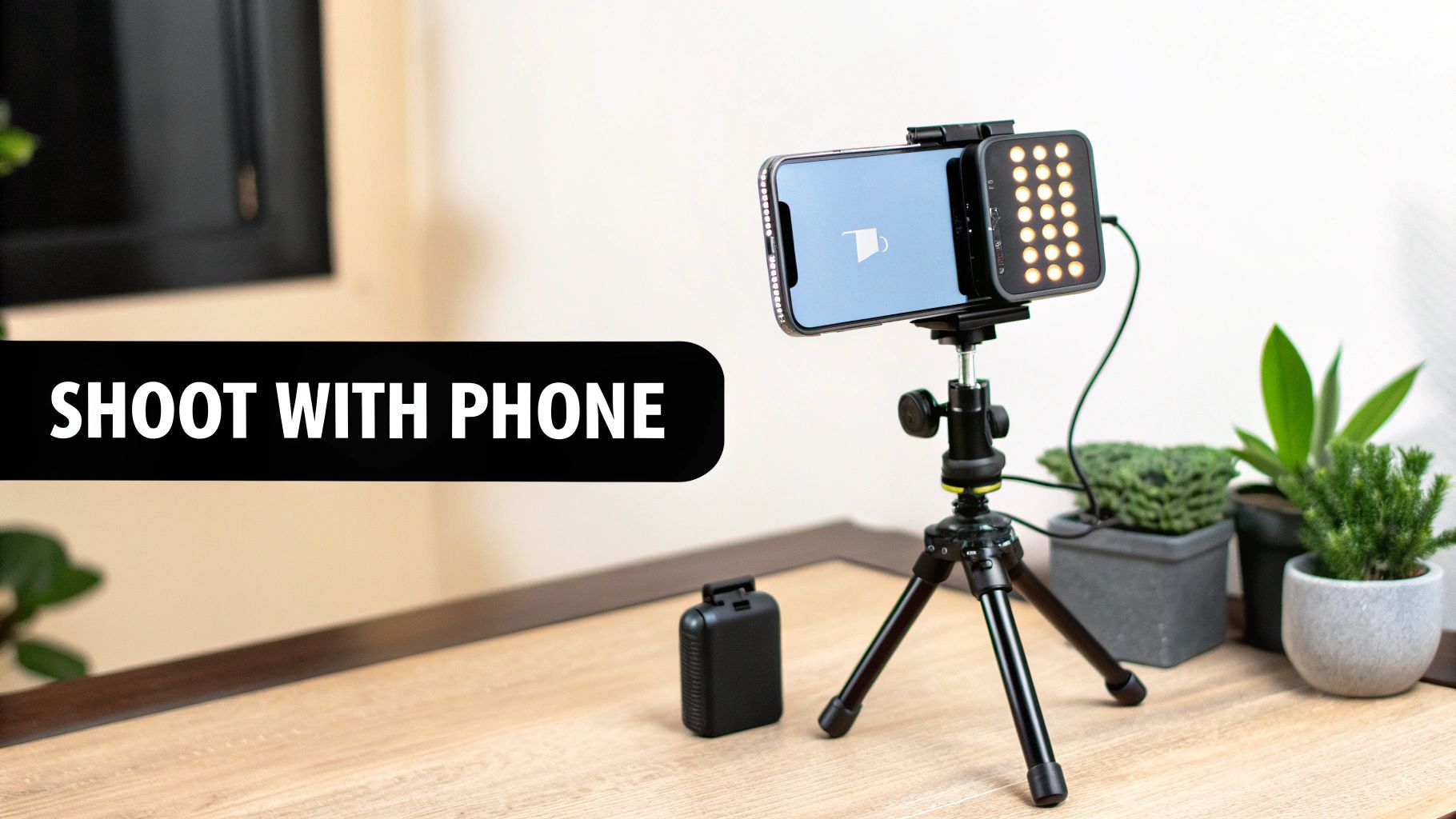
So many aspiring creators get hung up on needing a fancy camera. The truth? The powerful camera you already have in your pocket is more than enough. Modern smartphones shoot in gorgeous 4K, which is overkill for platforms like TikTok and Instagram Reels. It's not about the camera; it's all about how you use it.
Shooting with Your Smartphone
Getting beautiful footage from your phone boils down to a few basic, but crucial, principles.
First up, lighting. Good lighting is everything. Natural light from a window is your absolute best friend—it's soft, flattering, and costs nothing. Just make sure you’re facing the window when you record. This simple trick helps you avoid those harsh, unflattering shadows.
Next, you have to keep it steady. Shaky footage is a dead giveaway of an amateur video. You don't need to run out and buy an expensive gimbal. I've gotten great results just by propping my phone against a stack of books or even a coffee mug. Anything that eliminates those distracting jitters will keep your viewers focused on what you're saying.
And finally, let's talk about the unsung hero: audio. Your phone's built-in mic is surprisingly decent, but its biggest flaw is that it picks up everything—echoes, the air conditioner, your dog barking down the hall. For clean, crisp audio, try recording in a room with lots of soft surfaces. Think carpets, curtains, or even a closet packed with clothes. These things absorb sound and reduce echo. Even a simple pair of wired headphones with an inline mic will give you a massive boost in audio quality.
I can't stress this enough: Your phone's camera is a powerful tool, but your audio quality is what truly makes or breaks the viewing experience. People will forgive video that's a little grainy, but they will click away in a heartbeat if the audio is scratchy and hard to understand.
Sourcing Assets Without a Camera
What if being on camera just isn't your thing? Or maybe your concept is too abstract or grand to film yourself. No problem. In these cases, sourcing your assets from elsewhere becomes your go-to strategy, and you have some incredible resources available.
For starters, you can tap into the vast world of high-quality stock footage libraries. Sites like Pexels and Pixabay offer millions of clips for free, and there are paid services with even more options. The trick to using stock footage effectively is to pick clips that feel cohesive—look for a similar style, color grade, and lighting to make it all look intentional.
A more exciting alternative is to use AI to generate completely unique visuals. This is a game-changer and a core function of a tool like ShortGenius. It can literally take your script and dream up custom scenes from scratch. This method gives you total creative control and guarantees your video won't look like anyone else's.
You've got a few options here:
- Stock Footage: Perfect for realistic, live-action scenes that need a human touch.
- AI-Generated Visuals: A fantastic choice for abstract concepts, unique branding, and animated styles.
- A Mix of Both: This is often the sweet spot. Combining real-world clips with custom AI elements can create a really dynamic and interesting final video.
Whether you're behind the camera yourself or pulling clips from a library, the goal is always the same: gather visually stunning assets that bring your script to life and hook your audience from the very first second.
Editing Your Video to Tell a Compelling Story
You’ve got all your raw materials—the clips, the voiceover, the B-roll. Now comes the real magic: the edit. This is where you transform a folder of assets into a polished, compelling story that grabs and holds attention.
Think of yourself less as a technician and more as a storyteller. The editing bay is your final chance to shape the rhythm, energy, and emotional impact of your video. Every cut, transition, and sound effect should serve a purpose, turning a simple sequence of clips into something that feels intentional and professional.
Trimming for Pace and Impact
The first order of business is to get ruthless with your clips. Short-form video thrives on momentum, and that means cutting out every ounce of fat. Dead air, awkward pauses, filler words, or any moment that doesn’t actively push the narrative forward has to go.
Make every single second count. If a clip is five seconds long but the crucial action only takes two, trim it. Quick, snappy cuts are your best friend here. They keep the energy high and respect the viewer’s notoriously short attention span, which is exactly what you need on platforms designed for rapid content consumption.
Enhancing Your Narrative with Text and Captions
Text on screen is far more than just decoration; it's a powerful storytelling device. Use it to:
- Emphasize a key takeaway.
- Introduce a new topic or section.
- Pose a question directly to the viewer.
A well-placed text overlay acts as a visual signpost, reinforcing your message and making it stick.
And when it comes to captions, consider them essential. So many people watch videos on their phones with the sound off. Without captions, your message is completely lost. Adding them makes your content instantly more accessible and dramatically boosts comprehension.
Editing is where you find the story. It's not just about what you put in; it's about what you take out. Brevity and clarity are your sharpest editing tools.
Weaving in Music and Sound
Never underestimate the power of audio. It’s the emotional heartbeat of your video. The right background music can completely transform the vibe, turning a dry tutorial into an inspiring lesson or a product showcase into an exciting reveal. Find a track that genuinely matches the energy you're going for.
Sound effects (SFX) are the secret sauce that makes a video feel truly alive. A subtle "swoosh" as text appears or a "click" sound when a button is pressed adds a layer of polish that makes the experience more satisfying for the viewer. Just be sure to use them strategically to highlight important moments, not overwhelm them.
To help you focus on what really moves the needle, here’s a quick breakdown of the editing elements that have the biggest impact on keeping people watching.
Key Editing Elements for Viewer Engagement
| Editing Element | Impact on Engagement | Quick Tip |
|---|---|---|
| Pacing & Trimming | High | Keeps energy up and prevents boredom. If in doubt, cut it out. |
| Captions/Subtitles | High | Ensures your message lands even with the sound off. |
| Background Music | Medium | Sets the emotional tone and mood of the video. |
| Text Overlays | Medium | Reinforces key points and improves retention. |
| Sound Effects (SFX) | Low-Medium | Adds polish and makes interactions feel more tangible. |
This table isn't about skipping the "low-medium" impact items, but about making sure you nail the high-impact ones first. Get your pacing and captions right, and you're already ahead of the game.
Bringing It All Together
As you put all the pieces together, constantly circle back to your core message. Does this edit actually help tell the story? A great self-check is to watch the video with the sound completely off. Does it still make sense visually? Then, close your eyes and just listen. Does the audio alone carry the narrative?
The demand for short-form content isn’t slowing down. The market is projected to grow from USD 53.48 billion in 2025 to a staggering USD 106.22 billion by 2032. This explosive growth is driven by platforms that reward finely tuned, well-edited content. You can get a deeper look into these trends by checking out the short video platform market analysis on coherentmarketinsights.com.
By sharpening your editing skills, you’re creating content that can compete and thrive. The final product should be a tight, engaging video that delivers its message with punch and leaves the viewer feeling like their time was well spent.
Getting Your Video Seen: Publishing for Maximum Reach
Your video is polished and ready to go, but hitting "publish" is just the beginning. I've seen too many fantastic videos get lost in the noise simply because the creator skipped the final, crucial step: a smart publishing strategy. Creating the video is half the job; getting it in front of the right eyeballs is the other half.
It all starts with understanding that each platform has its own vibe. What kills it on Instagram might completely bomb on TikTok, where everything is driven by trends and snappy, direct language. Before you even think about posting, take a few minutes to write a caption that actually sparks a conversation. Ask a question, drop a surprising stat from your video, or prompt people to share their own stories.
Tailoring Your Post for Each Platform
Beyond the caption, you’ve got to play the game of the algorithm. This means using the specific tools each platform gives you to boost your visibility. Think of it as leaving a trail of breadcrumbs for the platform, guiding it to the perfect audience for your content.
Here’s what I always focus on:
- A Smart Hashtag Mix: Don't just throw random tags on there. Use a blend of broad, niche, and currently trending hashtags. For a video on a new coffee recipe, you could use something like
#coffee(broad),#homebarista(niche), and a tag for a trending audio or challenge. This helps you show up in all the right places. - Perfect Timing: Posting when your audience is scrolling is a game-changer. Your platform’s analytics will show you exactly when your followers are most active. Dropping your video during those peak hours gives it that initial push it needs to gain momentum.
- An Irresistible Thumbnail: On platforms like YouTube Shorts, the thumbnail is your video’s first impression. It can be the single reason someone chooses to watch your video over someone else’s. Pick a frame that’s crisp, intriguing, and gives a clear idea of what’s inside.
Making these small adjustments consistently tells the algorithms that you’re a creator who knows what they’re doing, and that can help your content get a leg up over time.
A video without a smart publishing strategy is like a billboard in the desert. The message might be brilliant, but if no one is around to see it, it doesn't make an impact.
Analyzing and Refining Your Strategy
Once your video is out in the wild, your job shifts to listening. The data that rolls in—view duration, likes, comments, shares—is pure gold. It's your audience telling you exactly what they loved and what they scrolled past. This entire workflow, from creation all the way to scheduling and analysis, can be managed seamlessly right inside ShortGenius.
The numbers don't lie: short-form video is a powerhouse for grabbing attention. In fact, 72% of people would rather watch a short video than read about a new product. That’s why it’s become such a vital tool for anyone trying to get a message across. Marketers even report that these quick, punchy videos have a 47% higher chance of going viral than longer content.
Use this feedback to inform your next project. Double down on what worked, and don't be afraid to tweak what didn't. That’s how you turn a single video into a successful long-term strategy.
Common Questions About Making Short Videos
Jumping into video creation for the first time? It's natural to have a ton of questions. Let's walk through some of the most common things people ask so you can get started with confidence.
What Gear Do I Actually Need?
Honestly, you probably already have everything you need. The smartphone in your pocket is an incredible piece of video equipment, more than capable of shooting high-quality video.
Where you'll want to focus isn't on a fancy camera, but on two things that make a massive difference: good lighting and clear audio.
- Lighting: You can't beat natural light. Simply facing a window is the best, and cheapest, lighting trick in the book.
- Audio: Your phone's built-in mic can pick up a lot of background noise. A simple pair of wired headphones with a microphone will give you much cleaner, more professional-sounding audio.
The key is to just start with what you've got. You can always invest in more gear down the road once you figure out what you actually need.
So, How Long Should My Videos Be?
This is the million-dollar question, isn't it? The best answer is always: as long as it needs to be to get the point across, and not a single second longer.
Platforms all have their own time limits, of course—YouTube Shorts are capped at 60 seconds, while a TikTok can now be up to 10 minutes. But don't get hung up on the maximums. Your real goal is holding your viewer's attention.
For most content, the sweet spot for engagement tends to land somewhere between 15 and 60 seconds. It’s just enough time to share a great tip or a quick story, but short enough that people don't get bored and swipe away.
Focus on delivering a punchy, valuable message first, and let the length follow from there.
Help! I'm Running Out of Ideas!
It happens to everyone. Creative block is a real thing, but it doesn’t have to stop you. The trick is to stop trying to pull brilliant ideas out of thin air and instead look for inspiration that’s already there.
Here are a few places I always look when I feel stuck:
- Your comment section: What are people asking? Every single question is a potential video idea just waiting to be made.
- Your best-performing videos: Look at what's already worked for you. A popular video is a clear sign that you struck a chord, so think about how you can explore that topic from a new angle.
- Your industry's pain points: What are the most common frustrations or questions in your niche? Solving those problems for people is one of the fastest ways to build authority and a loyal audience.
Making a great short video doesn't have to be some big, complicated mystery. If you focus on these fundamentals, you’ll sidestep the common roadblocks and get right to creating content that people actually want to watch.
Ready to turn your ideas into stunning videos in minutes? ShortGenius unifies scriptwriting, AI visuals, voiceovers, and publishing in one simple platform. Start creating today at https://shortgenius.com.