How to Build a Personal Brand: A Practical Guide

Discover how to build a personal brand that stands out, define your niche, and grow a thriving audience with this practical guide.
So, what does it actually mean to build a personal brand? It's really about figuring out what makes you uniquely valuable, sharing that value consistently, and connecting with the people who need it most. You're intentionally shaping how people see you by putting your skills, your story, and your values out there to build real trust.
Finding Your Authentic Brand Foundation

Before you ever post a single video or write a blog, you need to lay the groundwork. It's tempting to jump right into creating content, but that's like trying to build a house without a blueprint. The brands that truly last—the ones that feel real and attract loyal followers—are built on a deep understanding of self. It all starts with what you stand for, who you're here to help, and why any of it matters.
This foundational work is your secret weapon against sounding generic or flip-flopping on your message. It’s the difference between just another person posting online and someone building a memorable identity that pulls in the right kind of opportunities. Anyone can tell you to "just be yourself," but that advice is hollow without a strategy. The real magic happens when you translate who you are into a clear, compelling story for the world.
Defining Your Core Message
Your core message is the one thing you want people to remember you for. It's the simple, direct answer to the question, "What problem do you solve?" Think of it as your unique promise. For example, a financial advisor's core message might be helping millennials build wealth through simple, ethical investing—not just "I help with money."
To nail down your own, ask yourself:
- What topics could I talk about for hours without getting bored?
- What kind of advice or help do people always seem to ask me for?
- What unique life experience or perspective do I bring to the table?
Specificity is your best friend here. "I help businesses grow" is vague. "I help e-commerce startups scale their paid ad campaigns profitably" is a brand. That clarity becomes the bedrock for everything you create.
Understanding Your Target Audience
Listen, you can't be everything to everyone. Trying to do so just makes your message feel watered down. A truly powerful brand speaks directly to a specific group of people, making them feel seen and understood. When you know exactly who you're talking to, creating content that hits home becomes so much easier.
Don't just aim for "entrepreneurs." Get granular. Are you trying to reach first-time SaaS founders struggling with churn, or are you speaking to seasoned small business owners in the trades? Each audience has entirely different headaches. Defining your ideal follower guides your tone of voice, the examples you share, and the platforms you show up on.
A personal brand isn't what you say about yourself. It's what people say about you when you're not in the room. You shape that perception by consistently delivering real value to a specific group of people.
Conducting a Personal SWOT Analysis
To carve out your unique space in a noisy world, you need to know where you stand. A personal SWOT analysis—looking at your Strengths, Weaknesses, Opportunities, and Threats—is an incredibly valuable tool for this. Be brutally honest with yourself.
- Strengths: What are you naturally great at? Maybe it’s public speaking, deep-diving into data, or writing with personality.
- Weaknesses: Where do you struggle? Perhaps video editing feels like a nightmare, or you're not the most consistent person.
- Opportunities: What's happening in your industry that you can jump on? This could be a new social platform taking off or a clear gap in the market nobody is filling.
- Threats: Who else is doing what you want to do? What roadblocks (like a changing algorithm) might stand in your way?
This simple exercise is a goldmine for strategy. If you're a fantastic writer (strength) in a niche dominated by video creators (opportunity), your blog could quickly become the go-to resource. This analysis ensures the brand you build is not only authentic to you but also strategically positioned to win.
Developing a Content Strategy That Builds Authority
Once you've figured out who you are and what you stand for, your content is what brings that brand to life. Just posting whenever you feel inspired is a recipe for getting lost in the noise. To really build authority and gather a community around your work, you need a plan—a deliberate strategy that proves your worth with every single thing you share.
This isn't about grinding yourself into a content-producing machine. It’s about being smart and focused. The real goal is to get into a rhythm, one that makes you the go-to expert in your niche. You want to be the person solving problems for your audience before they even realize they need to ask.
Identify Your Core Content Pillars
First things first, you need to define your content pillars. These are the 2-4 foundational topics you're going to completely own. Think of them as the main subjects in your personal curriculum—broad themes that connect directly to your core message and the biggest headaches your audience faces.
For instance, if you're a personal brand coach, your pillars might look something like this:
- Brand Storytelling: Teaching people how to craft narratives that actually connect.
- Content Repurposing: Showing them how to squeeze every drop of value out of a single idea.
- Audience Engagement: Helping them turn quiet followers into a buzzing community.
Every piece of content you create should fall under one of these pillars. This laser focus makes your message cohesive and constantly reinforces what you're known for. It stops you from chasing shiny objects and keeps your brand sharp.
Brainstorm and Validate Your Ideas
With your pillars locked in, brainstorming becomes way more effective. Instead of staring at a blank screen wondering, "What should I post today?" you can ask a much better question, like, "What’s a common mistake people make with brand storytelling?" That simple shift makes coming up with ideas ten times easier. To really get started on the right foot, it helps to understand the basics of how to start content creation.
Don't stop at just having ideas, though. You need to validate them. Go hang out where your audience lives online—forums, Facebook groups, Reddit threads. What questions keep popping up? What are their biggest frustrations? The best content you'll ever create will be a direct answer to one of those real-world problems.
The most powerful content doesn't just show off what you know; it solves a specific, painful problem for the person on the other side of the screen. Your authority is built on how useful you are.
Create a Simple and Sustainable Content Calendar
If you want to build a personal brand, consistency is everything. It's not optional. The Power of Personal Branding Report 2023/24 found that people who post at least 3 times a week see a huge jump in engagement, with 62% reporting month-over-month increases in new connections. You can see all the details on personal branding effectiveness from Jago.
Your content calendar doesn't have to be some overly complicated system. A simple spreadsheet or a Trello board works perfectly fine. Just plan out your posts a week or two in advance, making sure each idea is tied to a specific pillar and platform. This planning saves you from the last-minute scramble and ensures you're putting out a steady, reliable stream of value.
For those focusing on video, we have a great guide on creating high-converting AI UGC ads without all the usual hassle. A system like this keeps you organized and lets you focus on what really matters: consistently delivering for your audience.
Using AI to Scale Your Video Content
Let's be honest: video content is no longer a "nice to have." It's pretty much the main way people connect with personal brands now. But the idea of scripting, shooting, and editing a constant stream of high-quality videos can feel totally overwhelming, especially when you're a one-person show.
This is where you need to work smarter, not just harder.
Instead of burning yourself out with manual tasks, you can let AI tools do the heavy lifting without making your content sound generic. Imagine taking a single idea and turning it into a whole week's worth of short-form videos for TikTok, Reels, and YouTube Shorts. And doing it in just a few minutes. That kind of output used to be reserved for big teams with even bigger budgets, but not anymore.
From a Simple Prompt to a Finished Video
The whole process of building a personal brand with video becomes so much more manageable once you have the right workflow. Modern AI platforms like ShortGenius can essentially act as your production assistant, scriptwriter, and video editor all rolled into one. You can kick things off with a simple text prompt—something like "explain the top 3 mistakes new freelancers make"—and watch it generate a complete script.
From there, the system can whip up unique video scenes, lay down a professional voiceover, and automatically add captions. And what about making sure it looks and feels like your brand? You can apply your brand kit (colors, logo, fonts) with a single click, keeping everything perfectly consistent. This approach frees you up to focus on the big ideas instead of getting bogged down in tedious editing.
You can get a better sense of how to transform text into engaging videos with AI and see how it fits into a broader content plan.
This visual lays out a simple but powerful process for planning your content, starting with your core pillars and moving through idea generation and scheduling.
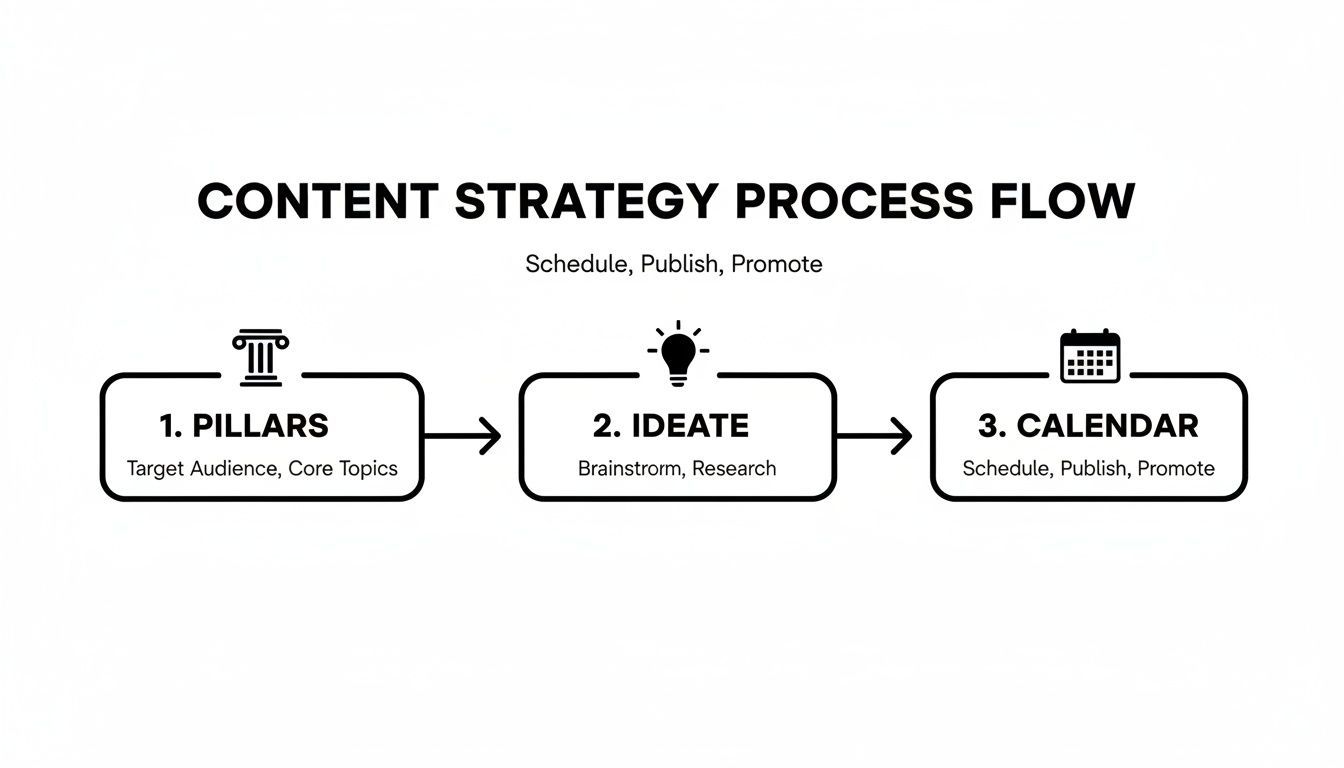
Following a clear path like this ensures that even your AI-powered content is strategic and stays true to your brand’s core message.
A Practical Workflow Example
Let's walk through a real-world scenario. Say one of your core content pillars is "Productivity for Solopreneurs." You want to create a quick video about using the "Two-Minute Rule" to stop procrastinating.
Here’s how it would look:
- Script Generation: You type in the prompt, "Create a 45-second script about the two-minute rule for productivity." The AI instantly drafts a solid script with a hook, key points, and a call to action.
- Scene Creation: The tool automatically pulls together relevant scenes and visuals that match the script's story, saving you the headache of hunting for stock footage.
- Voiceover & Captions: You pick a natural-sounding AI voice for the narration and turn on auto-captions. This is huge, since over 85% of social media videos are watched with the sound off.
- Branding & Polish: You apply your brand kit, maybe add a trending audio track from the built-in library, and schedule the finished video to go out across all your channels.
Before you jump in, it's helpful to see just how much of a difference this workflow makes. Here’s a quick comparison of the old way versus the AI-powered way.
Traditional vs AI-Powered Video Workflow
| Task | Traditional Method (Time/Effort) | ShortGenius AI Method (Time/Effort) |
|---|---|---|
| Scriptwriting | 1-2 hours of brainstorming and writing | ~2 minutes from a single prompt |
| Finding Visuals | 1-3 hours searching stock libraries | ~5 minutes with automatic generation |
| Voiceover Recording | 30-60 minutes of recording and editing | ~1 minute to select and apply an AI voice |
| Editing & Captions | 2-4 hours of cutting, timing, and transcribing | ~10 minutes for automatic assembly and branding |
| Total Time | 4.5 - 10 hours per video | ~20 minutes per video |
The numbers speak for themselves. This isn't just about making content faster; it’s about making it sustainable.
By systemizing the production process, you reclaim countless hours. This reclaimed time can be reinvested into what truly matters for a personal brand: engaging directly with your community and developing deeper content.
This efficiency is about more than just saving time—it’s about maintaining momentum. When you can consistently put out high-quality content, your audience learns to trust you and rely on your expertise. Beyond just video, it's worth exploring how AI for social media marketing can help streamline your entire content process. Adopting these tools is a strategic move to scale your presence and authority without burning out.
Distributing Content and Building Your Community

Creating standout content is a huge win, but it’s really only half the job. What good is a brilliant video if no one ever sees it? Now comes the part where we get your work in front of the right people and start turning those viewers into a real community.
This is all about smart distribution and genuine interaction. You have to remember that every social platform speaks its own language. A post that crushes it on one network might totally flop on another, which means that one-size-fits-all sharing just doesn't work.
Master Each Platform’s Language
To get your content seen, you have to play by the rules of each platform. It’s like learning the local dialect—you have to tailor your approach to the features and user habits of every channel you're on.
Here’s what I mean:
- On Instagram: Don't just slap on random hashtags. Do your homework and use a smart mix of broad, niche, and community-specific tags to expand your reach. If you're posting Reels, jumping on a trending audio track can give you a massive visibility boost.
- On YouTube: Your title and thumbnail are your first impression, and they are critical. You need to write compelling, keyword-rich titles that spark curiosity and design thumbnails that actually pop in a crowded feed. A great title often answers a burning question or promises a clear solution.
- On TikTok: This platform moves fast. It’s all about jumping on trends and challenges while they’re hot. Keep your videos short and punchy, and make sure you have a killer hook in the first 3 seconds to stop the scroll.
When you adapt your content like this, you're signaling to the algorithm—and your audience—that you get the platform's culture. That's how you get rewarded with more views.
From Engagement to Community
The real power of a personal brand comes alive in the comments and DMs. Engagement isn't just about dropping a quick "Thanks!" and moving on. It’s your chance to start real conversations, build relationships, and create a sense of belonging. This is what turns passive followers into a loyal tribe.
True community building isn’t about broadcasting at people; it's about connecting with them. Ask thoughtful questions, share personal stories, and create a space where people feel comfortable sharing their own experiences.
Instead of just posting and ghosting, make a habit of sticking around. When someone leaves a great comment, ask a follow-up question. If you share a video with a helpful tip, ask your audience how they plan to put it into practice. This back-and-forth dialogue is what builds trust and makes people feel seen and valued.
Of course, this all takes time and consistency. Using a scheduling tool can help you keep a steady stream of content going out, which frees you up to focus on the human connection. By investing in these conversations, you’re not just growing an audience; you're building a powerful network of genuine fans who will champion your brand.
Turning Your Personal Brand into a Business
Once you’ve built an engaged audience and established your authority, the idea of monetizing your personal brand will naturally come up. This is a good thing! It means you've created real value. The trick is to do it in a way that feels true to who you are and serves the community you've worked so hard to build.
Making the leap from free content to paid offerings can be nerve-wracking. We've all seen brands that suddenly flip a switch and become pushy salespeople. But it doesn’t have to be that way. When approached thoughtfully, monetization is simply the next step in serving your audience at a deeper level. It’s what allows you to dedicate more time and resources to creating even better content and solutions for them.
Creating Authentic Revenue Streams
The best way to start is by looking at the problems you're already solving. What questions do people ask you over and over? What struggles do they share in your DMs and comments? Your first product or service should be born directly from those needs. Don't just copy what others in your niche are doing; create something that only you can, based on your unique expertise.
Here are a few paths people commonly take, and they work for a reason:
- Digital Products: Think ebooks, in-depth guides, templates, or workshops. These are fantastic for packaging your knowledge into a structured, high-value format that solves a very specific problem.
- Coaching or Consulting: If your audience is constantly asking for your direct input, this is a clear sign they'd pay for it. You can offer one-on-one sessions or even small group programs for more personalized guidance.
- Affiliate Marketing: This one requires a delicate touch. Only recommend products, software, or tools that you genuinely use and believe in. Your audience's trust is your greatest asset, so be transparent and only promote things that will truly help them.
The idea is to make your paid offers feel like the logical next step for your most dedicated followers, not an abrupt and unwelcome sales pitch.
Pricing Your Value and Maintaining Trust
"What should I charge?" This question trips up almost everyone. My advice? Stop thinking about your time and start thinking about the transformation you provide. Are you helping someone land a new job, save 10 hours a week, or double their sales? The price should reflect the value of that outcome.
And speaking of value, trust is the currency of a personal brand. You have to protect it fiercely. Always be upfront about sponsored posts or affiliate links. Your audience followed you for your honest take, and they can spot an inauthentic recommendation from a mile away. The moment you trade trust for a quick buck is the moment your brand starts to crumble.
Your first paid offering shouldn't be a surprise. It should be the logical solution to a problem your audience has been asking you to solve. This approach frames monetization as an act of service, not just a transaction.
Scaling Your Business with Smart Tools
Once you have something to sell, you need to let people know about it. This doesn't mean you stop creating all that valuable free content. It just means you need to get strategic with your promotion. Running targeted ads is a great way to reach people who are ready to buy while continuing to serve the rest of your audience with free content.
You don't need a massive marketing budget or a big team to do this effectively anymore. Tools like a powerful AI ad generator can turn your existing content into compelling promotional videos in minutes. This lets you stay focused on what you do best—serving your clients and community—while the tools handle the heavy lifting of growing your business.
Answering Your Biggest Personal Branding Questions
So, you're ready to start building your personal brand. That's fantastic. But if you're like most people, your initial excitement is probably mixed with a healthy dose of doubt. It's completely normal to hit a wall of questions before you even lay the first brick.
Let's walk through some of the most common hangups I see people struggle with. My goal is to get you unstuck and moving forward.
“But I Have Nothing Unique to Say!”
This is, without a doubt, the number one fear I hear. In a world overflowing with content, it’s easy to feel like every topic has been covered from every possible angle. "Hasn't everything already been said?" you might wonder.
Here's the thing: you're looking at it wrong. Your unique perspective is actually your biggest strength.
People don’t just follow a brand for raw information—they follow a person they connect with. Your specific life experiences, the way you tell a story, and your personal method for breaking down tough subjects are what make you different. Two people can teach the exact same lesson, but their delivery, tone, and personal anecdotes will attract completely different communities. Don't underestimate that.
How Much of My “Real Life” Should I Actually Share?
This is a tricky one. You want to be authentic, but you also need to maintain some privacy. Striking that perfect balance between being relatable and oversharing is a common challenge for creators.
Here's a simple framework I use: share personal stories and experiences only when they directly relate to your core message and serve your audience.
Think of it as revealing the "why" behind what you do.
- Instead of just posting a workout, a fitness coach might share the vulnerable story of their own health transformation.
- A financial advisor could build trust by talking about the money mistakes they made in their twenties.
- A productivity guru could post a picture of their messy, chaotic desk on a tough day, reminding their audience that nobody is perfect.
These moments make you human. They build a powerful connection by showing you understand your audience’s struggles because you’ve been there. The trick is to always bring it back to the value you're offering them.
Your vulnerability isn't a weakness; it's a bridge. When you share it strategically, you allow your audience to connect with you on a much deeper level, turning casual followers into loyal advocates.
How Should I Deal With Negative Comments or Trolls?
When you put yourself out there, criticism is inevitable. It’s not a question of if it will happen, but when. I remember my first truly nasty comment—it can really sting. But having a game plan makes all the difference.
First, you have to learn to distinguish between genuine criticism and mindless trolling. Constructive feedback, even if it's delivered poorly, might have a kernel of truth you can learn from. Trolls, on the other hand, are just trying to get a rise out of you. My best advice? Never feed the trolls. Engaging with them just gives them the attention they crave and amplifies their voice.
For genuine negative feedback, a calm and professional response can sometimes de-escalate the situation and even win over a critic. For trolls, your best friends are the delete and block buttons. Your mental energy is your most valuable asset—invest it in the community that lifts you up, not in fighting battles with people who want to tear you down. Building a brand takes a thick skin.
Here's a quick checklist to get you started on the right foot.
Personal Branding Quick-Start Checklist
Getting started is often the hardest part. This checklist boils down the essential first moves for anyone just beginning their personal branding journey, helping you focus on what truly matters upfront.
| Action Step | Key Objective | Recommended Tool/Resource |
|---|---|---|
| Define Your Niche | Pinpoint the specific audience you want to serve and the problem you solve for them. | AnswerThePublic, Google Trends |
| Craft Your Core Message | Summarize what you stand for in one or two clear, compelling sentences. | StoryBrand Framework |
| Optimize One Social Profile | Choose one platform where your audience lives and build a stellar, value-packed profile. | Canva for profile graphics |
| Create 3 Pillar Content Pieces | Develop three foundational pieces of content that showcase your expertise. | Your blog, a YouTube channel |
| Engage With 10 People | Find 10 people in your niche and leave thoughtful, non-promotional comments. | The social media platform of your choice |
Remember, the goal isn't perfection; it's momentum. Completing these simple actions will build the foundation you need to grow with confidence.
Ready to turn your ideas into a steady stream of on-brand video content without the burnout? ShortGenius gives you the power to generate scripts, scenes, and voiceovers in minutes, so you can focus on building your community. Discover how thousands of creators are scaling their presence.