Faceless video creator: Master AI workflows to publish without showing your face

Discover an AI-powered workflow to become a successful faceless video creator. Generate ideas, scripts, and videos without showing your face.
A faceless video creator is someone who builds a brand and publishes content without ever showing their own face on camera. It’s a smart approach that puts all the focus on the value of the content itself—whether that’s a deep-dive tutorial, a compelling story, or an insightful data visualization—instead of relying on a creator’s personality.
The Strategic Rise of the Faceless Creator
Just a few years ago, the idea of building a huge online following without ever appearing on screen would have sounded a little strange. Today, it’s a seriously powerful business strategy. Going faceless isn't about hiding; it's a deliberate choice to step away from the pressures of personal branding and build a scalable, message-focused content machine instead. Your expertise, your story, or your unique aesthetic becomes the undisputed star of the show.
This shift has been put on overdrive by new technology. The rise of the faceless creator is directly tied to the explosive growth of the AI video generator market, which gives anyone the ability to produce a high volume of quality content without burning out. That market was valued at USD 614.8 million and is expected to climb to an incredible USD 2,562.9 million by 2032. You can dig into the specifics by reading more about these AI video market projections and their impact.
Why Go Faceless?
The appeal of this model goes way beyond just wanting a bit of privacy. For many, it's about building something sustainable that they can stick with. When you remove the need to be "camera-ready," you get rid of a massive production bottleneck. This lets you pour all your energy into the quality and consistency of your work.
This approach opens the door for a much wider range of people to find success:
- Introverts or private individuals who have valuable knowledge to share but don't want the personal exposure.
- Marketers and brands that need scalable content not tied to a single person's availability or image.
- Educators and storytellers who know their message is more powerful than their physical presence.
- Agencies tasked with producing tons of content, like AI-generated UGC ads, for a diverse client roster.
Let's break down the practical advantages with a quick comparison.
Key Advantages of the Faceless Creator Model
This table breaks down the core benefits of adopting a faceless video strategy, showing the practical advantages for different types of creators.
| Advantage | Impact for Solo Creators | Impact for Marketing Teams |
|---|---|---|
| Scalability | You can produce more content faster without needing to be on camera for every shot. Batching and automation become much easier. | Content production isn't reliant on one spokesperson. Multiple team members can create videos, ensuring consistent output. |
| Reduced Pressure | No need to worry about appearance, on-camera performance anxiety, or personal privacy. The focus is purely on the content. | Avoids the "key person risk" of a brand being too tied to a single influencer or employee who might leave. |
| Brand Focus | The brand is built around the value, aesthetic, and information provided, not a personality. This creates a stronger, more transferable asset. | The company brand is the hero. It's easier to maintain a consistent brand voice and style across all video content. |
| Anonymity | You can maintain your privacy while still building a successful online business or community. | Allows for rapid testing of different video styles and concepts for various campaigns without direct brand association until a winner is found. |
Ultimately, going faceless allows your brand to become synonymous with the value you deliver, not your personal identity. This makes your content far more scalable and easier to manage over the long term.
The core advantage is this: your brand becomes synonymous with the value you deliver, not your personal identity. This makes the content more scalable, evergreen, and easier to manage over the long term.
At the end of the day, being a faceless creator is all about efficiency and impact. It levels the playing field, proving that a powerful message doesn't need a face to connect with millions of people. It’s a method truly built for how we consume content now, where quality and consistency are what really matter.
Building Your AI-Powered Video Workflow
To create content that lasts, you need a process you can repeat. The real goal isn't just to make one amazing video; it's to build a system that churns out high-quality content without leading to burnout. This is precisely where having a unified, AI-powered workflow changes the game for faceless creators.
Instead of juggling a dozen different apps for scripts, visuals, voiceovers, and editing, an integrated platform puts everything you need in one place. This approach drastically reduces the friction of switching between tools, letting you go from a simple idea to a finished video in a fraction of the time.
I like to think of this process in three core stages: Message, Content, and Brand.
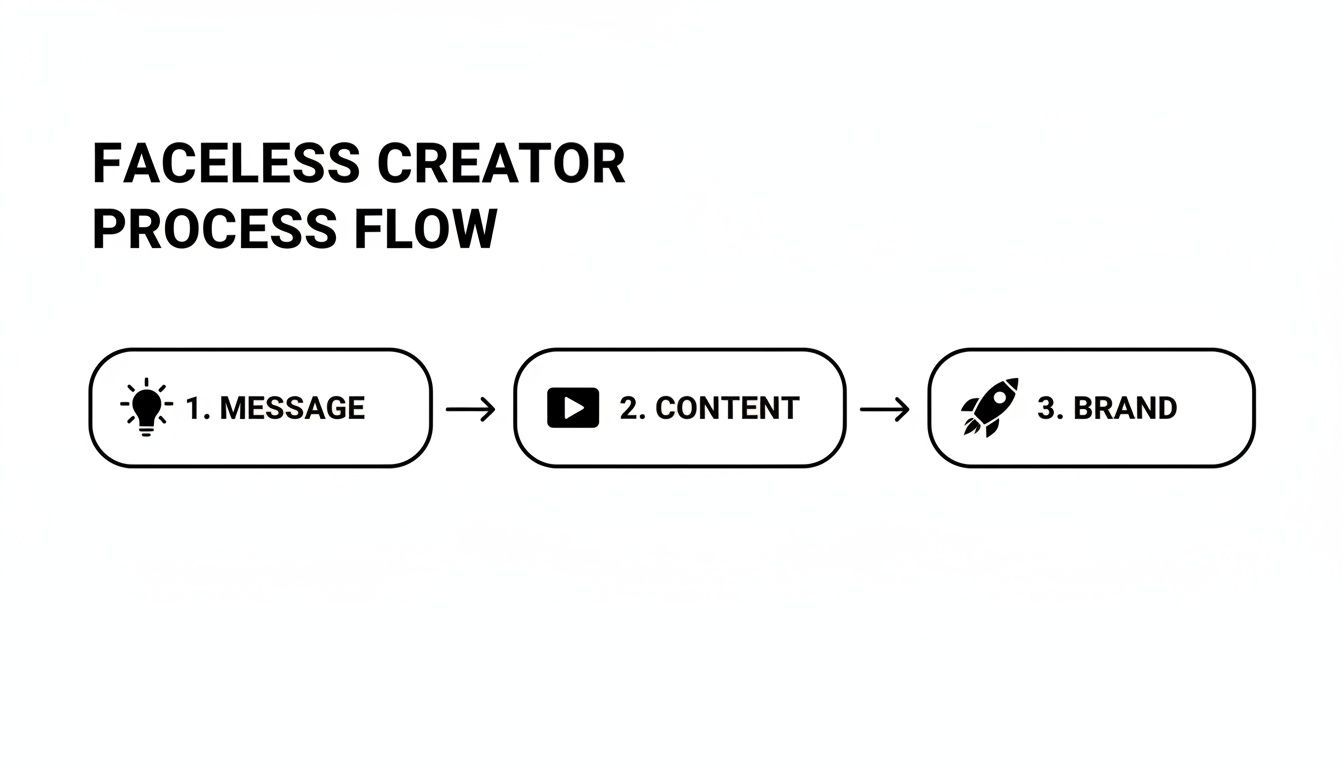
This model really drives home that a winning faceless strategy always starts with a clear message. That message dictates the content you create, which, over time, builds a brand people recognize and trust.
From a Single Idea to a Full Content Calendar
It all starts with the idea and the script. Let's say you want to create videos about "healthy morning habits." Instead of staring at a blank page, you can ask an AI to spin that one theme into a month's worth of video concepts.
For instance, you could try prompting it with things like:
- "Give me five quick TikTok video ideas about morning habits for busy professionals."
- "Outline a three-part YouTube Shorts series on the science behind proper hydration."
- "Write a script for a promo video about a new productivity journal."
The AI can spit back sharp, engaging scripts already fine-tuned for the platform and audience you’re after. Going from a single thought to a complete content plan can literally happen in minutes. The trick is learning to refine your prompts to get the exact tone and structure that fits your brand.
The real magic of an AI-driven workflow is its speed. On average, these tools can save creators 62% of their production time—a massive leg up for anyone looking to scale their output.
This efficiency is why so many creators are jumping on board. New data shows 78.8% of creators say the biggest benefit of using AI is the time saved, while 44.1% point to the huge cost reductions.
Generating Visuals and Voice in Sync
With your scripts locked in, it's time to bring them to life with visuals and a voice. An all-in-one platform is a huge help here, as it lets you generate all your assets in one go, ensuring everything feels cohesive. You can create custom images, pull from high-quality stock video libraries, or even play with incredible text-to-video AI models that build unique scenes from a simple line of text.
Here’s a quick look at how this part of the process usually plays out:
- Scene Creation: The AI reads your script and automatically suggests or generates video clips and images for each sentence or scene.
- Voiceover Generation: You pick an AI voice that matches your brand’s personality—maybe it's energetic, calm, or authoritative. The platform then generates the full voiceover, perfectly timed to the script.
- Initial Assembly: The system then stitches the visuals and the voiceover together, creating a solid first draft of your video.
This automated assembly is a massive time-saver. Instead of painstakingly syncing audio and video tracks by hand, you start with a rough cut that's already put together. This frees you up to focus on the creative edits and final polishes that will make your content truly shine.
Bringing Your Faceless Videos to Life
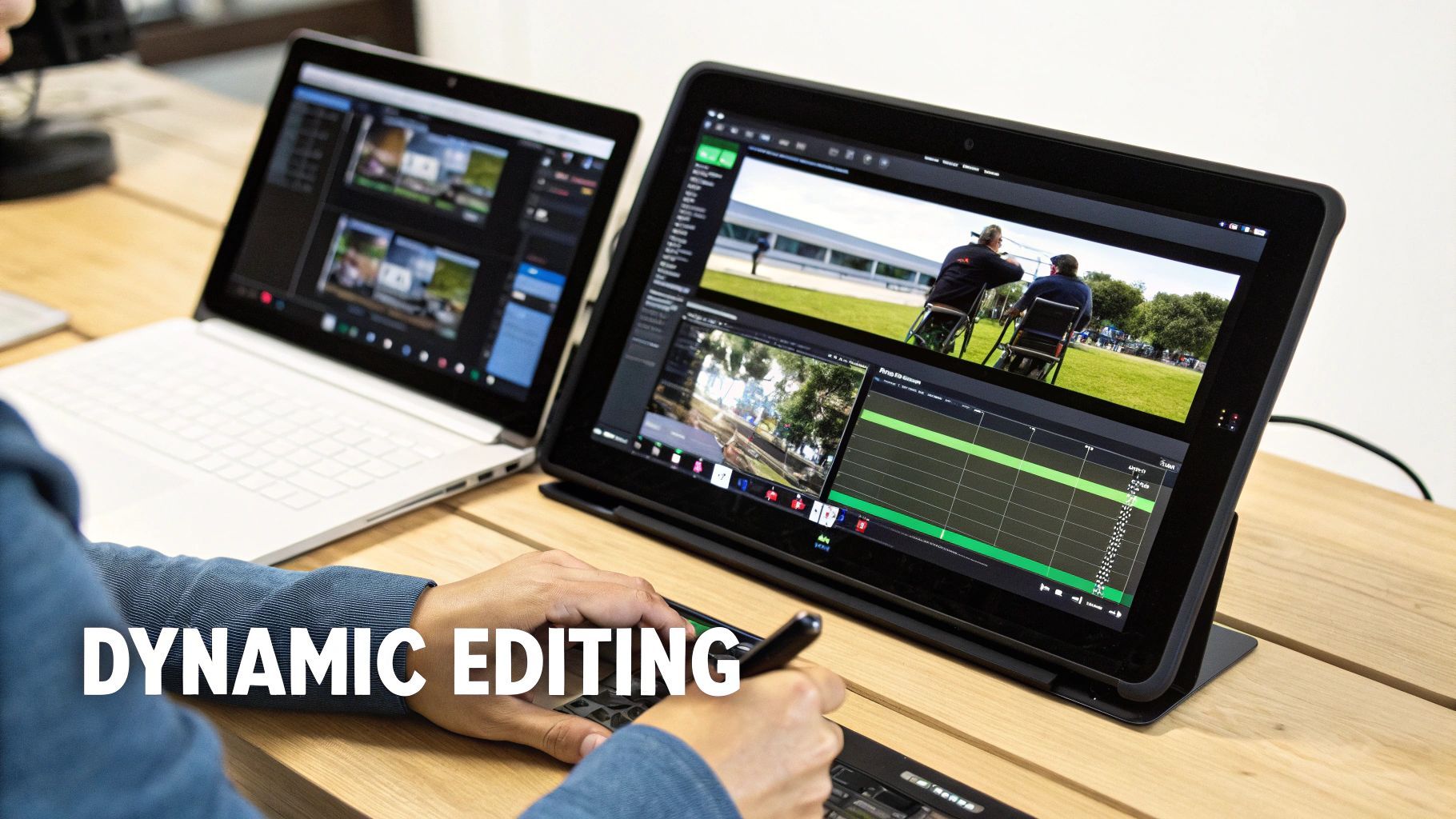
AI gives you all the raw ingredients, but the real magic happens in the editing suite. This is where you, the creator, step in to turn a collection of AI-generated assets into a polished, compelling video. It’s all about adding that human touch that makes the final product feel intentional and dynamic.
First things first: the pace. Short-form video lives and dies on momentum. Your job is to keep the energy high with quick, snappy cuts. I always start by trimming any dead air between sentences in the voiceover. Make sure each visual lingers just long enough to make its point before you jump to the next one. This rapid-fire rhythm is what keeps people from swiping away.
Enhancing Visuals with Motion and Effects
Static images are a viewer-retention killer. The easiest way to solve this is by adding subtle, AI-driven camera movements that trick the eye into seeing motion. A simple animation can make a still image feel like it was shot for a high-budget production.
Here are a few of my go-to enhancements that work every time:
- Slow Zoom: A gentle zoom-in adds a touch of drama and draws focus to a key detail.
- Pan Left/Right: This gives you a cinematic sweep across the scene. It just feels professional.
- Push-In Effect: A slightly faster zoom is perfect for emphasizing a specific word or moment in your voiceover.
You can learn more about how modern image-to-video AI tools can automate this, turning your static visuals into something much more engaging.
Beyond camera work, think about developing a signature look with filters or effects. Whether it's a specific color grade, a subtle grain filter, or a unique transition, consistency is key. Over time, people will start to recognize your content by its visual style alone, which is a massive win for any faceless brand.
Mastering Captions and Hooks
Let's be real: most people are scrolling with the sound off. That makes captions an absolute must-have, not just for accessibility but for keeping people watching. I use an auto-captioning tool to get started, but I always go back and proofread for accuracy.
Don't just stick with the default either. Make your captions part of your brand. Customize the font, colors, and animations to match your style. Highlighting keywords with a pop of color is a small detail that makes a huge difference in readability and visual appeal.
Finally, obsess over the first three seconds. This is your scroll-stopper. It’s the hook that decides whether someone gives you their attention or keeps on scrolling.
Your video's success is often decided in the first three seconds. A powerful hook isn't a luxury; it's a necessity for cutting through the noise on any platform.
Find an intro template that works and stick with it. I often start with a bold text overlay that asks a probing question or makes a provocative statement. I pair that with the most visually arresting clip I have to create instant intrigue. For example, a video on productivity might open with the text "You're Wasting 2 Hours a Day" over a chaotic, fast-paced montage. It immediately grabs attention and promises a solution, giving the viewer a reason to stay.
Make Every Video Count: Optimizing and Scheduling Your Content
Making a great faceless video is a huge win, but it's really just the first step. The real magic happens when you get that video in front of the right eyeballs, and that’s all about smart distribution. Forget the old-school grind of manually re-editing your work for every single platform. The modern workflow is all about one-click resizing.
This is a massive time-saver. With the right tool, you can instantly adapt your main video for TikTok, Instagram Reels, and YouTube Shorts. It’s not just cropping; a good tool will automatically adjust the aspect ratio, intelligently reframe the most important action, and make sure your captions don't get awkwardly cut off by each platform's interface. In seconds, you go from one core video to three perfectly formatted, platform-native versions.
Different Platforms, Different Playbooks
Even though the video file is essentially the same, your strategy for captions, descriptions, and hashtags needs to be tailored. Each algorithm is a unique beast, and what crushes it on TikTok might get completely ignored on YouTube Shorts.
Here’s a quick breakdown from my own experience:
- TikTok: Lean into trending audio and keep your caption short and snappy. You'll want a smart mix of popular, high-volume hashtags and a few super-niche ones to find your people.
- Instagram Reels: Visual quality is king here. The algorithm tends to reward polished, aesthetically pleasing clips. Your captions can be a bit more descriptive, and engaging audio is non-negotiable.
- YouTube Shorts: You have to think like a search engine. Your title and description need to be packed with relevant keywords. You're essentially telling YouTube’s algorithm exactly what your video is about so it can serve it up to the right audience.
Beyond the video itself, solid copywriting for social media is what separates a good post from a great one, turning passive viewers into engaged followers.
The sheer scale of these platforms is hard to wrap your head around. The faceless video creator has become a vital part of this world, with AI tools making it possible to keep up with the demand. Just think about it—25 million videos are uploaded to TikTok every single day. That's a level of output that AI makes manageable for creators who want to build a brand without ever showing their face.
The Platform-Specific Optimization Checklist
To keep things simple, I've put together a quick reference table. Use this as a final check before you post to make sure you're giving each video the best possible chance to succeed.
| Platform | Optimal Aspect Ratio | Key Elements (Captions, Music) | Best Practice Tip |
|---|---|---|---|
| TikTok | 9:16 | On-screen text, trending sounds | Hook the viewer in the first 2 seconds. Don't be afraid to be a little weird. |
| Instagram Reels | 9:16 | High-quality visuals, trending audio | Aim for an aesthetic, polished feel. Use carousels or collaborations to boost reach. |
| YouTube Shorts | 9:16 | Keyword-rich titles & descriptions | Treat it like a mini YouTube video. Your title is your most powerful tool for discovery. |
Tailoring your content isn't about creating three separate videos; it's about making small, strategic tweaks that respect how users behave on each platform. It's a small effort that pays off big time.
Put Your Content Calendar on Autopilot
If you want to grow a serious following as a faceless creator, consistency is everything. And the only sustainable way to be consistent is by scheduling your content. This is the ultimate "work smarter, not harder" move.
Consistency is the engine of audience growth. Scheduling transforms content creation from a daily reactive task into a strategic, proactive operation.
Imagine batch-creating a week's or even a month's worth of videos in one session. You upload them all at once, write your platform-specific captions, and schedule them to go live at the peak engagement times for each audience.
This "set-it-and-forget-it" method is what separates the pros from the hobbyists. It frees you from the daily pressure of having to post, giving you the mental space to focus on what really matters: coming up with your next killer video idea. All the while, your content engine is humming along in the background, building your audience for you.
Scaling and Monetizing Your Faceless Channel

Once you've got your AI workflow humming along, the real fun begins. You're no longer just churning out videos; you're building a genuine media asset that can grow. Now it's time to shift your focus from simply posting consistently to strategically growing your audience and, of course, making money.
The secret to scaling is to stop thinking in terms of one-off videos and start thinking in series. A single viral hit is a great ego boost, but a themed content series is what hooks viewers and turns them into subscribers. For a personal finance channel, imagine a "5-Day Savings Challenge" series. This approach is built for binge-watching and gives people a real reason to hit that follow button.
Building Your Monetization Stack
As a faceless video creator, your brand is tied to the value you provide, not your face. This is a huge advantage. It unlocks a ton of different ways to earn an income, and you can run them all at the same time to build a really stable financial base for your channel.
Here are the models I’ve seen work best:
- Affiliate Marketing: This is the natural starting point for most creators. You simply recommend products or software you actually use, drop your affiliate links in the description, and earn a commission. It costs your audience nothing extra and is a very authentic way to monetize.
- Digital Products: This is where you package your own expertise. Think e-books, video presets, Notion templates, or short courses that solve a very specific problem for your audience. You build it once and can sell it forever.
- Ad Revenue: The classic. Once you hit the eligibility requirements for programs like YouTube’s Partner Program, you can start earning money from ads on your videos. It’s a passive income stream that grows right alongside your viewership.
Platforms are also constantly adding new ways to earn. Beyond just ads, many creators are finding success with platform-native features, and it’s worth learning how to make money on TikTok to see just how creative you can get.
From Solo Creator to Scalable Operation
The real beauty of an AI-powered faceless workflow is that it's a repeatable system. The exact process you've perfected for one channel can be duplicated to run several. You could launch new channels in different niches or even start a new business where you manage video content for other brands.
The most powerful aspect of a faceless, AI-powered system isn't just creating content—it's creating a business model that can be duplicated and scaled without proportionally increasing your personal workload.
This is the shift from being a content creator to becoming a media operator. Since the entire process isn't tied to you being on camera, you can eventually hire a virtual assistant to help manage parts of the workflow. You’re essentially cloning your production capacity. This is how a small side project can genuinely grow into a sustainable, profitable business built on valuable content, not personal fame.
Common Questions About Faceless Video Creation
Diving into faceless video creation is exciting, but let's be honest—it also brings up a ton of questions. It's totally normal to wonder about the practical stuff, like how you'll actually make money or build a real connection with an audience you never show your face to.
I've heard these same questions from countless creators just starting out. Here are some straight-shooting answers to clear things up and give you the confidence to jump in.
Can Faceless YouTube Channels Actually Get Monetized?
Yes, 100%. This is probably the biggest myth that stops people before they even start. YouTube's monetization policies care about the originality and value of your content, not whether your face is on camera.
As long as you’re creating unique videos that follow the YouTube Partner Program rules—think original commentary, fresh educational insights, or a well-told story—you're good to go.
In fact, some of the most massive channels on the platform are completely faceless. Just think about the niches that are practically built for this model:
- Historical documentaries that weave together archival footage and a compelling narrator.
- Financial explainers that use slick animations and data charts to make complex topics simple.
- Guided meditations that are all about the soothing voice and calming visuals.
- Productivity tutorials where the focus is on a screen recording, not a person.
These channels don't just get monetized; they often become incredibly profitable. Their success comes from the quality of their information and execution, which is exactly what the algorithm is looking for.
What Are the Best Niches for a Faceless Creator?
While you can make a faceless channel work in almost any niche, some are a natural fit. These are usually topics where the information, aesthetic, or story is the real star of the show. Content like educational explainers, software walkthroughs, top-10 listicles, animated stories, and guided meditations are all proven formats.
But here’s the most important part: pick a niche you actually know and care about. The secret to success isn't about hiding your face; it's about delivering a unique perspective and consistent value that people can't get anywhere else. Your expertise is your brand.
Building a community isn't about your personal appearance—it's about your brand's personality. You create that connection with a distinctive AI voice, a consistent visual style, and by genuinely engaging with people in the comments. Your value becomes the 'face' of your channel.
Do I Need Expensive Software to Get Started?
Not anymore. A few years ago, making professional-looking videos meant juggling a bunch of expensive, complicated software for scripting, editing, voice recording, and animation. The financial barrier was steep, and it kept a lot of great ideas on the sidelines.
Today, integrated AI platforms have completely changed the landscape. They bundle the entire workflow—from writing scripts and generating voiceovers to assembling video clips and scheduling posts—into one affordable subscription. This has thrown the doors wide open, allowing any faceless video creator to produce high-quality, polished content without needing a Hollywood budget or a degree in video engineering.
Ready to build your own faceless content empire? With ShortGenius, you get an all-in-one AI-powered platform to write, create, edit, and schedule high-performing videos in minutes. Join over 100,000 creators and turn your ideas into a scalable brand at https://shortgenius.com.