8 Powerful Facebook Video Ad Examples to Dominate in 2026

Discover 8 top Facebook video ad examples with strategic breakdowns. Learn how to create high-converting video ads for your brand today.
In a feed saturated with content, the average Facebook video ad is destined to be ignored. The vast majority fail not because of low budgets or poor production quality, but because they lack a strategic framework. They fail to hook the viewer in the first three seconds, tell a coherent story, or present a compelling call to action. This creates a cycle of wasted ad spend and disappointing results, leaving marketers wondering what went wrong. For creators and brands who feel their campaigns are underperforming, it might even be worth exploring other channels; in fact, a common issue is finding reliable strategies when your Facebook Ads not working alternatives are needed to diversify your approach.
However, the ads that succeed do so by design. They follow proven formulas that combine psychological triggers with platform-native creative. This guide moves beyond generic advice to provide a deep, tactical breakdown of 8 powerful facebook video ad examples that consistently deliver. We will dissect each one to reveal the specific strategies that make them effective, from their initial hook and narrative structure to their final conversion push.
You won't just see what works; you'll understand why it works. We'll analyze everything from user-generated content and storytelling to urgency-driven promos and behind-the-scenes glimpses. Each example comes with a complete strategic breakdown, actionable takeaways, and reusable templates designed to help you create high-performing video ads immediately. Forget guesswork, this is your new playbook for creating Facebook video ads that don't just get seen, they get results.
1. Product Demo Videos - Educational/Awareness Marketing
Product demonstration videos are a cornerstone of effective social media advertising, especially for awareness and consideration stages. These short-form ads (typically 15-60 seconds) focus on visually showcasing a product's features, benefits, and real-world application. Instead of a hard sell, the goal is to educate the viewer, demonstrating how the product solves a specific problem clearly and concisely. This approach builds trust and positions your brand as a helpful solution provider, making it one of the most reliable facebook video ad examples for generating qualified interest.
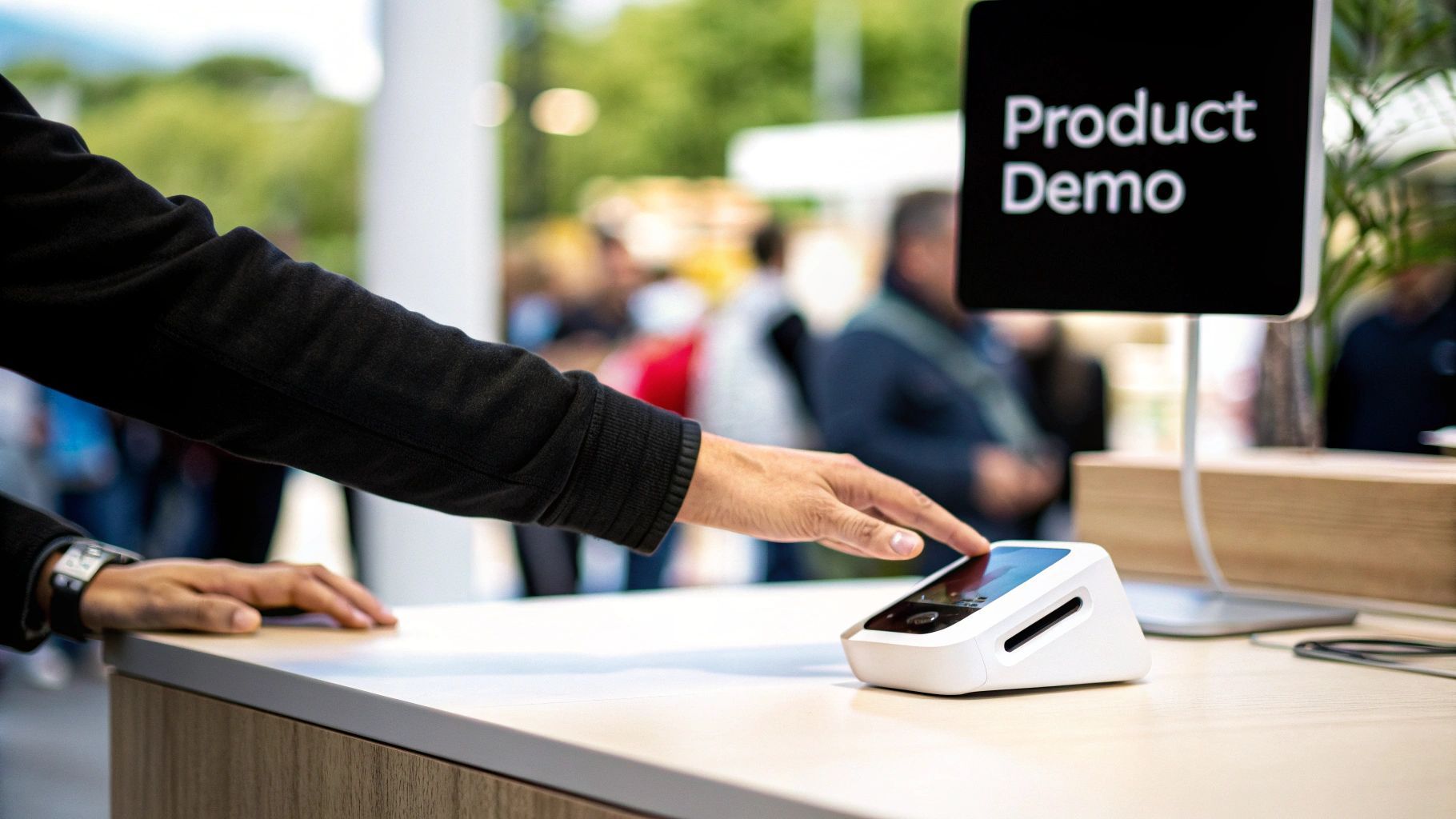
This format is particularly potent for SaaS companies like Slack and Notion or tech brands like Apple. For instance, a Grammarly ad might quickly show a user making a common typo in an email, followed by the tool instantly highlighting and correcting it. The ad doesn't just list "spell check" as a feature; it demonstrates the value in a relatable context, making the benefit tangible.
Strategic Breakdown & Actionable Takeaways
To create a high-performing product demo ad, focus on a clear problem-solution narrative that grabs attention within the first three seconds.
- Lead with the Pain Point: Start your video by immediately addressing the viewer's biggest frustration. A project management tool's ad could open with a shot of a messy, confusing spreadsheet.
- Show, Don't Just Tell: Use screen recordings, close-ups, or animations to walk through the solution. The visual proof of your product in action is far more compelling than a voiceover listing features.
- Focus on a Single Core Benefit: Avoid overwhelming viewers with every feature. Dedicate each ad to demonstrating one key benefit, such as "automating repetitive tasks" or "organizing your notes effortlessly."
- Optimize for Sound-Off Viewing: The vast majority of Facebook users watch videos without sound. Use bold, clear on-screen text and captions to convey your message effectively.
- End with a Clear, Low-Friction CTA: Conclude with a simple call to action like "Learn More" or "Try It Free." The goal is education, so a hard "Buy Now" can feel premature and reduce click-through rates.
This approach works best when your product has a clear, demonstrable function that can be easily understood visually. It builds brand awareness and educates potential customers, priming them for conversion later in their journey.
2. User-Generated Content (UGC) Testimonial Videos - Social Proof/Conversion
User-Generated Content (UGC) testimonial videos leverage the power of authentic social proof to drive conversions. These ads feature real customers sharing their genuine experiences with a product or service, creating a powerful, unbiased endorsement. Instead of polished brand messaging, UGC ads present a raw, relatable perspective that builds immediate trust with potential buyers. This format is one of the most effective facebook video ad examples for overcoming skepticism and pushing viewers from consideration to purchase.
This strategy has been popularized by direct-to-consumer brands that rely on community and word-of-mouth marketing. Allbirds, for example, often features ads with customers simply talking about how comfortable their shoes are for everyday activities. Similarly, a HelloFresh ad might showcase a customer's real-life weight-loss journey, providing a tangible and inspiring result that resonates far more deeply than a generic marketing claim. The unscripted nature makes the testimonial feel less like an ad and more like a trusted recommendation from a friend.
Strategic Breakdown & Actionable Takeaways
To create a compelling UGC testimonial ad, focus on authenticity and highlighting specific, desirable outcomes that your target audience can relate to.
- Prioritize Authenticity Over Polish: The power of UGC lies in its rawness. Encourage customers to film on their phones in natural settings. Over-editing or adding too much professional polish can strip away the credibility that makes these ads work.
- Guide, Don't Script: Provide customers with simple prompts or questions to answer rather than a full script. Ask them to describe the problem they faced before your product and the specific results they achieved after.
- Overlay Text to Emphasize Key Claims: Use bold on-screen text to highlight the most impactful parts of the testimonial, such as "lost 15 lbs in 2 months" or "saved 10 hours a week." This ensures the core message is delivered even with the sound off.
- Showcase Diverse Customer Profiles: Feature a variety of customers from different backgrounds, demographics, and use cases. This broadens the ad's appeal and helps more viewers see themselves in the testimonial, increasing connection and relatability.
- End with a Direct, Benefit-Driven CTA: Your call to action should connect directly to the testimonial's outcome. Instead of a generic "Shop Now," try "Get Your Perfect Fit" for a clothing brand or "Start Your Wellness Journey" for a health product.
This approach is ideal for the conversion stage of the funnel, as it provides the final nudge of social proof needed to convince hesitant buyers. It works best for brands with a passionate customer base and products that deliver clear, demonstrable results.
3. Storytelling/Narrative Brand Videos - Brand Awareness/Emotional Connection
Storytelling videos are designed to build a deep, emotional connection with an audience by focusing on narrative and values rather than direct product promotion. These ads, often 30-90 seconds long, tell a compelling story about a brand's mission, origin, or the people it serves. The primary goal is not an immediate sale but to foster brand loyalty and affinity, making it a powerful strategy for top-of-funnel brand awareness campaigns. This approach helps your brand stand out in a crowded feed by creating a memorable and emotionally resonant experience.
This format is masterfully used by lifestyle brands like Nike and Patagonia. A classic example is a Nike ad that doesn't show a new shoe but instead tells the origin story of an athlete overcoming adversity. Similarly, Patagonia often creates short documentaries about environmental activism. These narrative facebook video ad examples don't sell a product; they sell an identity, a belief system, and a community that viewers want to be part of.
Strategic Breakdown & Actionable Takeaways
To create a powerful narrative ad, focus on a clear story arc (setup, confrontation, resolution) that evokes a specific emotion, whether it's inspiration, humor, or empathy.
- Hook with Intrigue, Not a Product: Start with a compelling question or a visually captivating scene that sets up the story. Avoid showing your logo or product in the first few seconds.
- Develop a Relatable Protagonist: Center your story on a character your audience can connect with. This could be a customer, an employee, or a founder whose journey embodies the brand's values.
- Focus on the "Why," Not the "What": The narrative should communicate your brand's purpose and mission. Instead of showing what your product does, show why your company exists and the impact it aims to make.
- Build Emotional Resonance: Use powerful visuals, evocative music, and authentic narration to build an emotional climax. Test different emotional angles like inspiration, nostalgia, or humor to see what resonates with your audience.
- Subtle Branding and a Soft CTA: Introduce your brand logo and name only in the final moments of the video. The call to action should be soft, such as "Discover Our Story" or "Join Our Mission," encouraging further brand exploration rather than a direct purchase.
This strategy is most effective for brands looking to build long-term equity and differentiate themselves based on values rather than features. It creates a loyal following that connects with the brand on a deeper, more meaningful level.
4. Carousel/Multi-Scene Ad Videos - Product Showcase/Consideration
Carousel and multi-scene videos are a powerful tool for brands in the consideration stage, blending the exploratory nature of a carousel ad with the dynamic engagement of video. These ads feature a series of quick-cut scenes, each showcasing a different product, benefit, or use case within a single video. This format allows e-commerce and retail brands to present a collection or a product's versatility efficiently, encouraging viewers to explore multiple options without ever leaving the ad. It’s an excellent way to capture interest from a broader audience by displaying variety, making it one of the most effective facebook video ad examples for driving product discovery.
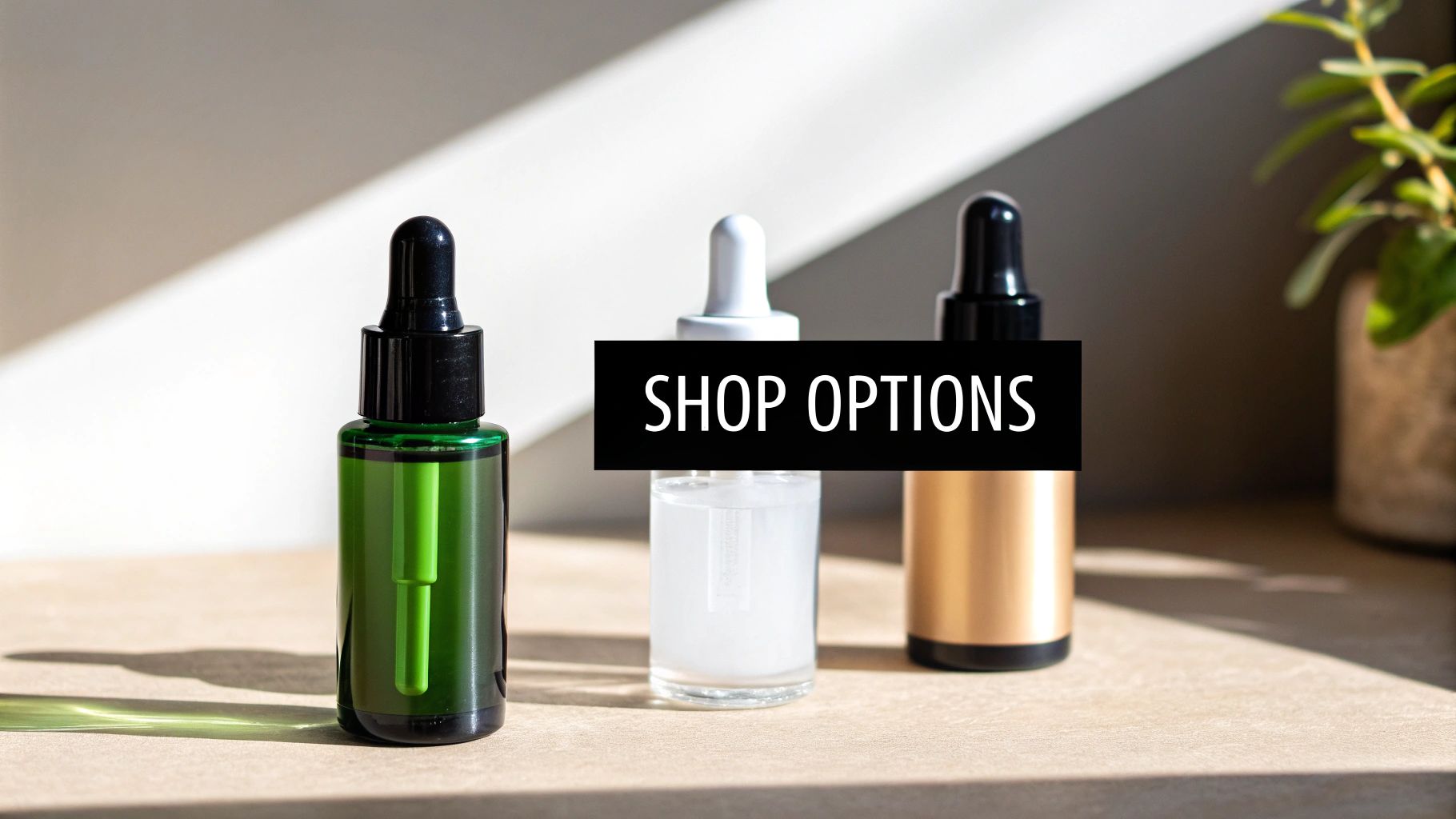
This strategy is a favorite for fashion retailers like ASOS or home decor brands like Wayfair. An ad might rapidly cycle through four or five different outfits suitable for a specific season, with each scene lasting only a few seconds. The quick pacing maintains high engagement while giving viewers a taste of the brand's diverse catalog. By presenting multiple options, the ad increases the probability of showing a viewer something that resonates with their personal style, prompting them to click through to see more.
Strategic Breakdown & Actionable Takeaways
To build a compelling multi-scene ad, focus on creating a cohesive yet varied visual narrative that guides viewers toward exploration and purchase.
- Lead with Your Bestseller: Start the video with your most popular or visually striking product to secure attention immediately. The first scene is your hook, so it needs to perform.
- Maintain Visual Consistency: While showcasing different products, use a consistent visual style, color palette, or editing technique across all scenes. This creates a professional, branded feel that builds trust and recognition.
- Keep Text Brief and Punchy: Each scene should have minimal on-screen text, like "New Arrivals" or "Summer Collection," to avoid clutter. The focus should be on the product visuals.
- Use Seamless Transitions: Employ subtle but clean transition effects between scenes to create a smooth, continuous flow. This keeps the viewer's eye moving through the ad and prevents it from feeling like a disjointed slideshow.
- End with a Multi-Product CTA: Conclude with a clear call to action that reflects the ad's variety, such as "Shop the Collection" or "Explore All Styles." This invites users to continue their discovery journey on your site.
This ad type is ideal for brands with a diverse product catalog or a single product with multiple compelling features. It excels at moving users from awareness to consideration by showcasing the breadth of your offerings and encouraging a click to learn more.
5. Trending Audio/Sound-Based Videos - Viral/Engagement Marketing
Trending audio videos leverage the power of cultural moments and platform algorithms to create highly engaging, organic-feeling content. These short-form ads (typically 15-30 seconds) are synchronized to trending sounds, music, or audio memes popularized on platforms like TikTok and Instagram Reels. Instead of feeling like a traditional ad, they tap into existing conversations, making the content more shareable and discoverable. This strategy is one of the most effective facebook video ad examples for boosting brand relevance and driving viral engagement.
This format is a go-to for DTC and fashion brands that thrive on cultural relevance. For instance, a clothing brand like ASOS might use a trending sound for a quick "outfit of the day" transition video, or a food brand like Chipotle could create a comedic skit using a viral audio clip. The key is that the brand joins a trend the audience already knows and loves, which lowers the barrier to engagement and makes the ad feel like native content in their feed.
Strategic Breakdown & Actionable Takeaways
To succeed with trending audio, speed and authenticity are paramount. The goal is to join the conversation, not interrupt it. For brands looking to create content that feels native and has high viral potential, understanding the nuances of how to make a video go viral is a critical first step.
- Act Quickly: Trends have a short lifespan, often just a few days to a week. Monitor TikTok's Creative Center or Instagram Reels' trending audio sections daily to catch sounds as they emerge.
- Prioritize Authenticity Over Polish: These videos are expected to have a lo-fi, user-generated feel. Overproduced content can seem forced and inauthentic. Use a simple setup and focus on nailing the trend's format.
- Align Trend with Brand Tone: Don't force a trend that doesn't fit your brand's personality. If your brand is serious and professional, a silly lip-syncing video may not resonate. Find sounds and formats that align with your voice.
- Adapt, Don't Just Copy: Put a unique spin on the trend that incorporates your product or brand message naturally. A beauty brand could use a "reveal" sound to show a before-and-after makeup transformation.
- Use Tools for Efficiency: Creating timely content requires speed. You can use platforms with pre-built templates and effects that sync to popular audio rhythms, allowing for rapid creation and deployment of trend-based ads. For streamlined production, ShortGenius offers tools to help you quickly match visuals to trending sounds.
This approach works best for top-of-funnel goals like brand awareness, engagement, and community building. It positions your brand as current and relatable, fostering a stronger connection with younger, social-media-savvy audiences.
6. Educational/How-To Tutorial Videos - Lead Generation/Engagement
Educational or "How-To" tutorial videos are a powerful strategy for engagement and lead generation. Instead of promoting a product directly, these ads (often 15-45 seconds) provide tangible value by teaching the viewer a useful skill, hack, or process. The primary goal is to establish brand authority and build trust by offering expertise freely. By positioning your brand as a helpful resource, you attract a highly engaged audience more likely to convert into leads, making this one of the most effective facebook video ad examples for nurturing potential customers.
This approach is widely used by brands like HubSpot, which offers marketing tutorials, and beauty brands like Sephora, which demonstrate makeup techniques. For example, a Canva ad might show a 30-second tutorial on creating a stunning Instagram story graphic using a specific feature. The ad teaches a valuable skill first, subtly showcasing the tool’s power and simplicity in the process, which encourages viewers to try it themselves.
Strategic Breakdown & Actionable Takeaways
To create a compelling educational video ad, prioritize genuine value over a sales pitch. The tutorial itself should be the main attraction, with the product acting as the tool that makes it possible.
- Hook with the End Result: Start your video by showing the impressive final outcome. A home improvement ad could begin with a shot of a perfectly organized closet before showing the quick DIY steps to achieve it.
- Break It Down into Simple Steps: Use clear, numbered on-screen text and quick cuts to guide the viewer through each step of the process. This makes the information easy to digest, especially in a sound-off environment.
- Keep the Tone Conversational: Use a friendly, accessible voiceover and avoid technical jargon. The goal is to feel like a helpful friend sharing a great tip, not a corporate trainer.
- Maintain a Fast Pace: Employ quick scene cuts (1-3 seconds each) and dynamic visuals to hold attention. A fast-paced tutorial feels more energetic and efficient, respecting the viewer's time.
- Use a Value-Driven CTA: End with a call to action that offers more educational content, such as "Download our free guide" or "Watch the full tutorial." This captures leads by offering more of what the viewer already found valuable.
This strategy excels at building an engaged community and generating warm leads. By prioritizing education, you attract an audience that trusts your expertise and is more receptive to your product when the time is right.
7. Limited-Time Offer/Urgency-Driven Videos - Conversion/Sales Marketing
Urgency-driven videos are high-impact, conversion-focused ads designed to compel immediate action. These short, punchy ads (often 15-30 seconds) leverage psychological triggers like scarcity and FOMO (fear of missing out) by highlighting a deadline, limited stock, or an exclusive deal. The primary goal is to interrupt a user's scroll with a compelling reason to act now, turning passive viewers into active customers by creating a sense of immediacy that a standard ad cannot match.
This tactic is a favorite for e-commerce brands during flash sales like Black Friday or for food delivery services like DoorDash offering a weekend promotion. For instance, a Shopify store's ad might feature quick cuts of a popular product with a large, animated countdown timer and bold text that reads, "50% OFF Ends Midnight!" This straightforward approach removes hesitation and pushes users directly toward the purchase decision, making it one of the most effective facebook video ad examples for driving bottom-of-funnel sales.
Strategic Breakdown & Actionable Takeaways
To execute a successful urgency-driven ad, every element must reinforce the need for immediate action. The message must be simple, the value proposition clear, and the deadline prominent.
- Make the Offer the Hero: Your offer should be the first and most visible element. Use large, bold text to state the discount (e.g., "40% OFF") or the deadline ("Ends Tonight!") within the first two seconds.
- Incorporate Visual Urgency: Don't just rely on text. Use visual cues like countdown timers, flashing banners, or fast-paced cuts to create a sense of energy and scarcity. An actual stock counter ("Only 47 Left!") can be extremely effective.
- Use Action-Oriented Language: Your copy should be direct and commanding. Phrases like "Shop Now Before It's Gone," "Claim Your Discount," and "Last Chance" are more effective than passive language.
- Maintain Offer Consistency: Ensure the offer in your video ad perfectly matches the offer on your landing page. Any discrepancy will break trust and lead to high bounce rates.
- End with a Strong, Direct CTA: The call to action should be unambiguous. "Shop Sale" or "Order Now" are powerful directives that tell the user exactly what to do next to secure the limited-time deal.
This ad type is most potent for sales-focused campaigns where the objective is to generate immediate revenue. It is ideal for clearing inventory, launching seasonal promotions, or hitting quarterly sales targets.
8. Behind-the-Scenes (BTS)/Brand Culture Videos - Authenticity/Community Building
Behind-the-scenes (BTS) videos offer an unpolished look into your company's inner workings, humanizing your brand in a way polished ads cannot. These ads, typically 30-60 seconds long, showcase your production process, introduce team members, or tell your brand's origin story. Instead of selling a product, the goal is to build an emotional connection and foster community by revealing the real people and values that power your business. This transparent approach cultivates trust and relatability, making it one of the most powerful facebook video ad examples for brand loyalty and affinity.
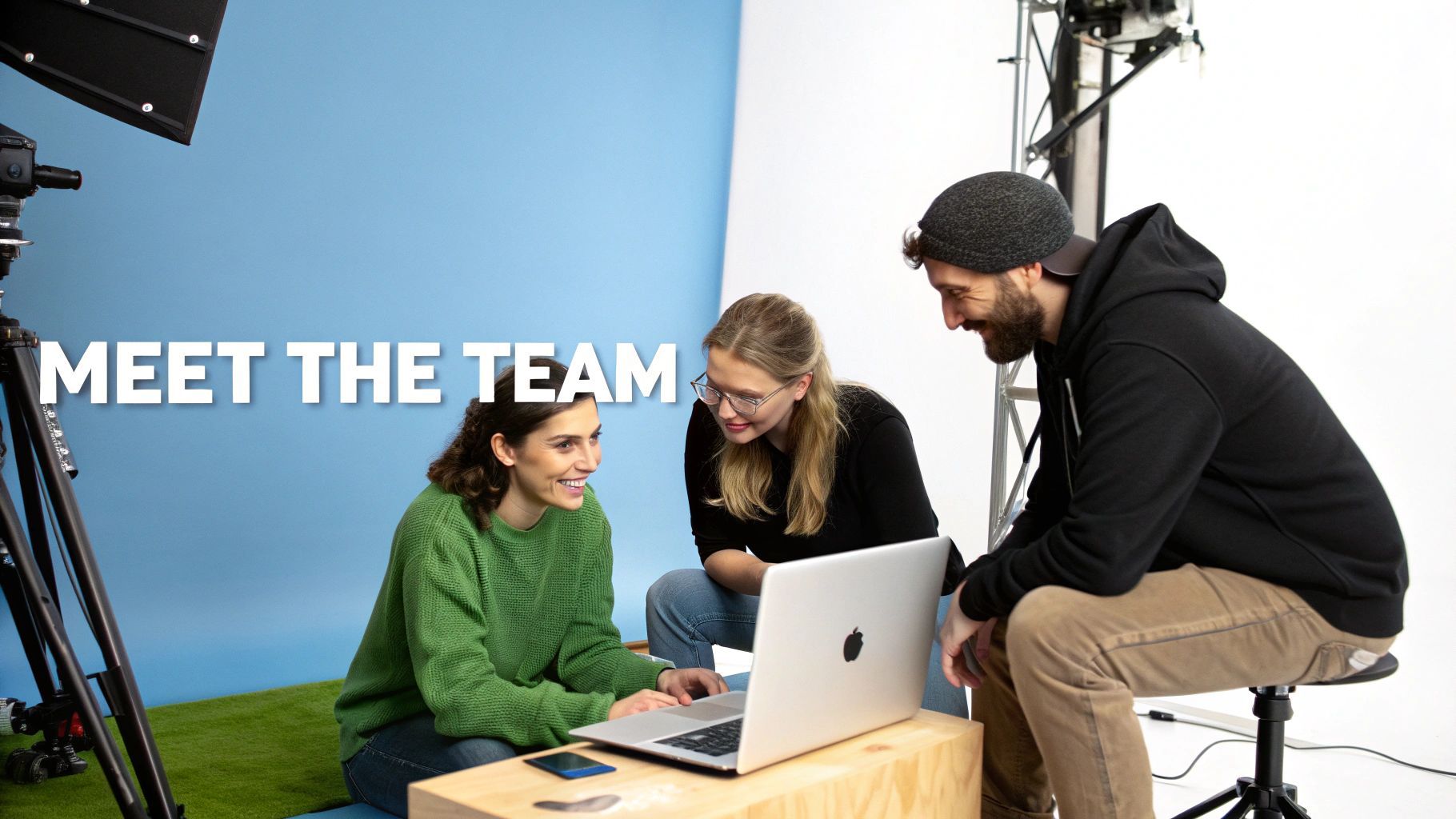
This format has been popularized by direct-to-consumer brands that prioritize community, like Allbirds showing its sustainable manufacturing process or Glossier featuring team members sharing personal stories. A brand like Patagonia might create an ad showing its employees participating in an environmental cleanup day. The ad doesn't explicitly sell a jacket; it sells the brand's ethos, attracting customers who share those values and want to support a company that stands for something more.
Strategic Breakdown & Actionable Takeaways
To create an effective BTS ad, prioritize authenticity over production value. Viewers on social media crave genuine content and can easily spot an overly scripted or polished attempt at "authenticity."
- Embrace Imperfection: Use a mobile-first shooting style. A handheld, slightly shaky video of your team packing orders or brainstorming ideas feels more real and trustworthy than a cinema-quality production.
- Spotlight Your People: Feature different team members and let them speak naturally. Use on-screen text to introduce them with their name and role. This puts a human face to your brand and makes it more relatable.
- Show, Don't Preach, Your Values: Instead of a voiceover stating, "We value sustainability," show your team sorting recycling or using eco-friendly materials. Let your actions communicate your brand's core principles.
- Create a Consistent Series: Turn your BTS content into a recurring monthly or weekly series. This gives your audience something to look forward to and builds a loyal, subscription-like following.
- Use a Soft CTA: The goal is community, not immediate sales. End with a call to action like "Follow Our Journey" or "Meet the Team," encouraging viewers to connect with your brand on a deeper level.
This strategy is ideal for brands looking to build long-term relationships and differentiate themselves in a crowded market. It's less about driving immediate conversions and more about creating a dedicated community of advocates who believe in your brand's mission.
8 Facebook Video Ad Types — Goals & Best Use
| Video Type | 🔄 Implementation Complexity | ⚡ Resources & Speed | ⭐ Effectiveness / Quality | 📊 Expected Outcomes | 💡 Ideal Use Cases & Key Advantage |
|---|---|---|---|---|---|
| Product Demo Videos (Educational/Awareness) | 🔄 Medium — needs clear product footage/editing | ⚡ Moderate resources; relatively fast iteration | ⭐⭐⭐⭐ — strong clarity/trust | 📊 Increased engagement & awareness; moderate direct conversions | 💡 SaaS/tech & retail — clarifies value quickly; good for trust-building |
| UGC Testimonial Videos (Social Proof/Conversion) | 🔄 Low–Medium — sourcing & permissions required | ⚡ Low production cost; sourcing can slow launch | ⭐⭐⭐⭐⭐ — highest trust factor | 📊 Higher conversion rates and social proof; scalable | 💡 DTC/e‑commerce — authentic social proof; low production overhead |
| Storytelling/Narrative Brand Videos (Emotional) | 🔄 High — script, direction, cinematic production | ⚡ High resources; longer timelines | ⭐⭐⭐⭐ — excellent long‑term brand equity | 📊 Strong brand recall, sharing, emotional loyalty; low immediate ROI | 💡 Lifestyle/large brands — build differentiation and emotional connection |
| Carousel/Multi-Scene Ad Videos (Showcase/Consideration) | 🔄 Medium — multiple scene assembly & hierarchy required | ⚡ Moderate resources; efficient if assets available | ⭐⭐⭐⭐ — effective for consideration & interaction | 📊 Higher engagement, product exploration, better CPE | 💡 E‑commerce/retail — showcase variety in one ad; optimized for platform interaction |
| Trending Audio / Sound-Based Videos (Viral/Engagement) | 🔄 Low — simple edits but requires trend monitoring | ⚡ Low resources; very fast turnaround | ⭐⭐⭐⭐⭐ — high organic reach potential (time-sensitive) | 📊 Rapid spikes in reach/engagement; short-lived impact | 💡 Youth‑facing brands — maximize algorithmic uplift with quick pivots |
| Educational / How‑To Tutorial Videos (Lead Gen) | 🔄 Medium — needs subject expertise & clear demos | ⚡ Moderate resources; evergreen content | ⭐⭐⭐⭐ — high authority and engagement | 📊 Lead generation, sustained engagement, shareability | 💡 B2B & consumer education — positions brand as expert; drives gated leads |
| Limited‑Time Offer / Urgency Videos (Conversion/Sales) | 🔄 Low — straightforward messaging & graphics | ⚡ Low resources; very quick to produce | ⭐⭐⭐⭐⭐ — highest direct conversion rates | 📊 Immediate sales lift and measurable ROI; short lifespan | 💡 E‑commerce/promotions — drives immediate revenue via FOMO |
| Behind‑the‑Scenes / Brand Culture Videos (Authenticity) | 🔄 Low–Medium — casual shoots; coordination needed | ⚡ Low resources; fast regular cadence | ⭐⭐⭐ — strong for loyalty and relatability | 📊 Community growth, improved brand affinity | 💡 Emerging/founder‑led brands — humanizes brand and fosters community |
Your Blueprint for High-Converting Video Ads
We've deconstructed some of the best facebook video ad examples circulating today, moving beyond surface-level observations to uncover the strategic frameworks that drive their success. The most compelling takeaway is that high-performance isn't a happy accident; it's the direct result of a calculated match between a specific marketing objective and a proven video format.
These campaigns don't just throw creative ideas at the wall to see what sticks. Instead, they operate from a blueprint: if the goal is to build trust and overcome skepticism, they leverage the raw authenticity of User-Generated Content. If the objective is to build an emotional connection and brand recall, they invest in powerful narrative storytelling. This intentional approach removes the guesswork and transforms ad creation from a gamble into a predictable system.
Core Principles Distilled from Top Performers
Across all the facebook video ad examples we analyzed, a few universal truths emerged. These principles are the common threads linking a viral trend-based clip to a polished product demonstration. Mastering them is non-negotiable for anyone serious about getting a positive return on ad spend.
- The Three-Second Rule is Law: Every winning ad, without exception, captured attention immediately. Whether through a jarring visual, a relatable problem statement, or a curiosity-piquing question, the hook was designed to stop the scroll instantly.
- Clarity Over Complexity: The most effective ads communicated a single, clear message. They weren't trying to be a product demo, a brand story, and a testimonial all in one. They chose one goal and executed it flawlessly.
- Format Follows Function: The choice of video style was never arbitrary. Urgency-driven ads used direct, high-energy visuals and text overlays, while brand-building ads used slower pacing and cinematic shots to evoke emotion. The ad's purpose dictated its creative direction.
- Authenticity Outperforms Polish: From user-submitted clips to behind-the-scenes footage, content that felt real and unscripted consistently resonated more deeply. Audiences are conditioned to tune out slick, corporate-style advertising, making genuine human connection a powerful competitive advantage.
Your Actionable Path Forward: From Insight to Implementation
Now, it's time to translate these insights into action. Don't let the variety of options paralyze you. Instead, use the examples in this article as a strategic toolkit. Start by clearly defining your primary objective for your next campaign.
Is your goal to drive immediate sales for a new product? Look to the Product Demo and Limited-Time Offer frameworks. Are you trying to build a loyal community and increase brand affinity? The UGC Testimonial and Behind-the-Scenes formats are your go-to blueprints. By starting with your "why," you can confidently select the right "how."
The ultimate goal is to build a repeatable creative engine. Test different hooks, experiment with various calls to action, and meticulously track your metrics to see which structures resonate most with your unique audience. The most successful advertisers aren't just creating ads; they are building a library of proven formulas they can deploy, adapt, and scale. These facebook video ad examples are not just inspiration; they are your foundational templates for building a more strategic, effective, and profitable advertising presence.
Ready to turn these strategic blueprints into high-performing video ads in minutes? ShortGenius (AI Video / AI Ad Generator) uses AI to help you script, voice, and produce compelling video ads based on these proven formats, eliminating the creative guesswork. Stop staring at a blank canvas and start generating scroll-stopping content today by visiting ShortGenius (AI Video / AI Ad Generator).