8 Common Mistakes With AI Generated Video Ads (And How to Fix Them in 2025)

Stop wasting ad spend. Discover the top 8 common mistakes with AI generated video ads and learn how to create high-performing campaigns that convert.
AI video ad generation is revolutionizing performance marketing, enabling teams to create stunning visuals and compelling scripts in minutes. Yet, many brands find their AI-powered campaigns fall flat, delivering high impressions but disappointing ROI. The problem isn't the technology; it's the strategy. Rapid generation without a clear framework leads to predictable, uninspired, and ineffective ads that viewers instinctively ignore. This cycle of producing generic content is one of the most significant common mistakes with AI generated video ads, leading to wasted budgets and missed opportunities for genuine connection.
To truly succeed in a crowded market, it's crucial to understand how to make your videos stand out in the age of AI-assisted content generation. This requires moving beyond default settings and treating AI as a powerful co-pilot, not an autopilot. This article dives into the 8 most critical mistakes we see every day, from poor pacing and inconsistent branding to inadequate testing and platform neglect. We'll break down why they happen, their direct impact on your bottom line, and provide actionable solutions. More importantly, we'll show you how to use specific ShortGenius features to turn your AI ad workflow into a reliable, conversion-driving machine.
1. Overreliance on AI-Generated Faces and Deepfakes
One of the most tempting yet riskiest shortcuts in AI video creation is the heavy use of synthetic human faces. This involves using AI-generated avatars or deepfake technology to create a "person" to present your product, often delivering a script with an AI voice. While the technology is impressive, relying on it entirely for your ad's spokesperson is a critical mistake that can erode trust and cripple your campaign's performance.
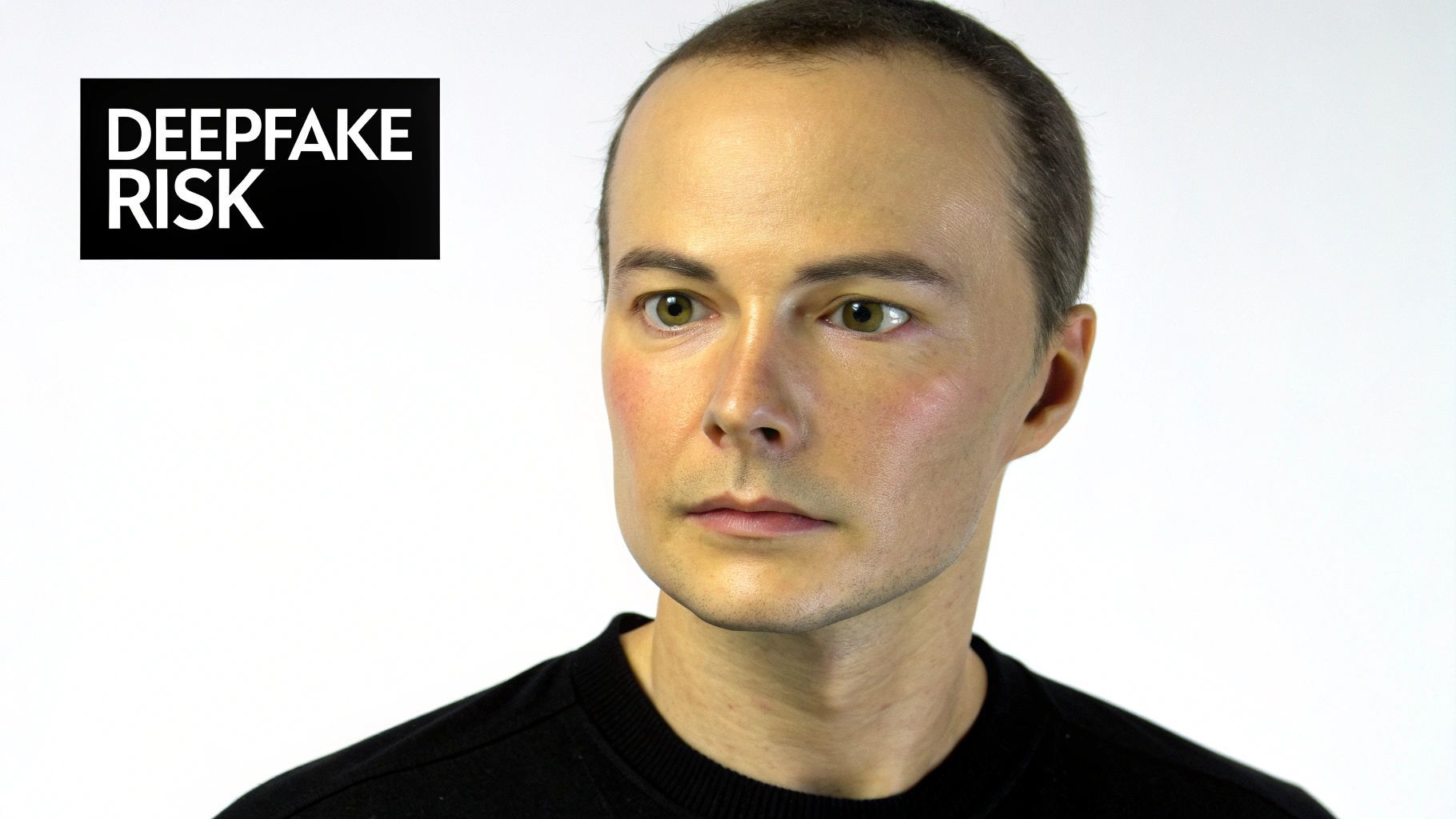
Audiences are becoming increasingly savvy at spotting AI-generated content. When a face looks slightly unnatural or falls into the "uncanny valley," viewers immediately disengage. This skepticism is a major barrier to conversion, as trust is the foundation of any successful ad. Furthermore, platforms like YouTube and Instagram are implementing stricter policies requiring clear disclosure for synthetic media, and failing to comply can lead to ad disapproval or account penalties. Brands that have been caught using undisclosed AI faces on TikTok have faced significant public backlash, damaging their reputation.
How to Avoid This Mistake
The core issue is a lack of authenticity. To prevent this, prioritize genuine human connection.
- Prioritize Real People: The most effective solution is to use real user-generated content (UGC) or hire actors. Authentic human expressions and testimonials build instant credibility that AI currently cannot replicate.
- Disclose and Be Transparent: If you must use a synthetic avatar, follow all platform guidelines for disclosure. A simple label like "AI-Generated Avatar" can prevent audience backlash and policy violations.
- Hybrid Approach: Combine real footage with AI elements. Use an AI voiceover on a video featuring a real person or product demonstration to maintain a human touch while leveraging AI for efficiency.
- Test and Validate: Before launching a full campaign with an AI face, run small A/B tests against ads with real people to gauge audience sentiment and performance differences.
Platforms like ShortGenius help you sidestep this issue by enabling you to repurpose existing, authentic video content, such as clips from a real creator or founder. This allows you to leverage the power of a genuine human presence while still benefiting from AI's speed and editing capabilities, effectively avoiding one of the most common mistakes with AI generated video ads.
2. Ignoring Brand Voice and Tone Consistency
One of the most damaging mistakes with AI generated video ads is allowing the technology to strip away your unique brand personality. Many tools default to generic, robotic voiceovers and scripts that feel disconnected from the brand's identity. When an ad's messaging and tone are misaligned with how a brand typically communicates, it breaks audience trust and severely dilutes the equity you've built, leading to lower engagement and conversions.
This issue is especially critical for brands built on a distinct persona, like those led by influencers or founders. For instance, some D2C brands have reported significant engagement drops when they swapped founder-narrated ads for versions with generic AI voices. Similarly, influencer-led brands have seen CTRs plummet by 40-60% when the unique voice personality that attracted their audience was removed. This happens because audiences connect with a consistent, recognizable voice; replacing it with a generic one feels inauthentic and jarring.
How to Avoid This Mistake
The solution is to guide the AI, not just use its defaults. Infuse your brand's unique identity into every AI-generated asset.
- Create a Brand Voice Guide: Before generating any ads, document your brand's specific tone, vocabulary, personality traits, and catchphrases. This guide will serve as a crucial reference for customizing AI outputs.
- Select the Right AI Voice: Choose an AI voice that aligns with your brand archetype, whether it’s energetic, professional, calm, or playful. Test multiple voice options with small audience segments before committing.
- Customize AI-Generated Scripts: Never use an AI script as-is. Edit it to include brand-specific terminology, inside jokes, or messaging that reflects your company values. This simple step makes the content uniquely yours.
- Use a Hybrid Approach: For maximum authenticity, layer a real voiceover from a founder or a creator over AI-edited visuals. This combines the human touch with AI's efficiency.
Platforms like ShortGenius help you avoid this mistake by allowing you to establish a Brand Kit. This feature ensures that every ad variation maintains consistent styling, messaging, and tone, preserving your brand’s identity across all AI-generated content. This makes it easier to prevent one of the most common mistakes with AI generated video ads.
3. Poor Pacing and Attention-Grabbing Hook Design
One of the most frequent yet easily overlooked mistakes with AI generated video ads is the failure to capture attention within the first three seconds. Many AI tools, when left to their own devices, create videos with slow introductions, weak hooks, or pacing that is poorly suited for the rapid-fire nature of platforms like TikTok and Instagram Reels. This critical error causes viewers to scroll past before your core message is even delivered, effectively wasting your ad spend and creative efforts.

The digital attention span is unforgiving. Performance marketers have consistently found that ads with hooks lasting just 0.5 to 1 second can outperform those with 2-3 second intros by a staggering 2-3x. A generic AI-generated opening simply cannot compete with the dynamic, pattern-interrupting content that users expect. Brands that neglect to manually refine AI-generated hooks see significantly lower engagement and higher drop-off rates, making this a crucial area for optimization.
How to Avoid This Mistake
The solution lies in strategically front-loading your ad with proven attention-grabbing elements and tailoring the pace to the specific platform.
- Structure for an Instant Hook: When prompting your AI, specifically instruct it to place the most compelling value proposition, a surprising statement, or a curiosity gap in the very first sentence. Ensure on-screen text and captions appear immediately to reinforce this hook.
- Leverage Proven Hook Formats: Don't rely on the AI's first attempt. A/B test different hook variations, such as benefit-driven statements ("This tool saves 10 hours a week"), pattern interrupts (an unexpected sound or visual), or direct questions.
- Create Instant Visual Interest: Use dynamic camera movements, quick cuts, and zooms right from the start. This creates a sense of energy that prevents viewers from immediately swiping away.
- Adapt Pacing for Each Platform: Customize your video's rhythm. TikTok demands faster cuts and a high-energy pace, while YouTube Shorts can accommodate a slightly more measured build-up. Instagram sits somewhere in the middle.
Platforms like ShortGenius are designed to solve this exact problem. Its built-in 'Scroll Stoppers' library allows you to inject proven, attention-grabbing templates at the beginning of your video, ensuring your ad makes an impact from the very first frame. By using these specialized features, you can avoid the common mistake of poor pacing and create AI-generated video ads that capture and hold viewer attention.
4. Neglecting Platform-Specific Optimization and Aspect Ratios
One of the most common mistakes with AI generated video ads is adopting a "one-size-fits-all" approach. Marketers often create a single video and deploy it across TikTok, YouTube, Instagram, and Facebook, ignoring the unique technical requirements and user behaviors of each platform. This critical error leads to awkwardly cropped videos, disengaged audiences, and significantly diminished ad performance, wasting both time and budget.

Each social media platform has its own algorithmic preferences and audience expectations. For example, a horizontal 16:9 video that works for a standard YouTube ad will be severely penalized on TikTok, where the vertical 9:16 format is king. Similarly, a fast-paced, 15-second ad ideal for TikTok may fail on Facebook, where a square 1:1 video with a slightly longer narrative can capture more attention in the mobile feed. Ignoring these nuances is a recipe for low engagement and poor ROI.
How to Avoid This Mistake
The solution is to build a platform-aware strategy from the very beginning of the AI generation process. Tailoring your content ensures it feels native to each platform, dramatically increasing its chances of success.
- Define Target Platforms First: Before generating any content, decide which platforms you will be advertising on. This allows you to tailor your scripts, hooks, and visual concepts to each one.
- Adapt Aspect Ratios and Lengths: Use AI tools to resize and reformat your master video for each specific channel. A vertical 9:16 is essential for TikTok, Reels, and Shorts, while a 1:1 square format often performs best on the Facebook feed. Trim videos to optimal lengths, like under 60 seconds for YouTube Shorts and 15-30 seconds for TikTok.
- Customize On-Screen Elements: Be mindful of each platform's user interface. Position your text and captions within the "safe zones" to avoid being covered by buttons, usernames, or progress bars.
- Craft Platform-Specific Hooks: Tailor the first three seconds of your ad to match audience expectations. A TikTok hook might use a rapid cut or a trending sound, whereas a YouTube Shorts hook could introduce a question to encourage viewers to watch until the end.
Tools like ShortGenius are designed to solve this exact problem. You can easily repurpose a single piece of long-form content and use AI to generate multiple platform-specific versions, complete with correct aspect ratios, AI-generated captions, and appropriate lengths. This allows you to maintain brand consistency while maximizing performance across all channels.
5. Lack of Product Clarity and Benefit Communication
A common pitfall with AI video generation is getting lost in visually stunning but abstract storytelling. When ads prioritize aesthetic flair over a clear message, viewers are left entertained but confused. This mistake occurs when the AI generates beautiful lifestyle scenes or conceptual animations that fail to explicitly show the product or articulate its core value proposition, leading to high engagement but dismally low conversion rates.
This lack of clarity is a conversion killer. Performance marketers in e-commerce have noted that AI-generated ads often bury the product deep within a creative narrative, failing to grab attention where it matters. For instance, SaaS companies found their AI-generated conceptual videos underperformed clear product demos by up to 4x. Similarly, D2C brands that relied solely on vague, AI-generated lifestyle content saw conversion rates drop by 60-70% compared to ads that showcased the product in action. Without a direct connection between the visual and the value, your ad spend is wasted on brand awareness that never translates to sales.
How to Avoid This Mistake
The solution is to ground your AI's creativity in clear, benefit-driven communication. Your primary goal is to ensure the viewer knows exactly what you're selling and why they need it within seconds.
- Structure for Clarity: Mandate that AI-generated scripts and scenes follow a strict formula: product shot, a specific problem statement, your product as the solution, and a clear call to action. Ensure the product is explicitly identified within the first five seconds.
- Show, Don't Just Tell: Use AI to generate scenes that directly visualize the product's benefits. For a SaaS tool, this means showing a screen recording or an animated UI that solves a user's problem.
- Reinforce with Text: Add bold text overlays and captions that explicitly state the primary benefit, such as "Save 50% on Groceries" or "Launch a Website in 10 Minutes." This reinforces the message visually.
- A/B Test for Performance: Run two ad versions: one highly creative and abstract, the other direct and benefit-forward. Use performance data to find the right balance that resonates with your audience and drives conversions.
Tools like ShortGenius are designed to prevent this mistake by focusing on repurposing existing, clear content. By starting with a product demo, a customer testimonial, or a founder explaining the product, you ensure the core message is never lost. The AI then enhances this clear foundation with on-brand styling and dynamic edits, making it one of the most effective ways to avoid the common mistakes with AI generated video ads that sacrifice clarity for creativity.
6. Inadequate Testing and Creative Refresh
The speed of AI video generation creates a new kind of pitfall: producing dozens of ad variations without a disciplined testing framework or a schedule for refreshing creative. Many teams fall into the trap of launching a high volume of AI-generated ads, assuming more options will automatically lead to better results. This spray-and-pray approach leads to wasted ad spend, misidentified "winners," and accelerated ad fatigue, making it one of the most costly common mistakes with AI generated video ads.
Performance marketing data reveals a harsh reality: only about 15-20% of AI-generated variations significantly outperform a baseline ad. Without a structured testing protocol, brands running 50 unaudited variations often see the same or worse return on ad spend (ROAS) than competitors who meticulously test just five to ten. Furthermore, neglecting to refresh creative is a recipe for diminishing returns, as CPMs can increase by 20-40% per week on a stale ad.
How to Avoid This Mistake
The solution is to merge AI's speed with disciplined marketing principles. A systematic approach to testing and iteration is crucial for unlocking AI's true potential.
- Establish a Testing Hypothesis: Before generating variations, create a clear framework. For example: "If we change the hook to focus on [benefit], we will see a [target]% improvement in click-through rate." This focuses your efforts.
- Isolate Variables: Use a structured approach to test one element at a time, such as the hook, voiceover style, or call-to-action. This helps you identify precisely what drives performance.
- Set a Refresh Cadence: Implement a mandatory weekly or bi-weekly creative refresh schedule. Track creative age alongside performance metrics to determine the optimal rotation timing for your audience and budget.
- Document and Learn: Create a log of which creative elements consistently perform best, including specific hooks, text styles, or pacing. Use these insights to inform the next batch of AI-generated ads.
Tools like ShortGenius are built for this workflow. The platform’s series-based campaign feature allows you to systematically test one variable at a time across multiple videos. By combining this with auto-publish and scheduling features, you can create a disciplined system that continuously generates, tests, and rotates fresh creative, ensuring your campaigns avoid fatigue and maintain peak performance.
7. Overuse of Effects and Motion That Distracts from Message
AI video tools make it incredibly easy to add dazzling visual effects, dynamic transitions, and complex camera movements. While these features can grab attention, a common mistake is overusing them to the point where they overwhelm the viewer and distract from the core message. When an ad is filled with constant zooms, flashy effects, and jarring cuts, the product's value proposition gets lost in the visual noise, severely hurting comprehension and conversion rates.
The goal of an effect should be to enhance the message, not become the message itself. For example, A/B tests frequently show that a clean, focused product shot outperforms an effect-heavy version by 2-3x in direct-response campaigns. Many luxury and B2B brands have found that minimalist ads convert up to 60% better than those with excessive motion graphics. The key is strategic application: using an effect to highlight a specific feature or punctuate a key benefit, rather than for constant visual stimulation.
How to Avoid This Mistake
To prevent your ad from becoming a distracting light show, adopt a "less is more" mindset and use effects with clear intent.
- Follow the 'Effect Hierarchy': Prioritize clarity over complexity. Use bold, simple effects to emphasize your hook or call-to-action, and reserve more subtle motion for transitions between scenes.
- Match Effects to Your Brand and Audience: A gaming brand can leverage high-energy, flashy effects that resonate with its audience, whereas a SaaS or finance company will build more trust with a clean, professional aesthetic.
- Enhance, Don't Obscure: Ensure every effect serves a purpose. Use a zoom to reveal a product detail, a transition to signify a change in topic, or a text overlay to reinforce a key benefit. Avoid random movements that don't support the narrative.
- Test Minimal vs. Maximal: Create two versions of your ad: one that is clean and direct, and another that is more visually dynamic. Test them against each other to see which one drives better conversions for your specific product and audience.
Tools like ShortGenius allow you to easily control the intensity of effects. You can generate multiple ad variations with different levels of visual motion and text animations, making it simple to A/B test and identify the perfect balance that captures attention without sacrificing clarity, a crucial step in avoiding one of the most common mistakes with AI generated video ads.
8. Insufficient Audience Targeting and Demographic Misalignment
One of the most wasteful mistakes with AI generated video ads is producing content that doesn't resonate with its intended audience. AI tools can create videos with incredible speed, but if the output is based on generic assumptions, it will fail to connect with specific demographic segments. This misalignment leads to high reach with poor engagement, wasted ad spend, and a brand message that falls on deaf ears.
This error often occurs when creators let the AI default to broad, one-size-fits-all aesthetics and language. For example, a B2B SaaS company targeting small business owners might find its AI-generated ad, full of corporate jargon and polished visuals, completely fails to resonate with the solopreneur segment. Similarly, beauty brands have faced backlash when their AI tools defaulted to Eurocentric beauty standards, alienating a diverse customer base. The result is an ad that feels inauthentic and irrelevant, leading viewers to scroll past without a second thought.
How to Avoid This Mistake
The solution lies in feeding the AI specific, human-centric data about your target audience before generation. You must guide the AI to create content for a person, not a population.
- Develop Detailed Personas: Before prompting the AI, create detailed audience personas that include age, values, pain points, lifestyle, and communication style. This becomes your creative blueprint.
- Customize AI Prompts: Tailor your prompts and scripts for each primary audience segment. For example, specify, "Create a script for a Gen Z audience that values authenticity and humor; emphasize ease-of-use and social proof."
- Incorporate Relevant References: Infuse your scripts with demographic-specific language, cultural touchpoints, and references that show you understand your audience's world.
- Test and Segment: Use AI to generate multiple ad variations, each optimized for a different demographic. Run A/B tests to measure which visuals, pacing, and messages deliver the lowest CPA for each segment.
Tools like ShortGenius help you avoid this mistake by allowing you to establish a brand kit with audience-specific visual preferences. You can also generate multiple variations of an ad from a single source video, making it easy to create parallel campaigns optimized with the right tone, style, and messaging for each of your key audience segments.
8-Point Comparison: AI Video Ad Mistakes
| Issue | 🔄 Implementation Complexity | ⚡ Resource Requirements | 📊 Expected Outcomes | Ideal Use Cases | 💡 Insights / ⭐ Key Advantages |
|---|---|---|---|---|---|
| Overreliance on AI-Generated Faces and Deepfakes | Medium–High: requires generative models, detection checks, and disclosure workflows | Low production cost but higher compliance/legal monitoring overhead | Risk: credibility loss, platform takedowns, lower CVR; potential short-term reach but long-term damage | Limited: anonymized testing, controlled branding where disclosure is clear | ⭐ Cost savings and visual control; 💡 Always disclose synthetic faces, prefer real UGC for trust |
| Ignoring Brand Voice and Tone Consistency | Low–Medium: straightforward technically but needs brand governance | Low-cost to produce but requires brand kit and voice selection effort | Weakened brand recognition, lower engagement and CTR if misaligned | Scalable content where consistent persona is required (founder-led brands need authenticity) | ⭐ Fast scalability; 💡 Create a brand voice guide and test voice options before scale |
| Poor Pacing and Attention-Grabbing Hook Design | Medium: requires creative prompting and manual hook refinement | Fast to iterate (AI) but needs human review and A/B testing time | High skip rates if hook weak; improved engagement when front-loaded correctly | Short-form platforms where first 2–3s determine performance (TikTok, Reels) | ⭐ Enables rapid hook variants; 💡 Front-load value/provocation and A/B test hooks |
| Neglecting Platform-Specific Optimization and Aspect Ratios | Low–Medium: technically simple but needs platform rules & export presets | Saves time initially; extra QA and resizing effort required for each platform | Underperformance on platform algorithms, wasted reach and higher CPA | Multi-channel campaigns that must respect vertical/horizontal specs | ⭐ Faster repurposing when automated; 💡 Define target platforms first and use multi-format exports |
| Lack of Product Clarity and Benefit Communication | Low complexity to fix but needs creative discipline | Low production cost but requires product-shot assets and copy edits | High engagement that fails to convert; clear benefit-forward ads boost CVR | Launches, unfamiliar products, performance-focused ads | ⭐ Supports creative storytelling; 💡 Ensure product and USP appear within first 5–7s with clear CTA |
| Inadequate Testing and Creative Refresh | Medium: needs testing framework, metrics, and scheduling | Low marginal cost to generate variations; higher analytics and management effort | Wasted spend without structure; disciplined testing improves ROAS significantly | Performance campaigns requiring scale and longevity | ⭐ Rapid variant generation; 💡 Implement hypothesis-driven A/B tests and regular refresh cadence |
| Overuse of Effects and Motion That Distracts from Message | Low–Medium: easy to apply but requires restraint and alignment | Effects are easy to add; testing needed to measure conversion impact | Initial attention may rise but comprehension and CVR can fall if overused | Creative/category-specific (gaming, creators) where bold effects suit audience | ⭐ Grabs attention when used strategically; 💡 Reserve effects for 1–2 key moments and test clean vs. heavy |
| Insufficient Audience Targeting and Demographic Misalignment | Medium: needs audience personas and tailored prompts | Fast to generate variations for segments; requires research and localization | Broad reach with low conversion; proper segmentation increases relevance and ROAS | Segmented campaigns targeting distinct demographics or cultures | ⭐ Enables rapid customization; 💡 Build detailed personas and create audience-specific creatives/tests |
From Common Mistakes to Uncommon Results
Navigating the landscape of AI-powered advertising is less about the technology itself and more about the strategy behind it. As we've explored, the most frequent pitfalls are not technical glitches but strategic oversights. Avoiding these common mistakes with AI generated video ads is the critical first step in transforming this powerful tool from a simple content machine into a high-performance growth engine.
The core lesson is that AI should augment, not replace, human strategy. It's the human touch that ensures brand voice remains consistent, that pacing grabs and holds attention, and that the core message resonates with a specific audience. When you prioritize authenticity over artificiality, especially by avoiding overused AI-generated faces, you build trust and connection that automated tools alone cannot replicate.
Key Pillars for Success
To move beyond common errors, focus on three foundational pillars:
- Strategic Brand Alignment: Ensure every element, from the script's tone to the visual style, is a direct reflection of your brand identity. This prevents the generic, disconnected feel that plagues many AI ads.
- Audience and Platform Centricity: Tailor your aspect ratios, hooks, and messaging to the specific platform and the audience segment you are targeting. A one-size-fits-all approach is a recipe for wasted ad spend and poor engagement.
- Disciplined Creative Iteration: Treat AI as your creative partner for rapid testing. Systematically test different hooks, calls to action, and benefit-driven messages to find what truly converts, and refresh your creatives before fatigue sets in.
The goal is not simply to produce more ads faster; it's to produce smarter ads that work harder. The future of advertising is a symbiotic relationship between human creativity and machine efficiency. To turn common pitfalls into uncommon successes, consider leveraging the right tools. Explore how the right training for the team using the AI and the right tools like the best AI for brainstorming can spark fresh ideas and prevent creative stagnation from the very beginning.
Ultimately, mastering AI in video advertising means retaining strategic control while delegating the repetitive, time-consuming tasks. By sidestepping the prevalent mistakes of poor branding, platform neglect, and inadequate testing, you unlock the true potential of AI. You begin to create ads that are not only generated at scale but are also genuinely engaging, persuasive, and, most importantly, profitable.
Ready to avoid these common mistakes and create high-performing AI video ads that feel authentic to your brand? ShortGenius is designed to help you maintain brand consistency, test creatives systematically, and scale your video production without sacrificing quality. Start building smarter, more effective ads today with ShortGenius.