Ինչպես ստանալ AI-ից սցենար, որը աշխատում է

Սովորեք, թե ինչպես ստանալ AI-ից սցենար կարճ տեսանյութերի և գովազդների համար: Վարպետացրեք prompt ձևանմուշները, իտերացիոն կատարելագործումը և տեսարանների քարտեզագրումը ավելի լավ արդյունքների համար:
Մեծամասամբ խորհուրդները, թե ինչպես ստիպել AI-ին սցենար գրել, սկսվում են հրաշալի prompt-ով: Ավելացրեք hook, թիրախային լսարան, call to action, և պատրաստի վիդեո սցենարը կհայտնվի: Պրոդուկցիայում այդ մոտեցումը սովորաբար ստեղծում է fluent filler, rushed pacing, generic dialogue և visual directions, որոնք ոչ ոք չի կարող նկարել:
AI-ն օգտակար է դառնում, երբ դադարում եք այն վերաբերվել որպես vending machine և սկսում եք վերաբերվել որպես junior writer կառավարվող պրոդուկցիայի գործընթացի ներսում: Տրամադրեք structured context, հաստատեք story beats-ները նախքան drafting-ը, առանձնացրեք narration-ը visual execution-ից, և օգտագործեք independent review pass՝ defect-ները բռնելու համար: Նպատակը raw generation speed-ը չէ: Դա սցենար է, որը համապատասխանում է platform-ին, աջակցում իր պնդումներին, հնչում է intentional, և դեռևս կրում է recognizable human point of view:
Ինչու են One-Shot Prompt-ները Ձախողվում Սցենարագրության Ներսում
One-line idea-ն AI-ին տալիս է գրեթե ոչ մի տեղեկատվություն, որն անհրաժեշտ է production decisions-ների համար: «Գրիր կարճ վիդեո sustainable clothing-ի մասին» չի սահմանում viewer-ին, platform-ը, runtime-ը, voice-ը, visual resources-ները, commercial objective-ը, expertise level-ը կամ acceptable claims-ները: Մոդելը պետք է հորինի այդ variables-ները, և նրա հորինումները սովորաբար արտադրում են familiar patterns՝ distinctive, shootable concept-ի փոխարեն:
Ավելի խորքային խնդիրը այն է, որ locally plausible writing-ը նույնը չէ coherent storytelling-ի: Տողը կարող է հնչել natural, մինչդեռ թուլացնում է scene-ը, կրկնում տեղեկատվություն, փոխում character's motivation-ը կամ դարձնում payoff-ը շատ ուշ: Stanford-ի համեմատությունը գեներացրել է 500 synthetic screenplay segments-ներ և գնահատել դրանք 500 real screenplay segments-ների դեմ, պարզելով, որ plausible text-ը մենք չի երաշխավորում compelling կամ coherent script: Ամենաուժեղ non-monotonic method-ը միայն marginally exceeded baseline systems-ները շատ automated measures-ներով, ներառյալ BERTScore-ը: Stanford-ի սցենար գեներացման հաշվետվությունը պարզ է դարձնում practical lesson-ը. AI-ն կարող է արտադրել convincing local prose, մինչդեռ բաց է թողնում larger dramatic job-ը:
Draft-ը deliverable չէ
Professional script-ը ունի մի քանի simultaneous constraints.
- Narrative movement: Յուրաքանչյուր scene պետք է ներկայացնի, զարգացնի կամ լուծի idea:
- Performance fit: Spoken language-ը պետք է հնչի natural aloud, ոչ միայն լավ կարդացվի screen-ի վրա:
- Production reality: Suggested shot-ը պետք է հնարավոր լինի available people, locations, props և footage-ով:
- Platform pacing: Opening-ը, information density-ը, captions-ները և ending-ը պետք է համապատասխանեն viewing environment-ին:
- Commercial clarity: Viewer-ը պետք է հասկանա, թե ինչ անել հաջորդիվ, առանց competing messages-ների կույտի:
One-shot prompting-ը խնդիր է դնում մոդելի առջև՝ լուծել այդ խնդիրների բոլորը միանգամից: Դա դժվարացնում է failure-ը diagnose անել, քանի որ չեք կարող ասել, թե թույլ result-ը եկել է vague premise-ից, poor structure-ից, impossible shot list-ից կամ unsuitable tone-ից:
Practical rule: Օգտագործեք առաջին generation-ը decisions expose անելու համար, ոչ թե դրանք խուսափելու:
Պահանջեք outline նախքան polished dialogue խնդրելը: Ստուգեք hook-ը, sequence-ը, proof-ը, payoff-ը և call to action-ը, մինչդեռ changes-ները դեռևս cheap են: Որպեսզի structure-ը աշխատի, ընդլայնեք այն narration-ի և production instructions-ների: Այդ mindset shift-ը reliable AI scriptwriting-ի հիմքն է:
Context Նշելու և Few-Shot Prompt Templates-ների Քաղաքացրացում
AI-ն չի արտադրում usable script, քանի որ opening prompt-ը clever է հնչում: Այն արտադրում է, երբ brief-ը սահմանում է audience-ը, production limits-ները և review rules-ները նախքան generation-ը: Քաղաքացրացրեք context block, որը ասում է մոդելին, թե որտեղ կգործի script-ը, ինչ պետք է հասնի, և որ decisions-ները մնում են creator-ի:
Օգտագործեք fields-ներ, ինչպես՝
- Audience: Նկարագրեք viewer's problem-ը, knowledge level-ը, motivation-ը և likely objection-ը:
- Platform: Նշեք destination-ը, aspect ratio-ն, caption treatment-ը, delivery format-ը և viewing context-ը:
- Runtime: Սահմանեք target duration-ը և պահանջեք realistic spoken-word budget:
- Objective: Ընտրեք մեկ primary outcome, ինչպես education, lead generation, product consideration կամ direct sale:
- Voice: Նշեք sentence length-ը, energy-ն, vocabulary-ն, humor-ը, emotional temperature-ը և words to avoid:
- Story inputs: Տրամադրեք setting-ը, characters-ները, conflict-ը, product facts-ները, available proof-ը և desired resolution-ը:
- Boundaries: Նշեք prohibited claims-ները, unavailable footage-ը, legal restrictions-ները, brand terminology-ն և topics-ները, որոնք պահանջում են human review:
- Output schema: Սահմանեք fields-ները, որոնք մոդելը պետք է վերադարձնի, ներառյալ timecode, narration, on-screen text, shot direction, transition և audio:
Վերջին երկու fields-ները խնայում են production time: Եթե մոդելը չգիտի, որ չունեք studio, actors կամ licensed stock footage, այն կարող է գրել attractive scene, որը չի կարող արտադրվել: Եթե չգիտի required format-ը, ինչ-որ մեկը պետք է հետո convert անի prose block-ը shooting document-ի:
Examples-ները ամրագրում են requested voice-ը
Ավելացրեք կարճ example, որը ցույց է տալիս exact scene format-ը, որն ցանկանում եք: Կապեք մեկ narration line-ը on-screen caption-ի և specific visual-ի հետ: Եթե brand-ը ունի established voice, տրամադրեք original sample, որը ցույց է տալիս rhythm-ը և restraint-ը: Նշեք հստակ, որ example-ը reference է format-ի և tone-ի համար, ոչ թե text to copy:
Այս method-ը few-shot prompting է: OpenAI-ի GPT-3 research-ը պարզել է, որ examples-ները prompt-ում բարելավում են performance-ը մի քանի tasks-ներով առանց additional model training-ի: TriviaQA-ում accuracy-ն աճել է 64.3%-ից առանց examples-ների մինչև 71.2% մի քանի examples-ներով, ցույց տալով, թե ինչպես են demonstrations-ները պարզաբանում requested output-ը: Նախնական GPT-3 research-ը չի գնահատել screenplay quality-ն, ուստի կիրառեք principle-ը script formatting-ի, ոչ թե result-ը որպես narrative quality-ի proof:
Reusable instruction կարող է լինել.
Դուք short-form video writer և production planner եք: Օգտագործեք ստորև context-ը: Առաջինը վերադարձրեք beat sheet, ոչ full script: Յուրաքանչյուր beat պետք է ներառի իր purpose-ը, approximate timing-ը, narration intent-ը, visual opportunity-ն և transition-ը: Մի հորինեք product facts: Նշեք unsupported claims-ները review-ի համար: Տրամադրեք երեք տարբեր hooks distinct angles-ներով:
Առաջինը վերադարձրեք beat sheet: Ստուգեք, թե արդյոք hook-ը, sequence-ը, proof-ը, payoff-ը և call to action-ը արժանի են իրենց տեղին: Միայն ապա խնդրեք polished dialogue և production detail:
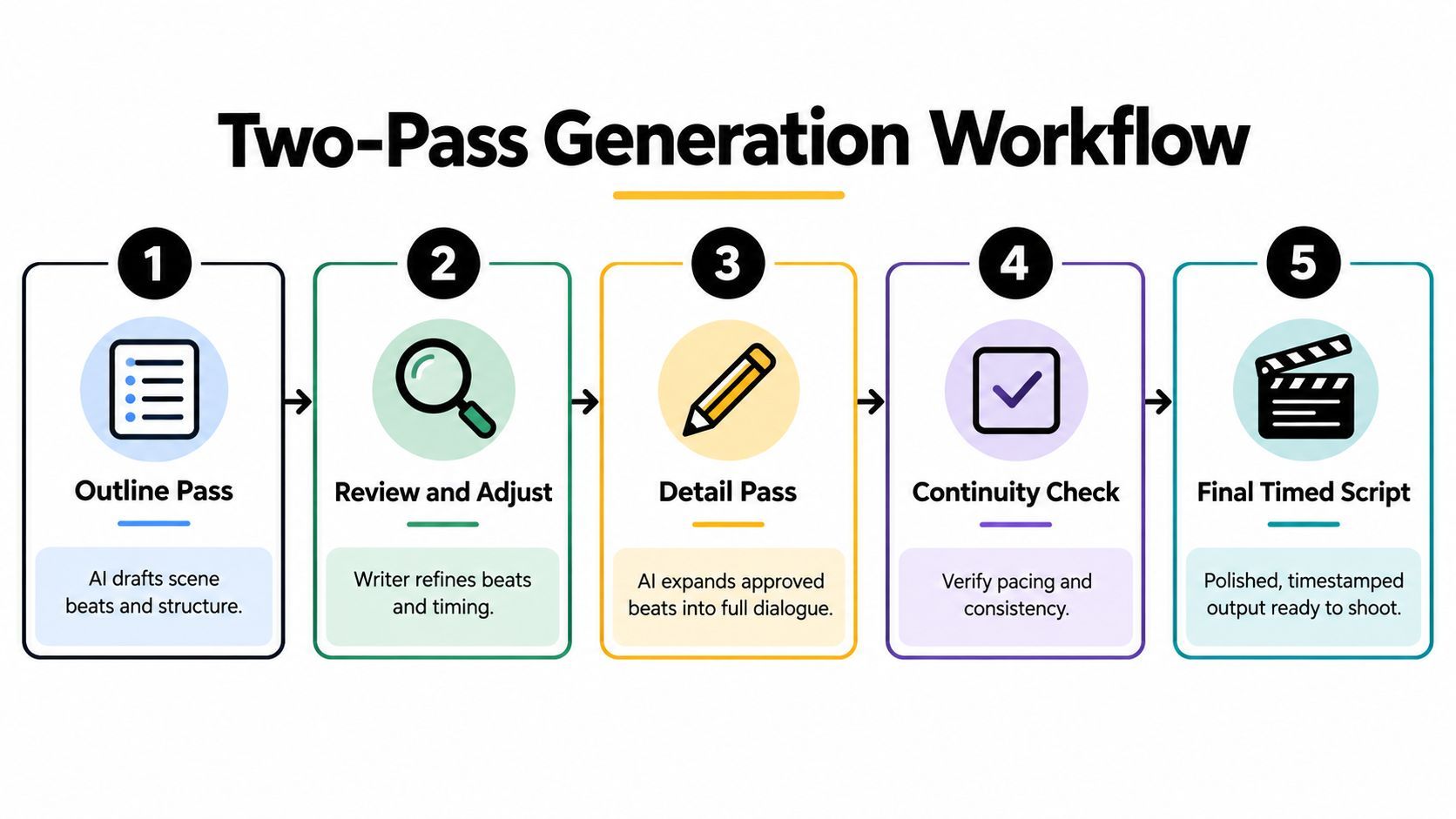
Պահեք examples-ները կարճ և purposeful: Մեկը կարող է հաստատել formatting-ը, մեկը voice-ը, և երրորդը՝ required visual specificity-ն: Եթե գնահատում եք script tools-ներ, AI video creation platform-ը կարող է օգնել structured ideas-ները scenes-ներից կազմել, մինչդեռ creator-ը դեռ հաստատում է underlying beats-ները, claims-ները և pacing-ը:
Երկու-Անցումով Generation Workflow-ի Գործարկում
Մի խնդրեք final timed script, մինչդեռ narrative-ը չի գերապրել review: Երկու-անցումով workflow-ը առանձնացնում է story architecture-ը language և production detail-ից, ինչը ձեզ տալիս է ավելի փոքր, manageable decision յուրաքանչյուր stage-ում:
Pass one-ը ստեղծում է beat sheet-ը
Տրամադրեք մոդելին approved context block-ը և խնդրեք beat sheet: Յուրաքանչյուր beat պետք է պատասխանի հինգ հարցերի.
- Hook: Ի՞նչն է ստեղծում immediate curiosity կամ identifying viewer's problem-ը:
- Information sequence: Ի՞նչն է viewer-ը պետք է հասկանա առաջին, երկրորդ և երրորդ:
- Proof: Ո՞ր demonstration-ը, example-ը, source claim-ը կամ visual-ը դարձնում է point-ը credible:
- Payoff: Ի՞նչ է փոխվում viewer-ի համար watching-ից հետո:
- Call to action: Ո՞ր single next step պետք է վերցնի viewer-ը:
Պահանջեք AI-ից ներկայացնել beats-ները table-ով՝ purpose, timing range, core message և risk note-ով: Այս stage-ում հեռացրեք redundant ideas-ները, reject արեք unsupported claims-ները, adjust արեք order-ը և rewrite ցանկացած beat, որը depend է unavailable footage-ից: Թույլ beat sheet-ը չի կարող փրկվել polished wording-ով:
Instruction-following research-ը առանձնացնում է format compliance, content constraints, logical sequencing և multi-step execution-ը՝ quality-ն որպես մեկ vague score չվերաբերվելով: Դա աջակցում է այս workflow-ի production logic-ին. instruction-following evaluation research-ը ցույց է տալիս, թրե ինչպես structured outline-ը հեշտացնում է success-ը test անել նախքան expansion:
Pass two-ն ընդլայնում է approved beats-ները
Միևնույն ժամանակ approve արեք beat sheet-ը, ուղարկեք այն հետ strict instruction-ով preserve sequence-ը: Խնդրեք մոդելից ընդլայնել յուրաքանչյուր beat-ը.
- Timed narration
- On-screen text
- Shot կամ b-roll direction
- Camera movement կամ framing
- Transition
- Music և sound cue
- Fact status կամ review flag
Նշեք, որ մի ավելացրեք new claims, characters, benefits կամ plot turns: Խնդրեք identify անել ցանցացած beat, որի narration-ը exceed է available time-ը՝ ending-ը compress անել առանց flagging: Դա preserve է pass one-ի editorial decisions-ները, մինչդեռ թույլ է տալիս AI-ին handle repetitive drafting work:
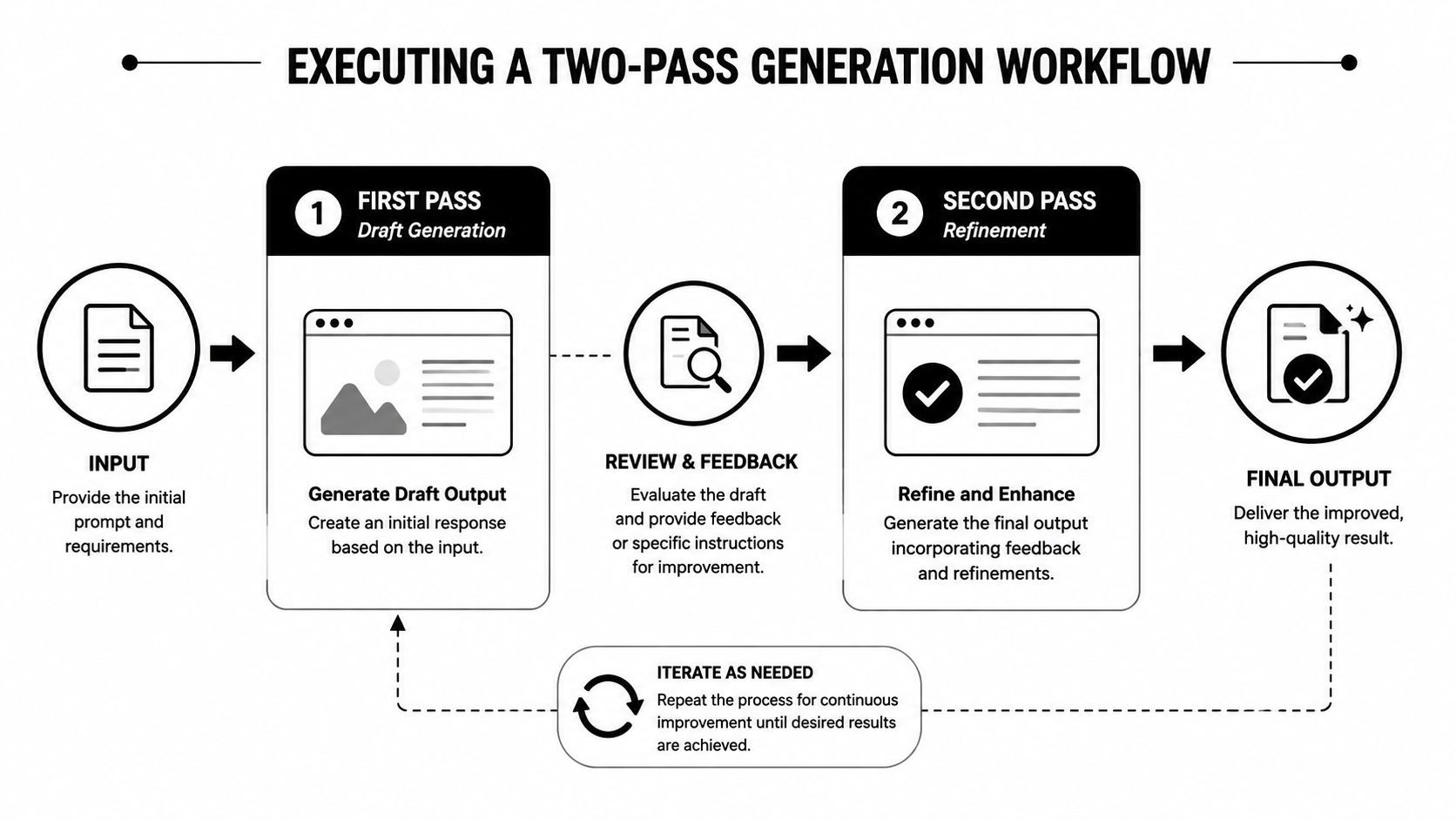
Result-ը պետք է լինի timed working document, ոչ marketing copy block: Ավելի practical guidance-ի համար վիդեո սցենարներ գրելու մասին, համեմատեք խորհուրդները ձեր production constraints-ների դեմ: Generic formulas-ները կարող են օգնել start անել, բայց approved beat sheet-ը պետք է control անի final version-ը:
Scenes-ների և Visual Directions-ների Mapping
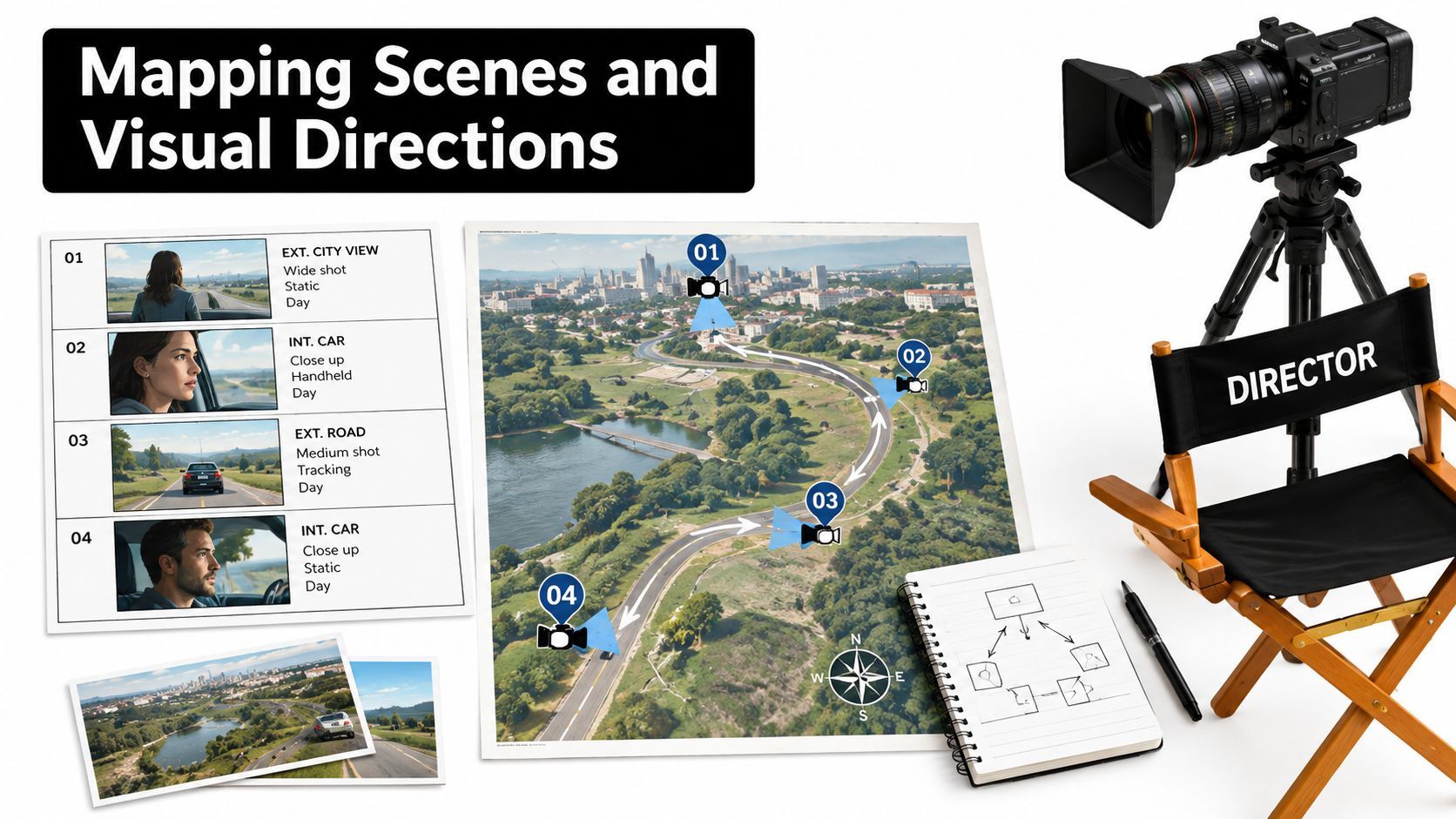
Script-ը չի պատրաստ՝ քանի որ words-ները լավ են հնչում: Այն usable է դառնում, երբ director, editor կամ creator կարող է ասել, թե ինչ է հայտնվում screen-ի վրա յուրաքանչյուր line-ի ընթացքում: Prompt-ը պետք է force անի մոդելին connect անել յուրաքանչյուր spoken idea executable visual decision-ի:
Սկսեք visual inventory սահմանելով: Նշեք AI-ին, թե արդյոք կարող է օգտագործել talking-head footage, product close-ups, screen recordings, animation, stock clips, generated imagery, captions կամ existing brand assets: Ներառեք restrictions, ինչպես single location, vertical framing, no actors կամ no access particular product angle-ի: Քանի ավելի concrete inventory-ն, այնքան ավելի քիչ հավանական է, որ մոդելը recommend անի cinematic shot, որը չեք կարող produce:
Կապեք յուրաքանչյուր line action-ի հետ
Օգտագործեք dual-column structure, եթե human editor կկարդա script-ը: Պատրաստեք time և narration-ը ձախում, ապա visual execution-ը աջում: Tool-based workflows-ի համար խնդրեք structured fields, քանի որ consistent labels-ները հեշտացնում են scenes, voices, captions կամ media swap առանց entire document rewrite:
Useful visual prompt-ը ասում է.
Յուրաքանչյուր narration line-ի համար տրամադրեք մեկ primary visual action: Նշեք subject, framing, movement, setting և on-screen text: Մի օգտագործեք abstract directions, ինչպես «show success» կամ «make it engaging:» Եթե visual-ը depend է inventory-ում չգրված asset-ից, նշեք այն unavailable որպես:
«Show the customer succeeding» shot չէ: «Medium vertical shot of the customer checking the completed dashboard, then a close-up of the highlighted result» տալիս է editor-ին ինչ-որ բան build անելու համար:
Design արեք actual platform-ի համար
Platform-specific pacing-ը decorative adjustment չէ writing-ից հետո: Այն փոխում է information-ի order-ը և density-ն: Short-form feed-ը պահանջում է opening visual, որը immediate communicate tension կամ relevance, մինչդեռ educational explainer-ը կարող է պահանջել clear question demonstration-ից առաջ: Product ad-ը կարող է պահանջել offer-ը և audience problem-ը visible same early sequence-ում:
Օգտագործեք առաջին moments-ները curiosity gap հաստատելու, surprising contrast-ի, visible result-ի կամ direct problem statement-ի: Ապա alternate արեք visual changes meaningful information-ով: Fast cuts առանց new information noise են ստեղծում, մինչդեռ static narration unrelated footage-ի վրա viewer-ին դարձնում է work too hard:
Խնդրեք մոդելից flag անել յուրաքանչյուր scene, որն առանց concrete visual է, repeats previous shot-ը կամ places important text, որտեղ interface controls կարող են obscure անել այն: Պահանջեք human editor-ից confirm անել, որ captions-ները readable են, claims-ները visible enough understand-ելու համար, և proposed transitions-ները match footage-ին՝ compensating its absence-ի փոխարեն:
Independent Critique-ի և Revision-ի Իրականացում
«Make this script better» weak revision instruction է, քանի որ չի տալիս model-ին better-ի definition: Այն նաև invite անում է same system-ին defend իր existing choices-ները: Ավելի ուժեղ workflow-ը ուղարկում է draft-ը independent critic-ի, be it separate AI conversation, rule-based check կամ human editor, և խնդրում failures explicit tests-ների դեմ:
Research-ը, որն համեմատում է language models human writers-ի հետ, identify անում է generation followed by independent critique and revision-ը որպես ավելի reliable quality-control pattern, քան unrestricted self-editing: Process-ը օգտագործում է repeated generations և detailed human rubrics՝ reducing chance-ը, որ one lucky sample determine verdict-ը: Creative-writing evaluation research-ը աջակցում է drafting-ի և judging-ի practical editorial separation-ին:
Տրամադրեք critic-ին pass and fail tests
Օգտագործեք checklist, ինչպես սա.
- Opening: Է՞լ արդյոք առաջին տողը ստեղծում clear curiosity gap կամ stating relevant problem:
- Progression: Է՞լ արդյոք յուրաքանչյուր scene advancing one idea՝ առանց previous-ը repeat անելու:
- Timing: Է՞լ արդյոք spoken copy-ն fitting assigned word budget natural reading-ի ժամանակ:
- Visuals: Կարո՞ղ է creator execute անել յուրաքանչյուր shot listed resources-ներով:
- Claims: Է՞լ արդյոք յուրաքանչյուր factual statement supported, clearly framed as opinion կամ marked for review:
- Continuity: Մնում են consistent character names-ները, product details-ները, tone-ը և visual logic-ը:
- Ending: Կա՞ն one unambiguous action script-ում՝ several competing requests-ների փոխարեն:
Խնդրեք defect list, ոչ rewritten script: Պահանջեք critic-ից identify անել scene-ը, explain failure-ը briefly, և propose line-level replacement միայն այնտեղ, որտեղ necessary: Ապա ուղարկեք դեֆեկտները writing model-ին instruction-ով change nothing else:
Editorial discipline: Fix diagnosed defects-ները, ոչ every sentence, որ model-ը reason կգտնի rewrite անելու:
Համեմատեք openings-ները նախքան committing
Opening-ը disproportionate responsibility կրում է, ուստի generate արեք մինչև երեք materially different hooks: Մեկը կարող է lead անել problem-ով, մեկը demonstration-ով, մեկը counterintuitive claim-ով: Score արեք յուրաքանչյուրը clarity, originality, audience fit, factual accuracy, narrative direction և platform suitability-ով:
Մի թույլ տալիս critic-ին reward polished clichés: Hook-ը կարող է grammatically sharp լինել և դեռ nothing ասել: Եթե օգտագործում եք voice dictation natural first-person delivery capture-ի համար, advanced dictation refinement-ի resource կարող է օգնել clean transcript-ը առանց sanding away spoken quality-ի: Final choice-ը պետք է reflect անի creator's intent-ը, ոչ model's preference familiar phrasing-ի:
Track acceptance team-ի understandable եղանակով: Record արեք, թե արդյոք first draft-ը passed hard constraints, քանի factual issues երևաց, արդյոք human-ը approved script-ը, և քանի revision rounds պահանջվեց: Այդ checks-ները «it feels better»-ը վերածում են repeatable production standard-ի:
Human Authorship-ի և Copyright-ի Պահպանում
Fastest workflow-ը automatically safest կամ most distinctive չէ: Եթե AI-ն expressive choices-ները կատարում է, invents language-ը, selects structure-ը և ստանում superficial approval, final script-ը կարող է sound polished՝ contribute անելով քիչ, որ clearly belongs creator-ին:
U.S. Copyright Office-ի 2025 analysis-ը նշում է, որ prompts-ները մենք generally չեն տրամադրում enough human control user-ին դարձնելու AI output-ի author: Protection-ը depend է perceptible human expression-ից, creative arrangement-ից կամ substantial modification-ից, ինչպես բացատրված է Copyright Office analysis-ում: Սա reason չէ avoid անել ցանկացած AI-assisted workflow: Այն reason է document անել, թե որտեղ են creative decisions-ները entering process-ը:
Քաղաքացրացրեք authorship record
Պահեք original brief-ը, source material-ը, approved beat sheet-ը, rejected alternatives-ները, revision notes-ները և final script version-ը: Գրեք original character perspectives-ները, brand language-ը, examples-ները և points of view brief-ի մեջ նախքան generation: Ապա կատարեք deliberate structural և line-level changes draft-ից հետո:
Այդ changes-ները պետք է ավելին անեն spelling correct-ից: Reorder արեք argument-ը, replace generic transitions-ները, sharpen central observation-ը, add original example, remove unsupported claims-ները և shape ending-ը actual relationship-ի շուրջ audience-ի հետ: Version history-ն պետք է ցույց տա, որ final work-ը reflects meaningful editorial judgment:
Protect voice օգտագործելով assistance
AI-ն tend-ում է smooth անել unusual phrasing-ը familiar patterns-ի: Դա improve անում է clarity-ն, բայց remove անում details-ները, որոնք creator-ին recognizable են դարձնում: Պահեք կարճ voice guide preferred rhythms-ներով, recurring concepts-ներով, prohibited clichés-ներով, product terminology-ով և brand-ի նման հնչող lines-ների examples-ներով:
Review disclosure requirements նախքան publishing կամ delivering client-ին: Platform, client կամ legal rules-ները կարող են պահանջել label կամ disclose AI involvement: Practical tip from AI Video Detector է treat provenance-ը workflow-ի մաս որպես, ոչ afterthought:
Ամենա defensiv process-ը AI draft plus human authorship է: Թույլ տալիս system-ին accelerate outlining, variation, formatting և mechanical transformations: Պահեք research judgment-ը, tone-ը, claims-ները, narrative priorities-ը և final expression human control-ի տակ:
ShortGenius (AI Video / AI Ad Generator)-ը approved brief կամ prompt-ից վերածում է scene-by-scene video workflow-ի՝ scriptwriting, image generation, video assembly, voiceovers, captions, resizing և editing tools-ներով: Օգտագործեք այստեղ structured two-pass method-ը, ապա այցելեք ShortGenius (AI Video / AI Ad Generator)՝ reviewed script-ը վերածելու platform-ready video և ad assets-ների: