เวิร์กโฟลว์การผลิตวิดีโอ AI: คู่มือ Pipeline แบบครบวงจร

สร้างเวิร์กโฟลว์การผลิตวิดีโอ AI ครบวงจรตั้งแต่สคริปต์จนถึงการเผยแพร่ เรียนรู้กลยุทธ์การอัตโนมัติ การเลือกเครื่องมือ และแนวปฏิบัติที่ดีที่สุดสำหรับครีเอเตอร์ยุคใหม่
ในการสำรวจปี 2024, 90% ของผู้สร้างวิดีโอบอกว่าเครื่องมือ AI ช่วยเพิ่มประสิทธิภาพการทำงานของพวกเขา. คำตอบที่เป็นจริงคือการเชื่อมต่อเครื่องมือ AI ที่เชี่ยวชาญเข้าด้วยกันใน pipeline ที่ควบคุมได้ ไม่ใช่คาดหวังให้ generator เดียวจัดการทุกงานสร้างสรรค์และปฏิบัติการ
ความแตกต่างนี้สำคัญเพราะผลประโยชน์ด้านประสิทธิภาพมักไม่ได้มาจากการกดปุ่มเดียว มันมาจากการกำจัดการส่งงานที่ซ้ำซาก, การทำให้ input เป็นมาตรฐาน, การตรวจสอบ output ในเวลาที่เหมาะสม, และการส่งสินทรัพย์ที่ได้รับการอนุมัติไปยังขั้นตอนถัดไปโดยไม่สูญเสียบริบท AI video production workflow ที่เชื่อถือได้จะทำงานเหมือนทีมผลิตดิจิทัลขนาดเล็กมากกว่า magic prompt
ทำไมผู้สร้างสมัยใหม่ถึงกำลังละทิ้ง Linear Workflows
การผลิตวิดีโอแบบดั้งเดิมเคลื่อนที่เป็นเส้นตรง ใครสักคนเขียนสคริปต์, อีกคนบันทึก, ช่างตัดต่อประกอบ footage, นักออกแบบเพิ่มคำบรรยาย, และผู้เผยแพร่ปรับไฟล์สุดท้ายสำหรับแต่ละช่องทาง ทุกการแก้ไขจะส่งงานย้อนกลับผ่านห่วงโซ่ การเปลี่ยนแปลงบรรทัดเปิดสามารถส่งผลต่อ voiceover, timing, captions, ลำดับภาพ, และ export
การนำ AI มาใช้เปลี่ยนตำแหน่งที่เกิด friction ในการ สรุปผลสำรวจปี 2024 โดย Kapwing, 90% ของผู้สร้างวิดีโอบอกว่าเครื่องมือ AI ช่วยเพิ่มประสิทธิภาพการทำงานของพวกเขา, ในขณะที่ 69% เคยใช้ AI ในการผลิตวิดีโอในช่วงหกเดือนที่ผ่านมา. การใช้งานที่พบบ่อยที่สุดคือ AI-powered subtitling and transcription ที่รายงานโดย 66% ของผู้ตอบ, ตามด้วย scriptwriting, brainstorming, audio editing, และ voiceover
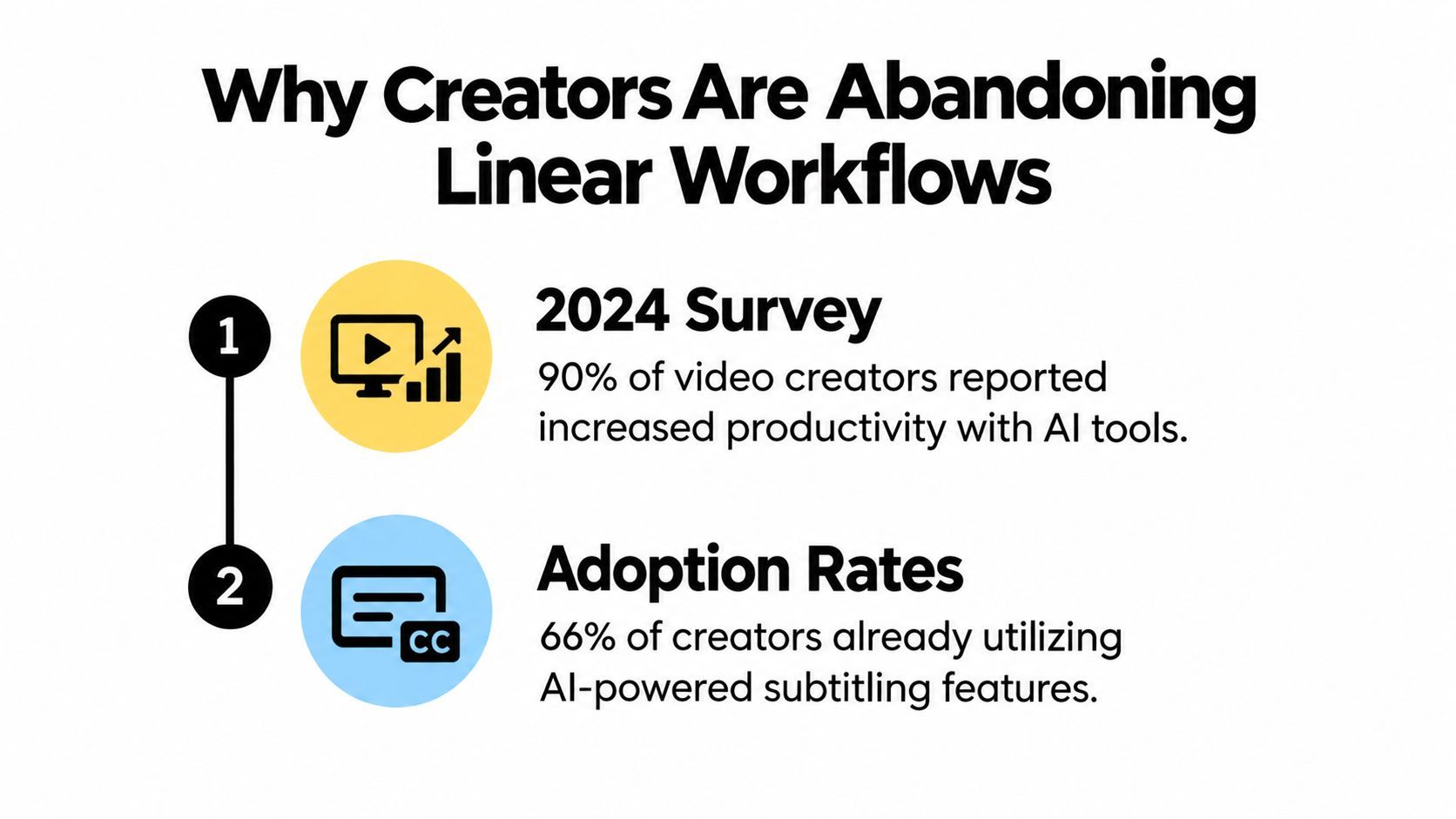
รูปแบบการนำมาใช้นี้เผยให้เห็นว่าอะไรที่ได้ผล ผู้สร้างไม่ได้เริ่มต้นด้วยการแทนที่การผลิตทั้งหมดด้วยคลิปที่ generate แล้วคลิปเดียว พวกเขากำลัง automate งานแคบๆ ที่ซ้ำซากก่อน โดยเฉพาะ transcription, captioning, script refinement, audio cleanup, และ narration การกำกับโดยมนุษย์ยังคงกำหนดหัวข้อ, มุมมอง, รสนิยมภาพ, และการอนุมัติสุดท้าย
หน่วยการผลิตกำลังกลายเป็น modular
workflow สมัยใหม่ปฏิบัติต่อแต่ละขั้นตอนเหมือน service ที่มี input และ output ที่กำหนด สคริปต์ stage ผลิต narration ที่มีโครงสร้างและ shot plan ขั้นตอน asset ผลิตภาพหรือคลิปที่ได้รับการอนุมัติซึ่งเชื่อมโยงกับ shot เหล่านั้น ขั้นตอน audio ผลิต voice track พร้อมข้อมูล timing ขั้นตอน assembly รวมวัสดุเหล่านั้นตามกฎ
การออกแบบ modular นี้ทำให้การเปลี่ยนแปลงถูกกว่า คุณสามารถแทนที่ voice โดยไม่ต้อง regenerate visuals, แก้ไขฉากโดยไม่ต้องเขียนสคริปต์ใหม่ทั้งหมด, หรือสร้าง aspect ratio ใหม่จาก project ที่ได้รับการอนุมัติแล้ว มันยังป้องกัน tool paralysis เพราะทุกเครื่องมือมีงานที่ชัดเจน
ผลสำรวจระดับโลกของ 515 ผู้จัดการระดับและ senior business decision-makers, ดำเนินการใน สิงหาคมและกันยายน 2024, พบว่าองค์กร media and entertainment มักร่วมมือกับ content-production partners เพื่อสร้างหรือ integrate generative AI systems ในองค์กร ตามสรุปโดย Sigma DAX's media and entertainment analysis บทเรียนปฏิบัติการนั้นตรงไปตรงมา ทีมที่ scalable มุ่งเน้น orchestration, integration, control, and repeatability, ไม่ใช่การหา model สากลตัวเดียว
สร้าง Modular AI Video Pipeline ของคุณ
ผู้สร้างรายงานผลประโยชน์ด้านประสิทธิภาพจาก AI แต่ผลประโยชน์เหล่านั้นมาจาก pipeline design มากกว่าการ generate แบบ single-click วางแผน handoffs ก่อน จากนั้นเลือกซอฟต์แวร์รอบๆ การตัดสินใจและไฟล์ที่แต่ละขั้นตอนต้องรับ
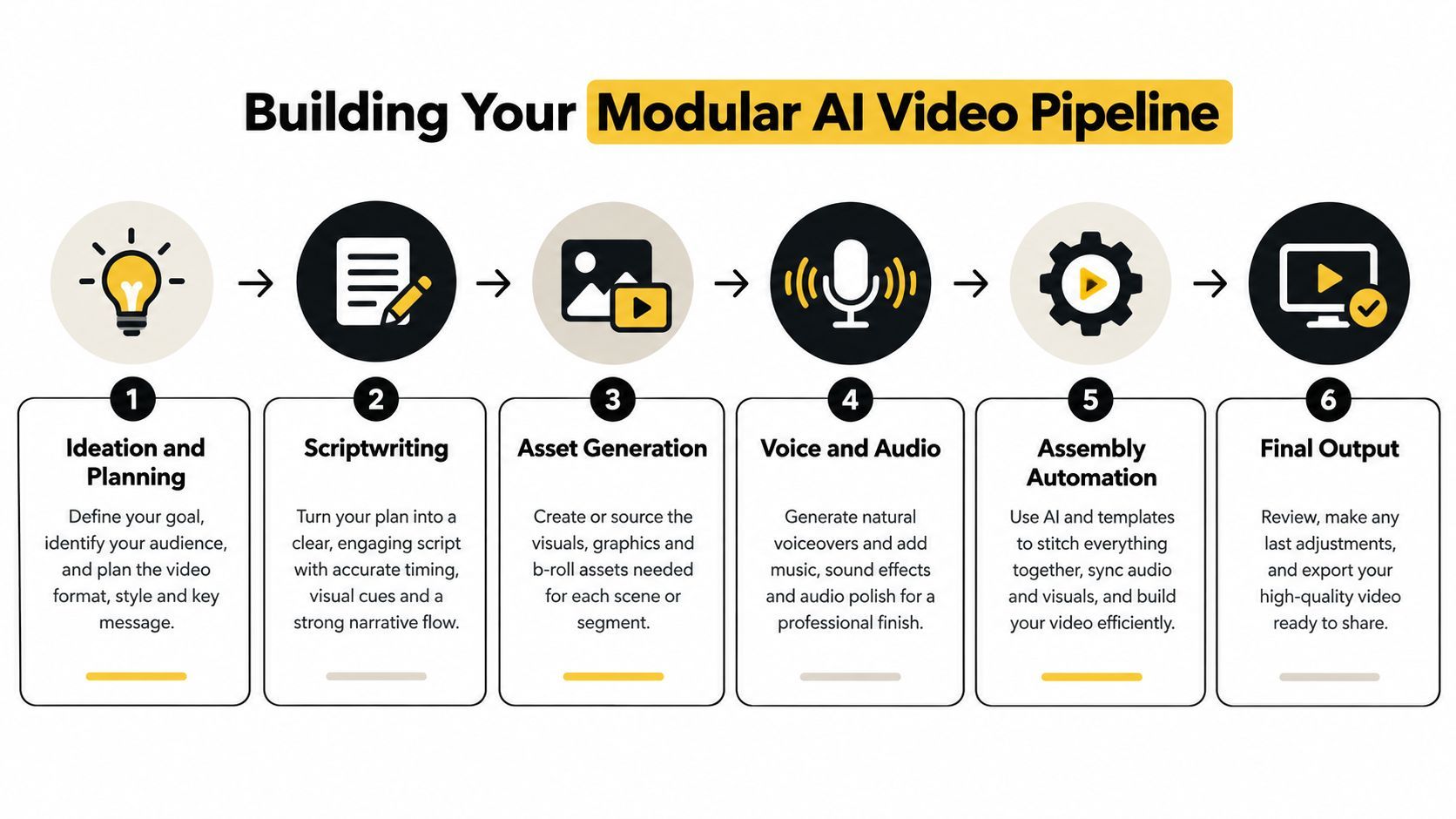
หกขั้นตอนและ handoffs ของพวกมัน
-
Ideation and planning กำหนด audience, offer, channel, angle, และ desired action handoff คือ content brief ที่มีตัดสินใจที่ใช้งานได้ ไม่ใช่หัวข้อที่คลุมเครือ
-
Scriptwriting แปลง brief นั้นเป็น narration, scene intent, on-screen text, และ rough timing แยกคำพูดที่พูดออกจาก visual instructions เพื่อให้ downstream tools ไม่ปฏิบัติต่อ production notes เป็น dialogue
-
Asset generation สร้างหรือหาวัตถุดิบสำหรับแต่ละ shot บันทึก scene number, prompt, reference image, intended duration, aspect ratio, และ approval status กับทุก asset
-
Voice and audio ผลิต narration, music, sound effects, และ timing Generate voice track ตั้งแต่แรก เพื่อให้ editor ตัด visuals ตาม pacing จริงแทน estimated script length
-
Assembly automation รวม clips, voice, captions, transitions, overlays, และ brand settings Templates และกฎจัดการงานที่ทำซ้ำได้ ในขณะที่คนสามารถแทนที่ฉากที่อ่อนแอได้ก่อน export
-
Final output สร้างเวอร์ชันเฉพาะช่องทาง, ตรวจสอบ playback, และส่งไฟล์ที่ได้รับการอนุมัติไปยัง publishing และ measurement systems
ให้ทุก handoff มีสถานะที่มองเห็นได้ เช่น draft, needs review, approved, หรือ rejected หากไม่มีสถานะนั้น ทีมจะสูญเสียการติดตามว่าภาพ, voice file, หรือ export ไหนคือ authoritative pipeline ที่เชื่อถือได้ยังบันทึก failures รวมถึง missing assets, mismatched durations, unsupported formats, และ captions ที่เกิน design limit
คู่มือของ Sprello เรื่อง guide to AI creative workflows อธิบาย architecture นี้สำหรับทีมที่เชื่อมต่อเครื่องมือสร้างสรรค์หลายตัวแทนการใช้ generator ที่แยกออก สำหรับผู้สร้างที่ต้องการ production environment ที่ unified มากกว่า ShortGenius เชื่อมต่อ writing, visual creation, voiceover, editing, และ publishing ภายใน workflow เดียว trade-off ปฏิบัติการนั้นชัดเจน: handoffs น้อยลงสามารถลดงาน setup ในขณะที่ modular tools ให้ทีมควบคุมขั้นตอนเดี่ยวมากกว่า
ออกแบบสำหรับการเปลี่ยนแปลง volume
สร้างสำหรับการผลิตซ้ำตั้งแต่ project แรก เก็บ reusable brand instructions, voice preferences, caption styles, visual references, และ export presets แยกจาก project-specific files แคมเปญตามฤดูกาลสามารถเพิ่ม output โดยไม่บังคับให้ทีม rebuild process
เก็บ original ingredients ไว้ด้วยกัน: script, prompt, source asset, voice file, caption file, และ final export หาก platform เปลี่ยน format requirements หรือ client ขอเวอร์ชันใหม่ regenerate ขั้นตอนที่ได้รับผลกระทบแทนการ rebuild วิดีโอทั้งหมด file discipline นั้นคือสิ่งที่เปลี่ยน collection ของ AI tools ให้เป็น production system
Scripting Strategies ที่ Scale ได้จริง
สคริปต์ควรให้โครงสร้างพอแก่ downstream tool ทุกตัวเพื่อทำหน้าที่ย่อหน้า generic อาจยอมรับได้สำหรับ human writer แต่ให้ image model, voice engine, caption system, และ editor ตีความ project ต่างกันมากเกินไป
ใช้ script schema ที่มี fields แยกสำหรับ:
- Hook: opening claim, question, หรือ tension
- Narration: exact spoken words
- Visual direction: สิ่งที่ผู้ชมควรเห็น โดยไม่ผสม dialogue
- On-screen text: short phrases ที่ support comprehension
- Audio direction: voice tone, music mood, และ sound cues
- Approval notes: claims, products, people, หรือ rights-sensitive elements ที่ต้องการ review
โครงสร้างนี้เปลี่ยน prompting เป็น iterative production process คำขอแรกควร establish audience, objective, tone, format, forbidden claims, และ desired outcome pass ที่สองควร challenge weak assumptions, identify unsupported statements, และ remove generic language pass ที่สามควรแปลง approved idea เป็น timed scenes
ใช้ prompts เป็น production templates
สำหรับ series ที่เกิดซ้ำ เก็บ stable system prompt หรือ template ที่กำหนด brand voice เพิ่ม variable fields สำหรับ topic, audience segment, offer, evidence, และ call to action วิธีนี้ dependable กว่าการขอให้ model “sound like the previous video,” เพราะ model ได้รับ explicit constraints แทน loose comparison
Short-form hooks ต้องการ compression ขอ clear tension และ fast route to the payoff Explanatory videos ต้องการ hierarchy, transitions, และ context พอให้ผู้ชมเข้าใจว่าทำไม recommendation ถึงสำคัญ prompt เดียวกันไม่ควร serve both formats
practical revision loop ดูแบบนี้:
- Generate several angles จาก brief เดียวกัน
- Select one angle โดยใช้ audience และ business criteria
- Expand มันเป็น scenes และ narration
- Verify ทุก factual claim และ named entity
- Read สคริปต์ aloud ด้วย intended voice
- Approve text ก่อน generate expensive visual assets
ปกป้อง series consistency
สร้าง style sheet สำหรับ recurring characters, presenters, products, และ phrases บันทึก pronunciation guidance, preferred terminology, sentence rhythm, และ level of technical detail ที่ audience คาดหวัง เก็บ examples ของ approved scripts เป็น references แต่ไม่พึ่ง examples เพียงอย่างเดียว Rules ง่ายต่อการ maintain กว่า expanding pile of old outputs
เป้าหมายไม่ใช่ perfect first draft แต่เป็น predictable first draft ที่เข้าสู่ review ด้วย structure, tone, และ production metadata ที่แนบมาอยู่แล้ว
Generating Visual Assets ด้วย Purpose
Visual generation ทำงานดีที่สุดเมื่อแต่ละ shot มี job ที่กำหนด Talking-head explanation, product demonstration, atmospheric b-roll clip, และ animated statistic ไม่ควรใช้ generation strategy เดียวกันเพียงเพราะ model เดียวกันผลิตได้ทั้งหมด
ใช้ simple decision rule:
- เลือก recorded or licensed footage เมื่อ exact product details, human credibility, หรือ legal certainty สำคัญ
- เลือก generated imagery เมื่อต้องการ controlled concepts, backgrounds, thumbnails, หรือ stylized scenes
- เลือก generated video เมื่อ motion เองสื่อสาร idea และ small visual variation ไม่ undermine message
- เลือก hybrid approach เมื่อ real product, person, หรือ interface ต้อง accurate ในขณะที่ surrounding environment สามารถ synthetic ได้

สร้าง ingredients ก่อน motion
การ generate complete scenes แบบสุ่มมักผลิต inconsistent faces, clothing, lighting, object geometry, และ camera position วิธี controlled มากกว่าคือสร้าง ingredients ก่อน: reference images, character views, product angles, key frames, และ storyboard จากนั้น video model animate approved visual foundation แทนการ invent ทุก detail พร้อมกัน
สำหรับ recurring subjects กำหนด reference pack รวม preferred framing, lighting, color palette, wardrobe, environment, และ negative instructions สำหรับ products ให้ clean views และ specify features ที่ต้องไม่เปลี่ยน สำหรับ branded motion graphics ใช้ reusable layout แทนการขอให้ model recreate typography ใน moving scene
Camera direction ควร explicit “Slow push-in toward the subject” ให้ editor หรือ motion model usable instruction “Make it cinematic” ไม่ได้ Specify ว่าฉากต้องการ locked frame, lateral movement, overhead view, handheld energy, หรือ transition-friendly composition หรือไม่
การสาธิตต่อไปนี้แสดงวิธีที่ asset สามารถเคลื่อนจาก generated concept ไปสู่ finished short-form production:
เก็บ reusable asset library จัดตาม purpose แทน generation tool Folder สำหรับ product close-ups, อีกอันสำหรับ neutral backgrounds, และอีกอันสำหรับ approved character references มีประโยชน์กว่าการตั้งชื่อ folder ตาม model ที่สร้าง tool อาจเปลี่ยน production need ยังคงอยู่
Voice, Audio, and Assembly Automation
Audio กำหนดว่า generated video รู้สึก intentional หรือไม่ sequence ที่ visually strong กับ uneven pronunciation, abrupt pauses, clipped words, หรือ music competing with narration ยังรู้สึก unfinished
เลือก voice ตาม job Tutorial อาจต้องการ calm precision, advertisement อาจต้องการ controlled urgency, และ founder-led message อาจต้องการ human recording เพื่อ preserve personal credibility Synthetic voices มีประโยชน์เมื่อ pronunciation, licensing, และ audience expectations ชัดเจน แต่ยังต้องการ listening review ตรวจ names, product terms, emphasis, pauses, และ emotional match ระหว่าง read และ visuals
Treat the timeline as structured data
repeatable assembly process สามารถใช้ scene record ที่มี:
- scene identifier
- approved visual asset
- narration segment
- start and end timing
- caption text
- transition rule
- music state
- brand overlay
- review status
ข้อมูลนั้นให้ automation layer assemble first cut โดยไม่ hide creative decisions มันยังทำให้ targeted regeneration เป็นไปได้ หาก scene five fails แทนที่ scene five แทน rebuild entire project
Captioning ควรอยู่ในช่วงต้น process ไม่ใช่ท้าย Captions ส่งผลต่อ line breaks, safe areas, pacing, และ visual hierarchy Generate จาก approved narration จากนั้น review names, punctuation, timing, และ contrast Burned-in captions ควร legible หลัง resize สำหรับ smaller screens
เพิ่ม quality gates ก่อน export
ใช้ gate หลัง audio generation, อีกอันหลัง assembly, และ final gate หลัง channel formatting gate สามารถตรวจว่าทุก scene มี asset หรือไม่, narration duration match timeline หรือไม่, captions อยู่ใน safe area หรือไม่, และ export ใช้ dimensions และ frame rate ที่ขอหรือไม่
Codec selection อยู่ใน delivery ไม่ใช่ creative stage peer-reviewed codec benchmark พบว่า AV1 มัก deliver strongest compression quality ใน codecs ที่ทดสอบ ในขณะที่ SVT-AV1 ผลิต higher quality กว่า real-time AV1 implementations ที่ทดสอบแต่ต้องการ encoding นานประมาณ seven times ใช้ fast H.264 หรือ hardware AV1 สำหรับ previews และ rapid publishing จากนั้น queue slower encoding สำหรับ archives หรือ bandwidth-sensitive versions เมื่อ playback compatibility confirmed
Multi-Channel Distribution โดยไม่ Fatigue จาก Repetition
การ publish master file เดียวกันทุกที่ efficient เพียงจนกว่า audience จะสังเกตว่า channel ทุกตัวได้รับ identical experience Distribution ควร reuse underlying idea ในขณะที่ adapt opening, pacing, captions, framing, และ call to action สำหรับแต่ละ platform
TikTok มักได้ประโยชน์จาก immediate visual หรือ verbal interruption YouTube Shorts สามารถ support clearer explanatory arc Instagram Reels อาจต้องการ strong visual polish และ clean caption treatment Facebook สามารถ accommodate more context ใน accompanying post ในขณะที่ X อาจ reward sharper claim ที่ work กับ concise text introduction
production system ควรสร้าง variants จาก approved source project เดียว ไม่ duplicate entire project manually เก็บ core narration และ evidence stable จากนั้น vary elements ที่ affect platform fit:
- Opening frame: เปลี่ยน first visual หรือ line เพื่อ match channel's browsing behavior
- Caption layout: ปรับ line length, placement, และ emphasis สำหรับ interface
- Pacing: ลบ pauses หรือเพิ่ม breathing room ที่ audience ต้องการ explanation มากกว่า
- Aspect ratio: Recompose important subjects แทน just cropping master
- Call to action: Match available interaction ไม่ว่าจะ comment, profile visit, click, หรือ save
single render สามารถ produce several files แต่ automation ไม่ควร remove editorial judgment Crop ที่ preserve person อาจ cut product Caption position ที่ work บน platform หนึ่งอาจ overlap interface elements บนอีก platform Preview ทุก major variant
Measure the content system
ติดตาม performance ตาม concept, hook, audience, platform, และ production version อย่าตัดสิน workflow เพียง views บันทึกว่าความคิดไหน generate meaningful actions, openings ไหน hold attention, captions ไหน understood, และ variants ไหนต้องการ repeated manual correction
สำหรับ delivery efficiency เปรียบเทียบ codecs ที่ matched perceptual quality แทน bitrate เพียงอย่างเดียว Independent testing พบว่า AV1 achieved roughly 55% lower bitrate than H.264 at comparable VMAF quality on average, ผลลัพธ์แตกต่างตาม content type ตาม this codec comparison using real content VMAF quality gate สามารถ catch artifacts จาก resizing, caption burning, หรือ fast scene changes โดยเฉพาะรอบ small text และ high-contrast edges
Quality Control ในยุค Fast Generation
Faster generation ไม่ remove editorial work มันสร้าง output มากขึ้นที่ look plausible พอผ่าน casual glance แต่ยัง contain false claim, mispronounced name, inaccessible caption, หรือ visual detail ที่ damage trust
Marketers ที่ surveyed โดย Animoto รายงานว่า 90% ถือว่า editable AI output essential, 95% required brand reflection, และ 99% said brand personality had to remain visible, ตาม evidence ที่ summarized ใน research on credibility and AI-generated video Requirements เหล่านั้น describe workflow problem ไม่ใช่ prompting problem ทีมต้องการ approval checkpoints ที่ทำให้ quality visible ก่อน publishing
ใช้ risk-based review
Review ทุกวิดีโอสำหรับ factual claims แต่ reserve deeper approval สำหรับ content ที่มี higher consequences Product promise, health statement, financial explanation, regulated claim, หรือ named individual ควรได้รับ source verification และ human sign-off Decorative background สามารถใช้ lighter review path หากไม่มี meaningful factual หรือ rights-sensitive content
practical checklist รวม:
- Claims: Verify dates, names, product capabilities, และ comparative language ต่อ approved sources
- Language: ขอ native speakers review translation, idiom, pronunciation, และ cultural context
- Rights: Confirm permission สำหรับ voices, likenesses, music, stock footage, logos, และ reference images
- Accessibility: Check caption accuracy, timing, contrast, reading speed, และ meaningful audio description ที่ required
- Brand safety: ดู unintended symbols, stereotypes, unsafe behavior, visual glitches, และ unsuitable generated details
- Authenticity: Confirm ว่า material AI assistance disclosed เมื่อ audience expectations หรือ platform rules make it relevant
Disclosure ไม่ harmful โดยอัตโนมัติ Study ของ 787 TikTok videos จาก 30 creators, ใช้ data collected ระหว่าง November 2024 and April 2025, พบว่า perceived inauthenticity ลด likes และ shares ในขณะที่ AI-label disclosure moderated negative relationship นั้น positively ตาม study on AI disclosure and audience response วิธีที่ถูกต้องขึ้นอยู่กับว่า AI สร้าง voice, actor, scene, script, หรือ minor production assist ชัดเจน material involvement, preserve human accountability, และ test audience trust แทน hiding behind vague wording
30 วันแรกของคุณในการสร้าง AI Video Workflow
small, complete pipeline สอนมากกว่า large collection ของ disconnected experiments เริ่มด้วย repeatable content format เดียว, audience เดียว, และ approval path เดียว เป้าหมายคือเรียนรู้ว่าตรงไหน work stalls
สัปดาห์แรก
Document current process จาก idea ถึง published file Mark ทุก manual handoff, repeated correction, missing input, และ approval delay จากนั้นเลือก first automation target Captioning, script formatting, voiceover, หรือ resizing มัก stabilize ง่ายกว่า fully generated visual storytelling
สร้าง project template ด้วย folders หรือ records สำหรับ brief, script, assets, audio, captions, exports, และ review notes ตัดสินใจว่าใคร approve แต่ละ stage ได้ แม้คนเดียว hold ทุก role
สัปดาห์ที่สอง
Produce complete pilot จาก real brief เก็บ concept commercially useful แต่ limit visual ambition Generate script, create small set ของ assets, produce narration, assemble draft, add captions, และ export one channel version
ยังไม่ optimize speed บันทึกว่าตรงไหน tool misunderstood prompt, asset ขาด consistency, และ human ต้อง repair output Observations เหล่านั้นคือ requirements สำหรับ next version
สัปดาห์ที่สาม
Convert successful decisions เป็น reusable rules Save approved voice settings, caption layouts, scene templates, brand colors, visual references, และ export presets เพิ่ม review checklist สำหรับ claims, pronunciation, rights, accessibility, และ brand fit
Run second production โดยใช้ structure เดียวกันแต่ topic ต่าง หากทีมต้อง invent new instructions ทุกครั้ง workflow ยังไม่ modular หาก content เท่านั้นที่เปลี่ยนแต่ production logic stable คุณกำลัง build right foundation
สัปดาห์ที่สี่
สร้าง channel variants และเปรียบเทียบ manual effort กับ previous process Review ไม่ใช่แค่วิดีโอ finished แต่รวม number ของ corrections, rejected assets, regenerated scenes, และ approval rounds baseline ควร describe time และ friction qualitatively หากไม่มี reliable historical measurement
สิ้นเดือน automate เฉพาะ handoffs ที่ predictable เก็บ creative selection, factual review, rights decisions, และ sensitive localization ภายใต้ human control AI video production workflow ที่ reliable เติบโตผ่าน controlled repetition ไม่ใช่การเพิ่ม tools มากขึ้น
ShortGenius (AI Video / AI Ad Generator) รวม scriptwriting, AI actor casting, voiceover generation, b-roll sourcing, captions, editing, และ aspect-ratio exports ใน production process เดียว เยี่ยมชม ShortGenius (AI Video / AI Ad Generator) เพื่อเปลี่ยน approved idea เป็น editable, multi-channel video drafts ในขณะที่เก็บ key review และ publishing steps ใน workspace เดียว