AI سے کام کرنے والا سکرپٹ کیسے لکھوائیں

شارٹ فارم ویڈیو اور اشتہارات کے لیے AI سے سکرپٹ لکھوانے کا طریقہ سیکھیں۔ بہتر نتائج کے لیے پرامپٹ ٹیمپلیٹس، تکراری بہتری، اور سین میپنگ کو ماسٹر کریں۔
زیادہ تر مشورے AI سے سکرپٹ لکھوانے کے بارے میں جادوئی prompt سے شروع ہوتے ہیں۔ ایک hook، target audience، call to action شامل کریں، اور مکمل ویڈیو سکرپٹ ظاہر ہو جائے گا۔ پروڈکشن میں، یہ طریقہ عام طور پر fluent filler، rushed pacing، generic dialogue، اور ویژول directions پیدا کرتا ہے جنہیں کوئی shoot نہیں کر سکتا۔
AI مفید تب بنتا ہے جب آپ اسے vending machine کی طرح استعمال کرنا چھوڑ دیں اور اسے controlled production process کے اندر junior writer کی طرح treat کریں۔ اسے structured context دیں، drafting سے پہلے story beats approve کریں، narration کو visual execution سے الگ کریں، اور defects پکڑنے کے لیے independent review pass استعمال کریں۔ مقصد raw generation speed نہیں ہے۔ یہ ایک سکرپٹ ہے جو platform کے مطابق فٹ بیٹھے، اپنے claims کو support کرے، intentional لگے، اور recognizable human point of view رکھے۔
Why One-Shot Prompts Fail at Scriptwriting
ایک لائن کا idea AI کو production decisions لینے کے لیے تقریباً کوئی معلومات نہیں دیتا۔ “Write a short video about sustainable clothing” viewer، platform، runtime، voice، visual resources، commercial objective، level of expertise، یا acceptable claims کو define نہیں کرتا۔ model کو ان تمام variables کا اندازہ لگانا پڑتا ہے، اور اس کے اندازے familiar patterns پیدا کرتے ہیں نہ کہ distinctive، shootable concept۔
گہرا مسئلہ یہ ہے کہ locally plausible writing coherent storytelling کے برابر نہیں ہے۔ ایک sentence natural sound کر سکتی ہے جبکہ scene کو کمزور کرے، information repeat کرے، character's motivation تبدیل کرے، یا payoff بہت دیر سے آئے۔ Stanford کا موازنہ 500 synthetic screenplay segments generate کر کے 500 real screenplay segments سے evaluate کیا، یہ پایا کہ plausible text اکیلا compelling یا coherent script کی ضمانت نہیں دیتا۔ سب سے مضبوط non-monotonic method نے most automated measures پر baseline systems کو marginally exceed کیا، including BERTScore۔ اسٹینفورڈ کی screenplay generation پر رپورٹ عملی سبق واضح کرتی ہے: AI convincing local prose produce کر سکتا ہے جبکہ larger dramatic job miss کر دے۔
The draft is not the deliverable
ایک professional script میں کئی simultaneous constraints ہوتے ہیں:
- Narrative movement: ہر scene ایک idea introduce، develop، یا resolve کرے۔
- Performance fit: Spoken language aloud natural sound کرے، screen پر صرف پڑھنے لائق نہ ہو۔
- Production reality: Suggested shot available people، locations، props، اور footage سے possible ہو۔
- Platform pacing: Opening، information density، captions، اور ending viewing environment کے مطابق ہو۔
- Commercial clarity: Viewer سمجھ جائے کہ اگلا کیا کرنا ہے، competing messages کی pile کے بغیر۔
One-shot prompting model سے تمام problems ایک ساتھ solve کروانے کا کہتا ہے۔ اس سے failure diagnose کرنا مشکل ہو جاتا ہے کیونکہ آپ نہیں بتا سکتے کہ weak result vague premise، poor structure، impossible shot list، یا unsuitable tone سے آیا۔
Practical rule: پہلی generation decisions expose کرنے کے لیے استعمال کریں، ان سے بچنے کے لیے نہیں۔
Polished dialogue مانگنے سے پہلے outline مانگیں۔ Hook، sequence، proof، payoff، اور call to action review کریں جب changes سستے ہوں۔ Structure کام کر جائے تو narration اور production instructions میں expand کریں۔ یہ mindset shift reliable AI scriptwriting کی foundation ہے۔
Building Context and Few-Shot Prompt Templates
AI usable script اس لیے produce نہیں کرتا کہ opening prompt clever sound کرے۔ یہ تب produce کرتا ہے جب brief audience، production limits، اور review rules define کرے generation سے پہلے۔ ایک context block بنائیں جو model کو بتائے کہ script کہاں run ہوگا، کیا achieve کرنا ہے، اور کون سے decisions creator کے پاس رہیں گے۔
ایسے fields استعمال کریں:
- Audience: Viewer کا problem، knowledge level، motivation، اور likely objection describe کریں۔
- Platform: Destination کا نام، aspect ratio، caption treatment، delivery format، اور viewing context بتائیں۔
- Runtime: Target duration set کریں اور realistic spoken-word budget require کریں۔
- Objective: ایک primary outcome select کریں، جیسے education، lead generation، product consideration، یا direct sale۔
- Voice: Sentence length، energy، vocabulary، humor، emotional temperature، اور avoid کرنے والے words specify کریں۔
- Story inputs: Setting، characters، conflict، product facts، available proof، اور desired resolution provide کریں۔
- Boundaries: Prohibited claims، unavailable footage، legal restrictions، brand terminology، اور human review requiring topics list کریں۔
- Output schema: Model کو return کرنے والے fields define کریں، including timecode، narration، on-screen text، shot direction، transition، اور audio۔
آخری دو fields production time بچاتے ہیں۔ اگر model کو نہ پتہ ہو کہ studio، actors، یا licensed stock footage نہیں ہے، تو attractive scene لکھ سکتا ہے جو produce نہ ہو سکے۔ اگر required format نہ جانے تو prose block کو shooting document میں convert کرنا پڑے گا۔
Examples anchor the requested voice
وہ exact scene format جو چاہیے اس کی short example شامل کریں۔ ایک narration line کو on-screen caption اور specific visual کے ساتھ pair کریں۔ اگر brand کا established voice ہو تو original sample provide کریں جو rhythm اور restraint دکھائے۔ واضح کریں کہ example format اور tone کا reference ہے، copy کرنے کے لیے نہیں۔
یہ few-shot prompting ہے۔ OpenAI کا GPT-3 research پایا کہ prompt میں examples performance بہتر کرتے ہیں without additional model training۔ TriviaQA پر accuracy no examples کے 64.3% سے several examples کے 71.2% ہو گئی، جو دکھاتا ہے کہ demonstrations requested output clarify کرتے ہیں۔ اصل GPT-3 research نے screenplay quality evaluate نہیں کی، اس لیے principle کو script formatting پر apply کریں نہ کہ narrative quality کا proof سمجھیں۔
ایک reusable instruction ایسا ہو سکتی ہے:
You are a short-form video writer and production planner. Use the context below. First return a beat sheet, not a full script. Every beat must include its purpose, approximate timing, narration intent, visual opportunity, and transition. Do not invent product facts. Mark unsupported claims for review. Provide three different hooks with distinct angles.
پہلے beat sheet return کریں۔ Hook، sequence، proof، payoff، اور call to action review کریں کہ وہ اپنی جگہ deserve کرتے ہیں۔ تب polished dialogue اور production detail request کریں۔
Examples short اور purposeful رکھیں۔ ایک formatting establish کرے، دوسرا voice، اور تیسرا required visual specificity دکھائے۔ اگر script tools evaluate کر رہے ہیں تو AI video creation platform structured ideas کو scenes میں assemble کرنے میں مدد کر سکتا ہے، جبکہ creator underlying beats، claims، اور pacing approve کرے۔
Executing a Two-Pass Generation Workflow
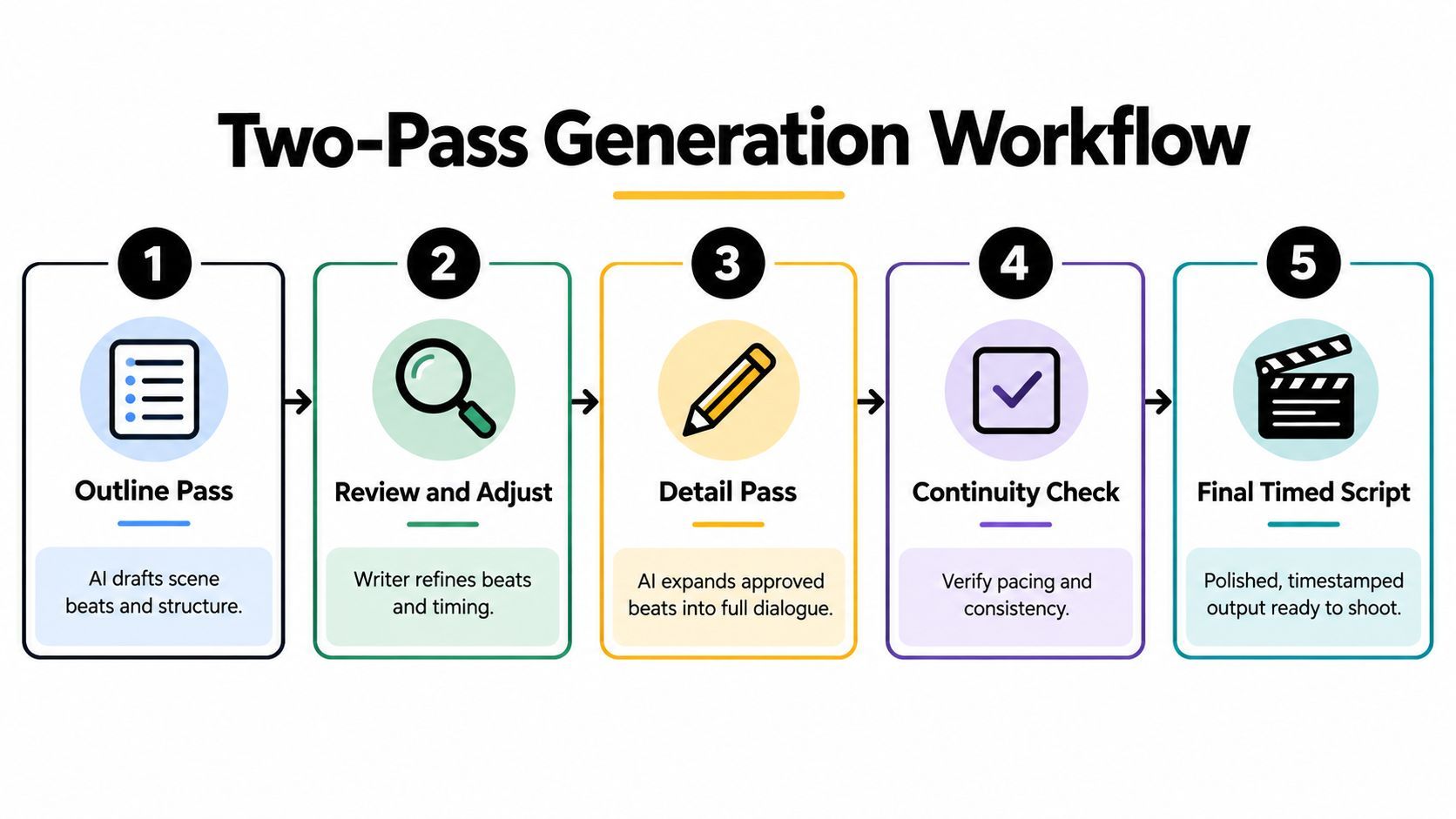
Narrative review survive کر جائے تب final timed script نہ مانگیں۔ Two-pass workflow story architecture کو language and production detail سے الگ کرتا ہے، جو ہر stage پر smaller، manageable decision دیتا ہے۔
Pass one creates the beat sheet
Model کو approved context block دیں اور beat sheet request کریں۔ ہر beat پانچ questions کا جواب دے:
- Hook: کیا immediate curiosity create کرتا ہے یا viewer کا problem identify کرتا ہے؟
- Information sequence: Viewer کو پہلے، دوسرے، تیسرے کیا سمجھنا چاہیے؟
- Proof: کون سا demonstration، example، source claim، یا visual point credible بناتا ہے؟
- Payoff: دیکھنے کے بعد viewer کے لیے کیا change ہوتا ہے؟
- Call to action: Viewer کا اگلا single step کیا ہونا چاہیے؟
AI سے beats کو table میں present کروائیں جس میں purpose، timing range، core message، اور risk note ہو۔ اس stage پر redundant ideas remove کریں، unsupported claims reject کریں، order adjust کریں، اور unavailable footage پر depend beat rewrite کریں۔ Weak beat sheet کو polished wording سے rescue نہیں کیا جا سکتا۔
Instruction-following research format compliance, content constraints, logical sequencing, اور multi-step execution کو الگ کرتا ہے quality کو ایک vague score کی بجائے۔ یہ workflow کی production logic support کرتا ہے: instruction-following evaluation research structured outline کیوں success test کرنے میں آسان بناتا ہے expansion سے پہلے۔
Pass two expands approved beats
Beat sheet approve ہو جائے تو strict instruction کے ساتھ واپس بھیجیں sequence preserve کرنے کو۔ ہر beat کو expand کرنے کو کہیں:
- Timed narration
- On-screen text
- Shot or b-roll direction
- Camera movement or framing
- Transition
- Music and sound cue
- Fact status or review flag
نئی claims، characters، benefits، یا plot turns نہ add کریں۔ Available time exceed کرنے والی narration identify کریں نہ کہ ending compress کریں without flagging۔ یہ pass one کی editorial decisions preserve کرتا ہے جبکہ AI repetitive drafting handle کرے۔
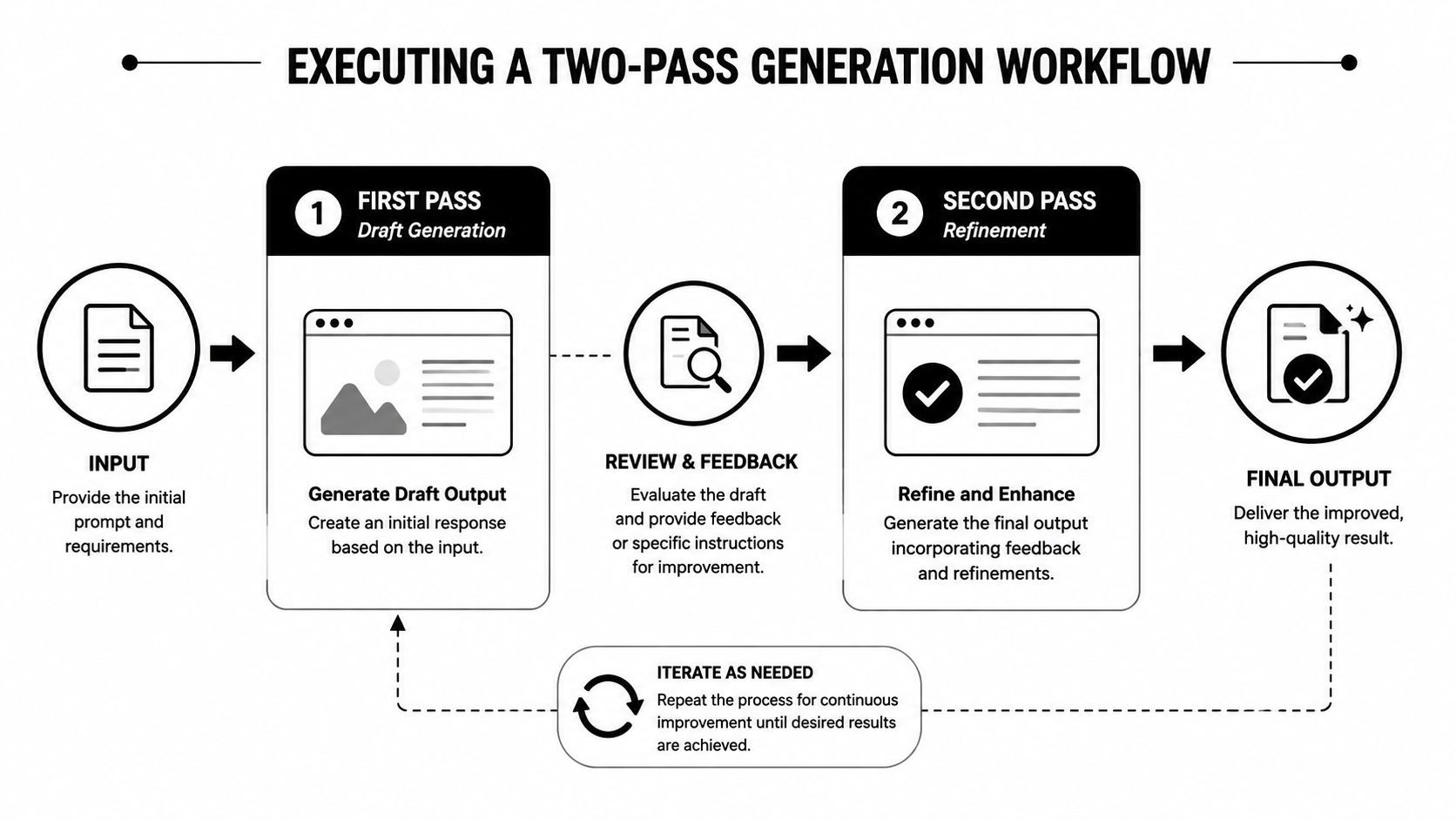
نتیجه timed working document ہونا چاہیے، marketing copy کا block نہیں۔ ویڈیو scripts کیسے لکھیں پر مزید practical guidance کے لیے اپنی production constraints سے compare کریں۔ Generic formulas start کرنے میں مدد کرتی ہیں، لیکن approved beat sheet final version control کرے۔
Mapping Scenes and Visual Directions
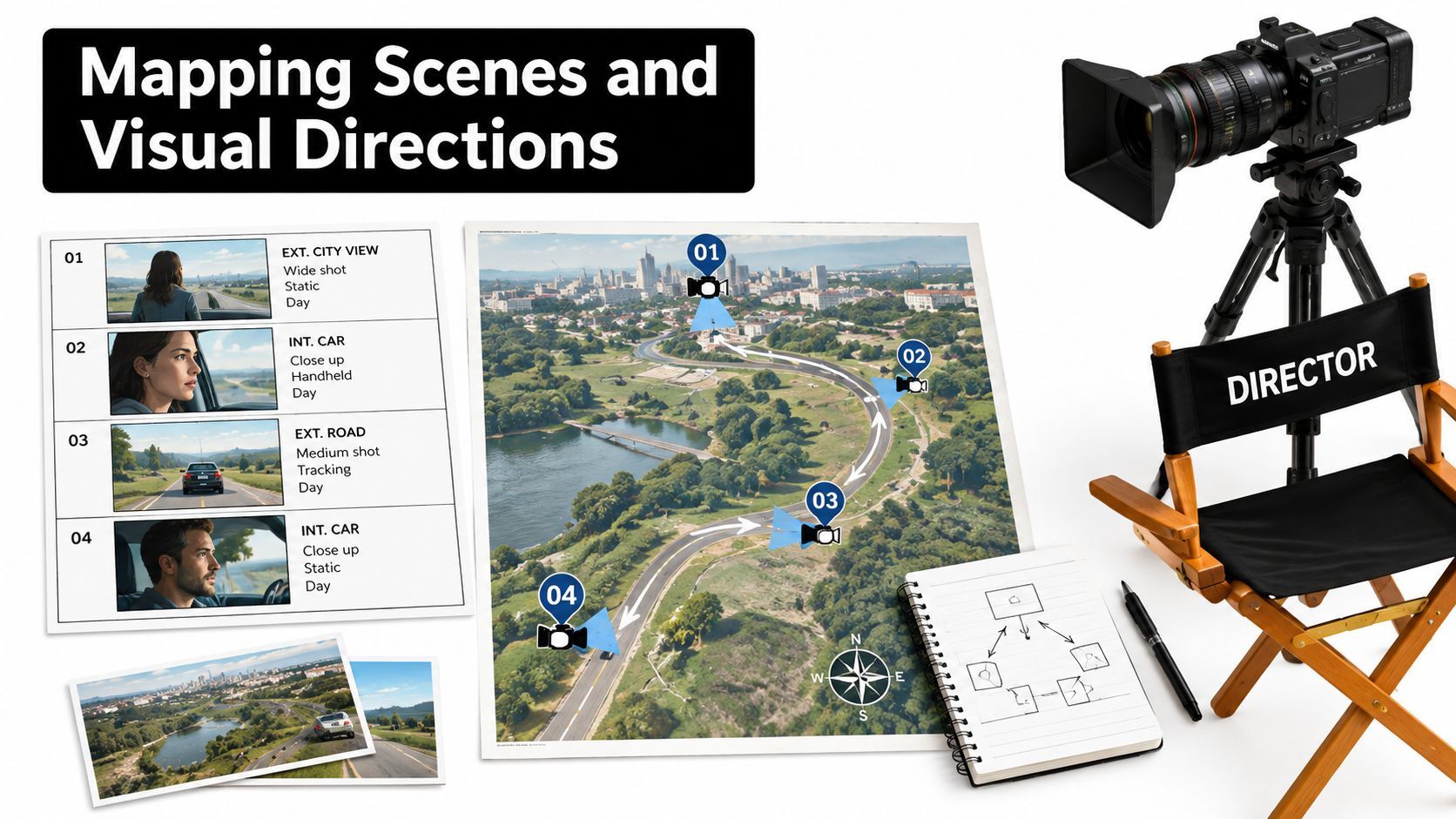
Script words good sound کرنے سے ready نہیں ہوتا۔ یہ usable تب بنتا ہے جب director، editor، یا creator بتا سکے کہ ہر line spoken ہوتے ہوئے screen پر کیا appear ہوگا۔ Prompt model کو force کرے کہ ہر spoken idea کو executable visual decision سے connect کرے۔
Visual inventory define کریں۔ AI کو بتائیں کہ talking-head footage، product close-ups، screen recordings، animation، stock clips، generated imagery، captions، یا existing brand assets استعمال کر سکتا ہے۔ Restrictions جیسے single location، vertical framing، no actors، یا particular product angle تک access نہ ہو شامل کریں۔ Concrete inventory جتنا زیادہ، model کا cinematic shot recommend کرنے کا chance کم جو produce نہ ہو سکے۔
Pair each line with an action
جب human editor script پڑھے گا تو dual-column structure استعمال کریں۔ Left میں time and narration، right میں visual execution۔ Tool-based workflows کے لیے structured fields request کریں، consistent labels scenes، voices، captions، یا media swap آسان بناتے ہیں without entire document rewrite۔
ایک useful visual prompt:
ہر narration line کے لیے ایک primary visual action provide کریں۔ Subject، framing، movement، setting، اور on-screen text specify کریں۔ Abstract directions جیسے “show success” یا “make it engaging” avoid کریں۔ اگر visual inventory میں نہ listed asset پر depend ہو تو unavailable mark کریں۔
“Show the customer succeeding” shot نہیں ہے۔ “Medium vertical shot of the customer checking the completed dashboard, then a close-up of the highlighted result” editor کو build کرنے کو دیتا ہے۔
Design for the actual platform
Platform-specific pacing writing کے بعد decorative adjustment نہیں ہے۔ یہ information کے order اور density تبدیل کرتی ہے۔ Short-form feed کو immediate tension یا relevance communicate کرنے والا opening visual چاہیے، educational explainer کو demonstration سے پہلے clear question۔ Product ad کو offer اور audience problem early sequence میں visible چاہیے۔
پہلے moments میں curiosity gap، surprising contrast، visible result، یا direct problem statement establish کریں۔ پھر visual changes کو meaningful information کے ساتھ alternate کریں۔ New information without fast cuts noise بناتے ہیں، unrelated footage پر static narration viewer کو زیادہ کام دلاتا ہے۔
Model سے flag کروائیں ہر scene جو concrete visual نہ رکھے، previous shot repeat کرے، یا important text interface controls سے obscure جگہ پر رکھے۔ Human editor سے confirm کروائیں کہ captions readable ہیں، claims understand ہونے تک visible رہیں، اور proposed transitions footage match کریں نہ کہ absence compensate کریں۔
Implementing Independent Critique and Revision
“Make this script better” weak revision instruction ہے کیونکہ better کی definition نہیں دیتی۔ یہ draft بنانے والے system کو existing choices defend کرنے دیتی ہے۔ Stronger workflow draft کو independent critic بھیجتا ہے، separate AI conversation، rule-based check، یا human editor، اور explicit tests کے خلاف failures مانگتا ہے۔
Language models اور human writers کا research generation followed by independent critique and revision کو unrestricted self-editing سے reliable quality-control pattern قرار دیتا ہے۔ Process repeated generations اور detailed human rubrics استعمال کر کے chance کم کرتا ہے کہ one lucky sample verdict determine کرے۔ Creative-writing evaluation research drafting اور judging کے درمیان practical editorial separation support کرتا ہے۔
Give the critic pass and fail tests
ایسی checklist استعمال کریں:
- Opening: کیا پہلی sentence clear curiosity gap create کرتی ہے یا relevant problem state کرتی ہے؟
- Progression: کیا ہر scene ایک idea advance کرتی ہے previous repeat کرنے کی بجائے؟
- Timing: کیا spoken copy naturally پڑھنے پر assigned word budget میں فٹ بیٹھتی ہے؟
- Visuals: کیا creator listed resources سے ہر shot execute کر سکتا ہے؟
- Claims: کیا ہر factual statement supported ہے، opinion کے طور پر framed، یا review کے لیے marked؟
- Continuity: کیا character names، product details، tone، اور visual logic consistent رہتے ہیں؟
- Ending: کیا script میں ایک unambiguous action ہے several competing requests کی بجائے؟
Defect list مانگیں، rewritten script نہیں۔ Critic سے scene identify، failure briefly explain، اور صرف necessary جگہ line-level replacement propose کروائیں۔ پھر defects writing model کو بھیجیں instruction کے ساتھ کہ باقی کچھ نہ بدلے۔
Editorial discipline: Diagnosed defects fix کریں، ہر sentence کو model کے rewrite کرنے کے جو بھی reason سے نہیں۔
Compare openings before committing
Opening disproportionate responsibility carry کرتا ہے، اس لیے کم از کم three materially different hooks generate کریں۔ ایک problem سے lead کرے، دوسرا demonstration سے، تیسرا counterintuitive claim سے۔ Clarity، originality، audience fit، factual accuracy، narrative direction، اور platform suitability سے score کریں۔
Critic کو polished clichés reward نہ کرنے دیں۔ Hook grammatically sharp ہو سکتا ہے اور پھر بھی nothing کہے۔ اگر natural first-person delivery capture کرنے voice dictation استعمال کریں تو advanced dictation refinement transcript clean کرنے میں مدد دے سکتا ہے spoken quality sand نہ کر کے۔ Final choice creator کا intent reflect کرے، model کا familiar phrasing preference نہیں۔
Team سمجھ سکے ایسے track کریں acceptance۔ Record کریں کہ first draft hard constraints pass کرا، کتنے factual issues آئے، human نے approve کیا، اور کتنے revision rounds لگے۔ یہ checks “it feels better” کو repeatable production standard بناتے ہیں۔
Preserving Human Authorship and Copyright
Fastest workflow automatically safest یا most distinctive نہیں ہے۔ اگر AI expressive choices کرے، language invent کرے، structure select کرے، اور صرف superficial approval ملے تو final script polished sound کر سکتا ہے creator کو clearly belong کرنے والی little contribute کرتے ہوئے۔
U.S. Copyright Office کی 2025 analysis کہتی ہے کہ prompts اکیلے generally human control enough نہیں دیتے AI output کا author user بننے کو۔ Protection perceptible human expression، creative arrangement، یا substantial modification پر depend کرتی ہے، جیسا Copyright Office analysis میں explain کیا گیا۔ یہ ہر AI-assisted workflow avoid کرنے کی وجہ نہیں۔ یہ process میں creative decisions کہاں enter ہوتے ہیں document کرنے کی وجہ ہے۔
Build an authorship record
Original brief، source material، approved beat sheet، rejected alternatives، revision notes، اور final script version رکھیں۔ Generation سے پہلے brief میں original character perspectives، brand language، examples، اور points of view لکھیں۔ پھر draft آنے کے بعد deliberate structural اور line-level changes کریں۔
یہ changes spelling correct کرنے سے زیادہ کریں۔ Argument reorder کریں، generic transitions replace، central observation sharpen، original example add، unsupported claims remove، اور ending audience سے actual relationship کے گرد shape کریں۔ Version history دکھائے کہ final work meaningful editorial judgment reflect کرتا ہے۔
Protect voice while using assistance
AI unusual phrasing کو familiar patterns میں smooth کر دیتا ہے۔ یہ clarity improve کر سکتا ہے، لیکن creator recognizable بنانے والے details remove بھی کر سکتا ہے۔ Preferred rhythms، recurring concepts، prohibited clichés، product terminology، اور brand جیسے lines کی examples کے ساتھ short voice guide رکھیں۔
Publish یا client کو deliver کرنے سے پہلے disclosure requirements review کریں۔ Platform، client، یا legal rules AI involvement label یا disclose require کر سکتے ہیں۔ AI Video Detector کا practical tip provenance کو workflow کا حصہ بنانا ہے afterthought کی بجائے۔
سب سے defensible process AI draft plus human authorship ہے۔ System outlining، variation، formatting، اور mechanical transformations accelerate کرے۔ Research judgment، tone، claims، narrative priorities، اور final expression human control میں رکھیں۔
ShortGenius (AI Video / AI Ad Generator) approved brief یا prompt کو scene-by-scene video workflow میں بدل دیتا ہے scriptwriting، image generation، video assembly، voiceovers، captions، resizing، اور editing tools کے ساتھ۔ یہاں structured two-pass method استعمال کریں، پھر ShortGenius (AI Video / AI Ad Generator) پر جائیں reviewed script کو platform-ready video اور ad assets میں بدلنے کو۔