AI Deep Dream: گوگل کے تجربے سے وائرل آرٹ تک
AI Deep Dream کیا ہے؟ گوگل کے سرریل AI آرٹ جنریٹر کی تاریخ دریافت کریں اور جدید ویڈیو کنٹینٹ کے لیے اسی طرح کے سائیکیڈیلک ویژولز کیسے بنائیں، یہ سیکھیں۔
2015 میں، میرے سوشل فیڈز عمارتوں، درختوں، اور بادل کی تصاویر سے بھر گئے جو کتوں کے چہروں اور اضافی آنکھوں میں پگھلنے جیسے لگ رہے تھے۔ بہت سے ناظرین نے اسے عجیب AI آرٹ کہا۔ جو وہ دیکھ رہے تھے وہ پہلی باروں میں سے ایک تھا جب عوام نے دیکھا کہ ایک neural network ایک تصویر کو کیسے “دیکھتا” ہے۔
AI Deep Dream کیا ہے اور یہ کیوں اہم ہے
AI Deep Dream اہم ہے کیونکہ یہ creative technology کے ایک turning point پر بیٹھا ہے۔ اس نے عوام کو neural network کے اندر ایک واضح، پریشان کن، اور ناقابلِ فراموش جھلک دی، اس وقت جب کم لوگوں نے machine learning سے براہ راست تعامل کیا تھا۔
سب سے پہلے یہ misconception دور کرنا ضروری ہے۔ DeepDream نے scratch سے images نہیں بنائیں جیسا کہ بہت سے modern AI tools کرتے ہیں۔ یہ ایک موجودہ image سے شروع ہوا، پھر اس اندر موجود patterns کو exaggerate کیا جب تک کہ نتیجہ psychedelic، crowded، اور dreamlike نہ لگنے لگے۔
یہ فرق اب بھی لوگوں کو الجھن میں ڈال دیتا ہے۔ ایک Reddit discussion میں، 78% users جو “How do I make my own deepdream images?” پوچھ رہے تھے انہوں نے confusion دکھائی کہ آیا tool original content generate کرتا ہے یا input image کو distort کرتا ہے، جیسا کہ اس Reddit thread about what DeepDream images are میں ہے۔
DeepDream اصل میں کیا کرتا ہے
جب آپ بادل کو گھورتے ہیں تو آپ کو جانور، چہرے، یا symbols نظر آنے لگتے ہیں۔ DeepDream کچھ ایسا ہی کرتا ہے، لیکن casual noticing shapes کی بجائے، یہ انہیں aggressively amplify کرتا ہے۔
Practical rule: اگر source image نہ ہو تو classic DeepDream result نہیں ہوگا۔
یہی وجہ ہے کہ DeepDream کو visualization tool کہنا بہتر ہے نہ کہ general image generator۔ یہ دکھاتا ہے کہ ایک trained neural network کس قسم کے patterns notice کرنا سیکھ چکا ہے، پھر ان patterns کو push کرتا ہے جب تک کہ وہ ignore نہ کرنے لائق نہ ہو جائیں۔
creators کو کیوں اب بھی care کرنا چاہیے
آج کے creators کے لیے، DeepDream محض پرانی internet curiosity سے زیادہ ہے۔ اس نے ایک visual language متعارف کرائی جو اب بھی ہر جگہ نظر آتی ہے: recursive textures، organic distortions، repeated eyes، animal-like forms، اور ایک sensation کہ reality sideways slip ہو رہی ہے۔
آپ اس کے influence کو دیکھ سکتے ہیں:
- Music visuals جو scenes کو pulsing hallucinations میں بدل دیتے ہیں
- Fashion edits جو beauty imagery کو pattern overload کے ساتھ blend کرتے ہیں
- Short-form videos جو surreal transitions استعمال کرتے ہیں تاکہ viewer کا scroll رک جائے
- Educational explainers جو perception، memory، یا altered states کو visualize کرتے ہیں
DeepDream کا اصلی legacy original code نہیں ہے۔ یہ aesthetic اور idea ہے جو اس کے پیچھے ہے۔ Machines images کو صرف label نہیں کرتے۔ وہ انہیں reshape کر سکتے ہیں اس بنیاد پر جو detect کرنا سیکھ چکے ہیں۔ جب آپ یہ سمجھ جائیں تو modern AI video effects بہت سمجھ میں آتے ہیں۔
Google's AI Experiment کا Viral Phenomenon
2015 میں، internet اچانک hallucinating لگنے لگا۔ dogs، عمارتوں، اور شہری سڑکوں کی photos واپس آئیں extra eyes، curling textures، اور animal forms سے ڈھکی ہوئیں جو image سے خود نکل رہے جیسے لگتے تھے۔ بہت سے لوگوں کے لیے DeepDream پہلی بار تھی جب AI background infrastructure کی بجائے کچھ ایسا بن گیا جو آپ دیکھ سکتے، share کر سکتے، اور فوری react کر سکتے تھے۔
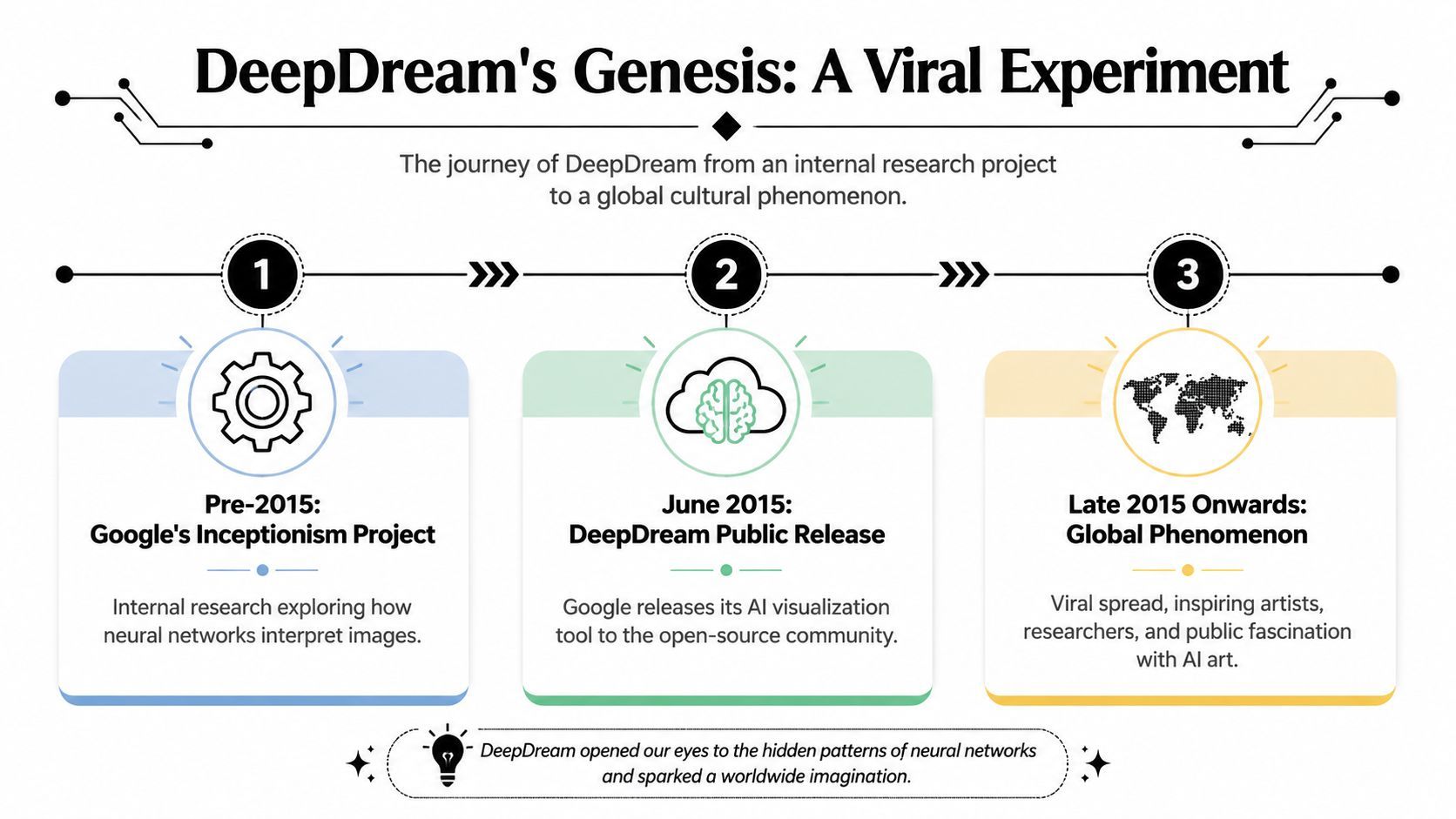
DeepDream Google کے اندر ایک research project کے طور پر شروع ہوا جس کی قیادت Alexander Mordvintsev، Mike Tyka، اور Christopher Olah نے کی۔ شروع میں، یہ process کو Inceptionism کہا گیا، ایک نام جو researchers کو سمجھ آتا تھا لیکن images کی feeling explain نہیں کرتا تھا۔ DeepDream چپکا کیونکہ یہ result سے match کرتا تھا۔ Pictures software output کی بجائے machine-made visions جیسے لگتے تھے۔
Google نے June 2015 میں اپنے research blog پر project شائع کیا اور جلد ہی code release کر دیا، جیسا کہ پہلے نوٹ کیا گیا۔ یہ sequence اہم تھی۔ ایک lab experiment public tool بن گیا، اور جب لوگ اپنی photos پر چلا سکتے تھے تو style AI research circles سے کہیں آگے پھیل گئی۔
release کیوں اتنی تیزی سے پھیلا
DeepDream بالکل اس internet moment پر آیا جہاں visual shock کو reward ملتا ہے۔ Social feeds پہلے سے remix culture، strange humor، اور images کو favor کرتے تھے جو لوگوں کو scroll روکنے پر مجبور کریں صرف “What am I looking at?” پوچھنے کے لیے۔
کچھ factors نے اسے travel کرنے میں مدد کی:
- Anyone could try it: Open-sourcing نے spectators کو participants بنا دیا۔
- The output was instantly readable: Machine learning background کی ضرورت نہیں تھی skyline سے eyes اور snouts نکلتے دیکھنے کے لیے۔
- It mixed beauty with unease: Images playful، creepy، اور oddly mesmerizing تھیں ایک ہی وقت میں۔
یہ combination نے DeepDream کو meme کرنا، remix کرنا، اور یاد رکھنا آسان بنا دیا۔
ایک sentence اس کی cultural force explain کرتی ہے۔ DeepDream نے ordinary internet users کو machine perception کو image style کے طور پر experience کرنے کا طریقہ دیا۔
Internet curiosity سے art-world material تک
Virality صرف پہلا chapter تھا۔ جلد ہی، artists نے DeepDream کو novelty filter سے زیادہ استعمال کرنا شروع کیا۔ Galleries اور creative institutions نے neural-network imagery کو real artistic medium سمجھنا شروع کیا، نہ کہ محض technical stunt۔
یہ shift اہم ہے کیونکہ اس نے AI visuals کے گرد conversation بدل دی۔ DeepDream سے پہلے، computer vision زیادہ administrative لگتی تھی۔ یہ photos tag کرتی، objects detect کرتی، اور information sort کرتی۔ DeepDream نے اس hidden process کو outward موڑ دیا۔ اس نے system کے pattern-seeking behavior کو visible، strange، اور emotionally charged بنا دیا۔
آج کے creators کے لیے، یہ historical lesson ہے جو رکھنے لائق ہے۔ DeepDream current standards سے rough، slow، اور hard to control تھا، لیکن اس نے ایک surreal visual language متعارف کی جو اب بھی کام کرتی ہے۔ Modern tools جیسے ShortGenius آپ کو short-form video میں وہی dreamlike instability produce کرنے دیتے ہیں بہت زیادہ speed اور control کے ساتھ، چاہے آپ warped transition، creeping texture shift، یا social platforms کے لیے full AI hallucination sequence چاہیں۔
DeepDream اب AI art کے early public era کا historical artifact لگتا ہے۔ اس کا influence اب بھی زندہ ہے۔ فرق یہ ہے کہ creators کو original tool کی limits قبول کرنے کی ضرورت نہیں aesthetic استعمال کرنے کے لیے۔
DeepDream Images کو Dreams میں کیسے بدلتا ہے
DeepDream کو سمجھنے کا اچھا طریقہ ordinary چیز کی photograph سے شروع کرنا ہے۔ شاید tree line، building facade، یا cloudy sky۔ System اس image کو study کرتا ہے، certain visual signals کو favor کرتا ہے، اور پھر ان signals کو picture واپس push کرتا رہتا ہے جب تک کہ scene خود hallucinate نہ کرنے لگے۔
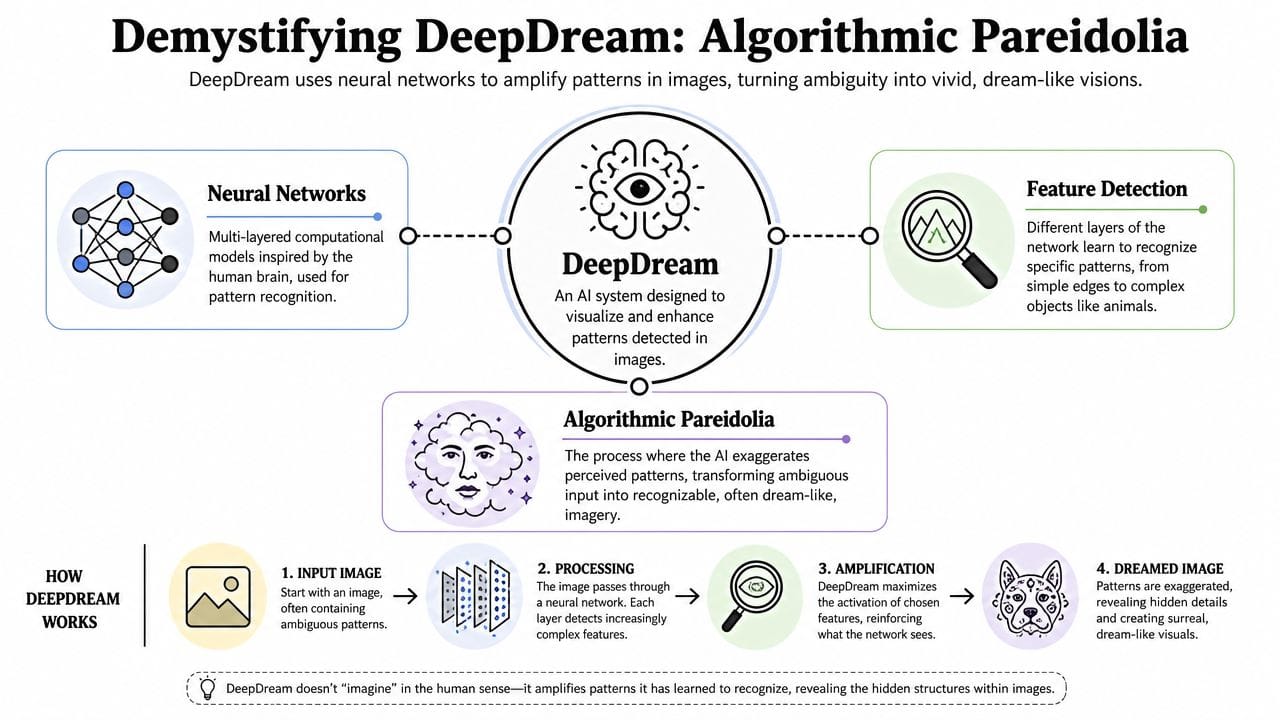
Technical level پر، DeepDream input image کو edit کرتا ہے pixels measure کرکے جو ایک selected layer میں trained neural network کی activity بڑھائیں، پھر image کو اس direction میں nudge کرتا ہے بار بار۔ TensorFlow کا DeepDream tutorial یہ gradient-based process explain کرتا ہے اور دکھاتا ہے کہ shallow layers simpler textures produce کرتے ہیں جبکہ deeper layers complex forms نکالتے ہیں۔
یہ abstract لگتا ہے جب تک آپ اسے feedback loop کے طور پر نہ دیکھیں۔
- Real image سے شروع کریں۔
- Network میں ایک layer منتخب کریں۔
- Visual changes measure کریں جو اس layer کو strongly react کرائیں۔
- ان changes کو image پر apply کریں۔
- Repeat کریں۔
ہر pass چھوٹی ہوتی ہے۔ Accumulation اہم ہے۔
Leaves کا patch feathers اگانا شروع کر سکتا ہے۔ Cloud bank eyes اگا سکتا ہے۔ Stone wall animal faces develop کر سکتا ہے جو پہلے نہ تھیں، لیکن اب ignore نہ کرنے لائق لگتی ہیں۔
کیوں کچھ outputs subtle لگتے ہیں اور کچھ feral
Network کے مختلف حصے مختلف visual ingredients پر attention دیتے ہیں۔ Early layers edges، contrast shifts، اور texture پر respond کرتے ہیں۔ Middle layers fragments کو motifs میں group کرتے ہیں۔ Deeper layers larger، object-like patterns پر react کرتے ہیں۔
| Layer choice | What you tend to see |
|---|---|
| Lower layers | Ripples, lines, textures, repeated strokes |
| Middle layers | Curves, motifs, clustered forms |
| Deeper layers | Faces, eyes, animals, object-like structures |
یہی وجہ ہے کہ DeepDream images اتنی مختلف محسوس ہوتی ہیں چاہے starting photos equally plain ہوں۔ Chosen layer visual exaggeration کی type بدل دیتی ہے، جیسے distortion pedal پر مختلف knobs گھمانا۔
اگر آپ neural networks visual features represent کیسے کرتے ہیں اس کی clearer foundation چاہتے ہیں تو یہ practical AI image model explainer helpful context دیتا ہے۔
Moving example definition سے زیادہ مدد کرتا ہے۔ یہ walkthrough effect کو action میں دکھاتا ہے:
Algorithmic pareidolia کا کردار
Humans پہلے سے ایسا ہی کرتے ہیں۔ ہم windows میں faces، smoke میں creatures، اور carpet میں patterns دیکھتے ہیں۔ DeepDream اس impulse کو machine process میں بدل دیتا ہے۔
Dream effect machine کے half-recognized patterns پر overcommitting سے آتا ہے۔
یہی وجہ ہے کہ output eerie لگتا ہے random کی بجائے۔ Network visual guess کرتا رہتا ہے، پھر اس guess کو image پر paint کرتا ہے جب تک suggestion structure نہ بن جائے۔
Creators کے لیے، یہ idea اب بھی اہم ہے۔ Strongest surreal visuals usually ایک foot reality میں رکھتے ہیں۔ وہ recognizable scene کو bend کرتے ہیں completely replace کی بجائے۔ 2015 میں، DeepDream نے slow image iteration سے ایسا کیا۔ آج، short-form video tools جیسے ShortGenius creators کو motion، transitions، اور evolving textures پر وہی principle apply کرنے دیتے ہیں much tighter control کے ساتھ۔ Aesthetic زندہ ہے، لیکن workflow modern content creation کے لیے fit ہے۔
DeepDream بمقابلہ Modern Generative AI
DeepDream اب بھی اہم ہے، لیکن اسے correctly place کرنا مددگار ہے۔ یہ historical artifact ہے، modern production workflow نہیں۔ ایک documented retrospective کے مطابق، 2015 release کے 10 سال بعد، DeepDream AI image history میں foundational ہے، Stable Diffusion سے 7 سال پہلے اور Google Veo 3 سے 10 سال پہلے، اور یہ VGG16 network اندر images iteratively enhance کرکے کام کرتا تھا newer model families سے generate کی بجائے، جیسا کہ اس DeepDream retrospective video میں بیان ہے۔
یہ “historical artifact” framing اہم ہے کیونکہ بہت سے creators DeepDream کو backwards discover کرتے ہیں۔ وہ modern AI image اور video tools پہلے encounter کرتے ہیں، پھر older systems دیکھتے ہیں اور assume کرتے ہیں کہ وہ early versions تھے۔ وہ نہ تھے۔
Central difference
DeepDream enhancement کے بارے میں ہے۔ Modern generative AI اکثر creation کے بارے میں ہے۔
DeepDream image سے شروع ہوتا ہے اور learned features exaggerate کرکے transform کرتا ہے۔ Modern systems اکثر text prompt سے شروع ہو سکتے ہیں، scene scratch سے generate کریں، revise کریں، animate کریں، expand کریں، اور different outputs کے لیے adapt کریں ایک workflow میں۔
یہ creators کے لیے everything بدل دیتا ہے۔ یہ speed، control، repeatability، اور video میں کام کرنے کی ease پر affect کرتا ہے۔
DeepDream بمقابلہ modern AI tools
| Feature | AI DeepDream (2015) | Modern AI Tools (e.g., ShortGenius) |
|---|---|---|
| Starting point | Existing image required | Can start from prompts, assets, or mixed inputs |
| Core function | Enhances patterns already present | Generates, edits, assembles, and adapts content |
| Creative control | Layer-based and indirect | More direct control through prompts, scenes, effects, and edits |
| Output style | Psychedelic distortion and recursive motifs | Wide range, from photoreal to abstract and surreal |
| Speed | Older workflow, slower by current standards | Faster and built for production use |
| Video readiness | Not designed as a modern short-form workflow | Better suited to reels, shorts, ads, and multi-scene editing |
یہ practice میں کیوں اہم ہے
اگر آپ historical یا artistic reasons سے exact DeepDream process چاہتے ہیں تو old method اب بھی interesting ہے۔ لیکن most working creators کو historical fidelity کی ضرورت نہیں۔ انہیں result چاہیے جو shape اور ship کر سکیں۔
اس کا مطلب آج کا سوال usually “How do I run classic DeepDream?” نہیں ہے۔ یہ قریب تر ہے “How do I get that eerie, over-interpreted, dreamlike feel in a vertical video without losing control?”
Modern tools بہتر ہیں:
- Maintaining subject consistency
- Handling social formats
- Integrating captions, pacing, and voiceover
- Letting you iterate without rebuilding everything manually
اگر آپ image systems کی broader map چاہتے ہیں تو یہ practical AI image model explainer useful ہے کیونکہ یہ older approaches کو newer model categories سے plain language میں separate کرتا ہے۔
Then بمقابلہ now surreal aesthetics کے لیے
DeepDream نے ہمیں machine perception کی جھلک دی۔ Modern AI tools آپ کو اس perception کو direct کرنے دیتے ہیں creative goal کی طرف۔ یہ key shift ہے۔
Working rule: DeepDream کو inspiration سمجھیں، production stack کی بجائے۔
Short-form creators کے لیے، opportunity اب بڑی ہے۔ آپ original aesthetic logic، repeated motifs، warped texture، unstable realism، visual recursion borrow کر سکتے ہیں، اور 2015 workflow سے بہت زیادہ tighter control کے ساتھ apply کر سکتے ہیں۔
Modern Content کے لیے Surreal Visuals Recreate کرنا
2015 کا creator still image کو DeepDream میں feed کرتا، wait کرتا، اور software کو fur، clouds، اور stone کو feverish pile of eyes اور animal faces میں بدلتے دیکھتا۔ اب Shorts بنانے والا creator مختلف چیز چاہتا ہے۔ Image uncanny ضرور محسوس ہونی چاہیے، لیکن 9:16 framing میں fit ہونی چاہیے، پہلے second میں attention hold کرنی چاہیے، اور message support کرنے کے لیے readable رہنی چاہیے۔
یہ shift اہم ہے کیونکہ DeepDream اب production method سے کم useful ہے visual reference point کی حیثیت سے زیادہ۔ اس نے دکھایا کہ model image over-read کرے تو machine perception کیسی لگتی ہے۔ Modern short-form creators وہی tension recreate کر سکتے ہیں، ordinary reality pattern obsession میں tip کرتے ہوئے، pacing، subject focus، اور final format پر بہت زیادہ control کے ساتھ۔
Footage سے شروع کریں جو mutate اچھی طرح کر سکے
DeepDream ہمیشہ surfaces، edges، اور repeated forms والی images favor کرتا تھا۔ Modern video کے لیے وہی principle ہے۔ Dense visuals system کو exaggerate، echo، اور distort کرنے کے زیادہ opportunities دیتے ہیں۔
Useful starting points شامل ہیں:
- Architecture: windows, tiles, railings, carved surfaces
- Nature footage: clouds, branches, flowers, water, smoke
- Portrait closeups: hair, eyelashes, jewelry, makeup textures
- Detailed products: glass, stitching, chrome, labels, packaging
Sparse scenes rarely کام کرتی ہیں۔ Blank wall transform کرنے کو بہت کم دیتی ہے۔ Texture سے بھرا frame bend کرنے کا material دیتا ہے۔
Surreal effect کو stages میں build کریں
سب سے آسان mistake پہلے frame سے maximum distortion apply کرنا ہے۔ Old DeepDream outputs compelling لگتے تھے کیونکہ viewer original image کو hallucination کے نیچے recognize کر سکتا تھا۔ Good short-form video وہی push and pull استعمال کرتا ہے۔
Practical sequence ایسا لگتا ہے:
-
Stable shot سے شروع کریں
Clear composition اور limited camera shake والا clip استعمال کریں۔ Slow movement audience کو change notice کرنے کا وقت دیتا ہے۔ -
Texture اور edge detail بڑھائیں
Small patterns، lines، اور surface contrast نکالیں۔ یہ old DeepDream habit recreate کرتا ہے hidden detail کو visual noise میں بدلنے کا۔ -
ایک motif repeat کریں
Recurring form منتخب کریں جیسے eyes، petals، liquid reflections، branching veins، یا folded geometry۔ Repetition effect کو dreamlike بناتی ہے random کی بجائے۔ -
Color logic shift کریں
Acid greens، infrared reds، electric blues، یا faded pastel haze scene کی emotional reading بدل سکتے ہیں distortion notice ہونے سے پہلے۔ -
Motion کو slightly disturb کریں
Gentle morphing، pulsing zooms، اور looped instability aggressive movement سے زیادہ unsettling محسوس ہوتے ہیں۔
یہ process audio mixer پر feedback بڑھانے جیسا ہے۔ تھوڑا amount character add کرتا ہے۔ زیادہ whole signal کو noise میں بدل دیتا ہے۔
Clip کو dream کی طرح shape کریں، filter demo کی بجائے
Strong surreal edits usually simple arc رکھتی ہیں۔ Scene reality سے شروع ہوتی ہے، misrecognition میں slip ہوتی ہے، overload تک پہنچتی ہے، پھر clarity واپس آتی ہے یا reveal پر land ہوتی ہے۔
یہ structure useful ہے کیونکہ audience کو transformation feel کرنے کے لیے contrast چاہیے۔ اگر frame one سے everything strange ہو تو nothing changed لگتا ہے۔
Simple four-part progression اچھی کام کرتی ہے:
- Normal reality سے open کریں
- ایک detail mutate ہونے دیں
- اس logic کو frame بھر پھیلائیں
- Clean image، product shot، یا key line سے resolve کریں
یہ DeepDream سے borrow کرنے کا clearest طریقہ ہے original workflow copy کیے بغیر۔
Vertical screens کے لیے compose کریں
Vertical video surreal energy کی جگہ بدل دیتا ہے۔ Gallery image میں eye sideways wander کر سکتی ہے۔ Phone screen میں attention center کے قریب رہتی ہے اور up or down travel کرتی ہے۔
9:16 edits کے لیے:
- Main subject centered رکھیں
- Captions اور interface elements کے لیے room چھوڑیں
- Drips، vines، smoke، eyes، یا repeating forms کو vertically climb ہونے دیں
- Side edges کو detail سے stuffing avoid کریں
اگر sequence design کرنے سے پہلے references چاہیں تو surreal tattoo style جیسا visual category browse کریں کیونکہ tattoo artists bizarre dream imagery کو bold، readable compositions میں compress کرتے ہیں۔ یہ social video کے لیے useful constraint ہے۔
Short-form creators کے لیے modern workflow
Modern AI video workflow آپ کو DeepDream mood دیتا ہے old friction کے بغیر۔ Short-form production کے لیے بنے tools surreal layer generate کرنے، beat پر time کرنے، اور scenes بھر subject readable رکھنے دیتے ہیں۔ اگر current example چاہیں تو ShortGenius for AI short-form video creation یہ approach fit کرتا ہے۔
Simple production logic استعمال کریں:
- ایک anchor subject منتخب کریں: ایک face، object، یا environment
- Mutation rule set کریں: floral growth، machine eyes، liquid metal، cosmic fog، insect symmetry
- Intensity کو time کے ساتھ بڑھائیں: subtle پہلے، heavy بعد میں
- Beat، lyric، یا script turn پر cut کریں: visual change meaning match کرے تو effect intentional لگتا ہے
- Clarity پر end کریں: audience point یاد رکھے، distortion صرف نہیں
Direction chaos سے زیادہ matter کرتا ہے۔
یہی DeepDream سے carry forward کرنے کا core lesson ہے۔ Memorable images صرف weird نہ تھیں۔ انہوں نے viewer کو ایک stable چیز دی hold کرنے کو جبکہ frame کا باقی machine fantasy میں slip ہو رہا تھا۔
یہ aesthetic کہاں best کام کرتا ہے
Surreal visuals art experiments سے کہیں زیادہ support کر سکتے ہیں۔ Distortion idea express کرے تو خاص طور پر اچھا کام کرتے ہیں۔
| Content type | Surreal visual use |
|---|---|
| Product ads | Show craving, transformation, obsession, or sensory overload |
| Music promos | Build looping dream states around the track's mood |
| Fashion content | Distort fabric, accessories, makeup, and silhouette details |
| Education | Show perception errors, memory drift, dreams, or AI pattern recognition |
| Personal branding | Turn a face or repeated setting into a recognizable visual signature |
Goal historical reenactment نہیں ہے۔ Goal DeepDream era میں born visual language کو short-form video کی speed، framing، اور storytelling demands کے لیے remake کرنا ہے۔
Creators کے لیے Creative اور Ethical Uses
DeepDream نے creators کو useful warning label چھوڑا۔ AI صرف style generate نہیں کرتا۔ یہ system کو دکھاتا بھی ہے کہ notice، repeat، اور overstate کرنا trained کیا ہے۔
ایک famous DeepDream quirk نے یہ آسان بنا دیا۔ Model کو dog imagery کا strong exposure تھا تو یہ unrelated subjects سے dog-like eyes، snouts، اور fur patterns نکالتا رہا۔ Cloud hidden faces کا kennel بن جاتا۔ Building facade muzzles اگاتا۔ Image surreal لگتی، لیکن bias concrete تھا۔
وہی lesson current video tools پر apply ہوتا ہے۔ اگر prompt “dreamlike transformation” مانگے اور output glossy female faces، cyberpunk neon، یا melting luxury textures کی طرف drift کرے تو tool اپنی habits دکھا رہا ہے۔ یہ habits training data، model tuning، اور product defaults سے آتی ہیں۔ انہیں signals سمجھیں direct کرنے کے لیے، نہ کہ final answers accept کرنے کے لیے۔
Aesthetic استعمال کرنے کے creative ways
Surrealism best کام کرتا ہے جب distortion specific something کہے۔
مثال کے طور پر، skincare creator pores کو cracked desert soil میں بدل سکتا ہے، پھر product appear ہو تو smooth skin restore کر سکتا ہے۔ Music promo streetlights کو beat پر watchful eyes میں bloom کر سکتا ہے، anxiety کو visual motif بنا کر random weirdness کی بجائے۔ Educator pattern recognition explain کرتے ہوئے neutral hallway کو gradually repeated faces یا animal forms سے بھر سکتا ہے، تاکہ viewers feel کریں کہ AI system noise پر meaning force کیسے کرتا ہے۔
Useful applications شامل:
- Hypnotic B-roll: rooms، streets، یا natural scenes کو stress، craving، memory، یا overload کی metaphors میں transform کریں
- Product transitions: product texture جیسے bubbles، chrome، petals، یا smoke کو frame بھر پھیلنے دیں item پر snap back سے پہلے
- Educational storytelling: bias، false pattern detection، unstable perception، یا machine vision errors visualize کریں
- Artist promos: real sketch، outfit، mask، یا face سے شروع کریں، پھر ایک feature replicate اور mutate ہونے دیں purpose کے ساتھ
- Campaign hooks: ایک impossible visual event سے open کریں attention fast earn کرنے کے لیے، پھر clear message پر واپس آئیں
Short-form video کے لیے، restraint matter کرتی ہے۔ تین fast cuts میں ایک mutation usually دس seconds میں دس unrelated effects سے hard land کرتی ہے۔
Practical ethical test
Publish کرنے سے پہلے دو questions استعمال کریں۔
پہلا، یہ tool مجھے visually کس طرف push کر رہا ہے؟ Specifics سے جواب دیں۔ اگر ہر “beautiful portrait” prompt lighter skin، symmetrical features، اور expensive-looking editorial makeup واپس لائے تو bias abstract نہیں رہا۔ اگر ہر “surreal city” prompt neon Tokyo at night بن جائے تو model broad idea کو ایک familiar internet image set میں collapse کر رہا ہے۔
دوسرا، اس piece میں کیا میرا ہے؟ آپ کا subject choice، edit timing، script، camera reference، اور selection logic visible ہونا چاہیے۔ اگر result model کے default taste پر mostly depend کرے تو work interchangeable لگے گا۔ اگر یہ آپ کی direction reflect کرے تو surrealism authorship کا حصہ بن جاتا ہے۔
Responsible AI art تب شروع ہوتی ہے جب creators repetition notice کریں، اسے system تک trace کریں، اور keep، redirect، یا reject کرنے کا choice کریں۔
Human part visible رکھیں
DeepDream آج اہم ہے کیونکہ اس نے magic trick اور flaw دونوں expose کیا۔ Machine startling images generate کر سکتا تھا، لیکن habits بھی public میں دکھاتا رہا۔ Modern tools faster، cleaner، اور video کے لیے بہت useful ہیں، خاص طور پر short-form content بنانے والے creators کے لیے tight timelines پر۔ Responsibility نہیں بدلی۔
Creator اب بھی decide کرتا ہے کہ dream کا مطلب کیا ہے۔
یہیں good taste، editing judgment، اور ethical judgment مل جاتے ہیں۔ Surreal aesthetics کو obsession، memory drift، sensory overload، یا transformation express کرنے کے لیے استعمال کریں۔ انہیں people کو stereotypes میں flatten کرنے، دوسرے artist کو closely imitate کرنے، یا model کے favorite motifs کو اپنے point of view کی جگہ لینے کے لیے نہ استعمال کریں۔
جیسا کہ پہلے نوٹ کیا گیا، newer video workflows Reels، Shorts، ads، اور creator content کے لیے controlled surreal sequence build کرنا بہت آسان بناتے ہیں۔ DeepDream کا historical lesson اب بھی قائم ہے۔ Strange images memorable بنتی ہیں جب human choose کرے کہ کیا real رہے، کیا mutate ہو، اور کیوں۔