कंटेंट रिपर्पोजिंग टूल: 2026 में अपनी आउटपुट को गुणा करें

अपनी कंटेंट आउटपुट को गुणा करें और समय बचाएँ। एक शक्तिशाली कंटेंट रिपर्पोजिंग टूल आपके ब्रांड को स्केल करता है। सबसे अच्छा चुनाव करने के लिए 2026 का गाइड खोजें।
आपने दिनों तक एक webinar, podcast episode या प्रमुख blog post तैयार करने में बिताया। लॉन्च वीक आशाजनक लग रहा था। कुछ कमेंट्स आए, टीम ने इसे शेयर किया, शायद sales ने इसे एक-दो बार लिंक किया, और फिर एसेट बाकी सबके साथ आर्काइव में चला गया।
यह चक्र content teams को थका देता है क्योंकि काम का अधिकांश बोझ शुरुआत में होता है और shelf life छोटी होती है। Content teams को ideas की कमी नहीं है। उन्हें extraction की समस्या है। उनके पास मूल्यवान raw material है, लेकिन एक मजबूत एसेट को platform-ready pieces की धारा में बदलने का कोई विश्वसनीय सिस्टम नहीं है।
एक अच्छा content repurposing tool इसे बदल देता है। न कि इसलिए क्योंकि यह जादुई रूप से mediocre content को उपयोगी बना देता है, बल्कि इसलिए क्योंकि यह आपको हर channel को blank page मानने से रोकता है। एक webinar से clips, posts, emails, article angles, ad concepts और follow-up assets बन जाते हैं। काम constant reinvention से structured adaptation में बदल जाता है।
The Content Creator's Dilemma
लगभग हर content operation में एक परिचित पैटर्न दिखता है।
किसी ने एक मजबूत interview रिकॉर्ड किया। एक strategist ने एक मजबूत article आउटलाइन किया। एक founder ने आखिरकार एक long-form webinar पूरा किया जिसमें शेयर करने लायक कुछ कहा। टीम इसे publish करती है, कुछ दिनों तक promote करती है, और फिर अगली चीज के लिए calendar पहले से ही demanding होने के कारण आगे बढ़ जाती है।
यह content treadmill है। यह तब नहीं होता क्योंकि teams लापरवाह होती हैं। यह होता है क्योंकि manual repurposing को publishing के ऊपर अतिरिक्त काम लगता है, publishing का हिस्सा नहीं।
खर्च केवल lost reach नहीं है। यह wasted editorial effort है। एक विस्तृत blog post में अक्सर कई argument threads, usable quotes, short-form hooks, visual explainers और audience questions होते हैं। एक webinar में आमतौर पर short clips, social posts, newsletter sections और sales enablement content के रूप में काम करने वाले moments होते हैं। लेकिन अगर किसी के पास उन pieces को निकालने का समय न हो, तो एसेट एक बार इस्तेमाल हो जाता है।
Strong source content rarely has a one-format problem. It has a workflow problem.
यही वजह है कि repurposing को cleanup नहीं, strategy के रूप में treat किया जाना चाहिए। अच्छी तरह से किया जाए तो यह एक अच्छे एसेट को दूसरा जीवन देता है, फिर तीसरा, फिर दसवां। मकसद हर channel को duplicates से भरना नहीं है। मकसद एक core idea को अलग-अलग जगहों पर content consume करने के तरीके के अनुरूप formats में adapt करना है।
Teams जो यह shift करती हैं, "आज हमें क्या create करना है?" पूछना बंद कर देती हैं और "हमारे पास पहले से जो है, वह और आगे कैसे जा सकता है?" पूछना शुरू कर देती हैं। यह एक कहीं अधिक स्वस्थ operating model है।
What Are Content Repurposing Tools Really
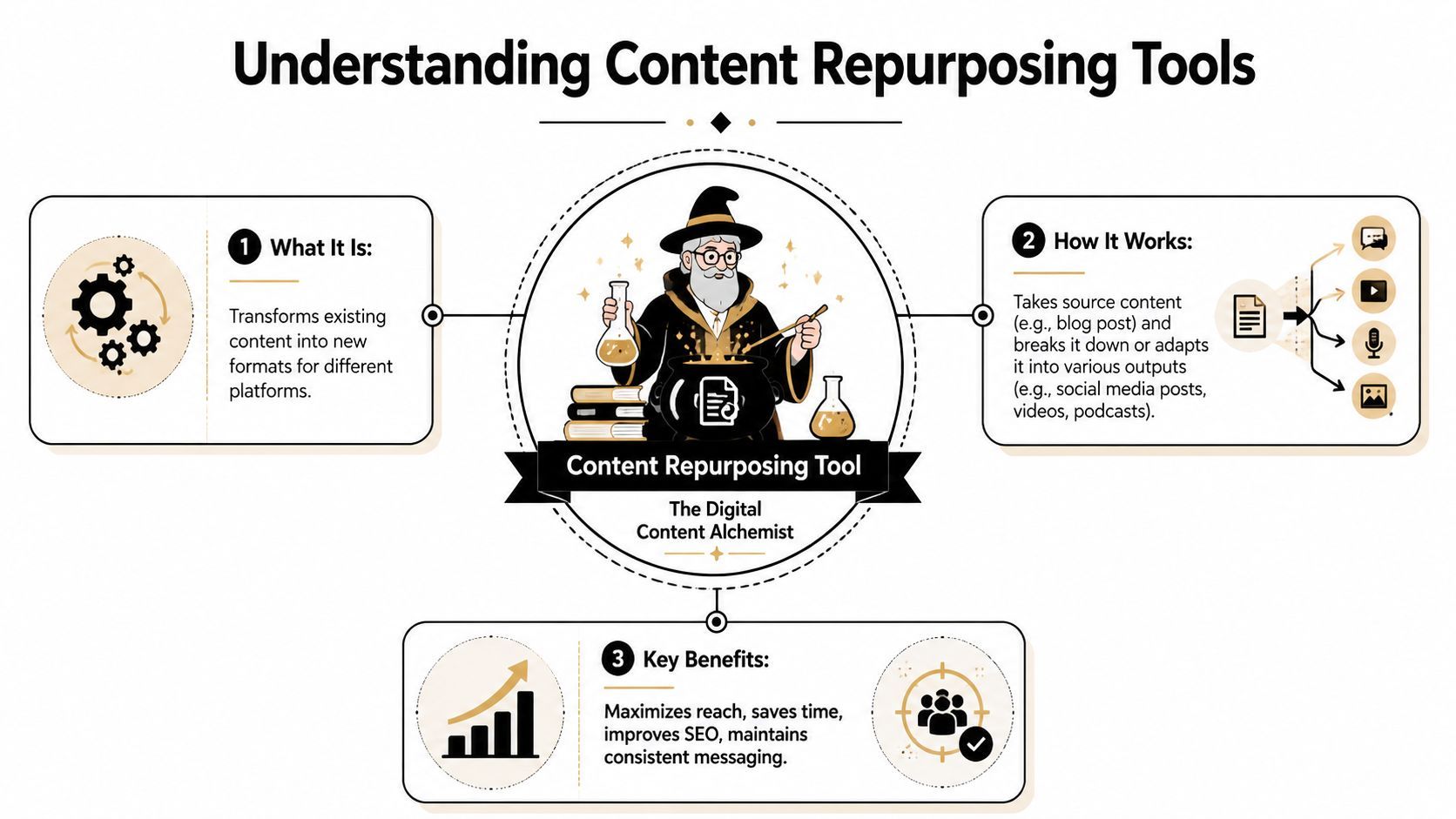
Content repurposing tool को सबसे आसानी से content kitchen के रूप में समझा जा सकता है।
आपका source asset मुख्य ingredient है। वह webinar, podcast recording, white paper, blog post या customer case study हो सकता है। Tool का काम उस ingredient को अलग-अलग channels के लिए कई finished dishes में तैयार करने में मदद करना है। एक source से short clips, quote cards, article drafts, email copy, social posts और भी बहुत कुछ बन जाता है।
The shift from publishing to atomization
महत्वपूर्ण concept है atomization। Content piece को एक finished object मानने के बजाय, tool इसे छोटे usable parts में तोड़ता है। Webinar में वे parts key takeaways, emotional beats, memorable lines, practical examples या objection-handling moments हो सकते हैं। Blog post में वे frameworks, stats, examples या step-by-step sections हो सकते हैं।
यह workflow को linear से modular में बदल देता है। आप अब create, publish और forget नहीं करते। आप create, extract, adapt और redistribute करते हैं।
2026 roundup में Intentsify's content repurposing strategies article द्वारा उद्धृत एक सर्वे के अनुसार 94% marketers पहले से ही content को अलग-अलग mediums और channels में repurpose करते हैं, जो 48 marketers के Referral Rock सर्वे पर आधारित है। यह महत्वपूर्ण है क्योंकि यह दिखाता है कि repurposing अब कोई niche creator hack नहीं है। यह mainstream marketing operations का हिस्सा है।
What a tool actually does
Practical level पर, content repurposing tool आमतौर पर तीन चीजों में मदद करता है:
- Source material को ingest करना ताकि आपको सब कुछ hand से copy-paste न करना पड़े।
- Useful atoms को identify करना जैसे clips, quotes, sections, hooks या summaries।
- उन atoms को rebuild करना channel-specific outputs में जो हर platform के format और cadence से मैच करें।
Practical rule: अगर tool केवल text rewrite करने में मदद करता है, तो उपयोगी है। अगर यह ingest, extract, adapt और publish में मदद करता है, तो operational है।
सबसे मजबूत tools केवल समय नहीं बचाते। वे teams को content को अलग तरीके से देखना सिखाते हैं। एक single asset एक-बार का deliverable बनना बंद कर देता है और source library की तरह काम करने लगता है।
Core Capabilities That Define a Great Tool
एक कमजोर tool आपको paraphrased output और अतिरिक्त cleanup work देता है। एक मजबूत tool हर stage पर friction कम करता है, source material ढूंढने से लेकर finished assets को multiple channels के लिए package करने तक।
Ingestion matters more than most teams think
पहला test सरल है। क्या tool आपकी team द्वारा produce की जाने वाली content kinds को accept कर सकता है?
अगर आपका workflow articles, reports, decks और white papers से शुरू होता है, तो URL और PDF ingestion चाहिए। अगर आप podcasts, interviews, webinars या training sessions publish करते हैं, तो audio और video ingestion usable transcripts के साथ चाहिए। अगर tool आपको source material को manually reassemble करने को कहता है इससे पहले कि वह मदद करे, तो आप पहले से ही समय खो रहे हैं।
Jasper's repurposing content guide में उद्धृत technical benchmarks नोट करते हैं कि URL और PDF ingestion tool की text-based assets को videos, infographics और social posts जैसे formats में transform करने की क्षमता को काफी सुधारते हैं। वही guidance कहती है कि atomization इस्तेमाल करने वाले tools केवल summarize करने वाले tools से 20 से 25% अधिक engagement हासिल करते हैं।
यह gap practice में समझ आता है। Summaries एसेट को flat कर देती हैं। Atomization उन parts को extract करता है जो अकेले खड़े हो सकें।
Analysis is where the real value shows up
एक बार source system में आ जाए, tool को केवल condense करने से ज्यादा करना पड़ता है। इसे structure को recognize करना चाहिए।
Video के लिए, इसका मतलब tension, clarity, novelty या emotional lift वाले moments को identify करना है। Text के लिए, frameworks, quotable passages, instructional sequences और standalone posts या scripts बनने वाले ideas को spot करना है।
ऐसे tools ढूंढें जो ये कर सकें:
- High-signal moments को ढूंढना long-form video से बराबर sections में काटने के बजाय।
- Usable claims और frameworks को pull करना text से बिना meaning खोए।
- Related ideas को group करना ताकि एक एसेट campaign support कर सके, केवल single post नहीं।
- Context को preserve करना ताकि repurposed piece अकेले coherent लगे।
Output flexibility separates helpers from platforms
आखिरी capability है transformation। एक उपयोगी content repurposing tool extraction पर रुकता नहीं। यह outputs को platform-fit forms में rebuild करने में मदद करता है।
यहां एक practical comparison है:
| Capability | Basic tool | Strong tool |
|---|---|---|
| Source intake | Manual paste | URL, PDF, audio, video |
| Processing | Summary | Atom extraction और restructuring |
| Outputs | One or two text variations | Clips, scripts, posts, visuals, captions |
| Formatting | Minimal | Platform-native sizing और packaging |
| Workflow fit | Standalone | Review, branding और distribution support |
कई teams generation को overvalue करती हैं और packaging को undervalue। लेकिन packaging ही वह जगह है जहां production slow होता है। Captions, aspect ratios, brand consistency, thumbnails और export formats जल्दी bottlenecks create करते हैं।
अगर आपके editors को अभी भी सारा resizing, re-captioning और formatting hand से करना पड़े, तो tool production problem को वाकई solve नहीं कर रहा।
How to Evaluate and Choose the Right Tool
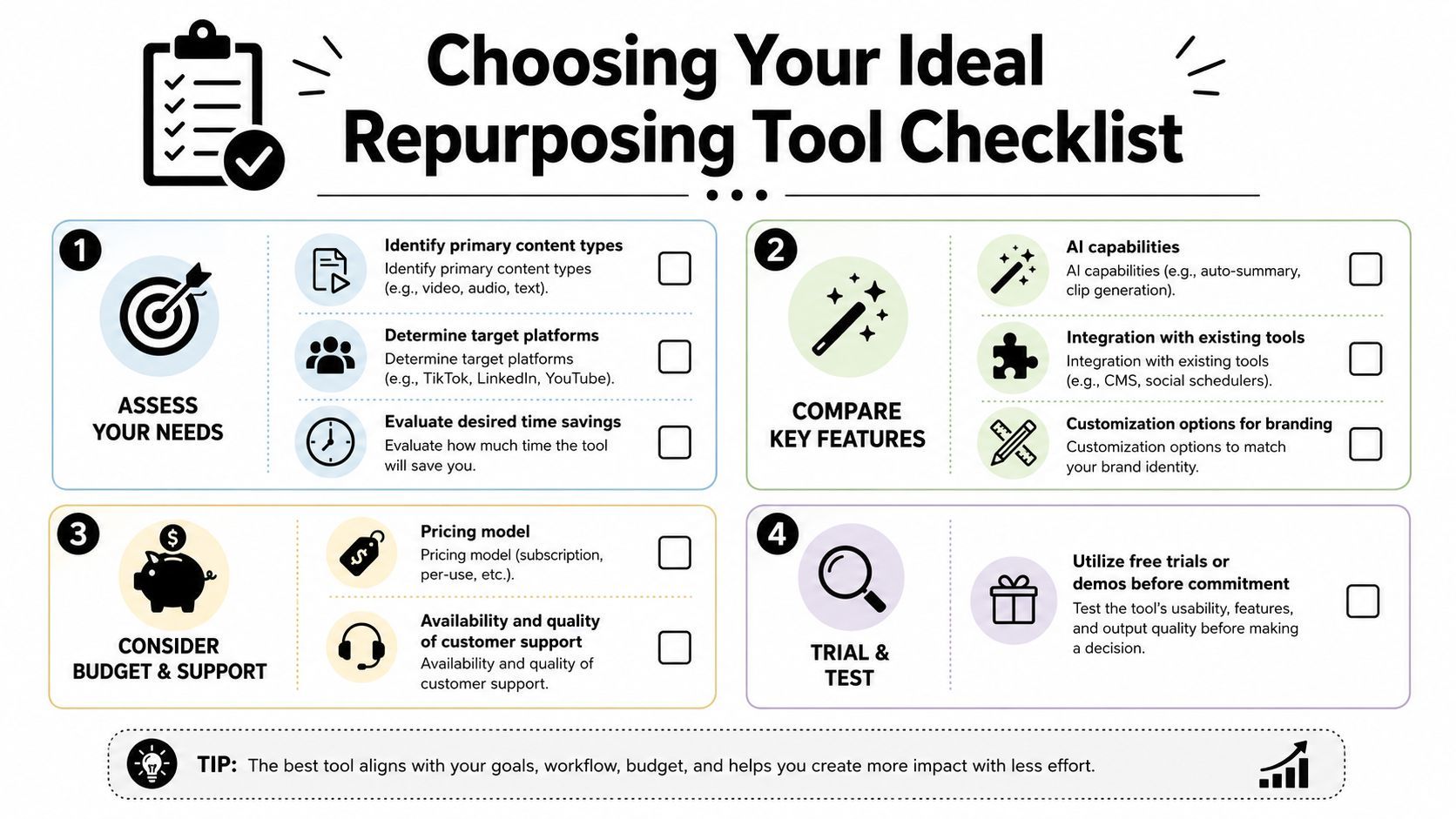
अधिकांश buyers tools को feature list से compare करते हैं। यह काफी नहीं है। बेहतर सवाल है: आपका current workflow कहां break होता है?
कुछ teams के पास source material की भरमार है लेकिन इसे usable outputs में तेजी से बदल नहीं पातीं। अन्य output generate कर सकती हैं लेकिन brand standards tight नहीं रख पातीं। Large teams के पास अक्सर अधिक basic problem होता है। उन्हें सही source assets भी नहीं मिलते क्योंकि content drives, decks, transcripts, emails और पुराने webinars में scattered है।
Start with the bottleneck, not the demo
एक polished product demo operational weaknesses को छिपा सकता है। Vendors को evaluate करने से पहले, internally ये सवालों के जवाब दें:
- आपका source format mix क्या है? Video-first teams को blog-first teams से अलग tooling चाहिए।
- काम अभी कहां stall होता है? Sourcing, clipping, writing, approvals, design या scheduling पर?
- Process का owner कौन है? Solo creator अधिक manual review tolerate कर सकता है distributed content team से ज्यादा।
- क्या on-brand रहना चाहिए? Captions, templates, tone, intros, CTAs और visual identity को अलग controls चाहिए।
- Success कैसा दिखता है? Faster production, broader distribution, less editorial drift या cleaner analytics?
Don't ignore governance and discoverability
यह वह part है जिसे अधिकांश tool roundups skip करते हैं।
Coverage आमतौर पर platform द्वारा create की जा सकने वाली चीजों पर focus करता है। Harder operational issue है कि teams सही material को repurpose करने के लिए पहले कैसे ढूंढें। Dropbox Dash's discussion of AI content repurposing tools इस governance और discoverability gap को highlight करता है, तर्क देते हुए कि सबसे अच्छा repurposing stack search-and-organization layer से शुरू हो सकता है, फिर ऊपर AI generation add करें।
यह agencies और in-house teams के लिए खासतौर पर सही है जिनके पास years का scattered assets है। अगर आपका best webinar पुराने folder में दबा है, या strongest founder interview untagged transcript में है, तो excellent generator ज्यादा मदद नहीं करेगा।
Wrong stack easy-to-access से content create करता है। Right stack worth-reusing से।
A practical evaluation checklist
किसी भी content repurposing tool को compare करते समय इसे इस्तेमाल करें:
- Input coverage: क्या यह वे formats handle कर सकता है जो आप पहले से publish करते हैं, न कि वे जो आप wish करते हैं?
- Extraction quality: क्या यह meaningful moments identify करता है, या generic fragments produce करता है?
- Brand controls: क्या आप voice rules, visual templates, captions और recurring series elements apply कर सकते हैं?
- Workflow fit: क्या यह reviews, approvals, exports और publishing को team के maintain करने लायक support करता है?
- Discovery support: क्या आप पुराने assets locate कर सकते हैं, tag कर सकते हैं और reusable content library build कर सकते हैं?
- Measurement: क्या आप repurposed outputs को source assets और channels के खिलाफ useful तरीके से compare कर सकते हैं?
सबसे अच्छा choice सबसे लंबी feature page वाला tool नहीं है। वह है जो आपके सबसे महंगे bottleneck को remove करे।
From Blog to Viral Clips The Repurposing Workflow in Action
सोमवार सुबह, team को LinkedIn, Instagram और YouTube Shorts के लिए clips चाहिए। पिछले हफ्ते का webinar raw material रखता है, लेकिन कोई आधा दिन footage scrub करने, variants काटने, captions लिखने और formats one by one export करने में नहीं बिताना चाहता। यही वह point है जहां repurposing या तो system बन जाता है या good intention रह जाता है।
एक working setup economics बदल देता है। एक strong source asset single pass में multiple usable outputs produce कर सकता है, लेकिन केवल अगर team सही moments ढूंढ सके, उन्हें हर channel के लिए package कर सके, और measure कर सके कि derivative content original से reach या engagement में बेहतर perform करता है या नहीं। यह operational piece कई tool comparisons में miss हो जाता है।
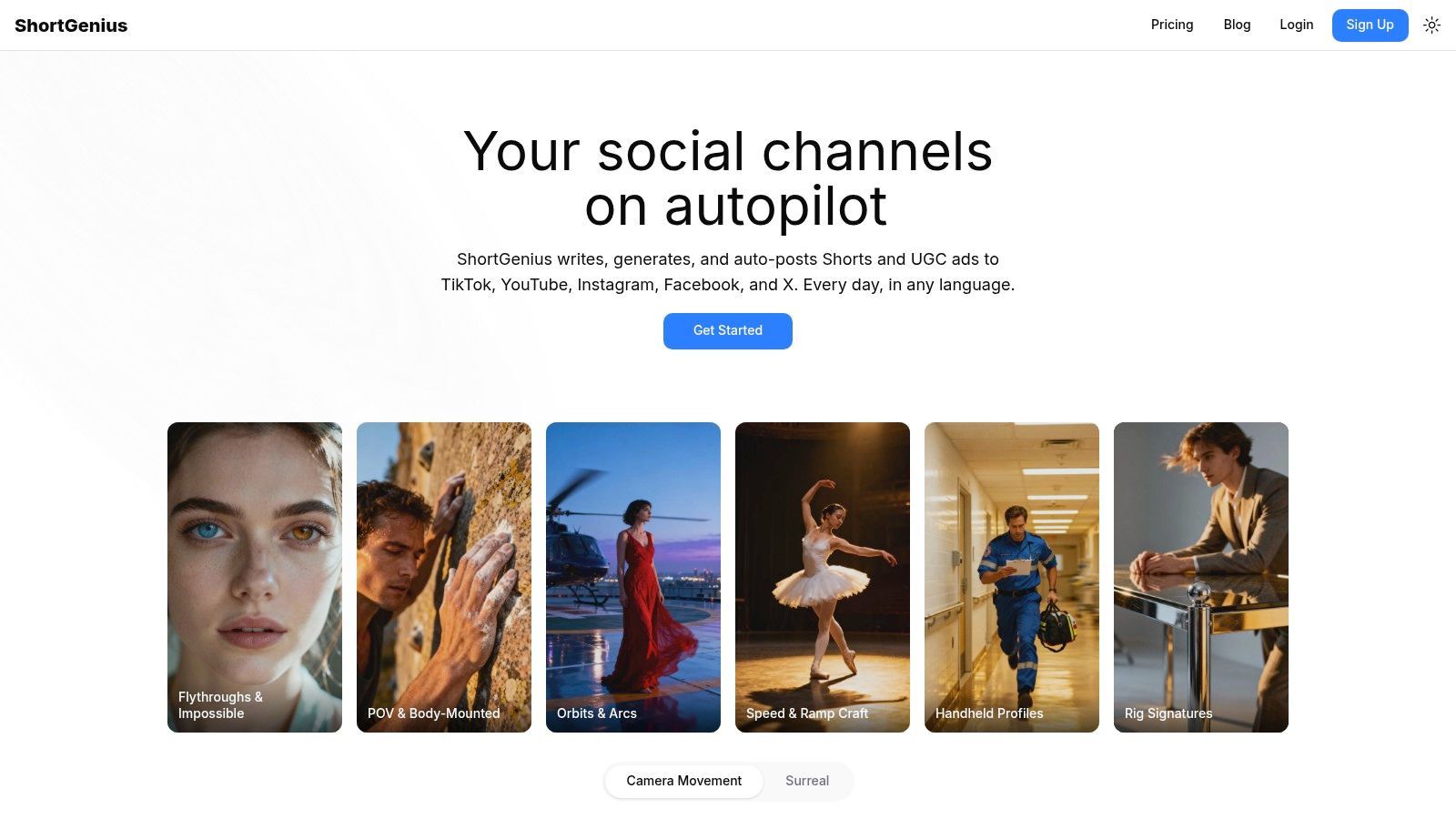
एक tool जैसे ShortGenius for AI video repurposing and publishing clipping, editing, formatting और distribution को एक environment में लाने के लिए designed है, जो किसी single feature से ज्यादा matters।
Step one is choosing the right source asset
Workflow editing से पहले शुरू होता है।
एक recorded webinar लें। इसमें तीन-चार distribute करने लायक moments हो सकते हैं: common problem की clear explanation, strong objection-handling answer, practical example, और promotional clip के रूप में काम करने वाला closing CTA। अगर वे moments 45 मिनट के rambling setup, weak audio या slide-dependent context में दबे हैं, तो output सीमित रहेगा चाहे कोई tool इस्तेमाल करें।
यही वजह है कि अच्छा repurposing asset selection और moment extraction से शुरू होता है। Editors को promising segments review करने में समय बिताना चाहिए, timelines में blindly search करने में नहीं।
जैसा पहले नोट किया, strong tools likely highlights को automatically surface कर सकते हैं। Practical benefit speed है, लेकिन strategic benefit consistency है। Teams ranked moments को हर बार same standard से review कर सकती हैं: standalone clarity, strong opening, useful takeaway, और channel fit।
Step two is packaging for each channel
एक बार usable clips identify हो जाएं, काम scavenger hunt के बजाय packaging decision बन जाता है।
एक practical sequence ऐसा लगता है:
- Suggested moments review करें और बिना extra explanation के sense बनाने वाले रखें।
- Opening trim करें ताकि पहले सेकंड्स जल्दी attention कमाएं।
- Captions और visual identity add करें ताकि clip readable और on-brand हो।
- Channel के अनुसार format करें vertical, square या widescreen के लिए।
- Channel-specific copy लिखें बजाय हर जगह same caption post करने के।
- Publish करें और performance track करें original asset और platform के खिलाफ।
अगर आप long-form video या interviews भी publish करते हैं, तो same logic से repurpose your video podcast करना मददगार है। हर episode को content library मानें। एक recording clips, quote posts, email copy, article sections और paid creative tests support कर सकती है जब source material well-organized हो।
एक short product walkthrough उस workflow को अधिक concrete बनाने में मदद कर सकता है:
What works and what breaks
सबसे अच्छे results आमतौर पर clear structure वाले source material से आते हैं। Educational webinars, specific answers वाले customer interviews, opinionated commentary, और real tension वाले Q&A sessions ऐसे clips produce करते हैं जो अकेले hold up करते हैं।
Messy inputs अभी भी messy outputs create करते हैं। मैं बार-बार same failure points देखता हूं: vague talking points, long intros, poor audio, और excerpts जो slides देखे बिना sense न बनें। AI selection और editing को speed up करता है। यह कभी न存在的 substance supply नहीं करता।
Formats जो आमतौर पर well repurpose होते हैं:
- Evergreen explanations recurring customer questions से tied
- Clear points of view जो contrast या debate create करें
- Short teaching segments एक clip प्रति idea
- Strong first sentence वाले answers जो feed में अकेले stand हो सकें
Formats जो आमतौर पर underperform करते हैं:
- Context-heavy excerpts जिन्हें ज्यादा setup चाहिए
- Generic advice जो polished लगे लेकिन little कहे
- Clips जो हर platform पर unchanged push किए जाएं
- Outputs जो review या performance tracking बिना publish हों
Repurposing तब best काम करता है जब team दो चीजें जानती हो: best source assets कहां हैं, और कौन से derivative formats returns produce करते हैं। बिना इसके, workflow busy रहता है लेकिन justify करना मुश्किल।
Integrating a Repurposing Tool into Your Workflow
Software खरीदना repurposing system create नहीं करता। Teams को उसके आसपास repeatable operating model चाहिए।

Audit the content you already own
अपने archive से शुरू करें। पुराने webinars, blog posts, case studies, newsletters, podcast episodes, decks और training sessions को pull together करें। फिर उन्हें recency से नहीं, usefulness से sort करें।
Evergreen, opinionated या already resonate करने वाले proven assets ढूंढें। Digital Applied's repurposing guide द्वारा summarized independent practitioner guidance कहती है कि एक strong source asset 10+ formats बन सकता है, और systematic repurposing distribution reach को 3 से 5x expand कर सकता है। महत्वपूर्ण point maximum output count नहीं है। Operational shift है ad hoc editing से structured pipeline की ओर।
Build a cadence, not a rescue plan
Repurposing तब best काम करता है जब source asset create होने के moment पर planned हो।
एक simple team cadence ऐसा लग सकता है:
- Source owner: Week या month का pillar asset identify करे।
- Repurposing operator: Clips, posts और derivative formats extract करे।
- Editor या strategist: Clarity, brand fit और duplication risk के लिए review करे।
- Publisher: Channel के अनुसार schedule और track करे।
यह setup common failure mode prevent करता है जहां repurposing leftover task बन जाता है जिसका कोई owner न हो।
Measure more than output volume
एक team अधिक publish कर सकती है और फिर भी कुछ न सीखे।
Track करें कि repurposed content नए formats या channels में reach expand करता है या नहीं, certain source assets consistently stronger derivatives produce करते हैं या नहीं, और effort blank-page creation में lost time कम कर रहा है या नहीं। Public guidance incremental lift और audience fatigue के आसपास सवाल open छोड़ती है, इसलिए teams को अपनी measurement discipline चाहिए।
एक practical dashboard में शामिल होना चाहिए:
- Source-to-output mapping: कौन सा pillar asset किन posts, clips या emails generate किया।
- Channel response: कौन से formats LinkedIn, Shorts, Reels या email पर काम किए।
- Reuse quality: कौन से assets समय के साथ usable material produce करते रहें।
- Editorial efficiency: क्या process manual production bottlenecks कम करता है।
Mature workflow "हमने कितना publish किया?" नहीं पूछता। यह पूछता है, "कौन से source assets हमें payback देते रहते हैं?"
The Future Is Efficient Content Creation
महत्वपूर्ण change यह नहीं कि AI अधिक assets बना सकता है। यह है कि teams आखिरकार content को isolated campaigns की sequence के बजाय system की तरह organize कर सकती हैं।
यह social media से परे matters। Same mindset adjacent workflows में दिखता है। Report को short videos में बदलने वाली team उतनी ही production problem solve कर रही है जितनी launch materials में concepts reuse करने वाला author, या book cover design tools इस्तेमाल करने वाला publisher एक creative direction को multiple usable assets में बदलने के लिए। Different output, same principle। Strong source से शुरू करें, फिर intelligently adapt करें।
Content repurposing tool अपनी जगह तब कमाता है जब वह one-off production से escape करने में मदद करे। Strongest setups source discovery आसान बनाते हैं, extraction तेज, formatting light, और review consistent। वे strategy remove नहीं करते। वे strategy को operate करने की room देते हैं।
Creators, marketers और agencies के लिए sustainable model clear है। कम blank pages। Existing work का बेहतर use। Assets से अधिक channel-native output जो पहले से prove कर चुके हैं कि बनाने लायक थे।
अगर आप ऐसी system build करना चाहते हैं, तो ShortGenius (AI Video / AI Ad Generator) explore करने लायक है उन teams के लिए जिन्हें scripting, video creation, editing, resizing, captions, brand kits और multi-channel scheduling के लिए एक workflow चाहिए। यह best fit करता है जब आपका repurposing engine long-form ideas को short-form video और ad assets की steady stream में बदलने पर depend करता है बिना separate tools stitch किए।