फ़ेसबुक एआई विज्ञापन: 2026 का आपका संपूर्ण परफ़ॉर्मेंस गाइड

2026 में Facebook AI विज्ञापन में महारत हासिल करें। यह गाइड Advantage+, AI क्रिएटिव, और ऑप्टिमाइज़ेशन टिप्स को कवर करती है जो ROI बढ़ाने और उच्च प्रदर्शन वाले वीडियो विज्ञापन बनाने में मदद करेंगे।
कई विज्ञापनदाता अभी भी Facebook AI ads को पुरानी playbook के ऊपर एक वैकल्पिक परत की तरह बात करते हैं। वे नहीं हैं। 2024 में, ad targeting और creative generation के लिए AI optimization का उपयोग करने वाले अभियानों ने manual management की तुलना में cost per acquisition में 23% सुधार दिखाया, Madgicx के 15,000+ अभियानों के विश्लेषण के अनुसार। यह संख्या बातचीत बदल देती है।
व्यावहारिक सवाल यह नहीं है कि AI का उपयोग करें या नहीं। यह है कि इसे कैसे काम में लें बिना अपने अकाउंट को सामान्य creative, कमजोर messaging और black-box decision making के ढेर में बदल दिए। जो टीमें स्थायी परिणाम प्राप्त कर रही हैं, वे सब कुछ automation को सौंप नहीं रही हैं। वे Meta के सिस्टम को मजबूत inputs, स्पष्ट objectives और परीक्षण के लिए अधिक विविध creative दे रही हैं।
यही बदलाव है। मशीन वितरण logic का अधिक हिस्सा संभालती है। इंसान judgment संभालता है। यदि आप अभी भी Facebook को कुछ साल पहले के manual media buyer की तरह अप्रोच कर रहे हैं, तो आप उन knobs को एडजस्ट करने में बहुत समय बर्बाद करेंगे जो कम मायने रखते हैं और उन inputs को सुधारने में बहुत कम समय देंगे जो अधिक मायने रखते हैं।
विज्ञापन में AI सह-पायलट का युग
Meta का ad system अब assistant से operator बन चुका है। यह अब खरीदार के हफ्ते को सोख लेने वाले execution के अधिकांश हिस्से को संभालता है: delivery decisions, bid adjustments, audience expansion, creative matching, और cross-placement distribution।
इसका मतलब यह नहीं कि human skill कम मायने रखती है। इसका मतलब है कि काम बदल गया है।
पुराना मॉडल उन लोगों को पुरस्कृत करता था जो audiences को obsessively segment कर सकते थे, endless manual tests चला सकते थे, और placements तथा bids पर control थोप सकते थे। वर्तमान मॉडल उन लोगों को पुरस्कृत करता है जो sharp offer define कर सकते हैं, इसे multiple creative expressions में पैकेज कर सकते हैं, और सिस्टम को पर्याप्त variation से सीखने दे सकते हैं ताकि performance मिल सके।
प्रैक्टिस में क्या बदला
अब account manager वह व्यक्ति नहीं है जो हर lever को हाथ से खींचता है। मजबूत operator अब तीन चीजें अच्छी तरह करता है:
- सही objective सेट करता है: यदि campaign goal अस्पष्ट है, तो सिस्टम गलत दिशा में सीखता है।
- सिस्टम को मजबूत creative inputs देता है: AI distribute और recombine कर सकता है, लेकिन weak hook को बचा नहीं सकता।
- brand truth पर लाइन होल्ड करता है: Automated variation मदद करता है। Automated blandness नुकसान पहुंचाता है।
व्यावहारिक नियम: Execution scale के लिए AI का उपयोग करें, strategic substitution के लिए नहीं।
यही कारण है कि “co-pilot” सही फ्रेम है। Meta का AI किसी human buyer से अधिक signals process कर सकता है। लेकिन इसे अभी भी direction की जरूरत है। जब विज्ञापनदाता algorithm से लड़ते हैं इसे over-constraining करके, तो performance अक्सर रुक जाती है। जब वे सारा judgment automation को सौंप देते हैं, तो ads अक्सर interchangeable हो जाते हैं।
अब सफलता कैसी दिखती है
एक अच्छा Facebook AI ads workflow media-buying साइड पर सरल है और creative साइड पर अधिक demanding।
सिस्टम को explore करने के लिए जगह चाहिए। आप exploration के लिए बेहतर material सप्लाई करना चाहते हैं। इसका मतलब है delivery पर broader inputs, cleaner campaign structures, और actual customer language पर आधारित fresh angles का consistent stream।
जो विज्ञापनदाता इस split को अपनाते हैं, वे आमतौर पर पूछना बंद कर देते हैं, “कौन सा hidden setting tweak करूं?” और पूछना शुरू कर देते हैं, “कल मशीन को बेहतर signal क्या दे सकता हूं?”
Facebook AI Ads वास्तव में क्या हैं
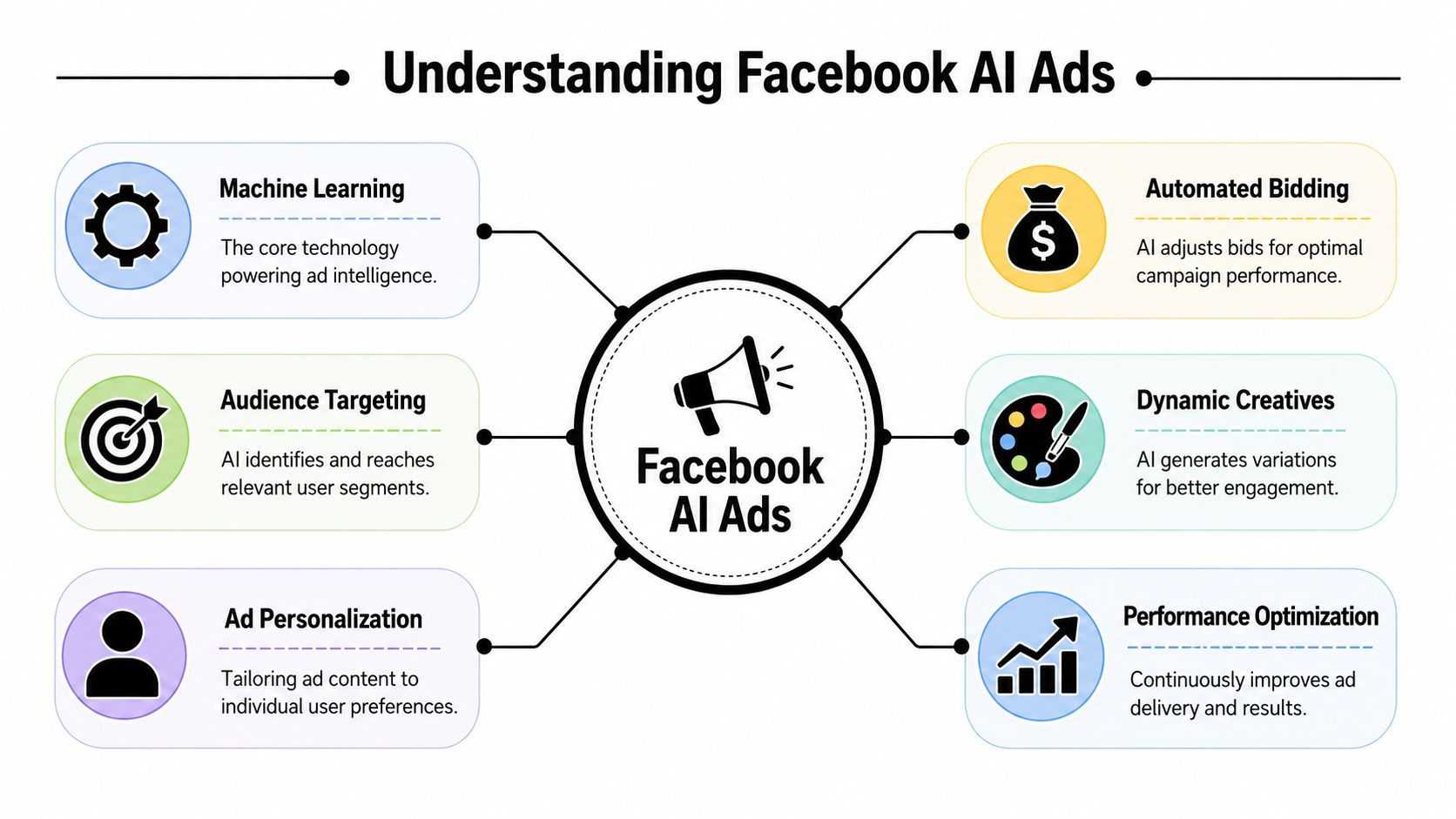
Facebook AI ads एक फीचर नहीं हैं। ये campaign setup, delivery, bidding, placement, और creative assembly के अंदर एक साथ काम करने वाले machine learning systems का stack हैं।
इसे सोचने का उपयोगी तरीका orchestra conductor है। performance के दौरान आप हर instrument को अलग-अलग नहीं देखते, लेकिन conductor timing, emphasis, और पूरे group में balance को coordinate करता है। Meta का AI दो बड़े jobs में ऐसा ही करता है: delivery और creative।
Delivery AI
Delivery AI तय करता है कि budget कहां सबसे अधिक संभावना से वह result पैदा करेगा जो आपने मांगा है। इसमें शामिल है कि ad कौन देखेगा, कब देखेगा, कौन सा placement priority पाएगा, और auction में सिस्टम कितनी aggressively bid करेगा।
आप अब उन micro-decisions को control नहीं करते, कम से कम पुराने manual sense में नहीं। इसके बजाय, आप सिस्टम को boundaries देते हैं:
| आप control करने वाला Input | सिस्टम उसके साथ क्या करता है |
|---|---|
| Objective | वांछित outcome को prioritize करता है, जैसे leads या purchases |
| Budget | Spend को likely opportunities में allocate करता है |
| Creative set | अलग-अलग assets को अलग-अलग viewers और placements से match करता है |
| Conversion data | सीखता है कि कौन से users और contexts target action पैदा करने की प्रवृत्ति रखते हैं |
यही कारण है कि setup discipline मायने रखती है। यदि आपका event tracking sloppy है या campaign objective business outcome से match नहीं करता, तो AI “गलत” नहीं है। यह सिर्फ खराब instruction के खिलाफ optimize कर रहा है।
Creative AI
Creative AI एक अलग layer संभालता है। यह तय करने में मदद करता है कि message का कौन सा version किस व्यक्ति के सामने और किस format में दिखे। कुछ workflows में, यह creative के pieces generate या adapt भी कर सकता है।
इसमें शामिल हैं:
- Assets के combinations टेस्ट करना
- Placements के across presentation एडजस्ट करना
- Visual formats expand या adapt करना
- Hooks या descriptions के लिए text variants generate करना
वादा है speed का। जोखिम है sameness का।
सिस्टम variation तेजी से generate कर सकता है। यह आपको नहीं बता सकता कि variation अभी भी आपकी brand जैसा लगता है या नहीं।
महत्वपूर्ण mental model
यदि आप Facebook AI ads को काम करना चाहते हैं, तो “targeting settings plus ad copy” के terms में सोचना बंद करें। Inputs और outputs के terms में सोचना शुरू करें।
आपके inputs हैं strategy, assets, offer, objective, और signal quality। Outputs हैं leads, sales, और downstream efficiency। AI उन दोनों के बीच बैठा है। यह inputs को scale पर interpret करता है, फिर हजारों delivery और matching decisions लेता है जो आप individually कभी नहीं देखेंगे।
यही कारण है कि बेहतर media buying अब पहले शुरू होती है। यह brief पर शुरू होती है।
Advantage+ के साथ AI कैसे Ad Delivery को Automate करता है
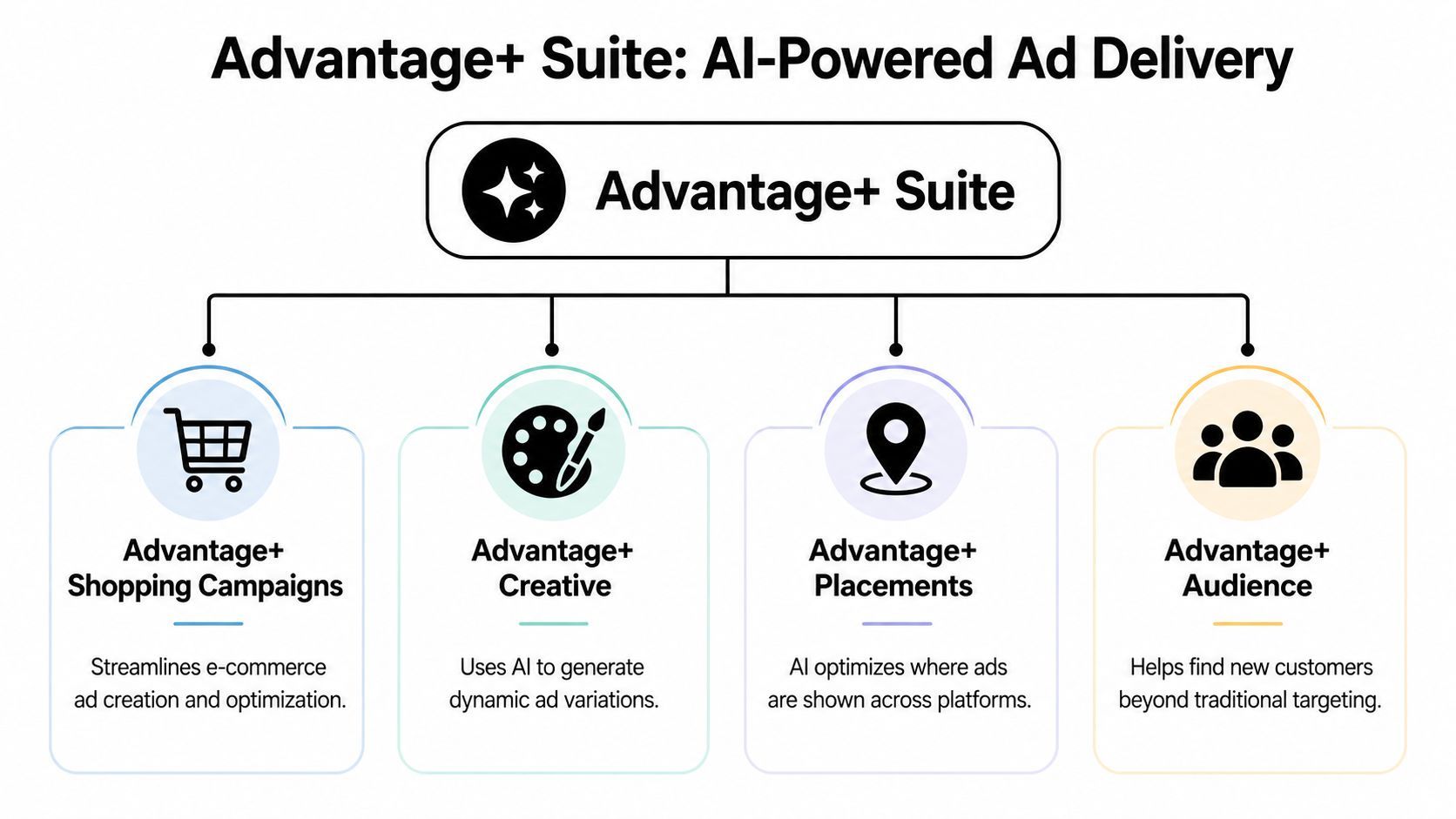
Advantage+ नई delivery model का Meta का सबसे स्पष्ट expression है। buyer से हर tactical choice dictate करने के बजाय, यह cleaner strategic intent मांगता है और फिर उस intent के आसपास distribution work को automate करता है।
यह shift platform scale पर financially meaningful हो गया है। Facebook का advertising revenue 2024 में $122 billion का अनुमानित पहुंचा, 2023 में ad impressions में 31% वृद्धि और average cost per ad में 6% गिरावट के साथ, Quso.ai के Facebook marketing stats के अनुसार। विज्ञापनदाताओं के लिए point सरल है: Meta के पास AI-driven delivery को platform और buyer दोनों के लिए अधिक efficient बनाने के मजबूत incentives हैं।
Advantage+ Audience
कई विज्ञापनदाता अभी भी hesitate करते हैं। वे tighter manual targeting चाहते हैं क्योंकि यह safer लगता है। प्रैक्टिस में, rigid audience definitions अक्सर learning को choke कर देती हैं।
Advantage+ Audience सिस्टम को narrow seed से आगे बढ़ने और manually select न किए गए लोगों को ढूंढने देता है। यह मायने रखता है क्योंकि अच्छे prospects अक्सर obvious demographic box में फिट नहीं होते। वे behavior, context, और patterns से आते हैं जो simple interest stack में visible नहीं होते।
इसे तब उपयोग करें जब आपका account decent signal quality वाला हो और offer पर्याप्त broad हो। अधिक cautious रहें जब offer highly regulated हो, geographically constrained हो, या बहुत narrow qualification की जरूरत हो।
Advantage+ Placements और bidding
Placement selection पहले एक control lever था जिसे buyers constantly touch करते थे। अब इसे आमतौर पर learning surface की तरह treat करना बेहतर है। Advantage+ Placements Facebook, Instagram, Stories, Reels, Feed, और अन्य available inventory में distribute करता है जहां सिस्टम best result predict करता है।
Bidding वैसा ही काम करता है। Static assumptions set करने के बजाय कि traffic कितना worth है, सिस्टम real time में likely action value evaluate करता है।
Control loosen करने का practical तरीका एक सवाल पूछना है: क्या आपका manual rule current evidence पर based है, या habit पर?
कई manual exclusions ad accounts में बहुत देर तक survive करते हैं जब उनके reason गायब हो चुके होते हैं।
Advantage+ Shopping Campaigns और account structure
Ecommerce teams के लिए, Advantage+ Shopping Campaigns audience, placements, और optimization के across decision making को consolidate करके इस automation को आगे बढ़ाते हैं। मुख्य gain magic targeting नहीं है। Reduced fragmentation है।
Fragmented account structure weak learning pockets बनाता है। बहुत सारे ad sets, बहुत सारी micro-audiences, बहुत सारे isolated tests। मशीन कम सीखती है क्योंकि data बहुत सारे containers में split हो जाता है।
Leaner structure अक्सर बेहतर काम करता है क्योंकि यह सिस्टम को अधिक signal concentration देता है। इसका मतलब यह नहीं कि हर business को सब कुछ एक campaign में flatten कर देना चाहिए। इसका मतलब है कि complexity को अब “that's how we've always organized tests” से मजबूत justification की जरूरत है।
जहां विज्ञापनदाताओं को अभी भी intervene करने की जरूरत है
Automation तब best काम करता है जब buyer micromanaging logistics बंद कर दे और business logic guard करना शुरू कर दे।
इसका मतलब checking करना:
- Objective alignment: क्या campaign business value वाले result के लिए optimize कर रहा है?
- Offer fit: क्या landing page, angle, और audience promise line up करते हैं?
- Signal integrity: क्या conversion events सिस्टम के सीखने लायक clean हैं?
Advantage+ delivery automate कर सकता है। Bad offer, confused funnel, या misleading creative को fix नहीं कर सकता।
AI-Powered Ad Creative का नया युग
Creative पहले Facebook advertising का slow side था। Media buyers tests जल्दी launch कर सकते थे, लेकिन new ads बनाना मतलब copywriters, designers, editors, और approval loops को wrangle करना। AI ने इसे बदल दिया। अब bottleneck production capacity अकेला नहीं है। Judgment है।
यहां दो systems मायने रखते हैं: dynamic creative optimization और generative creative tools। वे similar लगते हैं, लेकिन अलग problems solve करते हैं।
Dynamic creative बनाम old-school A/B testing
Traditional A/B testing rigid था। आप separate ads build करते, variables को imperfectly isolate करते, पर्याप्त spend का इंतजार करते, फिर decide करते कि क्या रखें। यह काम करता था, लेकिन slow और अक्सर underpowered था।
Dynamic creative अधिक fluid है। आप multiple assets provide करते हैं, और platform headlines, primary text, visuals, और calls to action के across combinations test करता है। सबके लिए एक winner के बजाय, यह अलग contexts के लिए अलग combinations surface कर सकता है।
यह creative workflow को उपयोगी तरीके से बदलता है:
| पुराना workflow | AI-assisted workflow |
|---|---|
| कुछ polished ads build करें | Modular assets का wider set build करें |
| अलग lanes में test करें | Platform को combinations mix करने दें |
| Clean winner का इंतजार करें | देखें कि कौन से themes delivery कमाते रहते हैं |
| Fatigue appear होने पर refresh करें | Fatigue harden होने से पहले new angles feed करें |
गलती यह assume करना है कि इससे quality कम मायने रखती है। यह अधिक मायने रखती है। Poor components poor combinations तेजी से बनाते हैं।
Generative tools accelerators हैं, replacements नहीं
Meta के newer AI features copy variants, format adaptation, और visual adjustments में मदद कर सकते हैं। यह उपयोगी है, खासकर जब placements के across एक idea के कई versions चाहिए।
यहां weak विज्ञापनदाता lazy हो जाते हैं। वे पहला clean-looking output accept कर लेते हैं, भले ही यह generic या product से detached लगे। यह forgettable ads का fast route है।
मजबूत approach है AI को options multiply करने दें, फिर human editor decide करे कि कौन से अभी भी conviction carry करते हैं। यह product-led creative के लिए खासकर सही है। यदि realistic visuals चाहिए जो बेचे जा रहे item से anchored हों, तो product to model ai जैसा tool product-focused assets create करने में मदद कर सकता है जो generic stock-style outputs से अधिक usable हैं।
अच्छा AI creative real angle से शुरू होता है। “Write me five ad variations” से नहीं।
ज्यादातर विज्ञापनदाता ignore करने वाला trust problem
यहां एक और trade-off है। AI volume आसान बनाता है, लेकिन audiences synthetic, over-smoothed, या empty लगने वाले content को spot करने में बेहतर हो रही हैं। जब ऐसा होता है, ad technically well render हो सकता है और फिर भी trust test fail कर सकता है।
यही कारण है कि creative operations में human review अब optional नहीं है। किसी को specificity, tone, proof, और realism protect करना पड़ता है। यदि ad recycled marketing language से assembled लगता है, तो platform इसे deliver कर सकता है, लेकिन buyer persuaded नहीं महसूस करेगा।
Practical win “AI creative हमारे लिए बनाता है” नहीं है। “AI हमें produce, test, और adapt अधिक creative करने में मदद करता है बिना standard कम किए” है।
Facebook के AI के लिए अपनी Campaigns कैसे Optimize करें
विज्ञापनदाता Meta के AI से बेहतर results तब पाते हैं जब वे optimization को post-launch settings exercise की तरह treat करना बंद कर दें और input problem की तरह treat करना शुरू करें। Budget, bids, और audience controls अभी भी matter करते हैं। Bigger swing आमतौर पर उन signals की quality से आता है जो आप सिस्टम को पहले dollar spend करने से पहले देते हैं।
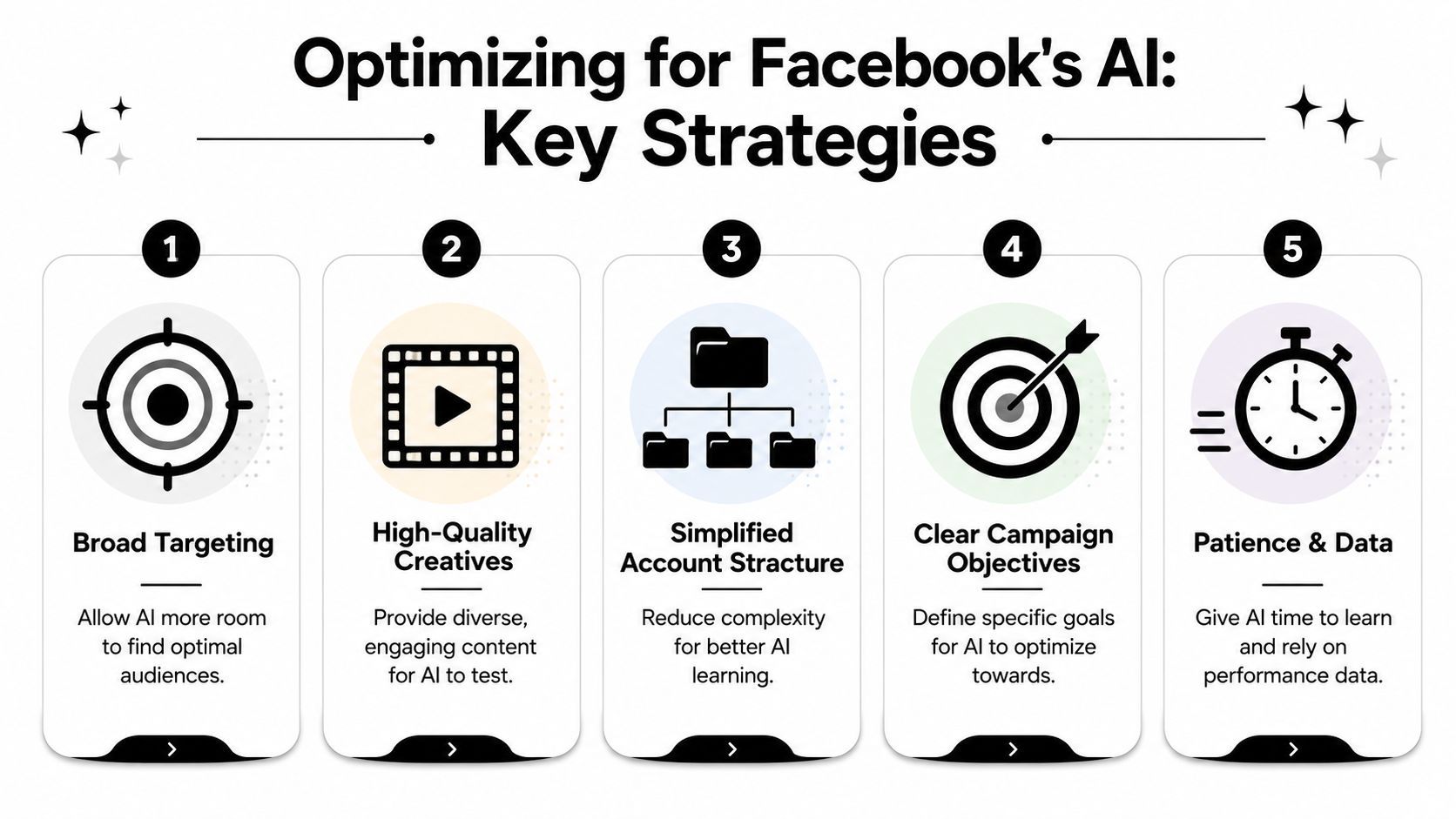
जो टीमें सबसे तेज adapt करती हैं, वे आमतौर पर दो changes एक साथ करती हैं। वे account structure simplify करती हैं ताकि delivery को काम करने की जगह मिले, और clearer creative inputs produce करने में अधिक effort डालती हैं। यह trade-off miss हो जाना आसान है क्योंकि platform interfaces attention को campaign settings की ओर खींचते हैं। Meta का AI तब stronger होता है जब account कम fragmented हो और creative library अधिक intentional हो।
एक उपयोगी setup वैसा दिखता है:
- Delivery को explore करने की जगह दें। Over-segmented audiences और बहुत सारे small ad sets learning slow करते हैं और winning demand pockets hide कर देते हैं।
- Conversion event carefully चुनें। Real business value से map होने वाले action के लिए optimize करें, easiest event inflate करने के लिए नहीं।
- Creative को schedule पर refresh करें। New concepts testing में performance decay से पहले enter होने चाहिए।
- Patterns judge करें, सिर्फ individual ads नहीं। Winning messages अक्सर अलग executions के across repeat होते हैं।
- Account को clean रखें। Redundant campaigns, overlapping tests, और inconsistent naming सिस्टम के learning को पढ़ना मुश्किल बनाते हैं।
Creative वह जगह है जहां human plus machine model practical बनता है।
Meta right impression को right user से बेहतर match कर सकता है जितना ज्यादातर media buyers manually scale पर कर सकते हैं। यह vague brief से sharp customer insight नहीं निकाल सकता। यदि inputs generic हैं, तो सिस्टम delivery optimize करेगा, लेकिन mediocre persuasion के आसपास।
यही कारण है कि voice of customer work अब कम नहीं, अधिक मायने रखता है। Reviews, comments, support tickets, return reasons, और sales calls से phrases pull करें। फिर उन phrases में actual buying motivation या objection के आसपास ads build करें।
एक skincare brand अच्छा example है। Internal team “glow” या “radiance” के आसपास brief कर सकता है। Customers को “doesn't sting”, “works under makeup”, या “fixes dry patches by noon” अधिक care हो सकता है। वे lines stronger hooks produce करती हैं क्योंकि वे buyer जैसी लगती हैं, brainstorm जैसी नहीं।
यहां real accounts में hold up करने वाला workflow है:
- Raw customer language collect करें उन जगहों से जहां buyers plainly बोलते हैं।
- उस language को problem, desired outcome, और objection द्वारा group करें।
- प्रति angle एक brief लिखें clear promise, proof point, और audience context के साथ।
- Multiple variations produce करें अलग formats में ताकि Meta को real options मिलें test करने।
- Results को theme द्वारा review करें ताकि पता चले कौन सा message काम कर रहा है, सिर्फ कौन सा ad ID win हुआ।
वह पांचवां step वह जगह है जहां कई टीमें plot lose करती हैं। वे losers pause कर देते हैं और winners scale करते हैं बिना lesson extract किए। बेहतर read है: कौन सा claim attention पा गया, कौन सा proof skepticism कम कर गया, और कौन सा framing qualified clicks खींच लाया? वे answers अगली creative batch improve करते हैं और algorithm को बेहतर material देते हैं।
यदि आपकी team उस output को maintain करने में struggle करती है, तो ad variation testing के लिए built creative workflow process को consistent रखने में मदद कर सकता है। Value automation अपने आप में नहीं है। Value Meta के सिस्टम में अधिक usable inputs देना है बिना account को random assets से flood किए।
Human judgment अभी भी angle decide करता है। Machine distribute, test, और hand से spot न होने वाले demand pockets ढूंढने में मदद करता है।
ShortGenius के साथ High-Performing Facebook Video Ads कैसे Build करें
Video Meta के AI द्वारा optimize किए जा सकने और advertiser द्वारा अभी भी decide करने वाली चीजों के बीच सबसे स्पष्ट split बनाता है। Platform delivery patterns test scale पर कर सकता है जो कोई team hand से manage नहीं कर सकती। यह अभी भी inputs पर depend करता है, खासकर पहले तीन सेकंड, message angle, और format choices जो तय करते हैं कि लोग watch करते रहें या नहीं।
एक practical workflow एक product और distinct angles के small set से शुरू होता है। Reels campaign के लिए, मैं आमतौर पर कम से कम तीन build करता:
- Problem-aware angle: buyer द्वारा महसूस की जाने वाली friction का नाम लें
- Outcome angle: result को fast और plain language में दिखाएं
- Objection-handling angle: click करने से पहले hesitate करने वाले reason का जवाब दें
यह structure मायने रखता है क्योंकि Meta को real creative variation चाहिए, cosmetic edits नहीं। Same underlying message रखते हुए एक caption line swap करना आमतौर पर कुछ सिखाता नहीं। Promise, proof, या opening scene बदलना सिखाता है।
यही वह जगह है जहां multiple angles testing के लिए video ad creation workflow अपना रख रखता है। ShortGenius scriptwriting, asset generation, voiceover, video assembly, resizing, और publishing को एक system में combine करता है। Value operational है। आप एक strategy brief को कई usable ad variants में बदल सकते हैं बिना batch के across message discipline खोए।
Format decisions production से पहले होनी चाहिए, बाद में नहीं। Short-form Facebook video तब best काम करता है जब message quickly appear हो, frame mobile के लिए composed हो, और product early visible हो। Polished horizontal video पहले build करके इसे Reels में trim करने की कोशिश करने वाली टीमें आमतौर पर weaker hooks, crowded captions, और awkward crops के साथ end होती हैं।
बेहतर approach है production rules upfront set करना:
| Creative decision | Practical implication |
|---|---|
| Video length | Short retention windows के लिए build करें ताकि core claim fast land हो |
| Frame design | First edit से vertical या mobile-first viewing के लिए compose करें |
| Hook placement | Main promise, problem, या visual proof को start पर रखें |
| Variant production | Same core script और footage से multiple opens create करें |
एक बार format right हो जाए, अगला job scale with control है। एक script useful test set बन सकता है यदि आप buyer response बदलने वाले elements vary करें:
- Hook swaps अलग awareness levels के लिए
- Scene swaps product use, lifestyle, या proof emphasize करने के लिए
- Voice swaps tone और audience fit match करने के लिए
- Caption edits first-screen message sharpen करने के लिए
- Resize passes Feed, Stories, और Reels के लिए
यही ठीक human plus machine workflow है। Software repetitive production work संभालता है। Marketer अभी भी decide करता है कि कौन सा claim credible है, कौन सा proof screen पर belong करता है, और कौन सी variations spend justify करने लायक अलग हैं।
यहां इस तरह के workflow में fit होने वाला quick product walkthrough है:
Outputs review करना भी बदल जाता है। Batch को single hero ad polish करने वाले editor की तरह judge न करें। Performance marketer की तरह judge करें जो signal ढूंढ रहा हो। कौन सा opening attention पाता है बिना inflated लगे? कौन सा version product soon enough दिखाता है? कौन सा angle likely to convert लोगों से clicks attract करता है, सिर्फ curious viewers से नहीं?
वह review loop वह जगह है जहां कई विज्ञापनदाता अभी भी AI production के benefit को waste करते हैं। वे अधिक assets पाते हैं, लेकिन अधिक learning नहीं। Point है produce faster, test cleaner, और next round को बेहतर judgments से feed करना। यही तरीका है जिससे Facebook AI ads समय के साथ improve होते हैं। Machine को अधिक test करने को मिलता है। Human system में जाने वाली quality को raise करता रहता है।
AI Advertising का भविष्य और आपके अगले कदम
Facebook AI ads अधिक automation की ओर बढ़ रहे हैं, कम की नहीं। Delivery अधिक abstracted होता जाएगा। Creative adaptation तेज होता जाएगा। Privacy constraints platforms को old style hyper-manual targeting के बजाय broader signal interpretation की ओर push करती रहेंगी।
यह advertiser की role कम नहीं करता। इसे sharpen करता है।
जीतने वाली टीमें consistently कुछ चीजें करेंगी। वे account structures simplify करेंगी जहां complexity मदद नहीं करती। Creative production को occasional project की बजाय continuous system की तरह treat करेंगी। Generic AI output पर rely करने के बजाय customer language से angles build करेंगी। और feature list कितना impressive लगता है, उसके बजाय business results से automation judge करेंगी।
एक अच्छा next-step checklist short है:
- अपना current workflow audit करें और identify करें कि delivery over-managing कहां हो रहा है।
- अपना creative process review करें और पूछें कि क्या आप हर महीने अधिक distinct concepts produce कर सकते हैं।
- Voice of Customer data pull करें next round of ads लिखने से पहले।
- Format के लिए early build करें ताकि assets Feed, Stories, और Reels के across usable हों।
- जहां speed बढ़ाता है वहां AI उपयोग करें, लेकिन जहां trust और specificity matter करते हैं वहां human review रखें।
2026 में practical edge अधिक automation उपयोग करने से नहीं आएगा। बेहतर material देने से आएगा जिसके साथ automation काम करे।
यदि आप product inputs, scripts, visuals, voiceovers, और ad-ready edits को usable video variations में cleaner तरीके से बदलना चाहते हैं, तो ShortGenius उसी workflow के लिए built है। यह teams को Facebook ad creative तेजी से produce करने में मदद करता है जबकि human role को message, offer, और quality control पर focused रखता है।