AI से काम करने वाली स्क्रिप्ट कैसे लिखवाएँ

शॉर्ट-फॉर्म वीडियो और विज्ञापनों के लिए AI से स्क्रिप्ट लिखवाने का तरीका सीखें। बेहतर परिणामों के लिए प्रॉम्प्ट टेम्पलेट्स, इटरेटिव रिफाइनमेंट और सीन मैपिंग में महारत हासिल करें।
ज्यादातर सलाह AI को स्क्रिप्ट लिखवाने के बारे में एक जादुई prompt से शुरू होती है। एक hook जोड़ें, लक्षित दर्शक, call to action, और तैयार वीडियो स्क्रिप्ट प्रकट हो जाएगी। उत्पादन में, यह दृष्टिकोण आमतौर पर fluent filler, rushed pacing, generic dialogue, और ऐसी visual directions पैदा करता है जिन्हें कोई शूट नहीं कर सकता।
AI तब उपयोगी बनता है जब आप इसे vending machine की तरह मानना बंद कर दें और इसे एक नियंत्रित उत्पादन प्रक्रिया के अंदर junior writer की तरह मानना शुरू करें। इसे structured context दें, drafting से पहले story beats को मंजूरी दें, narration को visual execution से अलग करें, और defects पकड़ने के लिए independent review pass का उपयोग करें। उद्देश्य raw generation speed नहीं है। यह एक ऐसी स्क्रिप्ट है जो platform के अनुकूल हो, अपने दावों का समर्थन करे, intentional लगे, और फिर भी recognizable human point of view ले जाए।
Why One-Shot Prompts Scriptwriting में विफल क्यों होते हैं
एक लाइन का idea AI को production decisions लेने के लिए लगभग कोई जानकारी नहीं देता। “सस्टेनेबल क्लोथिंग के बारे में एक छोटा वीडियो लिखें” viewer, platform, runtime, voice, visual resources, commercial objective, expertise level, या acceptable claims को परिभाषित नहीं करता। model को इन सभी variables का अनुमान लगाना पड़ता है, और उसके अनुमान familiar patterns पैदा करते हैं बजाय distinctive, shootable concept के।
गहरा समस्या यह है कि locally plausible writing coherent storytelling के समान नहीं है। एक वाक्य natural लग सकता है जबकि scene को कमजोर करे, जानकारी दोहराए, character's motivation बदले, या payoff बहुत देर से आए। Stanford की तुलना ने 500 synthetic screenplay segments उत्पन्न किए और उन्हें 500 real screenplay segments के खिलाफ मूल्यांकित किया, पाया कि plausible text अकेले compelling या coherent script की गारंटी नहीं देता। सबसे मजबूत non-monotonic method ने अधिकांश automated measures पर baseline systems को केवल marginally exceed किया, जिसमें BERTScore शामिल है। स्क्रीनप्ले जेनरेशन पर Stanford रिपोर्ट व्यावहारिक सबक स्पष्ट करती है: AI convincing local prose पैदा कर सकता है जबकि larger dramatic job को मिस कर दे।
Draft deliverable नहीं है
एक professional script में कई simultaneous constraints होते हैं:
- Narrative movement: प्रत्येक scene एक idea को introduce, develop, या resolve करे।
- Performance fit: बोली गई भाषा aloud natural लगे, न कि केवल screen पर पढ़ने में अच्छी।
- Production reality: सुझाया गया shot उपलब्ध people, locations, props, और footage से possible हो।
- Platform pacing: opening, information density, captions, और ending viewing environment के अनुकूल हो।
- Commercial clarity: viewer को अगला कदम समझ आए बिना competing messages के ढेर के।
One-shot prompting model से सभी समस्याओं को एक साथ हल करने को कहता है। इससे failure diagnose करना मुश्किल हो जाता है क्योंकि आप बता नहीं सकते कि weak result vague premise, poor structure, impossible shot list, या unsuitable tone से आया।
Practical rule: पहली generation को decisions expose करने के लिए उपयोग करें, उन्हें avoid करने के लिए नहीं।
Polished dialogue मांगने से पहले outline मांगें। Hook, sequence, proof, payoff, और call to action को review करें जबकि changes अभी भी सस्ते हों। एक बार structure काम करे, तो इसे narration और production instructions में expand करें। यह mindset shift reliable AI scriptwriting की foundation है।
Context बनाना और Few-Shot Prompt Templates
AI usable script इसलिए नहीं पैदा करता क्योंकि opening prompt clever लगता है। यह तब पैदा करता है जब brief audience, production limits, और review rules को generation शुरू होने से पहले define करे। एक context block बनाएं जो model को बताए कि script कहां चलेगा, क्या achieve करना है, और कौन से decisions creator के पास रहेंगे।
ऐसे fields उपयोग करें:
- Audience: Viewer की समस्या, knowledge level, motivation, और likely objection का वर्णन करें।
- Platform: Destination का नाम, aspect ratio, caption treatment, delivery format, और viewing context बताएं।
- Runtime: Target duration सेट करें और realistic spoken-word budget की मांग करें।
- Objective: एक primary outcome चुनें, जैसे education, lead generation, product consideration, या direct sale।
- Voice: Sentence length, energy, vocabulary, humor, emotional temperature, और avoid करने वाले words specify करें।
- Story inputs: Setting, characters, conflict, product facts, available proof, और desired resolution प्रदान करें।
- Boundaries: Prohibited claims, unavailable footage, legal restrictions, brand terminology, और human review requiring topics की सूची बनाएं।
- Output schema: Model को return करने वाले fields define करें, जिसमें timecode, narration, on-screen text, shot direction, transition, और audio शामिल हों।
अंतिम दो fields production time बचाते हैं। यदि model को पता न हो कि आपके पास studio, actors, या licensed stock footage नहीं है, तो यह attractive scene लिख सकता है जो produce न हो सके। यदि required format न पता हो, तो किसी को बाद में prose block को shooting document में convert करना पड़ेगा।
Examples वांछित voice को anchor करते हैं
Exact scene format दिखाने के लिए छोटा example जोड़ें। एक narration line को on-screen caption और specific visual के साथ pair करें। यदि brand का established voice हो, तो rhythm और restraint दिखाने वाला original sample प्रदान करें। स्पष्ट कहें कि example format और tone के लिए reference है, copy करने के लिए नहीं।
यह few-shot prompting है। OpenAI का GPT-3 research पाया कि prompt में examples ने कई tasks पर performance सुधारी बिना additional model training के। TriviaQA पर accuracy no examples के साथ 64.3% से several examples के साथ 71.2% हो गई, दिखाता है कि demonstrations requested output को clarify कैसे करते हैं। मूल GPT-3 research ने screenplay quality का मूल्यांकन नहीं किया, इसलिए principle को script formatting पर apply करें बजाय narrative quality के proof के रूप में।
एक reusable instruction इस तरह पढ़ सकती है:
आप short-form video writer और production planner हैं। नीचे दिए context का उपयोग करें। पहले beat sheet return करें, full script नहीं। हर beat में purpose, approximate timing, narration intent, visual opportunity, और transition शामिल हो। Product facts invent न करें। Unsupported claims को review के लिए mark करें। तीन अलग hooks distinct angles के साथ प्रदान करें।
पहले beat sheet return करें। Hook, sequence, proof, payoff, और call to action के place कमाने की review करें। उसके बाद ही polished dialogue और production detail मांगें।
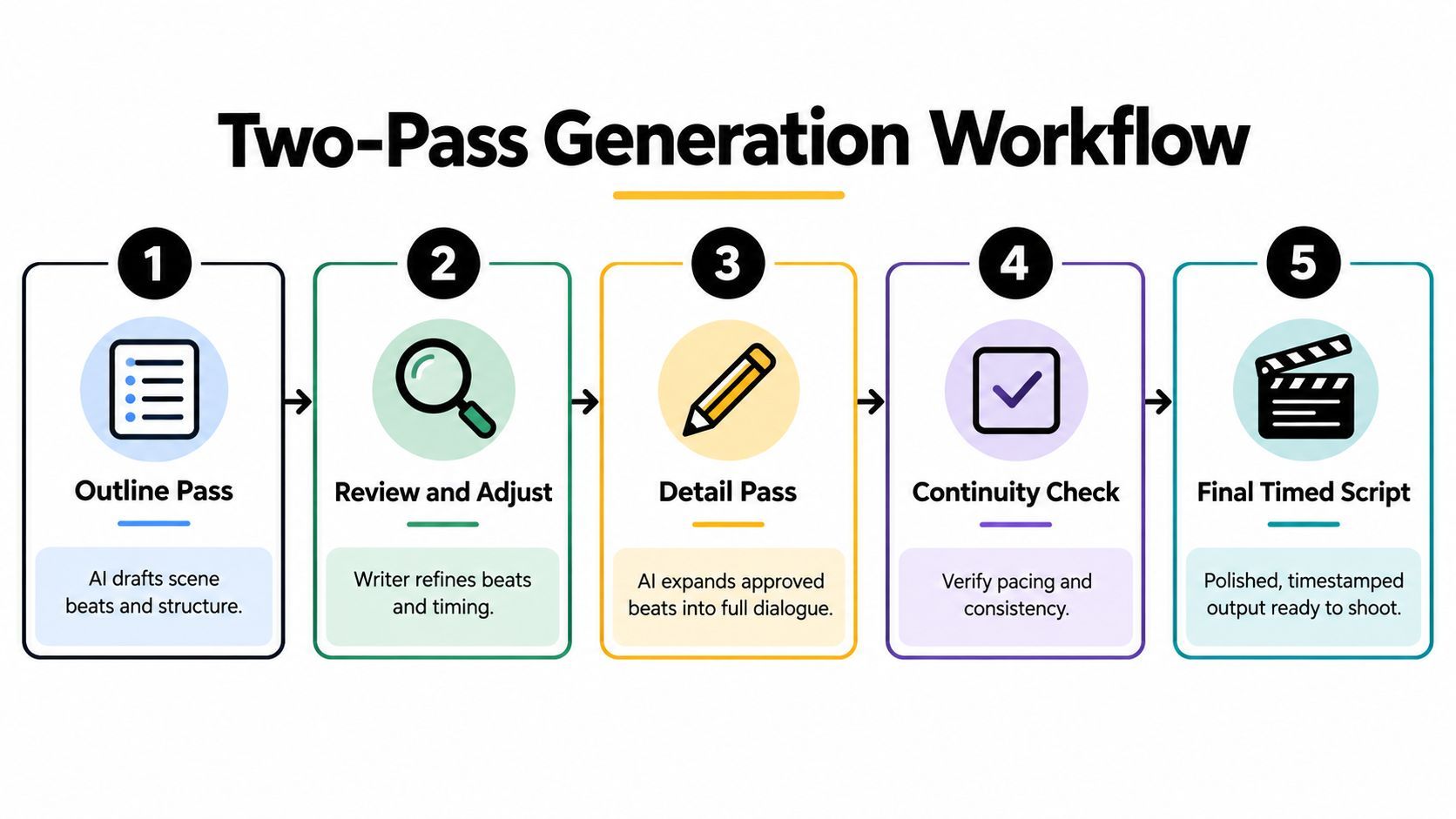
Examples को short और purposeful रखें। एक formatting establish करे, दूसरा voice, और तीसरा required visual specificity दिखाए। यदि script tools evaluate कर रहे हैं, तो AI video creation platform structured ideas को scenes में assemble करने में मदद कर सकता है, जबकि creator underlying beats, claims, और pacing को approve करता रहे।
Two-Pass Generation Workflow को Execute करना
Narrative review survive कर लेने तक final timed script न मांगें। Two-pass workflow story architecture को language और production detail से अलग करता है, जो प्रत्येक stage पर smaller, manageable decision देता है।
Pass one beat sheet बनाता है
Model को approved context block feed करें और beat sheet मांगें। प्रत्येक beat पांच सवालों का जवाब दे:
- Hook: क्या immediate curiosity पैदा करता है या viewer की समस्या identify करता है?
- Information sequence: Viewer को पहले, दूसरे, तीसरे क्या समझना चाहिए?
- Proof: कौन सा demonstration, example, source claim, या visual point को credible बनाता है?
- Payoff: देखने के बाद viewer के लिए क्या बदलता है?
- Call to action: Viewer को कौन सा single next step लेना चाहिए?
AI से beats को table में purpose, timing range, core message, और risk note के साथ present करने को कहें। इस stage पर redundant ideas हटाएं, unsupported claims reject करें, order adjust करें, और unavailable footage पर dependent beat rewrite करें। Weak beat sheet को polished wording से rescue नहीं किया जा सकता।
Instruction-following research format compliance, content constraints, logical sequencing, और multi-step execution को अलग करता है बजाय quality को एक vague score मानने के। यह workflow के production logic को support करता है: instruction-following evaluation research structured outline के success test करने को आसान बनाता है expansion से पहले।
Pass two approved beats को expand करता है
Beat sheet approve करने पर, sequence preserve करने की strict instruction के साथ वापस भेजें। Model से प्रत्येक beat को expand करने को कहें:
- Timed narration
- On-screen text
- Shot या b-roll direction
- Camera movement या framing
- Transition
- Music और sound cue
- Fact status या review flag
नए claims, characters, benefits, या plot turns न जोड़ने को कहें। Available time exceed करने वाली narration को flag करने को कहें बजाय ending compress करने के। यह pass one के editorial decisions preserve करता है जबकि AI repetitive drafting handle करता है।
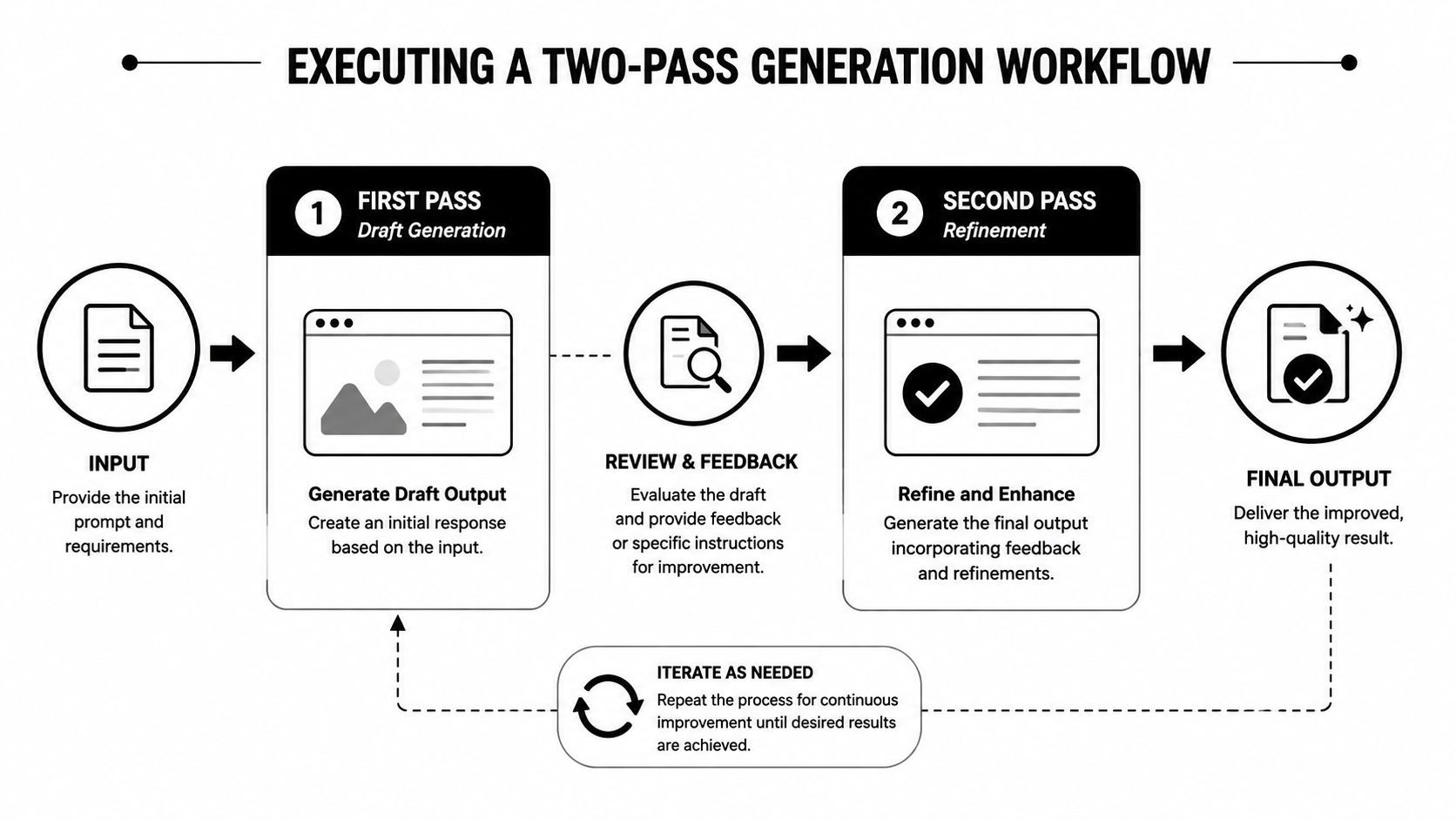
परिणाम timed working document होना चाहिए, marketing copy का block नहीं। वीडियो स्क्रिप्ट कैसे लिखें पर आगे practical guidance के लिए, advice को अपनी production constraints से compare करें। Generic formulas start करने में मदद कर सकती हैं, लेकिन approved beat sheet final version control करे।
Scenes और Visual Directions को Map करना
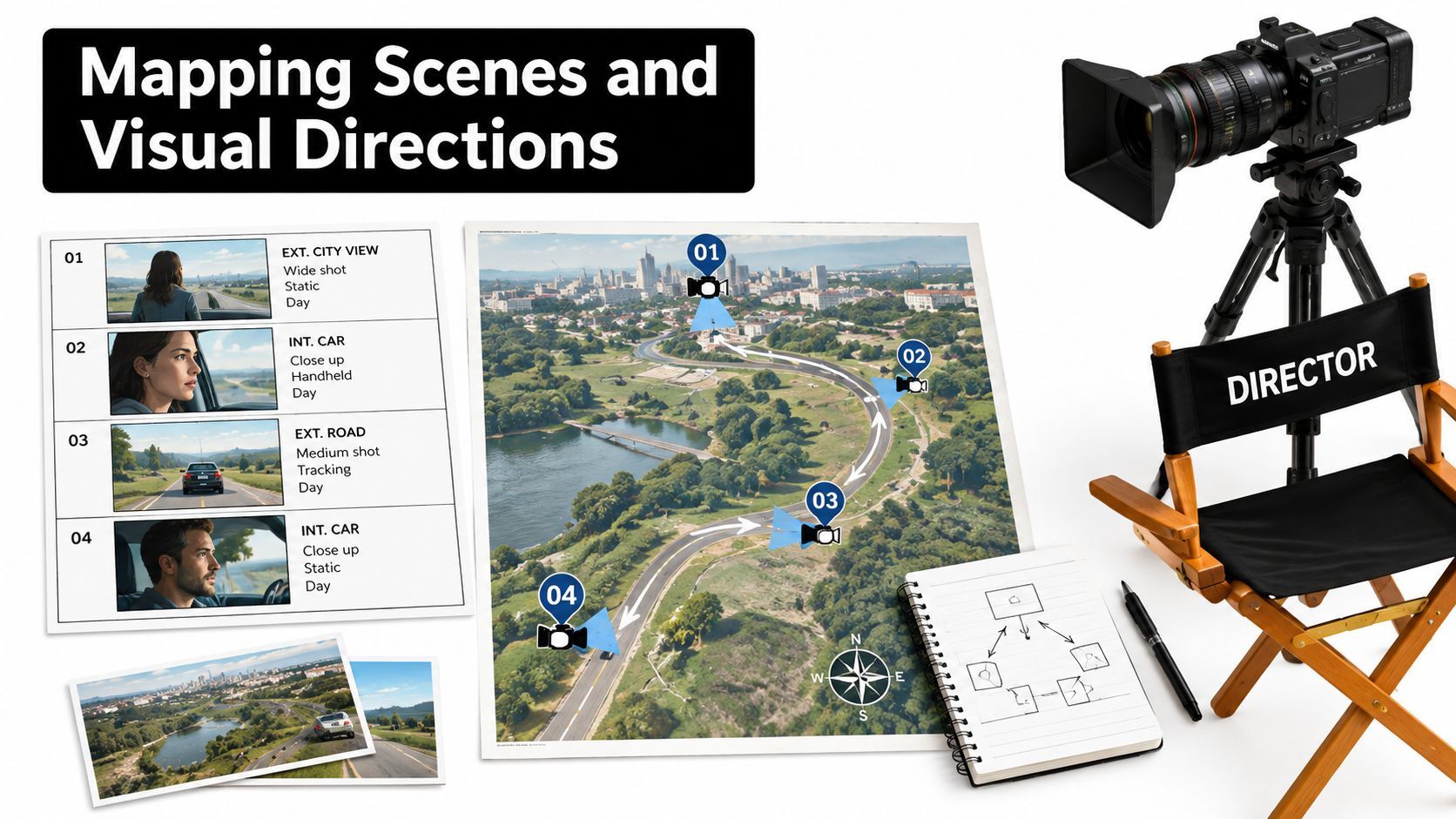
स्क्रिप्ट words अच्छे लगने से ready नहीं होती। यह usable तब बनती है जब director, editor, या creator बता सके कि प्रत्येक line बोले जाने पर screen पर क्या दिखेगा। Prompt model को force करे कि हर spoken idea को executable visual decision से connect करे।
Visual inventory define करके शुरू करें। AI को बताएं कि talking-head footage, product close-ups, screen recordings, animation, stock clips, generated imagery, captions, या existing brand assets उपयोग कर सकता है या नहीं। Restrictions जैसे single location, vertical framing, no actors, या particular product angle तक access न होना शामिल करें। जितना concrete inventory, उतना कम model cinematic shot recommend करेगा जो produce न हो सके।
प्रत्येक line को action से pair करें
Human editor द्वारा पढ़ी जाने वाली script के लिए dual-column structure उपयोग करें। Left पर time और narration, right पर visual execution रखें। Tool-based workflows के लिए structured fields मांगें, क्योंकि consistent labels scenes, voices, captions, या media swap करना आसान बनाते हैं बिना entire document rewrite के।
एक useful visual prompt कहता है:
हर narration line के लिए एक primary visual action प्रदान करें। Subject, framing, movement, setting, और on-screen text specify करें। “Show success” या “make it engaging” जैसे abstract directions avoid करें। यदि visual inventory में listed asset पर depend करे, तो unavailable mark करें।
“Customer succeeding दिखाएं” shot नहीं है। “Completed dashboard check करते customer का medium vertical shot, फिर highlighted result का close-up” editor को build करने के लिए कुछ देता है।
Actual platform के लिए design करें
Platform-specific pacing writing के बाद decorative adjustment नहीं है। यह information के order और density बदलता है। Short-form feed को immediate tension या relevance communicate करने वाला opening visual चाहिए, जबकि educational explainer को demonstration से पहले clear question। Product ad को offer और audience problem same early sequence में visible चाहिए।
पहले moments में curiosity gap, surprising contrast, visible result, या direct problem statement establish करें। फिर visual changes को meaningful information से alternate करें। New information बिना fast cuts noise पैदा करते हैं, जबकि unrelated footage पर static narration viewer को ज्यादा काम करवाता है।
Model से हर scene को flag करने को कहें जो concrete visual की कमी हो, previous shot repeat करे, या important text जहां interface controls obscure कर सकते हों। Human editor से confirm करवाएं कि captions readable हैं, claims समझने लायक समय visible रहें, और proposed transitions footage match करें बजाय absence compensate के।
Independent Critique और Revision को Implement करना
“इस स्क्रिप्ट को बेहतर बनाएं” weak revision instruction है क्योंकि model को better की कोई definition नहीं देता। यह draft बनाने वाले same system को existing choices defend करने invite भी करता है। Stronger workflow draft को independent critic भेजता है, चाहे separate AI conversation, rule-based check, या human editor हो, और explicit tests के खिलाफ failures मांगता है।
Language models और human writers की तुलना करने वाला research generation followed by independent critique and revision को unrestricted self-editing से ज्यादा reliable quality-control pattern identify करता है। Process repeated generations और detailed human rubrics उपयोग करता है ताकि एक lucky sample verdict determine न करे। Creative-writing evaluation research drafting और judging के बीच practical editorial separation support करता है।
Critic को pass और fail tests दें
ऐसा checklist उपयोग करें:
- Opening: क्या पहला sentence clear curiosity gap पैदा करता है या relevant problem state करता है?
- Progression: क्या हर scene एक idea advance करता है बजाय previous repeat के?
- Timing: क्या spoken copy naturally पढ़ने पर assigned word budget में fit होता है?
- Visuals: क्या creator listed resources से हर shot execute कर सकता है?
- Claims: क्या हर factual statement supported है, opinion के रूप में clearly framed, या review के लिए marked?
- Continuity: क्या character names, product details, tone, और visual logic consistent रहते हैं?
- Ending: क्या स्क्रिप्ट में एक unambiguous action है बजाय several competing requests के?
Rewritten script नहीं, defect list मांगें। Critic से scene identify करने, failure briefly explain करने, और केवल necessary जहां replacement को line-level replacement propose करने को कहें। फिर उन defects को writing model को भेजें बिना कुछ और change करने की instruction के।
Editorial discipline: Diagnosed defects fix करें, हर sentence को model rewrite का reason ढूंढने न दें।
Commit करने से पहले openings compare करें
Opening disproportionate responsibility लेता है, इसलिए कम से कम तीन materially different hooks generate करें। एक problem से lead करे, दूसरा demonstration से, तीसरा counterintuitive claim से। Clarity, originality, audience fit, factual accuracy, narrative direction, और platform suitability के खिलाफ score करें।
Critic को polished clichés reward न करने दें। Hook grammatically sharp हो सकता है और फिर भी nothing कहे। यदि natural first-person delivery capture करने voice dictation उपयोग करें, तो advanced dictation refinement पर resource transcript clean करने में मदद कर सकता है बिना spoken quality sand किए। Final choice creator's intent reflect करे, model's familiar phrasing preference नहीं।
Team के समझने लायक तरीके से acceptance track करें। Record करें कि first draft hard constraints pass कर गया या नहीं, कितने factual issues आए, human ने script approve की या नहीं, और कितने revision rounds लगे। वे checks “it feels better” को repeatable production standard बनाते हैं।
Human Authorship और Copyright Preserve करना
Fastest workflow automatically safest या most distinctive नहीं है। यदि AI expressive choices बनाए, language invent करे, structure select करे, और केवल superficial approval पाए, तो final script polished लग सकता है जबकि creator को clearly belonging little contribute करे।
U.S. Copyright Office का 2025 analysis कहता है कि prompts अकेले generally enough human control नहीं देते AI output के author बनाने के लिए। Protection perceptible human expression, creative arrangement, या substantial modification पर depend करता है, जैसा Copyright Office analysis में explained। यह हर AI-assisted workflow avoid करने का reason नहीं। यह process में creative decisions कहां enter होते हैं document करने का reason है।
Authorship record बनाएं
Original brief, source material, approved beat sheet, rejected alternatives, revision notes, और final script version रखें। Generation से पहले brief में original character perspectives, brand language, examples, और points of view लिखें। फिर draft आने पर deliberate structural और line-level changes करें।
वे changes spelling correct करने से ज्यादा करें। Argument reorder करें, generic transitions replace करें, central observation sharpen करें, original example add करें, unsupported claims remove करें, और ending को audience से actual relationship के around shape करें। Version history दिखाए कि final work meaningful editorial judgment reflect करता है।
Assistance उपयोग करते voice protect करें
AI unusual phrasing को familiar patterns में smooth करने का tend करता है। यह clarity improve कर सकता है, लेकिन creator को recognizable बनाने वाले details भी remove कर सकता है। Preferred rhythms, recurring concepts, prohibited clichés, product terminology, और brand जैसी lines के examples वाली short voice guide रखें।
Publishing या client को deliver करने से पहले disclosure requirements review करें। Platform, client, या legal rules AI involvement label या disclose करने को require कर सकते हैं। AI Video Detector का practical tip है कि provenance को workflow का part मानें afterthought नहीं।
सबसे defensible process AI draft plus human authorship है। System को outlining, variation, formatting, और mechanical transformations accelerate करने दें। Research judgment, tone, claims, narrative priorities, और final expression को human control में रखें।
ShortGenius (AI Video / AI Ad Generator) approved brief या prompt को scene-by-scene video workflow में बदल देता है scriptwriting, image generation, video assembly, voiceovers, captions, resizing, और editing tools के साथ। यहां structured two-pass method उपयोग करें, फिर ShortGenius (AI Video / AI Ad Generator) पर जाएं reviewed script को platform-ready video और ad assets में बदलने के लिए।